









Executive Overview
In a landmark decision reshaping the contours of international cultural and natural preservation, the 48th session of the World Heritage Committee—convened in the vibrant coastal metropolis of Busan, Republic of Korea—has marked a historic turning point for Africa and Small Island Developing States (SIDS). With the official inscription of three distinct, ecologically and historically rich properties, the nations of the Comoros, São Tomé and Príncipe, and South Sudan have successfully secured their very first entries onto the prestigious UNESCO World Heritage List.
This monumental achievement is far more than a ceremonial recognition of local splendor; it represents a profound structural correction to long-standing global imbalances. For decades, the World Heritage List—widely regarded as the gold standard for global heritage conservation—has wrestled with a noticeable geographic disparity. Western nations and select regions historically boasted disproportionate representation, while vast swaths of the Global South, particularly in Africa and Oceania, remained underrepresented despite housing some of the planet’s most invaluable cultural touchstones and fragile ecosystems.
The successful inscriptions in Busan are the tangible fruits of a deliberate, multi-year strategic campaign spearheaded by UNESCO and its international partners. Grounded in the framework of the Priority Africa initiative and bolstered by visionary leadership, this institutional push aims to construct a genuinely representative inventory of human history and planetary diversity. By bringing the Comoros, São Tomé and Príncipe, and South Sudan into the fold, the international community has taken a decisive stride toward ensuring that the World Heritage List mirrors the complex, multifaceted tapestry of human civilization and natural wonder.
Furthermore, this session underscored the reality that inscription is not merely an honor, but a solemn pledge. Notably, South Sudan’s historic debut was accompanied by its simultaneous placement on the List of World Heritage in Danger—a proactive governance mechanism designed to galvanize immediate international support, funding, and technical expertise to safeguard a threatened ecosystem against mounting pressures. As the global community absorbs the implications of the Busan resolutions, this historic milestone signals a new era of inclusivity, shared responsibility, and heightened vigilance in the stewardship of our collective past and future.
Detailed Chronology of the 48th Session and New Inscriptions
The path to the historic announcements in Busan was paved by meticulous preparation, rigorous scientific evaluations by advisory bodies such as the International Council on Monuments and Sites (ICOMOS) and the International Union for Conservation of Nature (IUCN), and unwavering diplomacy among the 21 member states of the World Heritage Committee.
The Comoros: Unlocking the Historic Sultanates
Among the celebrated debutants is the Union of the Comoros, an archipelago nestled in the turquoise waters of the Mozambique Channel. The Committee’s decision to inscribe the Medinas of the Historic Sultanates of the Comoros brings global recognition to an extraordinary crossroads of African, Arab, Persian, and Malagasy influences.
For centuries, these coastal stone towns served as vital maritime hubs along regional and trans-oceanic trade routes. Characterized by labyrinthine alleyways, intricate coral-stone architecture, ancient mosques, and venerable palaces, the Medinas bear physical witness to a unique Islamic civilization that flourished in the East African maritime sphere. The inscription acknowledges not only the architectural majesty of these urban centers but also the living intangible heritage of the communities who have preserved their ancestral traditions, social structures, and maritime lore against the relentless tides of modernization and coastal erosion.
São Tomé and Príncipe: Preserving the Roças
Off the western equatorial coast of Central Africa, the Democratic Republic of São Tomé and Príncipe claimed its historic spot on the World Heritage List with the recognition of its iconic Roças.
These historic agricultural estates—spanning both volcanic islands—tell a complex, sobering, and globally significant story of colonial history, agrarian transformation, and human endurance. Originally developed for sugar production before transforming into the world’s leading exporters of cocoa and coffee in the late 19th and early 20th centuries, the Roças are monumental agro-industrial complexes. They feature sprawling plantation houses, administrative buildings, processing sheds, and distinct residential quarters for the labor force.
The inscription of the Roças is an acknowledgment of a profound historical landscape. It offers scholars and visitors alike a window into the plantation economy that profoundly shaped the modern Atlantic world, while highlighting the island nation’s commitment to confronting, preserving, and educating future generations about its intricate past. Furthermore, these sites are embedded within breathtaking tropical ecosystems that boast high levels of endemic biodiversity, bridging cultural memory with natural conservation.
South Sudan: Safeguarding the Boma-Badingilo Migratory Landscape
In what many delegates hailed as one of the most emotionally resonant moments of the Busan session, the world’s newest nation, the Republic of South Sudan, celebrated its inaugural World Heritage inscription: the Boma-Badingilo Migratory Landscape.
Encompassing vast savannahs, seasonally flooded grasslands, and dense woodland ecosystems, this breathtaking landscape hosts one of the largest mammal migrations on Earth. Millions of white-eared kob, Tiang antelope, and Mongalla gazelle traverse these remote expanses in an annual spectacle of survival that rivals the famed Serengeti migration.
However, South Sudan’s debut comes with profound institutional responsibility. Recognizing the severe anthropogenic pressures, institutional vulnerabilities, and security challenges facing the region, the World Heritage Committee simultaneously inscribed the Boma-Badingilo Migratory Landscape onto the List of World Heritage in Danger. This dual action is not a punitive measure, but an emergency mobilization framework. It unlocks technical assistance, emergency funding, and heightened global monitoring to help the government of South Sudan protect this irreplaceable natural phenomenon from poaching, habitat fragmentation, and the destabilizing impacts of regional conflict.
Supporting Context & Metrics: Closing the Representation Gap
To fully comprehend the magnitude of the Busan milestone, one must examine the statistical landscape of international heritage conservation over the past half-decade. The historical skew of the World Heritage List has long been a subject of critical academic and diplomatic debate. For decades, European and North American nations dominated the registry, while developing regions—particularly in Africa and Small Island Developing States—faced structural barriers to nomination, including a lack of technical capacity, limited financial resources for dossier preparation, and insufficient institutional infrastructure.
The turning point in this disparity began to take definitive shape in 2021 during the 44th extended session of the World Heritage Committee, where the landmark World Heritage Strategy for Africa (2022–2029) was formally adopted. At that critical juncture, the baseline metrics presented a stark challenge: twelve African nations possessed zero properties inscribed on the World Heritage List, leaving vast cultural and natural legacies unrepresented in the global registry.
The strategic intervention launched by UNESCO, African member states, and international donor partners sought to dismantle these barriers through targeted capacity-building workshops, dossier-writing masterclasses, comparative studies, and robust financial support. The results achieved in the span of just five years have been nothing short of transformative:
- Halving the Unrepresented Count: In a remarkably short operational window, the number of African countries with zero World Heritage properties has been cut in half, dropping from twelve to six.
- Geographic Diversification: The successful inscriptions of the Comoros, São Tomé and Príncipe, and South Sudan at the 48th session directly reflect this aggressive, results-oriented methodology.
- Expanding SIDS Frameworks: Recognizing that island nations face acute, existential threats ranging from sea-level rise to economic isolation, the global heritage community has expanded its focus. The adoption of the World Heritage Strategy for Small Island Developing States (SIDS) 2026–2034 at the Busan session establishes a robust, long-term roadmap to provide specialized technical and financial scaffolding to the remaining unrepresented island states.
This statistical progress underscores a vital truth: achieving a representative World Heritage List is not merely an administrative exercise in box-ticking. It is an act of historical equity. Every new site added from a previously unrepresented country recalibrates our collective understanding of human history, shifting the narrative from a Eurocentric focus to a truly global polyphony of human experience, environmental adaptation, and artistic expression.
Official Statements and Diplomatic Resonance
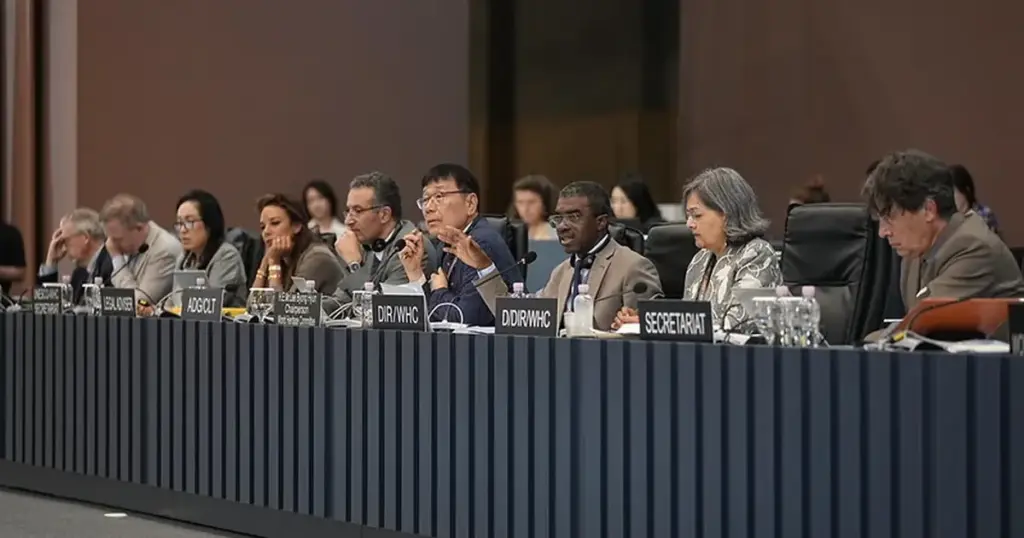
The atmosphere inside the plenary halls in Busan was charged with a palpable sense of historic achievement. Delegations, international experts, and civil society representatives exchanged warm congratulations as the gavel fell on the final resolutions. The voices of leaders at the forefront of this movement shed light on the deeper philosophical and practical implications of the inscriptions.
Highlighting the profound gravity of South Sudan’s dual inscription—simultaneously joining the World Heritage family and entering the List of World Heritage in Danger—a high-ranking representative of the South Sudanese government delivered a stirring address to the Committee:
"The inscription of this property, including its placement on the World Heritage List in Danger, strengthens our resolve to work even more closely with UNESCO and the international community to conserve its Outstanding Universal Value for the benefit of present and future generations. Through this inscription, South Sudan joins the family of World Heritage nations. This inscription is not only a victory for our people but also a contribution to humanity’s shared heritage and our collective responsibility to protect it."
This sentiment resonated deeply with the broader institutional vision articulated by UNESCO’s leadership. Under the current strategic momentum championed by senior leadership, including Director-General Khaled El-Enany, the organization has doubled down on its commitment to multilateralism, inclusive diplomacy, and equitable resource distribution. The policy framework executed in Busan directly mirrors the institutional mandate to leave no State Party behind.
International conservation experts attending the session noted that South Sudan’s proactive embrace of the "In Danger" listing demonstrates a mature, transparent approach to heritage governance. Rather than viewing the designation as a diplomatic setback, the South Sudanese authorities have framed it as a strategic shield—an international covenant ensuring that the Boma-Badingilo Migratory Landscape receives the urgent financial lifelines, scientific research partnerships, and security frameworks required to shield its megafauna from irreversible decline.
Similarly, delegates from the Comoros and São Tomé and Príncipe emphasized the transformative socio-economic potential of World Heritage status. For these island nations, inscription acts as a catalyst for sustainable eco-tourism, community-led conservation economies, and heightened national pride. By placing their unique histories and fragile island ecosystems on the global map, these nations have secured not only international prestige, but vital tools to educate domestic youth and foster national unity through cultural preservation.
Future Outlook: The Road Ahead for Global Heritage
As the 48th session of the World Heritage Committee draws to a close, attention naturally pivots from the celebratory halls of Busan to the complex, challenging terrain of on-the-ground implementation. Inscription is merely the beginning of a lifelong commitment to conservation, monitoring, and community engagement.
The roadmap for the coming decade is anchored by two monumental strategic frameworks: the remaining years of the World Heritage Strategy for Africa (2022–2029) and the newly minted World Heritage Strategy for Small Island Developing States (SIDS) 2026–2034. These documents provide a comprehensive blueprint for tackling the remaining blind spots on the World Heritage Map.
Presently, 26 States Parties remain entirely unrepresented on the World Heritage List. For UNESCO and the international community, the mission is clear: to extend the success achieved in the Comoros, São Tomé and Príncipe, and South Sudan to the remaining unrepresented nations across Africa, the Pacific, the Caribbean, and other underrepresented regions. This will require:
- Enhanced Technical Capacity Building: Continuing to train local heritage professionals, archaeologists, ecologists, and site managers in dossier preparation, management plan formulation, and state-of-the-art conservation techniques.
- Climate Resilience Integration: As demonstrated by the existential threats facing SIDS and delicate ecosystems like Boma-Badingilo, future conservation strategies must aggressively incorporate climate change adaptation mechanisms. Rising sea levels, shifting weather patterns, and prolonged droughts threaten both cultural monuments and migratory routes.
- Sustainable Financing Mechanisms: Mobilizing increased public-private partnerships, international trust funds, and philanthropic investments to support conservation infrastructure in developing nations, ensuring that local communities are the primary beneficiaries of heritage tourism and protection efforts.
- Inclusive Community Stewardship: Ensuring that indigenous populations and local communities—who have historically acted as the de facto guardians of these cultural landscapes and natural habitats—are placed at the very center of decision-making and management processes.
The historic achievements in Busan serve as a powerful reminder of what is possible when political will, international solidarity, and expert dedication converge. By welcoming the Comoros, São Tomé and Príncipe, and South Sudan into the global pantheon of protected treasures, the international community has taken a monumental step toward a more balanced, inclusive, and interconnected world. As we look toward the future, the imperative remains absolute: to identify, protect, and keep alive the shared heritage of all humanity, ensuring that the wonders of our planet endure for generations yet unborn.