






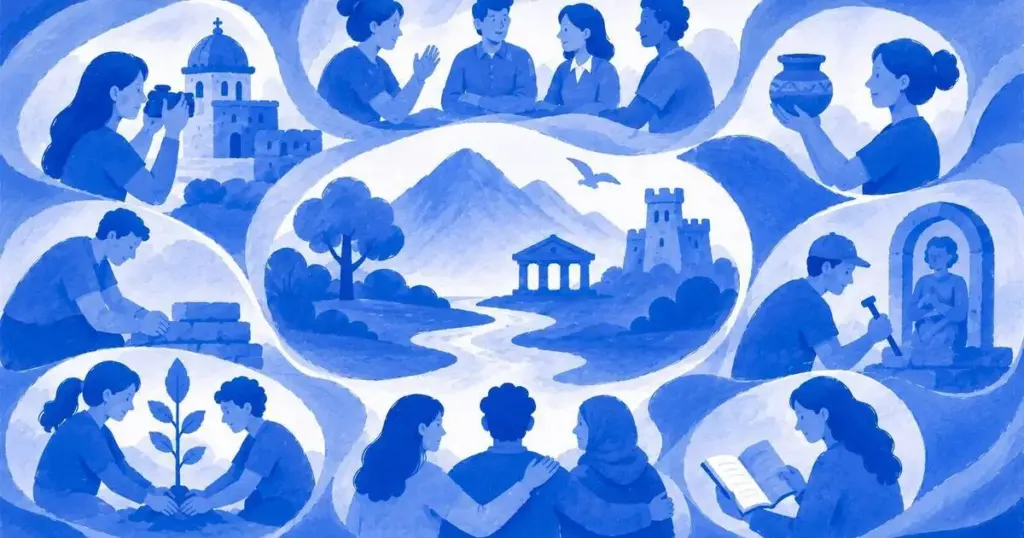
In an era defined by accelerating climate change, rapid urbanization, geopolitical instability, and unprecedented pressures on cultural and natural ecosystems, the safeguarding of humanity’s shared inheritance requires a unified global response. Recognizing that intergovernmental mandates alone are insufficient to meet these complex modern challenges, the United Nations Educational, Scientific and Cultural Organization (UNESCO) has officially launched a dedicated digital portal: the Civil Society and World Heritage webpage.
This newly established online resource represents a paradigm shift in how international heritage governance approaches grassroots participation. Designed as an authoritative clearinghouse, capacity-building tool, and tactical guide, the platform bridges the gap between high-level policy formulation and the tireless, on-the-ground efforts of non-governmental organizations (NGOs), Indigenous Peoples, local community groups, academic institutions, professional associations, and media representatives.
For over five decades, the 1972 Convention Concerning the Protection of the World Cultural and Natural Heritage—commonly known as the World Heritage Convention—has served as the international gold standard for preserving sites of "outstanding universal value." However, the operational mechanisms of the World Heritage system have historically been viewed by external stakeholders as bureaucratic, opaque, and inaccessible. The rollout of this comprehensive webpage directly addresses these historical barriers. By demystifying the architecture of the World Heritage Committee, clarifying accreditation pathways, and providing concrete protocols for submitting third-party information and engaging in reactive monitoring, UNESCO is signaling a decisive move toward radical transparency and inclusive governance.
This investigative report examines the genesis, strategic architecture, operational implications, and prospective impact of UNESCO’s new digital initiative. Drawing upon institutional context, expert analysis, and governance metrics, we explore how this platform intends to transform passive observers into active co-custodians of the planet’s most irreplaceable treasures.
Detailed Chronology: The Evolution of Civil Society Engagement in World Heritage
To fully appreciate the significance of the new webpage, one must trace the evolutionary trajectory of civil society integration within the United States Educational, Scientific and Cultural Organization’s heritage framework. The journey from exclusive state-party diplomacy to multi-stakeholder inclusivity spans more than fifty years of institutional adaptation.
1972–1990s: The Intergovernmental Genesis
When the General Conference of UNESCO adopted the World Heritage Convention on November 16, 1972, the architecture of the agreement was overwhelmingly state-centric. Grounded in Westphalian principles of national sovereignty, the Convention vested primary responsibility for identifying, nominating, protecting, and conserving World Heritage sites within national governments ("State Parties").
During the formative decades of the World Heritage Committee, civil society participation was largely peripheral. While international advisory bodies—such as the International Council on Monuments and Sites (ICOMOS), the International Union for Conservation of Nature (IUCN), and the International Centre for the Study of the Preservation and Restoration of Cultural Property (ICCROM)—were embedded in the Convention text as technical advisors, local communities and independent NGOs operated primarily as external advocates rather than formal participants in decision-making processes.
The 2000s: The Budapest Declaration and the Strategic Objectives
The turning point for broader stakeholder inclusion arrived at the turn of the millennium. In 2007, the World Heritage Committee adopted the "5Cs" at its historic session in Christchurch, New Zealand, building upon the foundational Budapest Declaration of 2002. These five strategic objectives—Credibility, Conservation, Capacity-building, Communication, and Communities—formally elevated the role of local populations and civil society organizations in heritage management.
For the first time, the international community acknowledged that sustainable conservation could not succeed without the active consent, traditional knowledge, and daily stewardship of the people living adjacent to or within World Heritage properties. Despite these normative shifts, operational pathways remained fragmented. Civil society actors frequently struggled to navigate the complex bureaucratic procedures required to submit alerts regarding endangered sites or secure observer status at annual Committee sessions.
2010s–Present: Digital Transformation and the Push for Accountability
Throughout the 2010s, the proliferation of global advocacy networks, coupled with the existential threats posed by climate change and armed conflict, generated mounting pressure for institutional democratization. Civil society organizations increasingly demanded formal mechanisms to challenge state-sponsored developments that threatened World Heritage sites—such as illegal mining in natural reserves or commercial overdevelopment in historic urban centers.
Recognizing the need for a centralized operational response, UNESCO’s World Heritage Centre initiated the development of a consolidated digital resource. Over several years, policy analysts, legal experts, and digital communications teams synthesized decades of operational guidelines, working methods, and procedural precedents. The culmination of this multi-year effort is the newly launched Civil Society and World Heritage webpage, marking a historic transition from ad-hoc engagement to institutionalized, systematic inclusion.
Supporting Context & Metrics: The Anatomy of the New Webpage
The newly unveiled portal is structured to serve multiple distinct user groups, ranging from seasoned heritage professionals to grassroots activists encountering the international treaty system for the first time. An analysis of the platform reveals four core functional pillars designed to demystify the World Heritage system and facilitate actionable engagement.
Pillar 1: Foundational Literacy and Governance Frameworks
Navigating the United Nations system requires an understanding of complex legal instruments and institutional hierarchies. The webpage provides an accessible yet rigorous overview of the 1972 World Heritage Convention, contextualizing its mandate within the broader framework of international cultural and environmental law.
- The Operational Guidelines: Users are provided with clear summaries of the Operational Guidelines for the Implementation of the World Heritage Convention, the definitive rulebook governing site nominations, state party reporting, and reactive monitoring.
- Institutional Roles: The portal delineates the distinct responsibilities of the General Assembly of States Parties, the 21-member World Heritage Committee, the Secretariat (UNESCO World Heritage Centre), and the Advisory Bodies (ICOMOS, IUCN, ICCROM).
- Policy Integration: Key international policy documents—such as the 2011 Recommendation on the Historic Urban Landscape (HUL) and policies concerning climate change and sustainable development—are cataloged and cross-referenced to demonstrate how civil society advocacy aligns with global standard-setting instruments.
Pillar 2: Practical Guidance on Participation Mechanics
Perhaps the most transformative aspect of the new webpage is its demystification of procedural entry points. Civil society organizations frequently encounter bottlenecks when attempting to engage with formal UN processes. The platform provides step-by-step guidance across three critical operational vectors:
- Observer Status at Committee Sessions: The portal outlines clear instructions on how NGOs, academic institutions, and professional networks can apply for accreditation to attend annual sessions of the World Heritage Committee as observers, enabling them to deliver statements on critical conservation alerts.
- Submission of Third-Party Information: Recognizing that national governments may occasionally overlook or downplay threats to heritage sites, the platform clarifies the protocols through which civil society actors can submit independent, verifiable data regarding potential dangers facing specific properties.
- Engagement in Reactive Monitoring: The webpage details how stakeholders can contribute to the state-of-conservation reporting process, ensuring that on-the-ground realities inform the decisions and recommendations of the World Heritage Committee.
Pillar 3: Stakeholder Mapping and Targeted Resources
The platform explicitly recognizes the heterogeneous nature of civil society. Rather than applying a monolithic approach, the webpage tailors its resources to specific constituencies:
- Indigenous Peoples and Local Communities (IPLCs): Acknowledging that indigenous lands overlap significantly with natural World Heritage sites, the portal emphasizes rights-based approaches, Free, Prior, and Informed Consent (FPIC), and the integration of traditional ecological knowledge.
- Non-Governmental Organizations (NGOs): Resources are provided to help advocacy groups build institutional capacity, mobilize public support, and interface effectively with state authorities.
- Academic and Professional Institutions: Universities and heritage conservation networks find dedicated research frameworks, technical standards, and methodological toolkits designed to support scientific rigour in site management.
- Media Representatives: Journalists and investigative reporters are provided with authoritative background materials, data repositories, and contact points to enhance public reporting on heritage preservation crises.
Official Statements and Institutional Perspectives
The rollout of the Civil Society and World Heritage webpage has drawn widespread acclaim from international leaders, legal scholars, and representatives of civil society organizations who view the initiative as a watershed moment for participatory global governance.
Speaking on the strategic rationale behind the digital platform, a senior official from the UNESCO World Heritage Centre emphasized the indispensable nature of grassroots vigilance:
"For over fifty years, the World Heritage Convention has protected humanity’s most treasured cultural and natural sites. However, intergovernmental declarations alone cannot halt the encroaching tides of climate change, unsustainable industrial development, and illegal exploitation. The true guardians of our shared heritage are the communities who live beside these sites, the scientists who monitor their ecosystems, and the NGOs that hold power to account. This new webpage is not merely an informational tool; it is an open invitation to global civil society to step into their rightful role as co-custodians of our common future."
Representatives from international advisory bodies have similarly welcomed the initiative, noting that increased transparency will streamline the evaluation of sites under threat. An expert liaison from the International Union for Conservation of Nature (IUCN) remarked:
"When local communities and independent experts are equipped with clear procedural knowledge, the quality of our conservation data improves exponentially. The new UNESCO portal bridges a historical chasm between international policy and grassroots reality. By establishing clear pathways for third-party reporting and reactive monitoring, we ensure that no environmental crisis or cultural endangerment goes unnoticed simply due to bureaucratic obscurity."
Indigenous leaders have expressed cautious optimism regarding the platform’s emphasis on community-based rights and traditional knowledge. A spokesperson for an international Indigenous peoples’ advocacy network noted:
"For generations, indigenous communities have successfully managed fragile ecosystems and sacred cultural landscapes, often without formal recognition from international bodies. While this digital portal is a welcome and necessary step toward inclusivity, its ultimate success will be judged by whether national governments respect these collaborative frameworks on the ground. We stand ready to utilize these resources to defend our ancestral territories and ensure our voices shape the future of World Heritage."
Future Outlook: Challenges and Strategic Horizons
While the launch of the Civil Society and World Heritage webpage marks a monumental leap forward in institutional accessibility, significant structural and geopolitical challenges remain on the horizon. Transforming digital accessibility into tangible conservation victories will require sustained commitment from all stakeholders involved.
1. Overcoming Asymmetries in Digital Access and Capacity
A critical vulnerability of any digital platform is the digital divide. While the webpage provides exceptional resources, marginalized communities in remote regions—particularly in parts of the Global South where many critical natural World Heritage sites are located—may face infrastructural, linguistic, and technological barriers in accessing and utilizing the portal. To fulfill its promise of universal inclusivity, UNESCO and its partner networks must complement the digital hub with targeted, on-the-ground capacity-building workshops, translation initiatives, and technical support programs.
2. Navigating Geopolitical Pressures and State Sovereignty
The World Heritage Convention remains an agreement between sovereign states. National governments retain ultimate jurisdiction over the nomination and management of sites within their borders. Consequently, tension frequently arises when civil society organizations utilize mechanisms like third-party reporting to highlight state-sponsored environmental violations or human rights abuses associated with heritage sites. Ensuring that state parties respect the legitimacy of civil society engagement—without resorting to intimidation, censorship, or legal retaliation against whistleblowers—will be one of the most pressing governance tests for UNESCO in the coming decade.
3. Integrating Emerging Threats: Artificial Intelligence and Climate Resilience
As the World Heritage system looks toward the next fifty years, the nature of threats facing cultural and natural sites is evolving at breakneck speed. Climate-induced disasters, sea-level rise, desertification, and unmitigated mass tourism require agile, data-driven responses. Future iterations of the civil society portal must expand to incorporate advanced monitoring tools, artificial intelligence-driven predictive analytics, and decentralized citizen-science networks. By empowering local actors to leverage modern technological innovations, the platform can evolve from a static informational repository into a dynamic, real-time early warning system for global heritage.
Conclusion
UNESCO’s new Civil Society and World Heritage webpage represents a profound institutional evolution. By dismantling historical bureaucratic barriers, providing rigorous methodological guidance, and affirming the indispensable role of non-governmental actors, Indigenous Peoples, and local communities, UNESCO has laid the groundwork for a more resilient, transparent, and inclusive global heritage regime. As these digital resources translate into active on-the-ground stewardship, the international community moves closer to realizing the true promise of the World Heritage Convention: that humanity’s shared treasures are preserved not merely by governments, but by the collective vigilance and passion of the global citizenry.