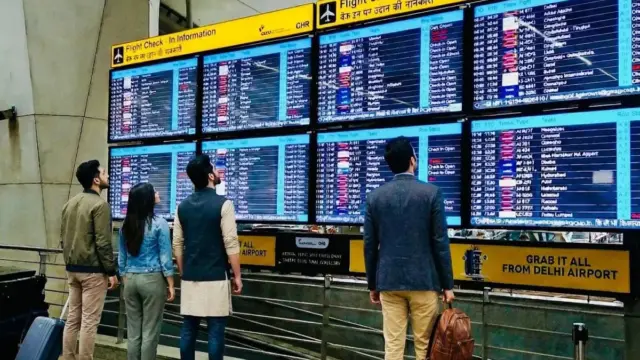








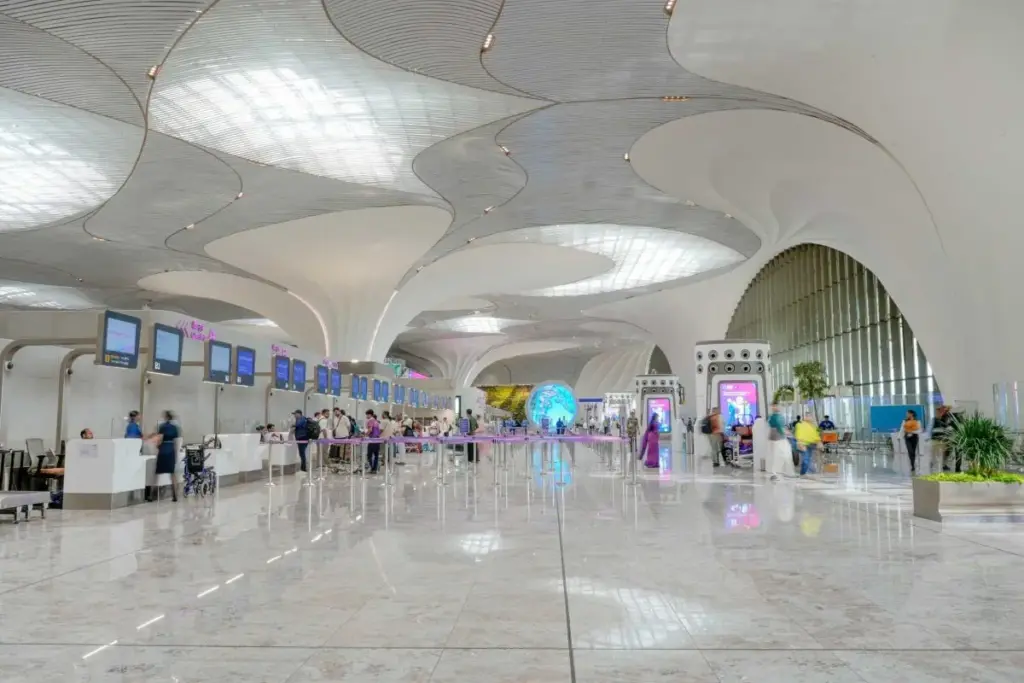
In a major regulatory intervention aimed at preventing operational disruption in India’s financial capital, the Ministry of Civil Aviation has stepped in to pause a plan by Adani Airport Holdings to rapidly shift a portion of international flight operations from Mumbai’s congested Chhatrapati Shivaji Maharaj International Airport (CSMIA) to the upcoming Navi Mumbai International Airport (NMIA).
The ministry’s directive, issued during a high-stakes meeting in New Delhi, instructs the airport operator to hold off on enforcing immediate flight transfers. Instead, the government has mandated that Adani Airport Holdings and affected airlines collaborate to establish a structured, phased transition plan.
While the intervention offers temporary relief to airlines operating out of Mumbai’s Terminal 2, government and industry sources emphasize that the decision does not signal a reversal of the relocation strategy. Rather, it represents a tactical pause to ensure that the transition to a dual-airport system for the Mumbai metropolitan region is executed smoothly, safely, and without compromising passenger experience or airline scheduling integrity.
A High-Stakes Showdown in New Delhi
The government’s decision to intervene came after a tense, 90-minute meeting convened by the civil aviation ministry in New Delhi. The urgency of the session was underscored by a looming deadline: airlines had been given until 4:00 PM on the very same day to notify Mumbai International Airport Limited (MIAL)—the Adani-led entity that operates CSMIA—which of their international flights they would be willing to give up or relocate to the new Navi Mumbai facility.
Airlines had expressed deep anxieties over the aggressive timeline, arguing that a forced, hurried relocation of international operations could trigger widespread scheduling chaos, disrupt global network connections, and severely inconvenience passengers who had booked tickets months in advance. Recognizing these systemic risks, ministry officials chose to intervene, effectively suspending the unilateral deadline and bringing both sides to the negotiating table.
Rather than forcing immediate concessions, the ministry has established a structured consultation process. Adani Airport Holdings and the airlines have been directed to jointly formulate and submit a comprehensive, realistic roadmap for the transition. The first follow-up meeting to review these proposals is scheduled for October 13, with a subsequent session expected by October 20 to finalize the transition strategy.
The Logistical Nightmare of Split Operations
For global and domestic carriers alike, shifting international flights from an established hub to a greenfield airport is a highly complex logistical puzzle. The aviation industry operates on schedules planned at least six months to a year in advance, coordinated through international slot conferences and aligned with global network connections.
Several operational bottlenecks make an immediate, unstructured shift highly problematic for carriers:
Hub-and-Spoke Connectivity
Many airlines rely on a "hub-and-spoke" model, where domestic flights feed passengers into international departures. If domestic flights continue to land at CSMIA in Santacruz/Sahar while international departures are forced to operate from Navi Mumbai, the transfer window for connecting passengers becomes virtually impossible to manage. Passengers would be forced to clear immigration, collect their baggage, and travel across the metropolitan region—a journey that, despite new infrastructure like the Atal Setu sea link, remains subject to unpredictable transit times.
Ground Infrastructure and Support Services
International widebody aircraft require specialized ground handling equipment, dedicated maintenance facilities, catering services, and cargo handling infrastructure. Airlines cannot simply move a flight without ensuring that their ground handling partners, catering suppliers, and engineering teams are fully operational and certified at the new site.

Alliance and Codeshare Commitments
Major global airline alliances—such as Star Alliance, SkyTeam, and oneworld—rely on seamless transfers between partner carriers. Splitting alliance partners across two separate airports separated by a harbor would dismantle these codeshare networks, forcing airlines to re-evaluate the commercial viability of their Mumbai routes.
The Dual-Airport Conundrum in Mumbai’s Crowded Skies
The tension between Adani Airport Holdings and the airline community highlights a broader structural challenge: Mumbai’s desperate need for aviation capacity expansion.
For over a decade, Chhatrapati Shivaji Maharaj International Airport has operated at near-total capacity. Constrained by a land-locked footprint in the heart of suburban Mumbai and utilizing a cross-runway system that prevents simultaneous takeoffs and landings, CSMIA is one of the busiest single-runway operations in the world. The airport has routinely faced severe congestion, leading to passenger delays, circling aircraft, and a chronic shortage of landing slots for both domestic and international carriers.
The upcoming Navi Mumbai International Airport, also managed by Adani Airport Holdings, is designed to be the ultimate safety valve for this crisis. Spanning a massive greenfield site, NMIA is envisioned as a world-class mega-hub capable of handling millions of passengers annually, featuring parallel runways and state-of-the-art terminal facilities.
However, the transition from a single-airport city to a dual-airport metropolis is historically fraught with challenges. Global cities like London (Heathrow and Gatwick), Tokyo (Haneda and Narita), and New York (JFK, LaGuardia, and Newark) took years, if not decades, to optimize traffic distribution between their primary and secondary airports.
For Adani Airport Holdings, the commercial pressure to operationalize Navi Mumbai and begin recouping its massive capital expenditure is immense. Yet, as the civil aviation ministry’s intervention demonstrates, rushing this process risks damaging the very airline partnerships required to make the new airport a commercial success.
What Lies Ahead: The October Deadlines
With the immediate threat of a forced flight relocation averted, the focus now shifts to the upcoming regulatory milestones on October 13 and October 20.
During these meetings, the civil aviation ministry, Adani Airport Holdings, and airline representatives will attempt to negotiate a compromise that balances the airport operator’s desire to populate the new Navi Mumbai facility with the airlines’ need for operational stability.
Industry analysts suggest that a successful transition roadmap will likely feature several key compromises:
- Phased Relocation: Rather than moving established, high-frequency international routes, the initial phase may focus on relocating charter flights, budget international carriers, or newly allocated international bilateral rights that do not rely heavily on domestic transfer traffic.
- Incentive Packages: To encourage voluntary relocation, Adani Airport Holdings may need to offer attractive landing fee waivers, reduced parking charges, and subsidized office space at Navi Mumbai to offset the initial operational inefficiencies faced by airlines.
- Infrastructure Syncing: Aligning the flight transition timeline with the completion of critical surface transport links—including dedicated metro lines and enhanced expressways—to assure airlines that passengers can transit between CSMIA and NMIA with minimal friction.
The civil aviation ministry’s intervention has successfully averted an imminent operational crisis, replacing a rigid deadline with a collaborative mandate. However, the clock is ticking. As the October meetings approach, the aviation sector will be watching closely to see if India’s financial capital can successfully chart a path into its new dual-airport era, or if the friction between infrastructure ambitions and airline realities will continue to stall progress.