






Executive Overview
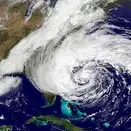
In late October 2012, the Eastern Seaboard of the United States braced for one of the most ferocious and structurally destructive meteorological events in modern history: Hurricane Sandy. Often referred to in meteorological annals as "Superstorm Sandy" due to its post-tropical transition and unprecedented geographical footprint, the storm crippled infrastructure from the mid-Atlantic up through New England. While much of the immediate media focus and subsequent governmental analyses concentrated on the catastrophic impacts to residential real estate, municipal transit grids, and the electrical power infrastructure of New York and New Jersey, the commercial maritime and cruise industries faced an operational crisis of staggering proportions.
Cruising, an industry characterized by meticulous scheduling, high passenger turnover, and tight logistical turnarounds, was brought to a near-complete standstill across the major northeastern homeports. Ports spanning from Boston, Massachusetts, down to Norfolk, Virginia, found themselves directly in the crosshairs of a tempest packing hurricane-force winds, historically high storm surges, and torrential rainfall.
For the major cruise lines—including Carnival Cruise Line, Royal Caribbean International, Norwegian Cruise Line, Cunard Line, and Crystal Cruises—the final week of October 2012 marked a period of intense crisis management. Thousands of passengers saw their vacations abruptly canceled, delayed, or drastically rerouted as major hubs like the ports of New York, Bayonne, and Baltimore closed their maritime gates to incoming and outgoing vessel traffic.
This retrospective examines the logistical nightmare that unfolded between October 28 and October 31, 2012. By analyzing passenger metrics, port-by-port vulnerabilities, and the broader economic and operational ripple effects, this report illuminates how the cruise industry weathered a storm that fundamentally challenged the resilience of regional maritime infrastructure.
Detailed Chronology of the Disruptions (October 28 – October 31, 2012)
The progression of Hurricane Sandy from a Caribbean hurricane into a colossal hybrid superstorm off the U.S. East Coast triggered a cascading series of port closures and itinerary cancellations. The timeline of disruption reveals a rapidly closing window of operational viability for cruise vessels navigating the northeastern seaboard.
October 28, 2012: The Pre-Landfall Staging and Initial Departures
As the outer bands of Hurricane Sandy began lashing the coast, several major vessels were scheduled for pivotal weekend departures. The maritime authorities and cruise line operators faced immediate decisions regarding whether to push forward with scheduled embarkations or institute proactive delays.
- Baltimore, Maryland: The Carnival Pride, carrying a passenger capacity of 2,251 travelers, was slated to depart on October 28. Given Baltimore’s position on the Chesapeake Bay and the anticipated track of the storm inland, operations faced immediate threat evaluations, putting thousands of embarkation-day passengers in limbo.
- Bayonne, New Jersey: Royal Caribbean’s Explorer of the Seas, with 3,301 passengers booked, was scheduled to pull away from the Cape Liberty Cruise Port on October 28. Situated directly within the New York-New Jersey harbor complex—the eventual bullseye of the storm surge—this sailing represented one of the largest single-ship movements at risk.
- Boston, Massachusetts: Further north, the impact was slightly delayed, but preparations were underway. The Jewel of the Seas (Royal Caribbean), carrying 2,234 passengers, maintained a scheduled departure date of October 28, attempting to slip out of Boston Harbor before the worst of the northern quadrant winds took hold.
- Norfolk, Virginia: Positioned further south in the mid-Atlantic, the Port of Norfolk saw the departure of Carnival Cruise Line’s Carnival Glory on October 28, accommodating 3,152 passengers. While southern ports experienced slightly milder conditions than the New York Bight, maritime traffic was already heavily monitored by the United States Coast Guard (USCG).
- New York, New Jersey, and International Hubs: Cunard Line’s flagship ocean liner, the Queen Mary 2, was scheduled for a massive transatlantic departure on October 28 from New York, carrying 5,554 passengers and crew components. Concurrently, Norwegian Cruise Line’s Norwegian Jewel, with 2,544 passengers, was locked into an October 28 departure schedule out of New York.
In total, October 28 accounted for the single largest concentration of disrupted passengers, with 19,038 travelers caught in the initial crossfire of the approaching storm.
October 29, 2012: The Eye of the Crisis and Port Freezes
By Monday, October 29, Hurricane Sandy’s forward speed slowed while its wind field expanded dramatically. The USCG issued blanket restrictions, effectively closing the ports of New York, New Jersey, and Baltimore to commercial shipping and passenger vessels.
- New York, New York: The city effectively shut down its mass transit systems, and the Port Authority of New York and New Jersey restricted all marine traffic. Two major ships scheduled for October 29 departures found themselves stranded at berth or unable to dock:
- Carnival Miracle (2,251 passengers)
- Norwegian Gem (2,529 passengers)
- Passenger Impact: The total affected passenger volume for October 29 stood at 4,781 individuals, who arrived at terminal facilities only to find operations suspended, baggage handling halted, and terminals transitioning into emergency staging areas or closing entirely.
October 31, 2012: Post-Landfall Assessment and Continued Paralysis
Even after Sandy made landfall near Atlantic City, New Jersey, on the evening of October 29, the devastation left behind—including localized flooding, power grid collapses, and blocked navigation channels—prevented a swift return to normalcy.
- New York, New York: Scheduled departures for Halloween (October 31) faced insurmountable logistical hurdles. Pier infrastructure in Manhattan and Brooklyn suffered power outages, and marine pilots could not guarantee safe navigation through debris-laden shipping lanes.
- Caribbean Princess (Princess Cruises), carrying 3,301 passengers, had its October 31 departure indefinitely postponed.
- Crystal Symphony (Crystal Cruises), carrying a luxury complement of 1,018 passengers, was similarly grounded.
- Passenger Impact: October 31 added another 4,318 passengers to the cumulative tally of disrupted travelers, cementing the multi-day paralysis of the nation’s premier northeastern cruise gateway.
Supporting Context & Metrics: Quantifying the Disruption
To fully understand the magnitude of the disruption, it is necessary to examine the hard data regarding passenger volumes, regional economic dependencies, and the sheer scale of the logistical failure across the affected ports.
Passenger Disruption Breakdown by Date
Data compiled from cruise operations during the event highlights a front-loaded crisis that tapered off in volume but expanded in duration:
| Date of Scheduled Departure | Total Affected Passengers | Percentage of Total Disrupted Volume | Primary Contributing Ports |
|---|---|---|---|
| October 28, 2012 | 19,038 | 69.3% | Baltimore, Bayonne, Boston, Norfolk, New York |
| October 29, 2012 | 4,781 | 17.4% | New York (Manhattan/Brooklyn) |
| October 31, 2012 | 4,318 | 15.7% | New York (Manhattan/Brooklyn) |
| Total Cumulative Volume | 28,137 | 100% | Northeast Regional Hubs |
Out of nearly 28,137 passengers whose embarkations were directly impacted across these specific dates, the vast majority were caught on the eve of the storm (October 28), requiring massive sheltering-in-place operations, hotel voucher distribution, and emergency re-accommodation efforts by the cruise lines.
Port-Specific Vulnerabilities
- The Port of New York and New Jersey: As the epicenter of cruise operations in the Northeast, the combined facilities of Manhattan Cruise Terminal, Brooklyn Cruise Terminal, and the Cape Liberty Cruise Port in Bayonne handled the lions’ share of the affected ships. The geography of the harbor—susceptible to funneling storm surges from the Atlantic—made it a high-risk zone. The inundation of low-lying piers crippled shoreside infrastructure, rendering gangways, baggage scanning equipment, and terminal power systems inoperable for days.
- Baltimore (Cruise Maryland Terminal): While spared the direct oceanic storm surge experienced by coastal New Jersey and New York, Baltimore’s upper Chesapeake Bay location still suffered from strong wind-driven tides that forced the Carnival Pride and port authorities to delay operations, stranding over 2,250 passengers.
- Boston and Norfolk: Serving as secondary northern and southern anchors respectively, Boston (Jewel of the Seas) and Norfolk (Carnival Glory) experienced gale-force winds and torrential rains. Although their infrastructure avoided the catastrophic structural flooding seen in Lower Manhattan, marine pilots suspended movements to prevent groundings or collisions with drifting debris.
Official Statements and Industry Response
In the wake of the crisis, cruise line executives, port authorities, and maritime safety organizations mobilized public-relations and emergency-response protocols to address the stranded passengers and concerned stakeholders.
Cruise Line Protocols and Passenger Care
Major cruise operators faced unprecedented challenges in communicating with thousands of booked guests who were either en route to ports, stuck in airport hubs, or already onboard vessels that were unable to sail.
- Carnival Cruise Line: Issuing continuous advisory updates for the Carnival Pride, Carnival Miracle, and Carnival Glory, Carnival focused on flexible cancellation and future cruise credit (FCC) policies. For passengers already arrived in port cities, the line coordinated with local hoteliers to provide emergency lodging, recognizing that many regional airports (such as JFK, LGA, EWR, and BWI) were shut down due to high winds and flooding.
- Royal Caribbean International: Dealing with massive vessels like the Explorer of the Seas in Bayonne and Jewel of the Seas in Boston, Royal Caribbean utilized its digital notification systems to advise passengers not to travel to the ports. For those caught onboard during delayed departures or modified itineraries, crew members worked overtime to maintain onboard services, entertainment, and dining operations despite being stuck at berth.
- Norwegian Cruise Line & Cunard Line: Given the high-profile nature of voyages like the Queen Mary 2 (carrying over 5,500 passengers and crew), Cunard coordinated closely with the Port Authority of New York and New Jersey to ensure vessel safety while docked at the Brooklyn Cruise Terminal. Passengers were given the option to cancel for full refunds or rebook on later transatlantic crossings.
United States Coast Guard (USCG) Directive
Captain of the Port (COTP) zones throughout the First Coast Guard District issued stringent marine safety information bulletins (MSIBs). The USCG mandated that all vessels secure their moorings, verify backup generator capabilities, and cease all hazardous cargo and passenger embarkation operations until post-storm hydrographic surveys could be completed. These surveys were critical in ensuring that underwater shoaling, sunken barges, or shipping containers washed overboard did not block the navigation channels essential for large cruise liners.
Future Outlook: Resilience, Infrastructure Adaptation, and Modern Mitigation
Hurricane Sandy served as a watershed moment for the cruise industry and port authorities along the United States Eastern Seaboard. The storm exposed critical vulnerabilities in shoreside terminal resilience, power grid dependencies, and the agility of multi-port logistics.
Evolution of Port Infrastructure
In the decade following Hurricane Sandy, ports throughout New York, New Jersey, Baltimore, and Boston embarked on multi-million-dollar resilience programs. Key advancements include:
- Elevated Electrical Grids: Critical shore-power infrastructure, baggage-handling systems, and passenger boarding bridges have been elevated above projected storm-surge levels or enclosed in waterproof, weather-resistant vaults.
- Redundant Power Systems: Cruise terminals now routinely feature heavy-duty, high-capacity emergency generators capable of maintaining climate control, lighting, and communication systems during prolonged municipal grid failures.
Enhanced Weather Routing and Predictive Analytics
Modern cruise lines have integrated advanced meteorological forecasting tools directly into their marine operations centers. Today, algorithms analyze real-time storm tracks, ocean swell data, and port reopening projections days in advance. This allows fleet operators to make proactive decisions—such as diverting ships to southern homeports (e.g., Charleston, Miami, or Port Canaveral) or extending voyages at sea to ride out storms away from coastal bottlenecks—long before a port formally closes.
Flexible Booking and Insurance Frameworks
The financial fallout of Sandy prompted a thorough overhaul of cruise contract-of-passage terms and travel insurance offerings. Cruise lines developed more robust, standardized compensation matrices for weather-related cancellations, ensuring that consumer confidence remained intact despite increasingly volatile climate patterns. Furthermore, partnerships with specialized travel insurance providers have become standard practice, protecting both passengers and operators from catastrophic financial losses during major natural disasters.
Conclusion
The disruption of Northeast cruise sailings by Hurricane Sandy in October 2012 remains one of the most significant logistical challenges in modern passenger shipping history. Affecting nearly 28,137 passengers across major hubs from Boston to Norfolk, the storm tested the operational limits of cruise lines and port authorities alike. Through coordinated crisis management, adherence to strict Coast Guard safety protocols, and a steadfast commitment to passenger welfare, the industry successfully navigated the immediate crisis.
More importantly, the legacy of Hurricane Sandy endures in the fortified infrastructure, sophisticated weather-routing systems, and resilient emergency response frameworks that safeguard North American cruise operations today. As extreme weather events become increasingly frequent, the lessons learned from Sandy’s maritime paralysis continue to serve as the operational bedrock for a safer, more adaptable global cruise industry.