










Executive Overview
The domestic and international air travel market continues to undergo rapid shifts, driven by capacity adjustments, shifting consumer demands, and aggressive airline pricing strategies. A prime example of this fluctuating landscape is the emergence of a notable airfare sale targeting Kauai, Hawaii (LIH). Featuring baseline pricing starting as low as $404 for restrictive tickets and standard regular economy tickets hovering around $534, this promotion offers a compelling case study in modern airline revenue management.
For travelers looking to trade the mainland bustle for the dramatic cliffs, lush valleys, and serene beaches of the Garden Isle, understanding the mechanics behind these prices is essential. This report provides an exhaustive, journalistic examination of the Kauai airfare sale. We will break down the structural differences between standard and basic economy fares, evaluate the broader economic implications for travelers and carriers alike, analyze routing and booking mechanics, and offer strategic guidance for maximizing value when planning a Hawaiian getaway.
Detailed Chronology: The Evolution of Transpacific Pricing to Hawaii
To fully understand the current airfare landscape surrounding flights to Kauai, it is necessary to examine how legacy and low-cost carriers have structured their pricing models for transpacific routes over the past decade.
The Shift Toward Unbundled Fares
Historically, flying to Hawaii from mainland hubs—such as Dallas/Fort Worth (DFW), Los Angeles (LAX), or Chicago (ORD)—commanded a straightforward, bundled price that included seat selection, checked baggage, and standard flexibility. However, the introduction of "Basic Economy" products by major legacy carriers, including American Airlines, fundamentally altered the booking experience.
When American Airlines and competing network carriers introduced unbundled fare tiers to compete with ultra-low-cost carriers (ULCCs), they created a two-tiered pricing structure for popular leisure destinations like Hawaii. The current sale highlights this dichotomy vividly:

- The $404 Basic Economy Tier: Designed to capture price-sensitive leisure travelers who prioritize upfront savings over comfort, flexibility, or loyalty perks.
- The $534 Standard Economy Tier: Retains traditional travel conveniences, catering to passengers unwilling to compromise on pre-assigned seating, overhead bin access, or general ticket flexibility.
Market Introduction and Routing Variances
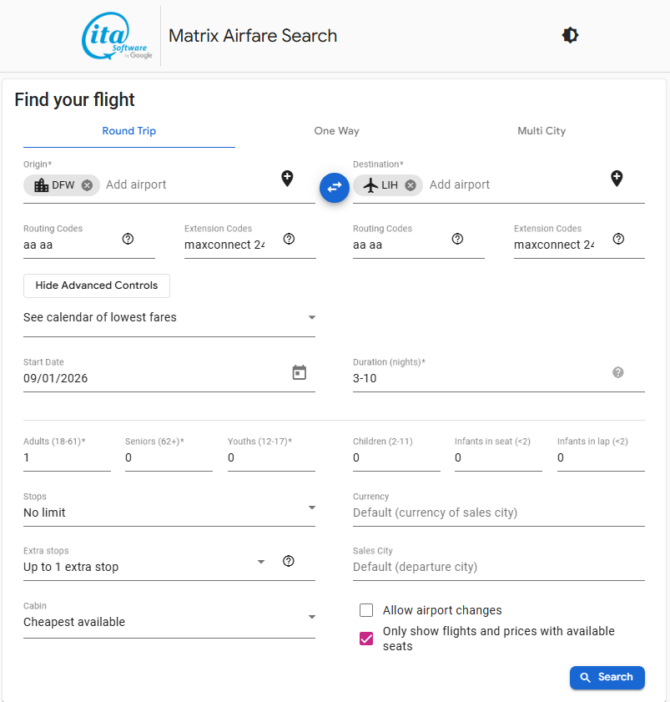
The rollout of these promotional fares typically begins during shoulder travel seasons when airlines experience a natural dip in demand. Yield management algorithms dynamically adjust seat inventory, releasing batches of discounted seats to stimulate demand across specific routing corridors. As observed in recent route analyses featuring flights originating from major hubs like Dallas/Fort Worth (DFW), pricing varies incrementally depending on the exact routing, layover duration, and aircraft deployment.
Savvy travelers tracking these fare movements note that availability can fluctuate rapidly within a matter of hours. The interplay between carrier capacity management and consumer demand creates a narrow window of opportunity for securing these rates, making real-time tracking tools and instantaneous alerts indispensable assets for modern travel hackers and vacation planners alike.
Supporting Context & Metrics: Unpacking the Fare Classes
Navigating an airline booking engine requires a granular understanding of fare classes, ticket rules, and hidden costs. The disparity between American Airlines’ $404 basic offering and its $534 standard fare illuminates the true cost of airline unbundling.
Basic Economy ($404): The Fine Print
While a $404 round-trip or one-way-equivalent fare to Hawaii initially appears irresistible, consumers must weigh the operational restrictions embedded in Basic Economy products:
- No Advance Seat Assignments: Passengers cannot select their seats during booking or check-in. Seats are assigned at random by the gate agent or automated system at the last possible moment, significantly increasing the likelihood of middle seats or being separated from traveling companions.
- Boarding Position: Basic Economy passengers are placed in the final boarding group (typically Group 8 or 9 on American Airlines). This creates a severe risk of depleted overhead bin space, which may force passengers to check their standard-sized carry-on bags at the gate.
- Zero Change or Cancellation Flexibility: Unlike standard economy tickets, basic economy fares are strictly non-changeable and non-refundable. In the event of an itinerary disruption or personal emergency, the value of the ticket is entirely forfeited.
- Exclusion from Loyalty Earnings: Perhaps most frustrating for frequent flyers, basic economy tickets frequently earn zero elite qualifying miles, redeemable miles, or lifetime status progress, stripping away the ancillary benefits that frequent travelers rely on.
Standard Economy ($534): Value and Flexibility
Investing the extra $130 for the standard economy fare unlocks a vastly superior travel experience, particularly on long-haul domestic segments like the mainland-to-Hawaii journey:
- Guaranteed Seat Selection: Securing window or aisle seating well in advance ensures comfort during flights that often exceed six to eight hours depending on the origin hub.
- Overhead Bin Priority: Boarding in earlier zones guarantees space for standard-size carry-on luggage, eliminating the anxiety of gate-checking vital belongings.
- Flexibility and Protection: Standard economy fares generally align with modern airline policies that waive change fees (though fare differences may apply), providing a vital safety net for unpredictable travel schedules.
- Mileage Accumulation: Passengers continue to accrue redeemable miles and loyalty program credits, protecting the value proposition for frequent flyers.
Economic Impact on the Airline Industry
From an industry perspective, this tiered pricing strategy maximizes revenue per available seat mile (RASM). By extracting higher margins from business travelers and comfort-driven vacationers via standard economy and premium cabins, airlines can afford to drop baseline basic economy fares to fill empty seats that would otherwise generate zero revenue. This dynamic pricing model has proven exceptionally resilient, though consumer advocacy groups continue to scrutinize the opacity of ancillary fee structures.
Official Statements and Industry Perspectives
Airline executives and travel industry analysts frequently comment on the delicate balance between unbundled pricing and customer satisfaction. While legacy carriers champion basic economy as a necessary tool to democratize air travel and compete effectively with low-cost carriers, consumer advocates urge caution.
The Carrier Perspective
In earnings calls and investor presentations, representatives from major network carriers emphasize that unbundling gives consumers ultimate control over their travel spending. An airline spokesperson noted in a recent industry forum:
"Our goal is to provide options that cater to every type of traveler. Whether a passenger is traveling light and solely focused on the lowest possible price, or seeking a comprehensive, flexible travel experience with seat selection and loyalty perks, our fare architecture ensures they only pay for what they value."
The Consumer Advocacy and Expert Viewpoint
Conversely, consumer watchdogs and aviation analysts argue that unbundled fares can easily become a financial trap if travelers are unaware of the restrictions. Travel experts consistently advise consumers to calculate the total cost of travel—including ancillary fees for checked bags, seat selection, and potential change penalties—before pulling the trigger on a basic economy ticket.

Furthermore, industry analysts point out that on grueling, multi-hour flights across the Pacific Ocean to destinations like Kauai, the physical discomfort and psychological stress of a random middle-seat assignment often outweigh the modest monetary savings of a basic economy ticket.
Future Outlook: Navigating the Future of Transpacific Air Travel
As the aviation sector looks toward the future, several macroeconomic and technological trends will continue to shape airfare pricing and availability for island destinations like Kauai.
Fleet Modernization and Fuel Efficiency
The deployment of next-generation, fuel-efficient aircraft—such as the Boeing 787 Dreamliner and the Airbus A321neo—has fundamentally altered the economics of transpacific flying. These aircraft allow carriers to operate point-to-point routes between secondary mainland hubs and Hawaiian airports profitably. As airlines optimize their fleets, seat capacity to Hawaii is expected to remain robust, occasionally triggering competitive fare sales as carriers vie for market share.
The Rise of Dynamic Personalization
Looking ahead, legacy airlines are moving beyond rigid basic and standard economy tiers toward hyper-personalized, dynamic retailing. Utilizing advanced data analytics and artificial intelligence, airlines will soon offer modular pricing where passengers can custom-build their ticket by independently selecting specific attributes—such as exact legroom dimensions, specific overhead bin space allocations, lounge access, and meal preferences—without being locked into pre-packaged fare classes.
Strategic Advice for Travelers
For travelers eager to explore Kauai or other premier destinations without overpaying, adhering to a disciplined booking strategy remains paramount:

- Monitor Real-Time Alerts: Relying on instant notification platforms and specialized travel newsletters ensures that flyers learn about fare drops the moment they are published by airlines, long before inventory is depleted.
- Perform Total Cost Calculations: Always weigh the price of a basic economy ticket against potential hidden costs, such as baggage fees, seat selection charges, and the loss of itinerary flexibility.
- Understand the Route Mechanics: Pay close attention to routing details, layover durations, and aircraft types. Selecting a convenient routing can drastically improve the overall travel experience, turning a grueling cross-country journey into a seamless vacation.
- Leverage Loyalty Programs: Maintain awareness of how fare classes impact mileage accrual and elite status progression, ensuring that every dollar spent contributes to long-term travel benefits.
By maintaining an informed, analytical approach to airfare purchasing, travelers can successfully navigate the complexities of modern airline pricing, securing exceptional value while embarking on unforgettable journeys to the breathtaking shores of Kauai.