





For nearly three decades, global hotel brands have engaged in a costly, uphill battle to reclaim ownership of their customers from Online Travel Agencies (OTAs). Despite pouring billions of dollars into direct-booking discounts, high-profile advertising campaigns, and revamped loyalty programs, hospitality giants have struggled to fully dismantle the convenience and market dominance of platforms like Expedia and Booking.com.
However, the rapid evolution of artificial intelligence may achieve what decades of traditional marketing could not.
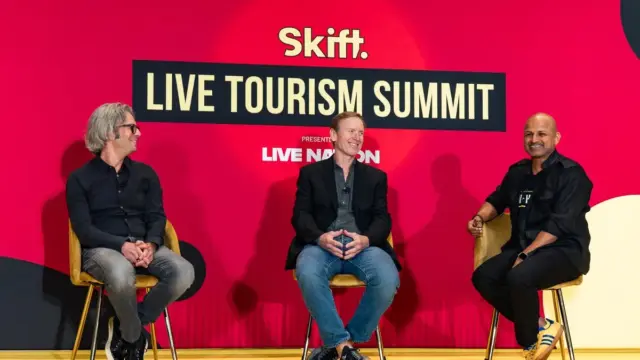
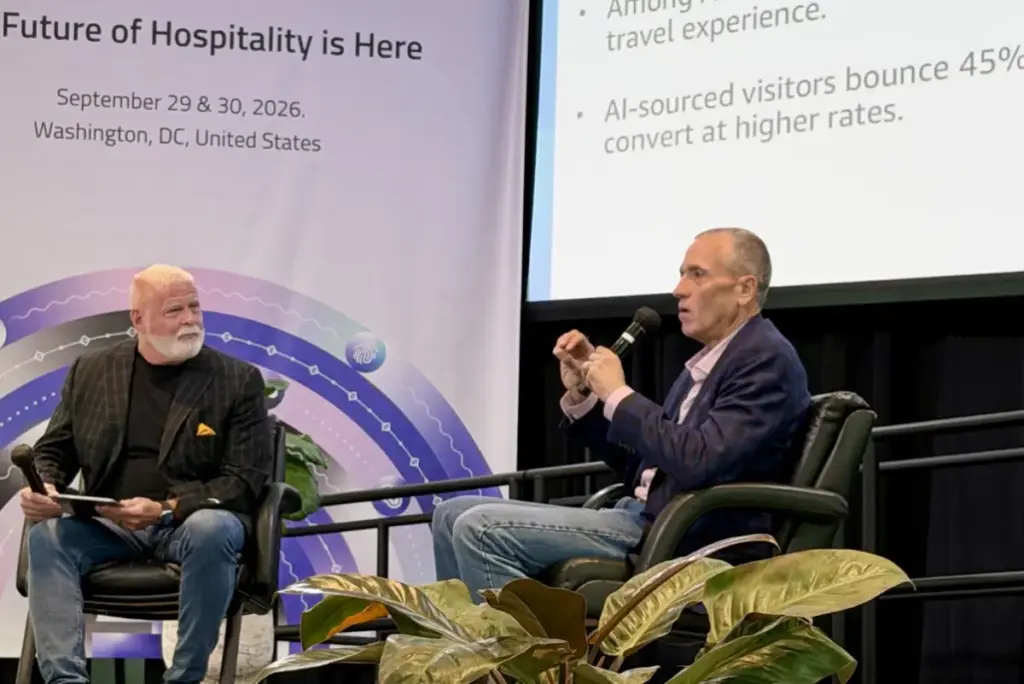
Speaking at the Destination AI summit in Washington, D.C., Michael Leidinger, Senior Vice President and Chief Information Officer at Hilton, shared a provocative outlook on the future of travel distribution. According to Leidinger, large language models (LLMs) and conversational AI assistants are fundamentally undermining the core value proposition of OTAs, exposing them to an unprecedented competitive threat.
For the first time in the digital era, the technological moats that protected third-party booking intermediaries are beginning to erode.
The Historical Moat: Why OTAs Dominated Travel Search
To understand why AI poses such a significant threat to OTAs, it is essential to examine the historical dynamics of the travel industry. The lodging market is highly fragmented. Beyond major international brands like Hilton, Marriott, and Hyatt, the global hotel inventory comprises hundreds of thousands of independent boutique properties, regional chains, and vacation rentals.
Historically, this fragmentation created a massive search friction for travelers. A consumer planning a trip to a major metropolitan area or a remote coastal town had to navigate dozens of individual hotel websites to compare prices, amenities, location, and availability.
OTAs solved this fragmentation problem. By aggregating global inventory into unified, searchable databases, they offered consumers a centralized marketplace. They spent billions of dollars on search engine marketing (SEM) and search engine optimization (SEO) to ensure that whenever a consumer searched for lodging, an OTA link appeared at the top of the search results page.
Over time, this aggregation capability transformed OTAs into powerful gatekeepers. In exchange for delivering guests, these platforms began charging hotels hefty commission fees—often ranging from 15% to 25% per booking. For major hotel chains, these fees represented a substantial erosion of operating margins and a loss of direct customer relationships, sparking a persistent industry-wide push to drive direct bookings.
Redefining Aggregation: The Shift from Grid Search to Conversational AI
During an onstage interview at the Destination AI conference, Leidinger explained that the rise of LLMs like ChatGPT has directly targeted the aggregation advantage that OTAs spent decades building.
"It really, for the first time, puts the OTAs under real threat, because in many ways they were providing those aggregated views in this highly fragmented environment and now, the LLMs have kind of, they’re providing that," Leidinger observed.
Traditional OTA platforms rely on structured databases and rigid filtering systems. A traveler must manually input their destination, dates, and select checkboxes for specific preferences—such as pet-friendly policies, fitness centers, or complimentary breakfast. The platform then outputs a standard grid of results that the user must manually scroll through and evaluate.
In contrast, generative AI introduces a semantic, natural-language search paradigm. Instead of toggling filters on a grid, a traveler can input a complex, multi-layered prompt:
"Find me a boutique-style hotel in Washington, D.C. that is within walking distance of the Smithsonian museums, has an excellent gym, allows dogs over 50 pounds, offers quiet workspaces, and fits within a $300-a-night budget. Once you find it, draft a three-day itinerary that includes highly rated local coffee shops and outdoor dining options."
An LLM can synthesize unstructured data from across the web, evaluate reviews, map locations, cross-reference hotel policies, and deliver a curated, highly personalized recommendation in seconds. By acting as an intelligent synthesizer of information, the AI assistant bypasses the traditional search-and-filter interface of the OTA, rendering the classic aggregation model increasingly obsolete.
The Rise of Agentic AI and Direct Booking Opportunities
The threat to OTAs deepens with the transition from informational AI to "agentic AI." While early iterations of chatbots could only answer questions and summarize text, agentic AI systems are designed to execute complex tasks on behalf of the user.
In a travel context, an autonomous AI agent will not only identify the ideal hotel based on a user’s complex criteria but will also be capable of executing the transaction. By utilizing APIs (Application Programming Interfaces), these AI agents can communicate directly with a hotel brand’s reservation system to check real-time rates and finalize bookings.
For Hilton, this shift represents an unprecedented opportunity to cultivate direct customer acquisition. If an AI assistant can query Hilton’s central reservation system directly to secure a room, the consumer bypasses the OTA entirely.
Leidinger noted that the emergence of LLMs and agentic AI provides "much more of an opportunity for us to engage directly" with guests, tailoring experiences and capturing loyalty from the very beginning of the travel planning journey. By establishing direct technical integrations with emerging AI platforms, hotel brands can capture high-intent traffic without paying the steep customer acquisition costs historically demanded by third-party distributors.
The Collaborative Frontier: Cloud Infrastructure and Hospitality Tech
The onstage discussion at the Destination AI summit also highlighted the collaborative efforts required to power this technological shift. Joining Leidinger on stage was Greg Land, Global Industry Leader for Hospitality at Amazon Web Services (AWS).
The presence of AWS underscores the critical role that cloud infrastructure plays in the practical application of generative AI within the hospitality sector. Processing massive volumes of real-time travel data—including room inventory, dynamic pricing, guest preferences, and localized content—requires immense computational power and secure data environments.
+-----------------------------------------------------------------+
|                      The Shifting Search Funnel                 |
+-----------------------------------------------------------------+
|                                                                 |
|   TRADITIONAL MODEL:                                            |
|   Consumer  ==>  Search Engine  ==>  OTA Grid  ==>  Hotel Booking|
|                                                                 |
|   EMERGING AI MODEL:                                            |
|   Consumer  ==>  AI Assistant   ==>  Direct API ==>  Hotel Booking|
|                  (LLM / Agent)                                  |
+-----------------------------------------------------------------+
Through partnerships with cloud providers like AWS, major hospitality brands are building proprietary AI capabilities. These systems allow hotels to clean, organize, and leverage their first-party data. By ensuring that their room availability, amenity details, and loyalty program benefits are easily accessible and interpretable by LLMs, hotel brands can ensure they remain highly visible and accurately represented in AI-generated travel itineraries.
Challenges on the Horizon: Will New Gatekeepers Emerge?
While the disruption of the OTA model offers significant optimism for hotel operators, the transition to an AI-driven search ecosystem is not without its challenges. The primary concern is whether the industry is simply trading one group of gatekeepers for another.
If consumers transition away from Expedia and Booking.com only to rely exclusively on platforms controlled by tech giants—such as OpenAI, Google, or Apple—these tech conglomerates could become the new intermediaries of travel distribution. If a single AI assistant becomes the default portal through which millions of consumers plan and book travel, those platforms will possess immense leverage.
Furthermore, ensuring data accuracy remains a persistent hurdle for generative AI. "Hallucinations"—instances where an LLM generates incorrect or outdated information—can lead to friction if an AI assistant promises a traveler an amenity, rate, or room type that a hotel does not actually offer. Establishing robust, real-time data pipelines between hotel reservation systems and LLMs is crucial to preventing customer dissatisfaction.
A New Era for Travel Distribution
Despite these potential hurdles, the sentiment shared by Hilton’s tech leadership indicates a pivotal moment in travel distribution. For years, the hospitality industry accepted the dominant role of OTAs as an expensive but necessary cost of doing business.
The democratization of artificial intelligence has disrupted that status quo. By shifting the consumer search experience from structured directory grids to natural, conversational curation, AI is leveling the playing field. As hotel brands continue to invest in cloud infrastructure, direct API integrations, and proprietary data models, the balance of power in the travel industry may finally swing back toward the brands that actually welcome the guests.