In August 2026, the United States District Court in Hawaii played host to a startling guilty plea that laid bare a persistent, high-stakes vulnerability in modern commercial aviation security. Dallas Pokornik, a 34-year-old former flight attendant, admitted to wire fraud charges after orchestrating a multi-year deception. By forging credentials and leveraging insider knowledge of aviation networks, Pokornik posed as an off-duty commercial pilot, securing hundreds of free and discounted flights across three major US airlines between January 2020 and October 2024.
The case is far from an isolated anomaly. Just eighteen months prior, a nearly identical federal case involved another individual successfully bypassing travel restrictions by masquerading as airline personnel. These consecutive breaches have forced a painful reckoning within the civil aviation sector.
At the heart of the controversy are the foundational verification frameworks that aviation professionals have long relied on for commuting and operational mobility: the Known Crewmember (KCM) program and the Cockpit Access Security System (CASS). Built upon an ethos of professional trust, operational efficiency, and mutual industry recognition, these systems prioritize speed to keep the global supply chain of flight crews moving. However, as Pokornik’s escapades demonstrate, this reliance on trust-based architecture can inadvertently create blind spots exploitable by determined fraudsters.
With Pokornik facing up to 20 years in federal prison, a $250,000 fine, and mandatory restitution, the industry is left asking critical questions. How could a forged employee ID card persist undetected across multiple carriers for half a decade? And more importantly, what structural reforms must be implemented to secure the flight deck and airport screening checkpoints against bad actors without grinding the daily commute of tens of thousands of legitimate aviation professionals to a halt?
Detailed Chronology of the Pokornik Deception
The trajectory of Dallas Pokornik’s multi-year fraud highlights systemic gaps in cross-airline communication and historical data retention. Pokornik’s familiarity with aviation protocols was not acquired through illicit observation; rather, he possessed legitimate industry credentials earlier in his career, working as a flight attendant for a Canadian carrier between 2017 and 2019.
When that employment concluded, Pokornik retained the baseline structural format of his former corporate identification. Armed with this template, he engineered a sophisticated counterfeit employee ID card. To bypass standard visual checks, he updated the expiration date to read 2027—well beyond the timeline of his active employment status.
The Five-Year Loophole
Between January 2020 and October 2024, Pokornik traversed the globe, utilizing his forged credentials to game non-revenue (non-rev) travel channels. His travels were brazenly documented and broadcast to the public. Operating under the guise of an off-duty pilot, his social media accounts regularly featured photographic and video evidence from high-profile international destinations, including:
London, United Kingdom
Los Angeles, California
Mexico City, Mexico
Phuket, Thailand
Pokornik systematically manipulated internal crew-booking software, targeting seats designated for non-revenue standby passengers and explicitly requesting access to cockpit jumpseats. While investigators note that it remains undetermined whether he successfully accessed the physical flight deck during every flight—or if he was consistently relegated to passenger cabin jumpseats—the mere possibility that an unverified individual could gain entry to a restricted aircraft cockpit highlights a catastrophic failure of physical security.
The Unravelling and Extradition
The house of cards collapsed not through an automated algorithmic alert or a centralized database flag, but through the vigilance of a frontline worker. A gate employee scrutinized Pokornik’s identification card closely, noted anomalies, and photographed the credential.
Subsequent investigations by federal authorities tracked Pokornik internationally, culminating in his arrest in Panama. He was subsequently extradited to the United States to face justice. On August 6, 2026, he formally pleaded guilty to wire fraud in a Honolulu federal court. His sentencing is scheduled for December 8, 2026, where he faces a maximum statutory penalty of 20 years imprisonment, a $250,000 fine, and court-ordered restitution to compensate the three victimized airlines for the financial value of the hundreds of unauthorized flights he consumed.
Supporting Context & Metrics: Decoding CASS, KCM, and Non-Rev Travel
To understand how Pokornik and other impostors bypassed layered aviation security, one must examine the operational mechanisms that govern crew transit in the United States.
The Mechanics of Non-Revenue Travel
"Non-rev" travel is a foundational, long-standing employment perk within the commercial airline industry. Designed to assist airline personnel with commuting to their base airports or taking personal vacations, it grants staff access to unsold seats on a space-available, standby basis.
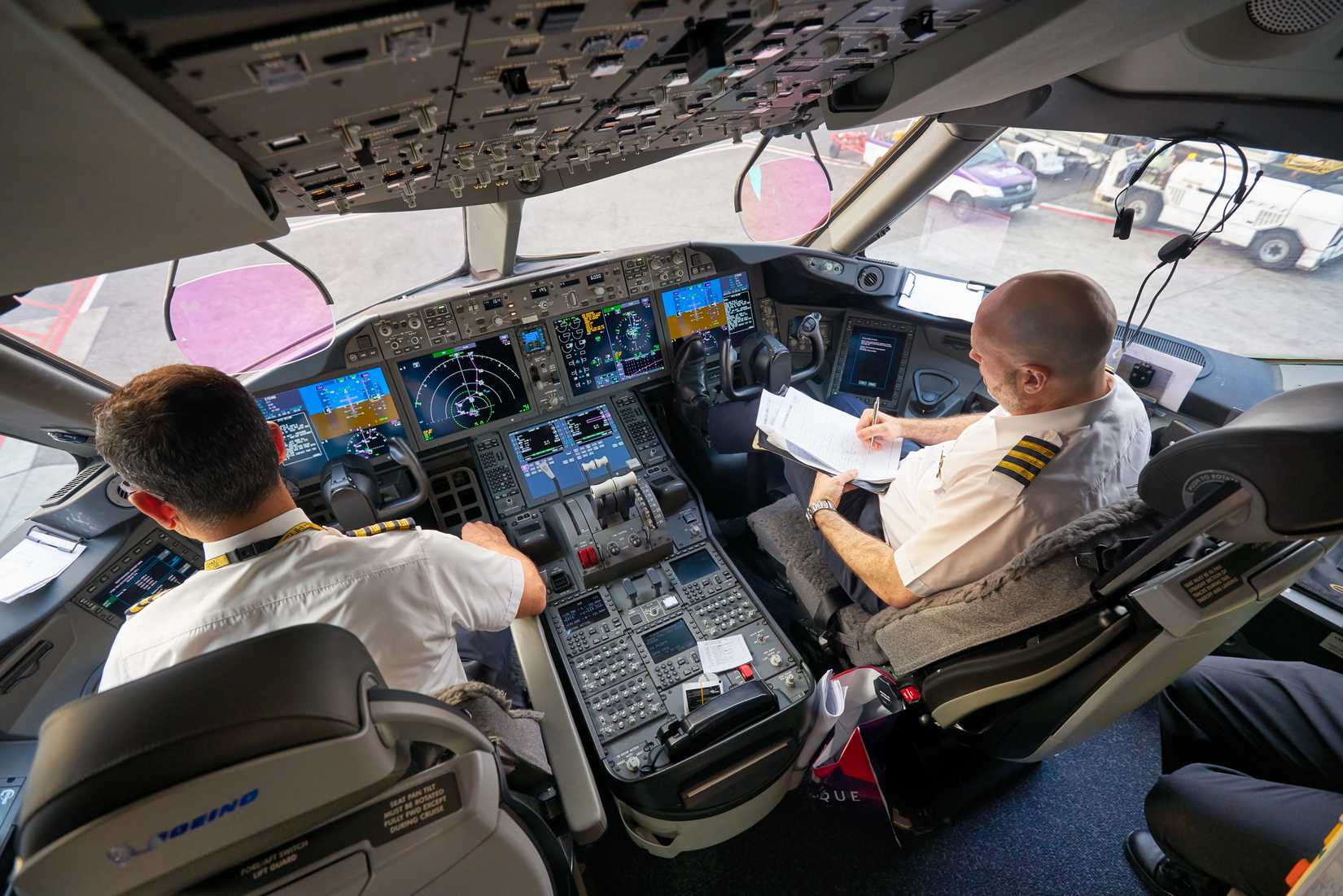
When passenger cabins are fully booked, off-duty cabin crew members may be seated on designated flight attendant jumpseats. Simultaneously, off-duty pilots are frequently accommodated via cockpit jumpseats, subject to strict interline agreements, company policies, and individual carrier approvals.
However, cockpit jumpseats are strictly regulated. They cannot be utilized for arbitrary leisure travel in the same manner as cabin seats; they require proof of professional status, active employment, and specific aviation credentials, such as a valid FAA or ICAO airman license and medical certificate. The aircraft captain retains ultimate legal authority and operational discretion to approve or deny access to the flight deck.
Known Crewmember (KCM) and CASS
The two pillars of modern crew authentication are KCM and CASS:
Known Crewmember (KCM): Launched to streamline the security screening process for airline pilots and flight attendants, KCM allows vetted crew members to bypass standard passenger queues by scanning a barcode on their KCM card at designated security lanes. This barcode cross-references a secure database containing biometric and photographic data, alongside the presentation of a government-issued photo ID and a company badge. KCM is strictly prohibited for personal leisure travel when employees are not on duty or commuting under official company parameters.
Cockpit Access Security System (CASS): CASS is a specialized, highly secure electronic database that validates the identity and employment status of a pilot requesting access to a jumpseat on an aircraft operated by an airline other than their own. Gate agents and security personnel cross-reference the pilot’s company ID and background information against CASS to confirm active employment status before authorizing transit.
Structural Vulnerabilities
Security analysts point out that systems like CASS and KCM were intentionally engineered to balance robust security with high operational efficiency. Airlines must move thousands of commuting pilots and flight attendants daily to ensure flights are adequately staffed.
Consequently, these networks operate on a foundation of mutual trust and reliance on third-party databases. If a former employee’s profile remains active in a legacy or third-party database—or if an update lag occurs between an employee’s termination and the purging of their credentials—system queries may return a "valid" status. This reliance on incomplete, delayed, or unverified data creates structural blind spots that sophisticated fraudsters can exploit.
Parallel Cases and Industry Precedents
Pokornik’s conviction is not an isolated incident. It represents a worrying pattern of identity fraud targeting aviation trust networks over the past several years.
The Tiron Alexander Case
In June 2025, a federal jury found a man named Tiron Alexander guilty of fraud and entering a secure airport under false pretenses. Between 2018 and 2024, Alexander executed a scheme nearly identical to Pokornik’s, successfully booking over 120 free flights and completing 34 journeys by posing as a flight attendant.
Alexander claimed employment across seven different commercial airlines, cycling through various forged IDs and fabricated hire dates. Like Pokornik, he utilized the specialized airline booking architecture reserved strictly for working or commuting crew members.
Smuggling Networks and Insider Threats
The abuse of crew credentials extends beyond fraudsters seeking free vacations; it has also been co-opted by transnational criminal organizations.
The JFK Drug Money Scandal: In 2024, a federal investigation exposed four flight attendants who utilized their Known Crewmember credentials to bypass routine security screening at New York’s John F. Kennedy International Airport (JFK). Over several years, they smuggled approximately $8 million in illicit drug proceeds from the United States to the Dominican Republic, weaponizing their trusted status to evade customs and security inspections.
The Aircraft Compartment Contraband Case: In 2023, an American Airlines mechanic was apprehended after smuggling a 25-pound stash of cocaine with a street value exceeding $235,000. The narcotics were hidden inside a secure compartment directly beneath the flight deck on a flight originating from JFK and bound for Montego Bay, Jamaica.
These incidents underscore a sobering reality: vulnerabilities in crew vetting do not merely result in financial losses for airlines; they present severe national security risks that can be exploited by illicit cartels and bad actors.
Official Statements and Accountability
The federal response to Pokornik’s guilty plea has been marked by a firm condemnation of security protocol manipulation.
"This individual took advantage of travel security protocols for his own benefit, and he will now face the consequences of his actions."
— CJ Ammons, Acting Special Agent in Charge, U.S. Homeland Security Investigations (HSI) Honolulu Office.
Law enforcement agencies have emphasized that the erosion of trust within aviation channels threatens the collective mobility of legitimate workers. When impostors compromise systems designed for expedience, they invite heightened regulatory oversight, increased delays, and potential rollbacks of hard-won professional perks.
Industry labor unions, including the Air Line Pilots Association (ALPA), have consistently stressed that while efficiency is vital for maintaining airline schedules, data integrity must remain paramount. The reliance on legacy databases that fail to rapidly sync termination records with interline verification platforms has placed an undue burden on gate agents and flight crews, who act as the final, often ill-equipped gatekeepers of sensitive infrastructure.
Future Outlook: Technology, Biometrics, and Regulatory Overhauls
The recurrence of high-profile identity breaches has galvanized regulatory bodies into action. Industry experts anticipate that the Transportation Security Administration (TSA) and international aviation authorities will accelerate structural reforms to eliminate reliance on static, forgeable plastic identification cards.
The Rollout of CMAP
Crucially, the aviation sector is transitioning away from older models toward more advanced technological verifications. Earlier in the month, the TSA rolled out a newly regulated program known as the Crew Member Access Point (CMAP).
Designed to completely replace the legacy KCM program, CMAP provides eligible, active airline crew members with secure, expedited access to sterile airport environments. The defining feature of CMAP is its integration of advanced facial comparison technology. Instead of relying purely on barcode scans and visual checks of plastic ID cards, CMAP cross-references a crew member’s live facial biometrics directly against federal law enforcement and customs databases, such as those maintained by Customs and Border Protection (CBP).
What This Means for the Future
Elimination of Static Counterfeits: By anchoring crew verification to live biometric data rather than physical identification cards, systems like CMAP render forged IDs obsolete. An impostor cannot replicate their facial structure to match a live database query.
Real-Time Database Synchronization: Future iterations of crew verification software are expected to feature instantaneous, bidirectional data sharing between airline human resources databases and federal security systems, ensuring that terminated employees are instantly stripped of their access privileges.
The Preservation of Non-Rev Privileges: While non-revenue travel and jumpseat access remain vital cultural and logistical pillars of the aviation community, their long-term survival depends on the industry’s ability to police itself. If systemic vulnerabilities are not aggressively patched through technological innovation, airlines and regulators may be forced to enact restrictive policy shifts that could permanently curtail employee travel freedoms.
Ultimately, the case of Dallas Pokornik serves as a cautionary tale for an industry built on clouds. As commercial aviation marches further into the digital age, the "honor system" must be reinforced with unyielding technological safeguards to ensure that the flight deck remains secure, trusted, and inviolable.