










Executive Overview
For the uninitiated, the recreational vehicle (RV) lifestyle conjures images of majestic mountain vistas, endless coastal highways, and serene campfires under the stars. However, seasoned full-time travelers understand that the reality of life on the road is equally defined by the management of essential infrastructure. Among these mechanical considerations, the RV toilet is rarely discussed in polite conversation—yet it is arguably one of the most heavily utilized components in any mobile domicile.
For nearly four years, a full-time RVing family relied on their stock, manufacturer-installed plastic toilet. Like many entry-level RV fixtures, it was functional, but inherently flawed. Plagued by slow bowl seal leaks, stubborn staining, and inadequate flushing dynamics, it represented a daily friction point in an otherwise idyllic lifestyle. The eventual transition to the Dometic 310 Gravity Flush Toilet transformed this minor nuisance into a masterclass in how targeted hardware upgrades can radically improve the quality of full-time mobile living.
Retailing typically between $250 and $350, the Dometic 310 sits comfortably in the mid-tier market segment of RV sanitation hardware. By replacing lightweight plastic with a high-gloss ceramic bowl and introducing an innovative 360-degree, 14-point rim flush pattern, this unit addresses the most common complaints leveled against stock RV systems. This comprehensive review examines the installation process, operational performance, ergonomic enhancements, minor construction drawbacks, and overall cost-to-benefit ratio of the Dometic 310 after extensive real-world testing.
Detailed Chronology: From Stock Frustrations to Ceramic Relief
The Four-Year Struggle with Stock Plastic
When purchasing a new or pre-owned RV, consumers rarely scrutinize the water closet. Manufacturers routinely install lightweight, injection-molded plastic toilets to minimize cargo-carrying weight and reduce initial production overhead. While this makes logistical sense on the assembly line, the long-term liveability of these plastic fixtures leaves much to be desired.
Over four years of continuous, full-time habitation, the baseline plastic toilet exhibited predictable structural fatigue:
- Seal Degradation: The primary rubber bowl seal began to warp and dry out, resulting in a persistent, slow trickle of water from the upper bowl down into the black water holding tank. In an RV, maintaining a standing pool of water in the bowl is critical; it acts as an airtight hydraulic barrier preventing noxious sewer gases from permeating the living quarters.
- Porosity and Staining: Plastic is inherently porous compared to ceramic or porcelain. Despite rigorous weekly scrubbing and specialized RV-safe chemical treatments, organic stains and lingering odors bonded with the microscopic imperfections of the plastic surface.
- Underpowered Flushing: The original stock unit relied on a rudimentary two- or three-stream flush mechanism. This concentrated discharge failed to provide adequate rotational velocity, leaving solid waste behind and necessitating manual intervention with a toilet brush on a frequent basis.
The Decision to Upgrade
Despite these cumulative grievances, the concept of "if it ain’t broke, don’t fix it" kept the family from acting. Because the toilet technically continued to flush and hold waste, the upgrade was continually deferred in favor of more glamorous recreational modifications—such as solar panel installations, Wi-Fi boosters, and upgraded mattresses.
However, after encountering a promotional retail discount on the Dometic 310 Gravity Flush Toilet, the decision was finalized. The installation marked a distinct turning point in their mobile living experience, proving that incremental ergonomic improvements inside a compact space yield disproportionately high returns on daily comfort.
Supporting Context & Metrics: Unboxing, Specifications, and Installation
What’s in the Box & Hardware Specifications
The Dometic 310 is engineered for streamlined, consumer-friendly deployment. The factory packaging includes all essential components required for a standard floor-mount transition:
- The primary Dometic 310 ceramic bowl and base assembly.
- A pre-installed enameled wood-composite slow-close seat and lid.
- A heavy-duty floor mounting bracket/seal kit (though installers should verify whether a new floor flange seal or wax-free ring is required based on their specific RV model).
Technical Specifications Table:
| Feature | Specification Details |
|---|---|
| Product Model | Dometic 310 Gravity Flush Toilet |
| Material Composition | 100% Vitreous Ceramic Bowl / Polypropylene Base |
| Flush System | PowerFlush Rim Jet (14 pressurized streams) |
| Seat & Lid | Enameled wood-composite with slow-close dampers |
| Mounting Type | Standard 2-bolt floor flange |
| Price Point | $250 – $350 USD (Retailer dependent) |
| Water Usage | Low-flow optimized gravity drop |
Installation: Demystifying the Swap
For novices, the prospect of plumbing a recreational vehicle’s sanitation system can evoke considerable anxiety. In practice, replacing an RV gravity-flush toilet is remarkably straightforward—frequently requiring less than 45 minutes from start to finish.
The mechanical sequence involves three primary steps:
- Isolation and Disconnection: Shut off the RV’s fresh water pump and relieve line pressure by opening a nearby faucet. Disconnect the flexible water supply line from the rear of the existing toilet base.
- Extraction: Remove the protective bolt caps at the base of the toilet, unthread the two mounting nuts using a standard wrench, and lift the entire unit straight up off the floor flange. Pro-tip: Stuff a clean rag into the open floor opening to prevent sewer gases from escaping while you clean the mounting surface.
- Re-installation: Inspect and replace the floor seal. Lower the Dometic 310 over the mounting bolts, secure the base nuts evenly (avoiding overtightening, which can crack the plastic base or ceramic foot), reconnect the water line, and test for leaks.
The simplicity of this procedure empowers even mechanically timid RVers to execute the swap independently, saving hundreds of dollars in dealership labor fees.
Operational Performance: A Better Flush and Superior Hygiene
The 14-Jet PowerFlush Advantage
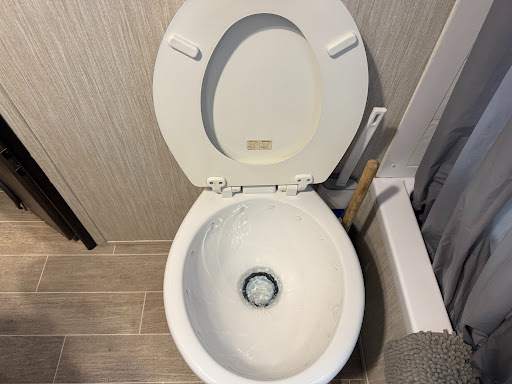
The most transformative feature of the Dometic 310 is its proprietary rim-jet flushing technology. While standard plastic toilets dump water through isolated channels that miss large sections of the basin, the Dometic 310 incorporates 14 distinct pressurized water streams encircling the upper rim.
When the foot pedal is depressed, these streams converge to create a powerful, vortex-like cleansing action that scrubs 360 degrees of the vitreous ceramic bowl. This eliminates the vast majority of residue buildup. Combined with the deep ceramic pool that reliably holds water, the unit successfully locks out black tank odors—a massive victory for anyone living full-time in a rig measuring under 35 feet.
The Maintenance Equation
Cleaning a ceramic surface is fundamentally different from maintaining injection-molded plastic. Vitreous china is ultra-smooth, non-porous, and highly resistant to chemical degradation. Consequently, routine maintenance requires significantly less elbow grease. A simple wipe-down with an RV-safe, non-abrasive cleaner restores the bowl to a pristine finish.

Furthermore, pairing this upgraded hardware with disciplined black water tank management—such as regular enzyme treatments and proper water-to-waste ratios—ensures an entirely odor-free bathroom environment. (For those looking to optimize their tank health, comprehensive guides are widely available through platforms like RVshare.)
The Ergonomics of the Slow-Close Lid
Beyond hygiene, everyday micro-interactions matter immensely in compact living spaces. The stock plastic toilet featured a flimsy, unweighted seat prone to loud, jarring slams—a particular hazard during middle-of-the-night bathroom visits or when children used the facilities.
The Dometic 310 comes equipped with a weighted, slow-close enameled seat and lid mechanism. Integrated hydraulic dampers slow the descent of both the ring and the cover, ensuring silent operation. While seemingly trivial, this feature quickly transitions from an overlooked luxury to an indispensable baseline expectation.
Critical Analysis: Minor Drawbacks and Areas for Improvement
No consumer product is without flaws. Despite its stellar performance, extended full-time testing of the Dometic 310 reveals two distinct construction quirks that prospective buyers should note.
1. The Seat Material Discrepancy
While the main body of the toilet is constructed from high-end, stain-resistant vitreous ceramic, the included seat and lid are manufactured from an enameled wood-composite material.
- The Issue: While sturdy and equipped with the wonderful slow-close feature, the enameled composite lacks the impenetrable, glass-smooth finish of the ceramic bowl. Over years of heavy use, enameled surfaces can micro-scratch, eventually becoming susceptible to moisture absorption, staining, or lingering odors around mounting points.
- The Verdict: While the seat feels durable initially, users should anticipate potentially replacing the seat assembly down the road before needing to replace the core ceramic unit.
2. The Exposed Hinge Design
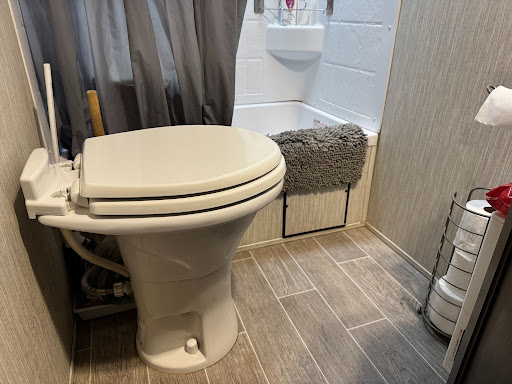
Perhaps the most notable ergonomic annoyance is the exposed plastic hinge architecture where the seat attaches to the rear of the bowl.
- The Issue: Unlike modern residential toilets that feature a sleek, snap-off plastic cover or concealed mounting bolts, the Dometic 310 leaves the hinge mechanism completely exposed. In a cramped RV bathroom—which frequently doubles as a multi-use utility space (such as housing a pet’s litter box)—airborne dust, cat litter granules, hair, and biological debris inevitably migrate into these tiny crevices.
- The Cleanup Challenge: Because the mounting hardware lacks a protective shroud, cleaning this specific area requires Q-tips or specialized brushes, turning a simple wipe-down into an awkward chore. Future iterations of Dometic’s design lineup would benefit immensely from a snap-on aesthetic hinge cover.
It must be emphasized that neither of these complaints represents a structural deal-breaker. They are minor, manageable grievances in an otherwise exceptional piece of engineering.
Future Outlook: Industry Trends and the Dometic Evolution
The RV sanitation sector continues to evolve alongside consumer demands for domestic comforts while traveling. Since the initial adoption of the Dometic 310, the manufacturer has introduced subsequent iterations, notably the Dometic 410 Series.
The newer 410 models incorporate updated styling, deeper bowls, and refined ergonomics to address historical market feedback. However, the 310 remains an industry stalwart. Because it continues to be widely distributed and heavily discounted by major retailers, it represents the absolute peak of value-per-dollar for RVers seeking to escape the tyranny of cheap plastic toilets without investing in luxury-tier electronic or macerator systems.
As off-grid camping and full-time RV living continue to surge in popularity, the standard of interior comfort inside recreational vehicles is shifting upward. Consumers are no longer willing to tolerate subpar residential substitutes just because they are mobile.
Conclusion: Is the Dometic 310 Worth the Investment?
Priced between $250 and $350, the Dometic 310 Gravity Flush Toilet represents a moderate financial commitment for an RV upgrade. Yet, when evaluated through the lens of daily frequency of use, its value proposition is undeniable.
You interact with an RV toilet multiple times every single day. In a small living environment, eliminating foul odors, ending the cycle of endless scrubbing, and introducing reliable, pressurized 360-degree flushing drastically elevates your baseline standard of living.
While whimsical upgrades like smart-home gadgets or exterior awnings certainly enhance the aesthetic of RV life, foundational improvements like the Dometic 310 quietly and reliably make life on the road considerably more civilized. For any full-time traveler or weekend warrior still enduring the frustrations of a stock plastic toilet, this upgrade is not merely recommended—it is an absolute game-changer.