





Old San Juan is an anomaly in the Caribbean. While the region is largely defined by nations emerging in the mid-to-late 20th century, Puerto Rico’s historic capital stands as a monument to five centuries of colonial ambition, architectural resilience, and cultural synthesis. By day, the city operates as a visual feast—a colorful jewel box of pastel facades, sun-drenched plazas, and hidden cafes that invite casual tourism. But the true character of Old San Juan reveals itself only after the sun dips below the horizon.
As twilight gives way to night, the city undergoes a metamorphosis. The tourist footprint softens, replaced by the steady click of footsteps on historical blue cobblestones (adoquines), the clack of dominoes on street corners, and the low hum of conversation spilling from open-air watering holes. This feature-length journalistic exploration follows a nocturnal descent through the hills and alleyways of San Juan, examining how a 500-year-old fortress city maintains an energetic, youthful pulse through continuous urban renewal, culinary innovation, and deep-rooted traditions.
Detailed Chronology: A Walk Through the Twilight Hours
Phase I: The Ascent and the San Sebastián Strip
The journey begins not at sea level, but in the historic upper elevations of the city. Opting out of a direct route to Fortaleza, a deliberate choice is made to start higher in the hills near the San Sebastián Strip.
"Take me to El Convento," the directive is given to the driver, bypassing the immediate bustle of the governor’s mansion in favor of the winding, elevated corridors that offer a downhill trajectory. In San Juan, rum—specifically local mainstays like Ron Barrilito—is always better enjoyed downhill, allowing gravity to mirror the evening’s descent.
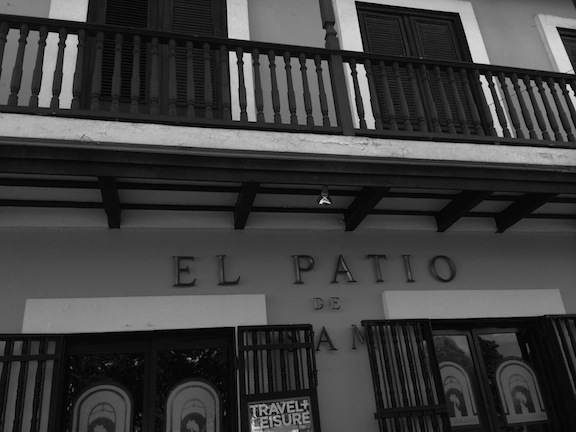
Alighting in front of Ostra Cosa on the San Sebastián Strip, the atmosphere is saturated with literary and cultural history. This corridor is home to El Patio de Sam, a legendary institution that once served as the haunt of mid-century sojourners, most famously gonzo journalist Hunter S. Thompson. While categorized primarily as a burger joint, El Patio de Sam has endured for seven decades by offering some of the city’s finest mofongo (mashed plantains with garlic and pork crackling) and chicharrones. Longevity of this scale in the Caribbean hospitality sector is rare, speaking to a consistency that grounds the neighborhood’s identity.
[ Twilight Transition ]
       │
       ├──► Upper Hills / San Sebastián Strip (El Patio de Sam, Historic Hangouts)
       ├──► Mid-City Cobblestones (Dominoes, Local Windows, Tres Leches Sales)
       └──► Flat-City Descent (Cuatro Sombras Espresso, Calle Fortaleza Nightlife)
Phase II: The Liminal Space of Early Evening
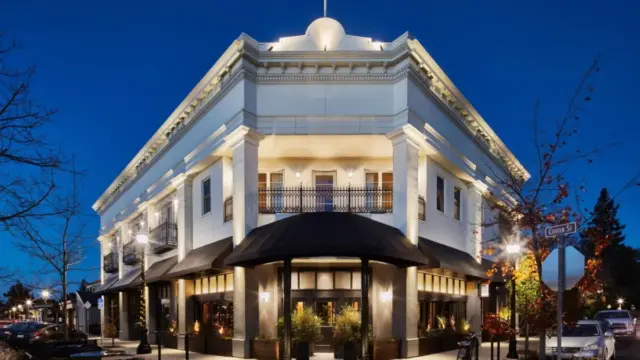
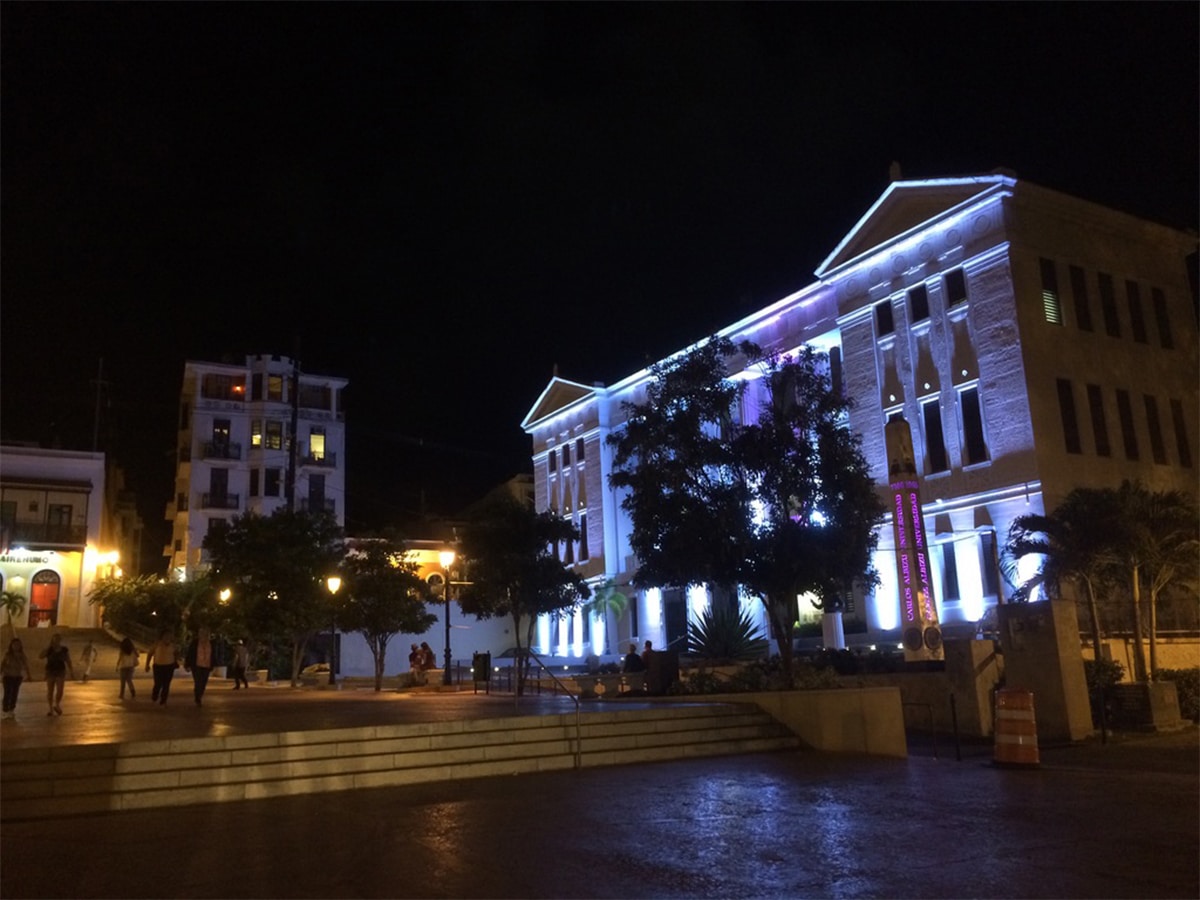
Just after twilight, San Juan enters a liminal state. The transition from day to night is audible. The sharp, bright colors of the Spanish colonial facades soften under the amber glow of street-level lamps. Footsteps echo clearly against the historic blue ballast stones, which were originally brought over as ballast in Spanish galleons.
During this quiet hour, the city’s residential heart beats visibly. Locals peer down from second-floor wrought-iron balconies, observing the slow trickle of early-evening pedestrians. In one doorway, a family opens their front door to sell homemade tres leches cake to passersby while the television flickers in the background.
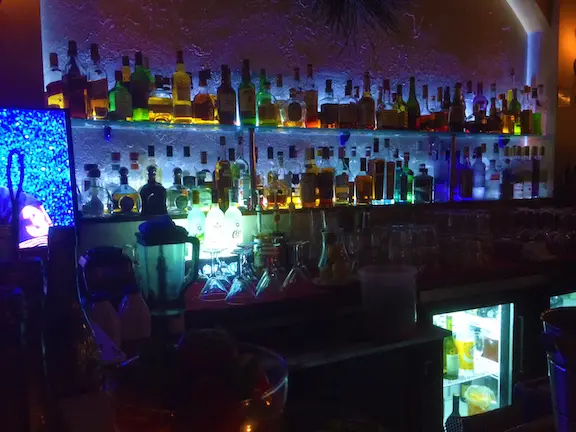
The initial stop is a modest, quiet bar off the main tourist track. Here, a pour of Ron Barrilito is ordered—a deliberate choice for anyone seeking authentic Puerto Rican rum heritage over mass-market alternatives. As patrons slowly trickle in, the city begins to hum with a metronomic regularity.
Phase III: The Metronome of Urban Renewal
What strikes the nocturnal traveler most is the juxtaposition of immense historical age and relentless contemporary energy. As the walk continues deeper into the historic grid, the evidence of adaptive reuse is everywhere. Centuries-old Spanish colonial structures—once decaying or abandoned—have been revivified.
Within a single block, a traveler might pass:
- A contemporary tapas bar utilizing imported Iberian ingredients.
- An authentic Italian osteria tucked behind heavy wooden doors.
- A traditional bakery serving fresh pastelitos.
- A high-energy contemporary Mexican cantina catering to a younger demographic.
This wave of restoration does not erase the past; it heats it up. In an ancient city, restoration and renewal generate literal and cultural heat. The pedestrians on the streets walk to an unspoken rhythm, a metropolitan heartbeat that precedes the late-night transformation into jazz clubs and salsa dens.
Phase IV: Coffee, Casablanca, and Calle Fortaleza
Descending from the upper ridges toward the flatlands near the harbor, the night requires a momentary pause for sustenance. At Cuatro Sombras, a specialty cafe located in a restored 19th-century building, high-quality Puerto Rican coffee is served. The local bean has a storied past, historically favored by European dignitaries and papal courts alike. The espresso is robust, serving as a clean reset before the second half of the night.
Re-energized, the route shifts toward Calle Fortaleza. The street narrows, flanked by historic cigar lounges where artisans roll tobacco by hand. Passing street musicians tuning their instruments, the walk leads to Rick’s Café, located downstairs at the Casablanca Hotel. With its soaring high ceilings and Moorish design motifs, the space evokes a Casablanca-esque cinematic aesthetic that feels worlds away from the Caribbean, yet entirely at home in San Juan’s eclectic architectural tapestry.
By this hour, Calle Fortaleza is congested. Sidewalks narrow as the crowds thicken. Taxis idle at intersections, signaling that San Juan is waking up for its primary shift. The journey loops back, the walker disappearing once more into the labyrinth of illuminated walls, colonial arches, and the constant, conversational rhythm of the city.
Supporting Context & Metrics: The Anatomy of San Juan
To understand Old San Juan’s nightlife and structural resilience, one must examine the demographic, architectural, and economic metrics that support its unique urban ecosystem.
Architectural Preservation and Urban Density
Old San Juan spans roughly 315 acres (0.5 square miles), completely enclosed by massive defensive fortifications constructed by the Spanish Empire starting in 1539, including Castillo San Felipe del Morro and Castillo San Cristóbal.
- Residential vs. Commercial Balance: Despite heavy tourism, approximately 8,000 to 10,000 residents live within the historic district, ensuring that the neighborhood remains a living community rather than a sterile museum.
- Historic Structures: The district contains over 400 structurally intact 16th- and 17th-century Spanish colonial buildings, representing one of the densest concentrations of colonial architecture in the Western Hemisphere.
- Economic Impact of Adaptive Reuse: Over the past two decades, municipal and private investments totaling hundreds of millions of dollars have targeted the restoration of dilapidated structures, converting former military barracks and administrative offices into boutique hotels, culinary incubators, and residential lofts.
The Culinary and Spirits Economy
Puerto Rico’s gastronomic sector has undergone a renaissance, driven by "Nuevo Boricua" cuisine—a movement that marries indigenous Taíno, Spanish, and African ingredients with modern culinary techniques.
- Rum Heritage: Puerto Rico produces over 70% of the rum consumed in the United States. Brands like Ron Barrilito (founded in 1880 at Hacienda Santa Ana) and Don Q represent centuries of artisanal distillation traditions.
- Coffee Resurgence: Once a major global exporter of coffee to the Vatican and European royal courts, Puerto Rico’s specialty coffee sector has rebounded via farm-to-cup cafes like Cuatro Sombras, supporting micro-lots grown in the island’s central mountain cordillera.
Official Statements & Expert Perspectives
Urban planners, historians, and local hospitality leaders emphasize that Old San Juan’s success lies in its organic integration of historical preservation with modern urban life.
Dr. Elena Rodriguez, Architectural Historian and Preservationist:
"Old San Juan is not a theme park; it is a living organism. The mistake many historic cities make is freezing themselves in amber. What makes San Juan unique is its metabolic rate. The buildings are five centuries old, but the interior life of these structures is constantly being rewritten by each new generation of chefs, artists, and residents."
Carlos Mendoza, General Manager of Historic Hospitality Ventures:

"When visitors walk these streets at night, they are experiencing the same spatial dimensions that Spanish soldiers, pirates, and poets walked centuries ago. However, the soundtrack has changed. It’s jazz, it’s local indie rock, it’s the clink of Barrilito glasses. The nocturnal economy is what keeps the historical shell vibrant and financially sustainable."
Mateo Alverez, Longtime San Sebastián Strip Restaurateur:
"Places like El Patio de Sam survived because they listened to the street. Hunter S. Thompson came here looking for edge and authenticity, and he found it. Today, the kids coming out of the universities are doing the same thing. They walk the walls, they sit on the benches, and they build new traditions on top of the old ones."
Future Outlook: Preserving the Pulse of the Walled City
As Old San Juan looks toward the next half-century, city planners and preservationists face complex challenges. Balancing the pressures of mass tourism, short-term vacation rentals (such as Airbnb), and climate change adaptation against the authentic cultural fabric of the city requires careful regulatory oversight.
Key Priorities for the Next Decade:
- Resilient Infrastructure: Upgrading underground utilities and drainage systems to protect historic foundations from rising sea levels and intense tropical weather events, without disrupting the historic streetscape.
- Housing Affordability: Implementing zoning protections to ensure that long-term residents and working-class families are not entirely priced out by commercialization and short-term rentals, thereby preserving the neighborhood’s authentic community feel.
- Sustainable Tourism Management: Promoting off-peak and nocturnal tourism dispersion to reduce daytime congestion at major monuments while supporting local businesses in secondary corridors like the San Sebastián Strip and Calle San Justo.
Old San Juan remains a testament to endurance. It is a city that invites exploration not through maps or guidebooks, but through the kinetic experience of walking its stones, listening to its conversations, and surrendering to its nocturnal rhythm. As long as the dominoes click on the plazas and the rum flows downhill, the old capital will continue to write its next chapter under the yellow glow of the streetlamps.