






Executive Overview
The landscape of global tourism is undergoing a profound structural shift. While group tours and multi-generational family vacations remain staples of the leisure industry, independent globe-trotting has evolved from a niche adventure subculture into a dominant force in modern mobility. Solo travel is no longer viewed merely as a compromise for those unable to coordinate schedules with peers; instead, it is increasingly recognized by behavioral psychologists, hospitality executives, and seasoned voyagers as the ultimate form of authentic cultural immersion and personal development.
Recent hospitality analytics and tourism board data indicate a staggering surge in single-occupancy bookings, with double-digit year-over-year growth across nearly every demographic category. From retired professionals embarking on their first unchaperoned international itineraries to digital nomads carving out nomadic existences across Southeast Asia and Latin America, travelers are voting with their feet.
At the heart of this movement is a realization that traveling alone unlocks a unique tier of experiences unavailable to those bound by the social dynamics of group travel. This comprehensive examination explores the distinct advantages of independent journeys—often referred to by veterans as the "upside secrets" of solo travel—and analyzes how venturing out entirely on one’s own alters not just the vacation experience, but one’s perspective on life itself.
Detailed Chronology: The Evolution of Independent Exploration
To understand the contemporary solo travel boom, one must trace its trajectory from an eccentric pursuit to a mainstream lifestyle choice.
The Pioneer Era (Pre-2000s)
Historically, traveling without companions was restricted to specific demographics: intrepid explorers driven by scientific or geographic curiosity, business travelers bound by corporate necessity, or rugged backpackers navigating well-worn paths like Europe’s classic "InterRail" circuit or the famous "Banana Pancake Trail" in Asia. Guidebooks from this era focused primarily on survival logistics, safety precautions against scams, and strategies to ward off crushing loneliness. The narrative was defined by risk management rather than personal enrichment.
The Digital Acceleration (2000s–2010s)
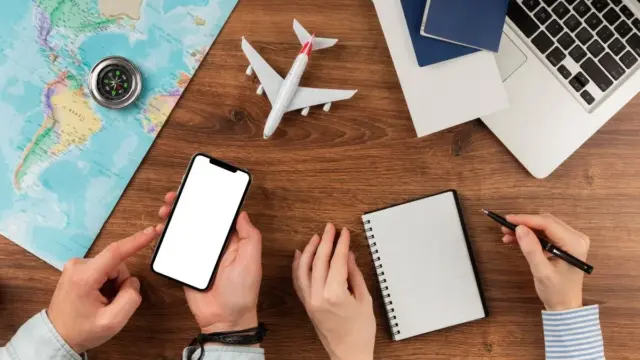
The advent of the consumer internet, budget airlines, and smartphone technology fundamentally altered the mechanics of moving through the world alone. The introduction of global mapping applications, instant translation tools, and peer-to-peer accommodation networks removed the friction that once made solo journeys intimidating. Travelers no longer needed to rely on physical paper maps or hardwired landlines to check in back home. Communities began to form online, allowing solo wanderers to share real-time tips, arrange impromptu meetups, and dismantle the isolation barrier that had deterred previous generations.
The Modern Empowerment Movement (2020s–Present)
Following the global disruptions of the early 2020s, a psychological reset occurred regarding how individuals value time, autonomy, and personal fulfillment. The post-pandemic travel rebound saw an unprecedented spike in solo bookings. Industry data shows that tour operators, boutique hotels, and cruise lines—historically notorious for penalizing solo travelers with prohibitive "single supplements"—are actively redesigning their business models to cater to the unattached voyager. Today, solo travel is celebrated not as a state of being alone, but as a deliberate choice for total sovereignty over one’s time, attention, and destiny.
Supporting Context & Metrics: The Numbers Behind the Solo Shift
The economic and social footprint of independent travel is massive. Far from being a fringe market, solo travelers represent a powerful, high-value demographic that is reshaping the travel supply chain.
- Market Growth: According to global tourism market research, the solo travel market is projected to expand at a compound annual growth rate (CAGR) of over 9% through the end of the decade, outpacing traditional group travel sectors in several key regions.
- Demographic Shifts: While young adults (Gen Z and Millennials) continue to lead in total volume, demographic tracking reveals the fastest-growing segment consists of women over the age of 50—a cohort characterized by high disposable income and a desire for experiential, transformative itineraries.
- Economic Impact: Independent travelers tend to spend more per day on localized experiences, immersive workshops, and private guides rather than standardized, all-inclusive resort packages. Because they are not splitting costs or compromising with travel partners, their discretionary spending flows directly into local economies, restaurants, and independent artisans.
- Psychological Benefits: Academic studies in environmental psychology and tourism research consistently highlight that navigating unfamiliar environments independently fosters cognitive flexibility, enhanced problem-solving skills, and a permanent boost in self-efficacy.
13 Secrets of Solo Travel: Unlocking the Ultimate Journey
Traveling alone strips away the filters, compromises, and social obligations that inevitably accompany group dynamics. Here are the core advantages—the foundational secrets—that make every solo trip exponentially more rewarding.
1. Total Autonomy Over Your Itinerary
When you travel alone, your schedule is a blank canvas. If you wish to spend an entire afternoon sitting in a quiet Parisian courtyard sketching architecture or reading a novel, you do so without guilt or negotiation. Conversely, if you want to scrap your morning plans on a whim to catch an early morning train to an unlisted mountain village, you answer only to yourself. This frictionless decision-making process eliminates the fatigue of group consensus.
2. Hyper-Receptivity to New Encounters
Human psychology dictates that we are approachable in inverse proportion to the size of our group. A pair or trio of travelers forms an insular social bubble that outsiders rarely attempt to puncture. A solo traveler, however, is naturally approachable. Whether sitting at a communal café table, waiting on a remote train platform, or joining a local walking tour, solo travelers find themselves invited into conversations, meals, and cultural moments that would never materialize if they were tethered to a companion.
3. Accelerated Self-Discovery and Resilience
Every minor crisis on the road—a missed connection, a language barrier, a sudden downpour without an umbrella—becomes an immediate test of character. When there is no travel partner to defer to or blame, you must tap into your own resourcefulness. Surviving and thriving through these micro-challenges builds a deep, unshakeable internal confidence that spills over into professional and personal life long after returning home.
4. Unfiltered Sensory Engagement
Traveling with a partner often divides our attention. We look outward at the destination, but we also look inward at our companion’s comfort, mood, and preferences. Solo travel demands total presence. Without a conversational distraction, your sensory awareness sharpens: the aroma of street food spices, the cadence of an unfamiliar language, the play of light on historic facades, and the subtle rhythms of daily life in a foreign city are absorbed with crystal-clear intensity.
5. Financial Precision and Budget Control
Managing expenses in a group can be a logistical nightmare involving endless calculations of split bills, mismatched dining preferences, and differing budget thresholds. Traveling solo grants you absolute dominion over your financial footprint. You can choose to splurge on a world-class culinary tasting menu one evening and balance it by staying in a clean, vibrant boutique hostel or eating street food the next. Your money goes precisely where you value it most.
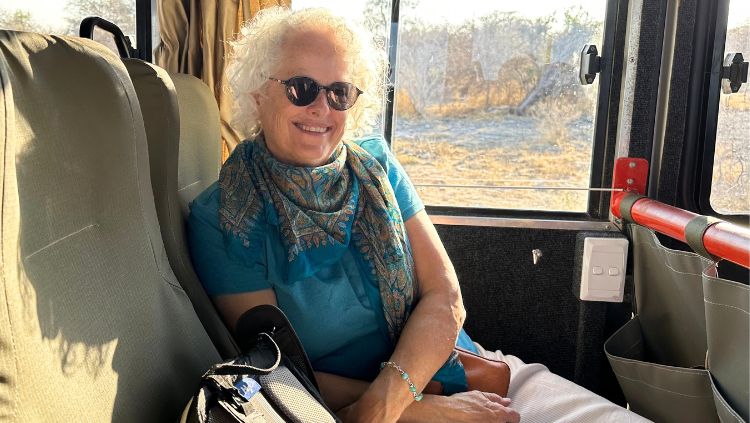
6. The Liberation of Anonymous Reinvention
One of the most liberating aspects of stepping into a destination where nobody knows your name or history is the psychological blank slate it provides. You are entirely free from the expectations, behavioral patterns, and social labels assigned to you in your daily routine. Solo travel allows you to test new facets of your personality, embrace uncharacteristic forms of bravery, and view yourself through an unbiased lens.
7. Deepened Empathy Through Cultural Immersion
Without the safety net of a familiar companion to converse with in your native tongue during moments of fatigue, you are forced to engage more deeply with locals. Even basic interactions require patience, non-verbal communication, and active listening. This heightened reliance on human connection fosters a profound, empathetic understanding of different cultures, dismantling stereotypes and building a truly global perspective.
8. Customized Rest and Recovery Management
Travel burnout is real. Jet lag, sensory overload, and relentless sightseeing can drain even the most enthusiastic adventurer. In a group setting, individuals often feel social pressure to "keep up" with the planned itinerary despite physical exhaustion. Solo travelers possess the ultimate luxury: the guilt-free permission to do absolutely nothing. A recovery day spent sleeping in, doing laundry, and journaling is viewed not as wasted time, but as an essential maintenance phase of the journey.
9. Enhanced Personal Safety and Situational Awareness
Paradoxically, solo travelers are often far safer than those traveling in groups. Why? Because group travelers tend to converse amongst themselves, look at their phones, and rely on collective security, leading to decreased situational awareness. A solo traveler must remain alert, observant, and attuned to their environment. This heightened state of mindfulness acts as a natural deterrent against common travel scams, pickpockets, and awkward situations.
10. The Power of Absolute Privacy
In our hyper-connected, open-plan modern lives, true solitude is increasingly difficult to secure. Solo travel offers uninterrupted periods of privacy. Whether gazing out the window of a trans-Siberian train, watching the sunset over a rugged coastline, or contemplating art in a quiet museum gallery, these moments of pure, unshared solitude provide a rare space for deep reflection and mental renewal.
11. Streamlined Logistics and Agility
Moving through airports, boarding trains, securing last-minute theater tickets, or finding a table for dinner for one is exponentially faster and easier than coordinating multiple people. Solo travelers can slip through the cracks of the tourism matrix with the agility of a local. If a venue is full, a solo diner can often be seated immediately at the bar or a small corner table while large parties are turned away.
12. Cultivation of Creative Inspiration
Artists, writers, thinkers, and creators throughout history have relied on solitary travel to break through creative stagnation. The disruption of daily habits, combined with the intake of novel environments, fires up neurological pathways associated with problem-solving and divergent thinking. Solo travel acts as a powerful catalyst for creative output, providing both the raw material of new experiences and the quiet time required to process them.
13. Crafting a Narrative Entirely Your Own
At the conclusion of a journey, the memories belong exclusively to you. There are no competing versions of events, no compromised compromises, and no regrets about activities you wished you had done differently. The story of your trip is an authentic, unedited reflection of your personal curiosities, instincts, and courage.
Official Statements and Industry Insights
Tourism boards and hospitality leaders are actively acknowledging the transformation in traveler behavior. In recent trade briefings, industry executives have emphasized the necessity of adapting infrastructure to suit the independent voyager.
"The modern traveler is seeking authenticity and personal sovereignty above all else," noted Elena Vance, Director of Global Hospitality Trends at an international tourism consultancy. "For years, the travel industry was built around the assumption of double-occupancy norms. Today, properties that fail to welcome solo travelers with equitable pricing, community spaces, and intuitive design are missing out on the most dynamic, engaged segment of the global market."
Furthermore, cultural analysts point out that the psychological dividends of solo travel extend far beyond the duration of the trip itself.
"When an individual successfully navigates an unfamiliar foreign environment entirely on their own terms, a permanent upgrade occurs in their self-perception," explains Dr. Marcus Thorne, a behavioral psychologist specializing in experiential learning. "They return home not just with photographs and souvenirs, but with an internal architecture of resilience that alters how they approach challenges in their professional and personal lives."
Future Outlook: Where Solo Travel Is Headed Next
As we look toward the future of global mobility, several trends indicate that solo travel will continue to expand its influence over the tourism sector:
- Technological Integration: The rise of AI-powered concierge services, hyper-localized translation apps, and secure digital identification will make independent travel even more seamless, lowering the threshold of entry for first-time solo explorers.
- Community-Driven Hospitality: Traditional hotels are pivoting toward hybrid models that combine private rooms with expansive, communal co-living and co-working spaces. These environments cater specifically to solo travelers who desire privacy to sleep, but community spaces to share meals and stories with fellow wanderers.
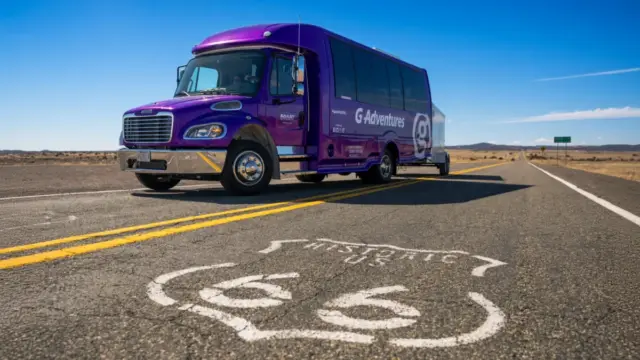
- Specialized Itineraries: Tour operators are moving away from generic group packages in favor of "solo-friendly group adventures"—trips where individuals travel independently alongside a curated cohort, combining the social safety of a group with the autonomy of solo exploration.
- Sustainable and Slow Travel: Independent travelers, unburdened by the scheduling demands of families or groups, are increasingly embracing slow travel: taking trains instead of domestic flights, staying longer in single destinations, and supporting regenerative tourism initiatives that protect local ecosystems.
Ultimately, solo travel is much more than a logistical preference or an alternative vacation style. It is an intentional act of self-reliance, a masterclass in cultural empathy, and an unforgettable journey into the most expansive territory of all: one’s own potential.