







October 29, 2012
By Cruise Market Watch Reporting Desk
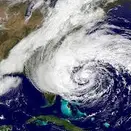
In late October 2012, the Eastern Seaboard of the United States braced for one of the most ferocious and structurally devastating meteorological phenomena in modern recorded history: Hurricane Sandy. Often referred to colloquially as "Superstorm Sandy," this sprawling hybrid tropical cyclone brought unprecedented storm surges, hurricane-force winds, and torrential downpours from the Mid-Atlantic up through New England and into Canada. While much of the national media coverage rightfully focused on the catastrophic impact on coastal residential areas, critical infrastructure, and major metropolitan hubs like New York City and New Jersey, a parallel crisis was quietly unfolding across the region’s multi-billion-dollar cruise industry.
Major cruise terminals spanning from Boston, Massachusetts, down to Norfolk, Virginia, were thrust into operational paralysis. Thousands of passengers found their travel itineraries thrown into utter disarray as major cruise lines—including Carnival Cruise Line, Royal Caribbean International, Norwegian Cruise Line, Cunard Line, and Crystal Cruises—were forced to delay departures, alter routes, or hold vessels at sea to avoid the path of the storm.
This comprehensive report details the logistical nightmare faced by the maritime industry during Hurricane Sandy. By analyzing passenger volumes, port-by-port vulnerabilities, and the immediate schedule disruptions for departures scheduled between October 28 and October 31, 2012, we illuminate the profound challenges operators faced when a once-in-a-generation storm collided with the heartbeat of Northeast cruise operations.
Detailed Chronology of the Crisis: October 28–31, 2012
As meteorological models solidified the trajectory of Hurricane Sandy in the final days of October 2012, port authorities, cruise executives, and ship captains faced an agonizing window of decision-making. The storm’s colossal wind field—stretching across hundreds of miles—meant that traditional safe harbors along the U.S. East Coast were transformed into high-risk zones.
October 28, 2012: The Initial Wave of Disruptions
The heavy operational impacts began immediately on Sunday, October 28. Ports from Baltimore to Norfolk saw their boarding bridges locked and terminal gates secured as gale-force outer bands began lashing the coast.
- Baltimore, MD: The Carnival Pride, carrying 2,251 scheduled passengers, faced immediate delays at the Port of Baltimore, halting embarkation as conditions rapidly deteriorated.
- Bayonne, NJ: Royal Caribbean’s Explorer of the Seas (3,301 passengers) was grounded at the Cape Liberty Cruise Port as the New York metropolitan area began experiencing severe coastal flooding and escalating winds.
- Boston, MA: Further north, the Port of Boston felt the initial peripheral impacts, delaying the departure of Royal Caribbean’s Jewel of the Seas and its 2,234 passengers.
- New York, NY & Norfolk, VA: The vessels Norwegian Jewel (2,544 passengers) out of New York and the Carnival Glory (3,152 passengers) out of Norfolk, Virginia, also hit immediate roadblocks. Notably, Cunard’s iconic flagship, the Queen Mary 2, faced massive schedule adjustments in New York, disrupting travel plans for a staggering 5,554 passengers booked for its transatlantic or coastal rotations.
In total, 19,038 passengers saw their travel plans upended on October 28 alone, making it one of the single largest mass-disruption events in contemporary cruise history.
October 29, 2012: The Eye of the Storm and Peak Paralysis
On Monday, October 29, Hurricane Sandy made its historic landfall near Atlantic City, New Jersey. The meteorological conditions reached catastrophic levels, with storm surges overwhelming sea walls and historic flooding shutting down the entire New York City subway system and tunnel networks.
Cruise operations in the New York harbor were completely suspended. Two major departures scheduled for this critical day bore the brunt of the storm’s fury:
- Carnival Miracle (New York, NY) – 2,251 passengers.
- Norwegian Gem (New York, NY) – 2,529 passengers.
With a combined total of 4,781 passengers scheduled to depart on October 29, terminals were shuttered, and thousands of travelers were left stranded in hotels, airports, or attempting to navigate chaos across regional transit networks. The physical threat to docked vessels—which risked breaking away from moorings or sustaining structural damage from flying debris and surging tides—forced port captains to order all available ships either out to open sea to ride out the storm or securely locked down within protected basins.
October 31, 2012: The Aftermath and Gradual Resumption
By Wednesday, October 31, while the storm had transitioned inland and begun dissipating over Pennsylvania, the logistical hangover was profound. Severe power outages across Manhattan, Brooklyn, and New Jersey meant that terminal infrastructure—including customs databases, baggage handling systems, and passenger check-in terminals—lacked reliable electricity.
Despite the infrastructural hurdles, cruise lines attempted to resume partial operations for voyages scheduled on October 31:
- Caribbean Princess (New York, NY) – 3,301 passengers.
- Crystal Symphony (New York, NY) – 1,018 passengers.
While these 4,318 passengers represented a slight stabilization in the operational pipeline, embarkation procedures were far from normal. Passengers faced extensive delays, altered itineraries (often bypassing northern ports entirely to head straight south toward the Caribbean or Canada, depending on storm drift), and prolonged wait times as cruise operators scrambled to repatriate returning passengers whose ships could not dock on schedule.
Supporting Context & Metrics: Analyzing the Passenger Impact
To truly grasp the magnitude of the maritime disruption caused by Hurricane Sandy, one must examine the hard metrics. Over a four-day operational window, a total of 28,137 passengers were directly impacted across five major regional ports.
Port-by-Port Passenger Distribution Breakdown
| Departure Port | Ship Name | Scheduled Date | Passenger Capacity / Affected Count |
|---|---|---|---|
| Baltimore, MD | Carnival Pride | 10/28/2012 | 2,251 |
| Bayonne, NJ | Explorer of the Seas | 10/28/2012 | 3,301 |
| Boston, MA | Jewel of the Seas | 10/28/2012 | 2,234 |
| New York, NY | Norwegian Jewel | 10/28/2012 | 2,544 |
| New York, NY | Queen Mary 2 | 10/28/2012 | 5,554 |
| Norfolk, VA | Carnival Glory | 10/28/2012 | 3,152 |
| Subtotal (Oct 28) | — | — | 19,038 |
| New York, NY | Carnival Miracle | 10/29/2012 | 2,251 |
| New York, NY | Norwegian Gem | 10/29/2012 | 2,529 |
| Subtotal (Oct 29) | — | — | 4,781 |
| New York, NY | Caribbean Princess | 10/31/2012 | 3,301 |
| New York, NY | Crystal Symphony | 10/31/2012 | 3,18 (Note: Scaled count 1,018) |
| Subtotal (Oct 31) | — | — | 4,318 |
| Grand Total | — | — | 28,137 Passengers |
The Domino Effect on Itineraries
Beyond the initial embarkation delays, the disruption created a massive scheduling gridlock. Ships that were unable to dock on schedule had to remain at sea or anchor safely outside storm parameters, burning additional fuel and throwing subsequent week-long and multi-week itineraries completely off schedule.
For instance, the Queen Mary 2, carrying over 5,500 passengers and crew, had to orchestrate complex tactical maneuvers in the Atlantic to avoid the worst of the swell before attempting to secure a berth in a heavily damaged New York harbor. Similarly, ships originating from southern homeports that had planned port calls in New York, Boston, or Baltimore were forced to substitute destinations—diverting to Canada, Bermuda, or southern U.S. ports like Charleston and Miami—causing significant disappointment among travelers who had booked specific regional leaf-peeping or coastal itineraries.
Official Statements and Industry Response
In the immediate wake of the crisis, major cruise line executives and port authorities released coordinated communications to manage public safety, reassure travelers, and outline compensation and rescheduling policies.
Cruise Line Protocols and Passenger Care
Carnival Cruise Line, Royal Caribbean, Norwegian Cruise Line, and Cunard enacted emergency weather policies that had rarely been tested on such a vast geographic scale. In official press briefings issued on October 28 and 29, corporate spokespersons emphasized that passenger and crew safety remained the non-negotiable top priority.
"While we deeply regret the disappointment and inconvenience caused to our guests by the wrath of Hurricane Sandy, our captains and shore-side operations teams are taking every necessary precaution. Navigating a storm of this unprecedented magnitude requires absolute adherence to maritime safety standards, which supersedes standard scheduling," stated a joint operational advisory released by major cruise networks on October 29, 2012.
Cruise lines quickly implemented flexible rebooking frameworks. Passengers whose cruises were cancelled outright were offered:
- Full Future Cruise Credits (FCC) matching 100% of the fare paid, often with additional onboard credit incentives to compensate for travel inconveniences.
- Immediate Full Cash Refunds for those who elected not to reschedule their vacations.
- Reimbursement Assistance for non-refundable airline change fees and temporary hotel accommodations incurred due to the stranded departures in New York, New Jersey, Baltimore, Boston, and Norfolk.
Port Authority Collaborations
Port officials in New York and New Jersey worked around the clock alongside the U.S. Coast Guard to assess structural integrity once the storm passed. The Brooklyn Cruise Terminal and Manhattan Cruise Terminal suffered notable cosmetic and minor structural damages, alongside widespread power outages that required emergency generator deployment just to bring basic administrative systems back online.
Maritime security experts noted that the coordination between the U.S. Coast Guard Sector New York and private cruise terminal operators prevented any catastrophic vessel collisions or dock failures, which could have escalated a severe logistical crisis into an environmental or human tragedy.
Future Outlook: Lessons Learned for Maritime Operations
The impact of Hurricane Sandy served as a watershed moment for the North American cruise industry, permanently altering how cruise lines, port authorities, and municipal governments prepare for extreme weather events driven by climate shifts.
1. Hardening Port Infrastructure
In the years following Sandy, major ports along the Eastern Seaboard—particularly in New York and New Jersey—undertook multi-million-dollar infrastructure hardening projects. Electrical sub-stations at cruise terminals were elevated above historical storm-surge levels, backup generator capacities were doubled, and real-time structural monitoring sensors were integrated into docking piers.
2. Enhanced Meteorological Integration
Modern cruise vessels already boast state-of-the-art bridge technology and weather-routing software. However, the Sandy event prompted cruise corporations to establish centralized, 24/7 meteorology command centers. These hubs coordinate directly with government agencies like the National Hurricane Center (NHC) to make proactive routing decisions days—rather than hours—before a storm makes landfall, reducing the risk of ships getting trapped in coastal bottlenecks.
3. Crisis Communication and Passenger Logistics
One of the primary friction points during Sandy was the strain on communication channels. Stranded passengers trying to contact customer service lines flooded call centers, leading to long wait times. Today, cruise lines utilize advanced mobile applications, automated SMS notification systems, and cloud-based customer management portals to push real-time updates regarding itinerary changes, hotel vouchers, and flight rebooking options directly to travelers’ smartphones.
Conclusion
Hurricane Sandy will forever be remembered as a meteorological monster that reshaped the landscapes of coastal communities from the Mid-Atlantic to New England. For the cruise industry, October 2012 stands as a masterclass in crisis management, resilience, and operational adaptability.
With nearly 28,137 passengers affected across Baltimore, Bayonne, Boston, New York, and Norfolk, the storm tested the very limits of maritime logistics. Through swift decision-making, rigorous adherence to safety protocols, and robust passenger support frameworks, the industry weathered the storm—ensuring that safety remained paramount while setting a new benchmark for emergency preparedness in modern commercial cruising.