








By Daniel Osipov
Published August 25, 2026
Executive Overview
In the complex theater of commercial aviation strategy, few historical decisions have attracted as much retrospective scrutiny as Qantas Airways’ conspicuous snub of the Boeing 777. The story of the Boeing 777’s genesis is well-trodden ground: as Boeing conceptualized its next-generation widebody to bridge the operational gap between the venerable 747 and the mid-size 767, it convened an exclusive advisory group of elite global carriers. Known colloquially as the "Werner Committee" or the "Working Together" group, this coalition of eight major airlines—All Nippon Airways, American Airlines, British Airways, Cathay Pacific, Delta Air Lines, Japan Airlines, United Airlines, and Qantas—directly shaped the aircraft’s initial cabin cross-section, systems architecture, and baseline capabilities.
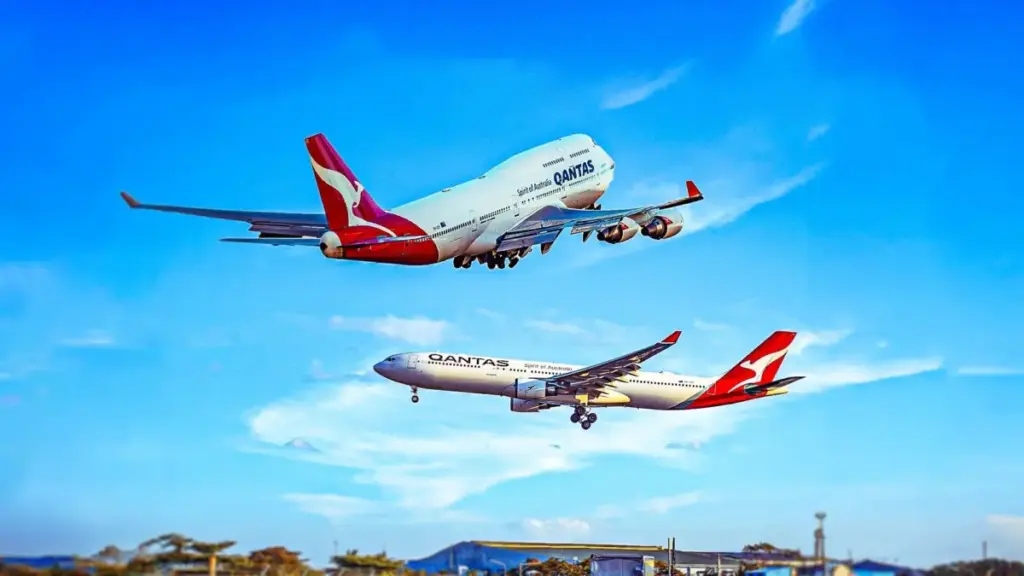
Yet, despite having a prominent seat at the design table, the Australian flag carrier never procured a single variant of the original or second-generation 777. Decades later, former Qantas CEO Alan Joyce famously remarked that a massive, multi-billion-dollar fleet acquisition made by the carrier in the year 2000—which committed the airline to the Airbus A330, the Airbus A380, and the specialized Boeing 747-400ER—was a strategic misstep, expressing a wish for "a time machine" to go back and select the Boeing 777 instead.
When viewed through a contemporary lens, Joyce’s lament appears sound. The Boeing 777-300ER went on to become one of the most prolific, reliable, and lucrative long-haul workhorses in aviation history, serving as the backbone for virtually every major international carrier. However, dismissing Qantas’s historical avoidance of the 777 as a simple blunder overlooks a complex matrix of regulatory hurdles, geopolitical factors, aggressive pricing from rival Airbus, and the unique operational constraints of flying long-haul routes from the remote Australian continent. This investigative analysis explores why Qantas bypassed the 777, the legacy of the pivotal 2000 fleet order, and how those historical choices continue to ripple through the carrier’s modern fleet strategy—including its recent rejection of the Boeing 777X in favor of the Airbus A350-1000ULR.

Detailed Chronology: The Pivot Point of 2000
To understand how Qantas arrived at its current widebody posture, one must return to the turn of the millennium. In 2000, under the leadership of then-CEO James Strong, Qantas was operating as a near-exclusive Boeing operator for its mainline jet fleet. Aside from a handful of regional turboprops and historic acquisitions, the airline’s long-haul and domestic trunk operations relied exclusively on the Boeing 737, 767, and 747.
At that juncture, however, Qantas was facing two distinct pressures:
- The Domestication of Competition: The impending collapse of rival domestic carrier Ansett Australia created a major vacuum in the local market, requiring Qantas to rapidly scale its capacity for domestic trunk routes and regional Asian sectors.
- Long-Haul Modernization: Its aging fleet of Boeing 747-300s and early-generation 747-400s needed a successor capable of sustaining high-volume, ultra-long-distance operations to major hubs in London, Los Angeles, Hong Kong, and Singapore.
Boeing offered the first-generation 777 family—specifically the 777-200 and the extended-range 777-200ER—alongside the short-to-medium-range 777-300. However, in 2000, these variants did not neatly align with Qantas’s immediate requirements. The airline’s long-haul network was built around massive passenger volumes on ultra-long trunk routes that demanded the sheer capacity of the 747, while its domestic and regional Asian networks were not yet ripe for a large-capacity twinjet.
Simultaneously, Airbus launched a two-pronged offensive. First, it dangled the Airbus A330 family—specifically the A330-300 and the long-range A330-200—at aggressive, highly competitive pricing. Second, Airbus marketed its visionary, ultra-large-aircraft concept: the A3XX, which would eventually become the Airbus A380.

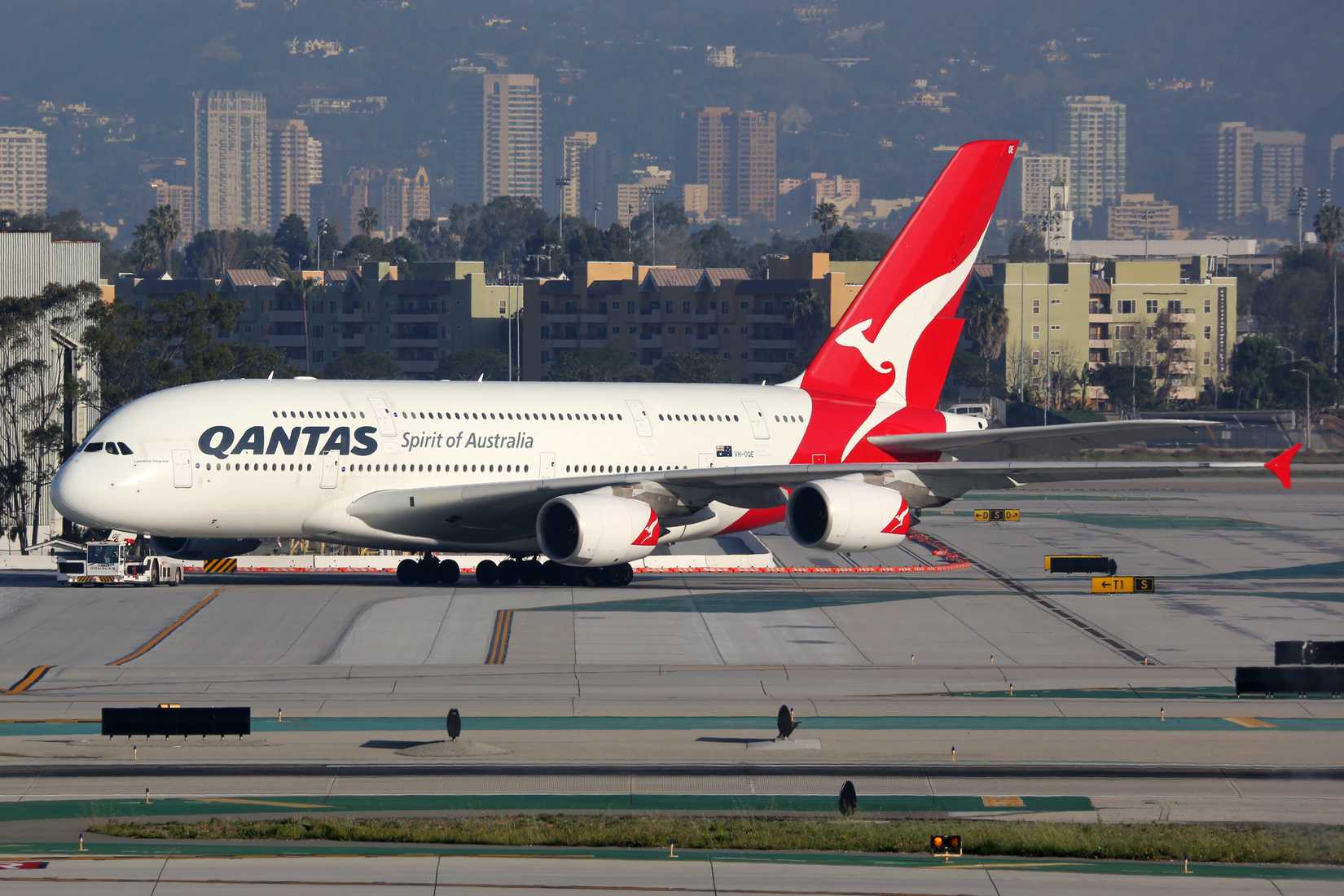
Faced with these competing proposals, Qantas finalized a landmark fleet order in 2000 for 13 Airbus A330s (split between seven -200s and six -300s), 12 Airbus A380-800s, and a unique sub-variant of the Boeing 747: six Boeing 747-400ERs. This order essentially threw a lifeline to the slowing 747 program, making Qantas the sole passenger airline operator of the -400ER variant. Yet, it dealt a massive blow to Boeing’s ambitions for the 777 in the Southern Hemisphere, locking Qantas into an Airbus-heavy widebody trajectory for decades to come.
Regulatory Realities: ETOPS and the Australian Landscape
While financial figures and aircraft catalog specs often dominate aviation retrospectives, regulatory frameworks play an equally decisive role in fleet selection. When the Boeing 777 entered commercial service in the mid-1990s, it famously debuted with FAA approval for 180-minute Extended-range Twin-engine Operational Performance Standards (ETOPS). This milestone signaled that regulatory bodies were gaining confidence in the reliability of modern high-bypass turbofan engines, allowing twinjets to operate transoceanic routes previously reserved exclusively for four-engine aircraft.
However, Australia’s Civil Aviation Safety Authority (CASA) maintained a significantly more conservative posture regarding ETOPS than its North American and European counterparts. At the turn of the millennium, CASA evaluated ETOPS approvals on a stringent, case-by-case basis. Operating under these rigid guidelines introduced substantial administrative burdens, required costly operational contingencies, and demanded exhaustive proof of mechanical reliability.
For an airline like Qantas—whose geographic isolation meant that a vast majority of its international departures involved long-overwater sectors across the Indian, Pacific, or Southern Oceans—quadrijet reliability (or the proven, heavy-lift capacity of the Boeing 747) offered a comforting operational certainty. Under CASA’s 2000-era framework, deploying a twin-engine widebody like the 777 on punishing ultra-long-haul sectors carried regulatory overhead that made quadjets or flexible multi-role fleets more attractive than they might have appeared on paper in the United States.
Furthermore, when the game-changing second-generation 777 variants—the ultra-long-range 777-200LR and the passenger powerhouse 777-300ER—finally materialized, their true economic potential was unproven. The 777-300ER, in particular, did not merely meet its initial engineering projections; it exceeded them. Powered by the monstrous General Electric GE90-115B engine, the 777-300ER achieved fuel-burn efficiencies and operating economics that surprised even Boeing. By the time the industry recognized the 777-300ER as an undisputed masterclass in widebody design, Qantas was already deeply embedded in the Airbus ecosystem with its A330 and A380 fleets.
Supporting Context & Fleet Metrics
To understand the operational trade-offs Qantas made, it is helpful to examine the global market performance and structural characteristics of the aircraft types in question. Below is a breakdown of cumulative commercial orders for the primary widebody variants of that era:
| Aircraft Family & Variant | Total Commercial Orders | Primary Market Niche |
|---|---|---|
| Boeing 777-300ER | 833 | Long-haul high-capacity flagship; global industry standard |
| Airbus A330-300 | 776 | Medium-to-long-range regional and trunk route efficiency |
| Airbus A330-200 | 667 | Long-range, smaller-capacity regional and secondary long-haul |
| Boeing 777-200ER | 422 | True long-range intercontinental twinjet |
| Boeing 777-200 | 88 | Early-generation regional/medium-range widebody |
| Boeing 777-200LR | 61 | Ultra-long-range point-to-point specialist |
| Boeing 777-300 | 60 | High-capacity short-to-medium range stretch |
Data compiled from historical manufacturer order books and industry analyses.
The A330 vs. 777-200ER Calculus
Critics of Qantas’s 2000 decision frequently argue that the airline should have taken the 777-200ER or 777-300ER instead of the Airbus A330. While a 777-200ER provided greater intercontinental range than an A330-300, the Airbus twinjet proved exceptionally fuel-efficient for regional Asian and domestic trunk operations. Over successive iterations, Airbus systematically extended the range capabilities of the A330 family, gradually closing the operational gap and eroding the market viability of early-generation medium-size twinjets like the standard 777-200.
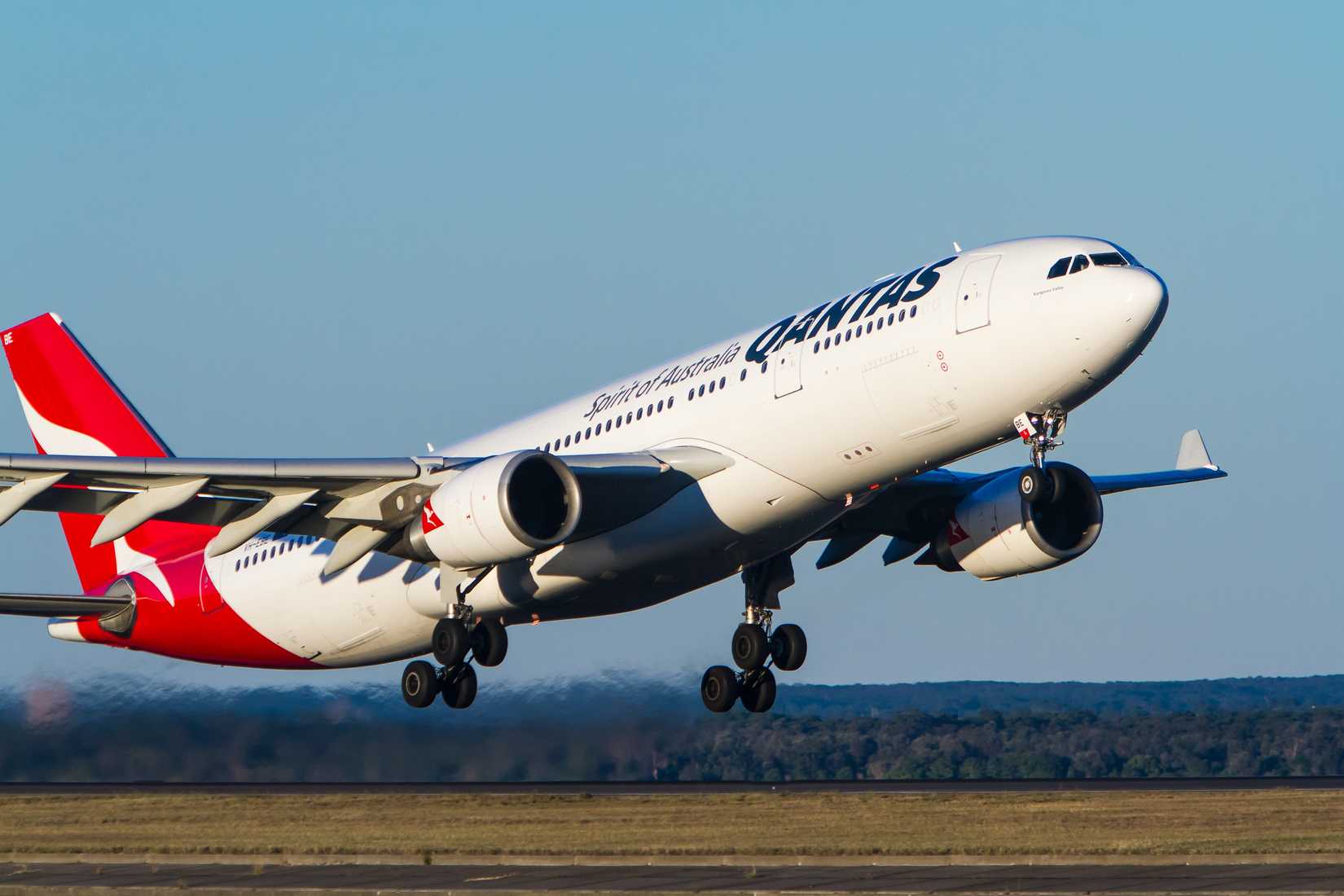
For Qantas, the A330 proved to be a versatile asset. The carrier deployed the type extensively across domestic transcontinental routes (such as Sydney to Perth) and high-density Asian corridors, eventually topping up its A330 orders in later years as older Boeing 767s were phased out.
Official Statements and Executive Reflections
The debate surrounding Qantas’s historic fleet choices was thrust back into the spotlight during interviews given by former CEO Alan Joyce. Having steered the airline through an era of profound transformation from 2008 to 2023, Joyce was never shy about evaluating the legacy decisions of his predecessors.
Reflecting on the 2000 acquisition, Joyce candidly noted that committing to the Airbus A380 and the niche Boeing 747-400ER—while leaving the 777 entirely out of the equation—was a decision he viewed with considerable reservation. While Joyce frequently voiced public skepticism regarding the long-term unit economics of the A380 in a post-deregulation, point-to-point aviation market, his perspective was colored by hindsight.
In 2000, James Strong and his executive team were navigating an entirely different economic climate characterized by high passenger volumes channeled through major hub airports. The A380 was widely perceived by many major international carriers (including Singapore Airlines, Emirates, and British Airways) as the definitive answer to slot-constrained global mega-hubs like London Heathrow. Blaming Qantas leadership for purchasing the A380 ignores the prevailing industry consensus of the era, just as lamenting the absence of the 777 ignores the reality that the 777-300ER was essentially a drawing-board concept when the fateful 2000 contracts were signed.
Future Outlook: Project Sunrise and Shutting the Door on the 777X
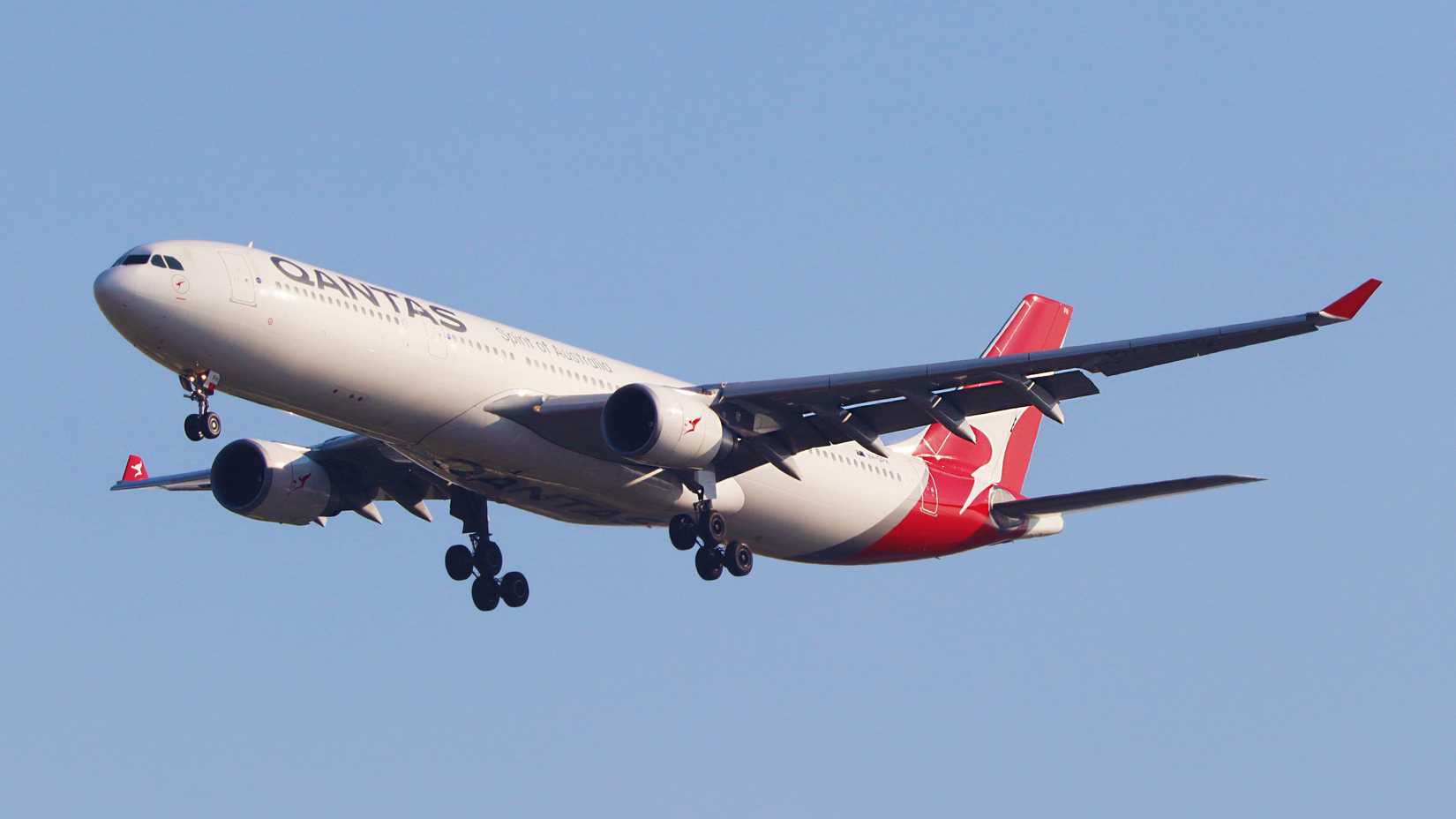
The historical ghost of the 2000 fleet decision reappeared decades later during the planning of Project Sunrise—Qantas’s ambitious initiative to connect Sydney and Melbourne directly to London and New York with non-stop flights.
| Origin | Destination | Great Circle Distance (NM) | Great Circle Distance (km) | Airline | Selected Aircraft |
|---|---|---|---|---|---|
| Sydney | London Heathrow | 9,188 NM | 17,016 km | Qantas | Airbus A350-1000ULR |
| Melbourne | London Heathrow | 9,127 NM | 16,904 km | Qantas | Airbus A350-1000ULR |
| Melbourne | New York JFK | 9,015 NM | 16,695 km | Qantas | Airbus A350-1000ULR |
| Sydney | New York JFK | 8,646 NM | 16,013 km | Qantas | Airbus A350-1000ULR |
| Singapore | New York JFK | 8,288 NM | 15,349 km | Singapore Airlines | Airbus A350-900ULR |
When Qantas formally launched the competition for Project Sunrise, it pitted Boeing and Airbus in a fierce battle. Boeing offered its next-generation flagship, the 777X, while Airbus put forward a specialized, ultra-long-range variant of the A350-1000.
Ultimately, in 2022, Qantas slammed the door on Boeing’s widebody family once again, placing a firm order for 12 extended-range A350-1000ULR aircraft, complemented by orders for standard A350-1000s and narrowbody A321XLRs. Had Qantas selected the Boeing 777 back in 2000, fleet commonality and pilot familiarity would likely have given Boeing an overwhelming advantage in the Project Sunrise evaluation. Instead, Airbus’s aggressive positioning two decades prior laid the groundwork for an enduring partnership that ultimately secured Qantas’s ultimate flagship program.
Conclusion
Looking back at Qantas’s historical avoidance of the Boeing 777 reveals a nuanced narrative far removed from a simple corporate blunder. While Alan Joyce’s wish for a time machine highlights the extraordinary success of the 777-300ER, James Strong’s decisions in 2000 were rational responses to a distinct set of economic pressures, regulatory constraints, and aggressive manufacturer pricing.

By steering toward the A330, the A380, and the 747-400ER, Qantas charted a unique path that supported its network through decades of shifting international dynamics. Yet, the enduring legacy of that fork in the road is clear: by choosing Airbus over Boeing at the turn of the millennium, Qantas cemented a relationship that ultimately guided its evolution into the modern era—leaving the Boeing 777 as one of the most notable and consequential non-purchases in commercial aviation history.