The landscape of personal aerial photography and broadcast-grade videography has reached a pivotal juncture. For over a decade, consumer and professional drone ecosystems have relied almost exclusively on forward-facing, single-lens cameras mounted on physical multi-axis mechanical gimbals. While effective, this architecture imposes significant cognitive load on pilots, who must simultaneously navigate airspace and execute precise camera framing.
The market release of the Antigravity A1 in late 2025 has fundamentally challenged this paradigm. By integrating a dual-lens, 360-degree optical payload onto a sub-250-gram airframe, the platform introduces a "fly now, frame later" operational methodology. Rather than requiring active camera maneuvering during flight, the A1 captures an entire spherical field of view simultaneously, delegating framing decisions entirely to post-production.
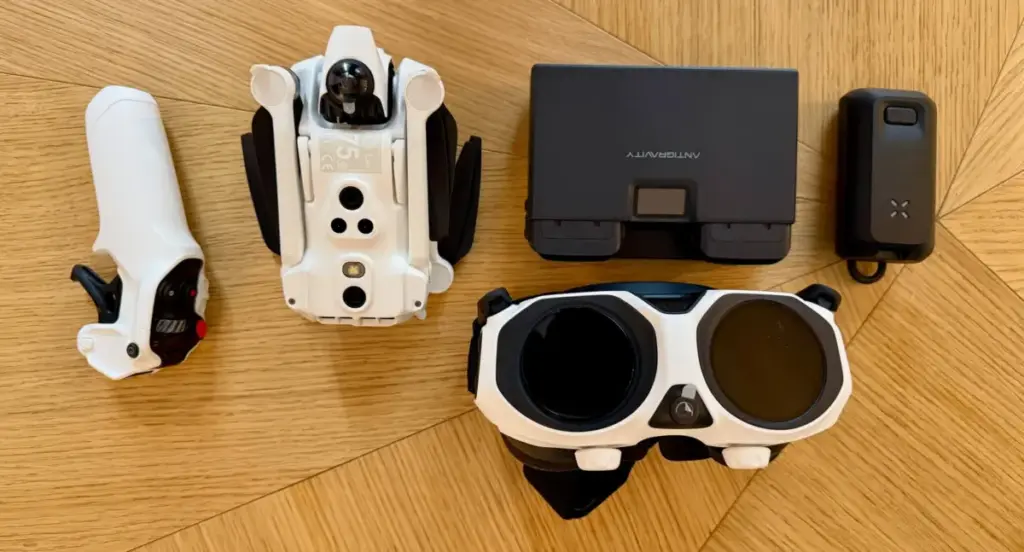
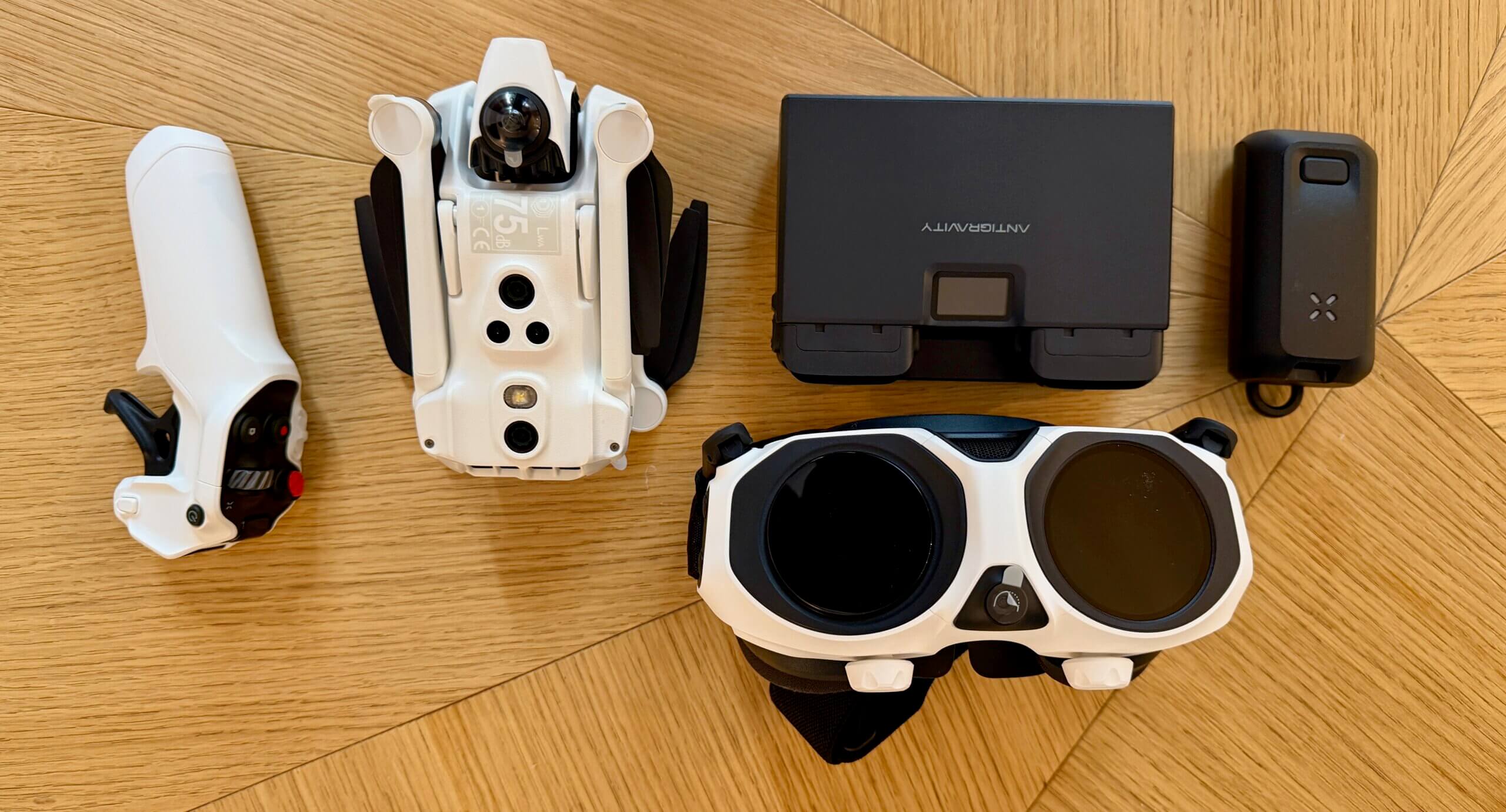
Equipped with dual 1/1.28-inch CMOS sensors, ultra-low-latency vision goggles featuring head-tracking telemetry, and an intuitive single-handed motion controller, the Antigravity A1 bridges the gap between traditional cinematic drones and immersive first-person view (FPV) platforms. Furthermore, by maintaining a launch weight of 249 grams with its standard battery, the aircraft circumvents the stringent registration requirements mandated by global aviation authorities like the Federal Aviation Administration (FAA) and the European Union Aviation Safety Agency (EASA), positioning itself as a disruptive asset for travel journalists, broadcast professionals, and independent content creators.
Detailed Chronology
+-----------------------------------------------------------------------------------+
|                            EVOLUTION OF AERIAL IMAGING                            |
+-----------------------------------------------------------------------------------+
|  2015–2023: Mechanical Gimbal Era                                                 |
|  • Single-lens optical systems mounted on 3-axis gimbals.                         |
|  • Pilot must balance flight path safety with precise manual camera pointing.      |
|                                                                                   |
|  Late 2025: Introduction of the Antigravity A1                                    |
|  • Launch of sub-250g 360-degree dual-lens drone architecture.                    |
|  • Transition to software-defined camera movement and real-time head tracking.     |
|                                                                                   |
|  Present: Real-World Integration & Field Adoption                                 |
|  • Widespread deployment among travel creators, documentary filmmakers, and FPV. |
|  • Pro battery options expand flight duration to 39 minutes for heavy workflows.  |
+-----------------------------------------------------------------------------------+
Phase 1: The Single-Lens Constraint (2015–2023)
For nearly ten years, consumer aerial platforms evolved along an incremental trajectory focused primarily on sensor size, obstacle avoidance, and battery efficiency. However, the foundational filming technique remained fixed: a single camera lens pointing in a direction predetermined by the pilot or an automated flight track. Missed angles, dynamic subject tracking errors, and horizon tilts caused by wind correction remained structural challenges inherent to fixed-field-of-view drones.
Phase 2: The Breakthrough and Launch (Late 2025)
In response to growing demand for versatile, lightweight capture tools, Antigravity unveiled the A1 in late 2025. The engineering goal was to miniaturize high-bitrate 360-degree capture hardware to fit within the 249-gram legal ceiling while guaranteeing thermal stability and aerodynamic efficiency. By utilizing dual ultra-wide optical assemblies coupled with advanced real-time dynamic stitching software, the developer successfully rendered traditional gimbals unnecessary for a broad cross-section of cinematic applications.
Phase 3: Field Adoption and Market Validation (Present)
Following its commercial release, the platform underwent rigorous real-world field evaluations by travel photographers, expedition journalists, and digital media agencies. Early operational reports confirmed that despite the lower optical resolution per cropped frame compared to dedicated professional cinema drones, the operational throughput—defined as usable footage angles captured per flight minute—increased dramatically. The ability to extract multiple camera perspectives from a single flight path has fundamentally altered production timelines for solo operators working in high-tempo environments.
Technical Deep Dive: Architecture, Metrics, and System Performance
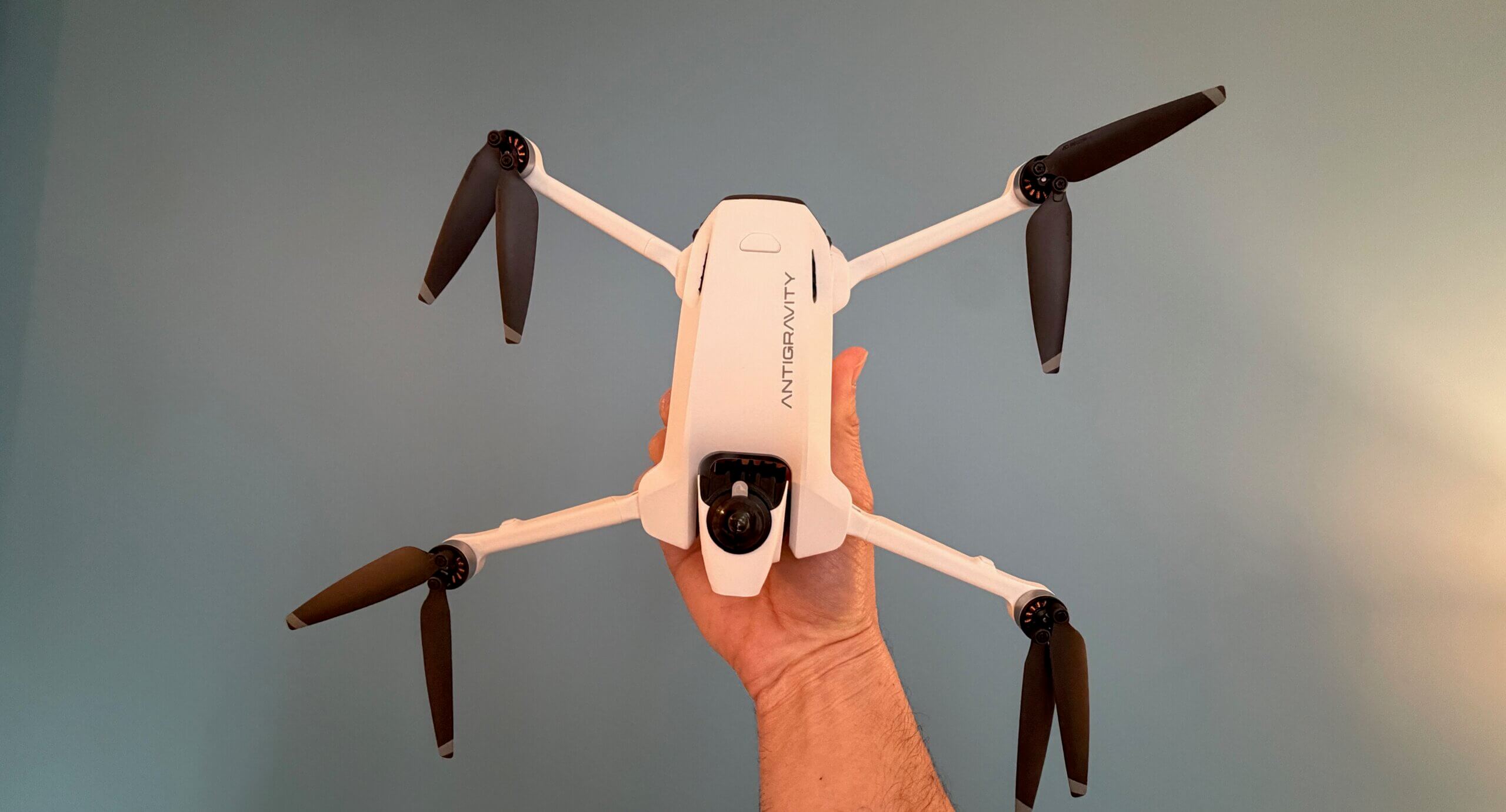
At the core of the Antigravity A1 are two back-to-back ultra-wide-angle lenses mounted on the top and bottom surfaces of the central fuselage. Each lens features a 200-degree field of view (FOV).
When processed through the onboard image processing engine, the overlapping optics generate a seamless 360-degree spherical image. An algorithmic stitching process mathematically erases the narrow profile of the fuselage from the final video, creating the visual effect of an invisible, floating camera body.
Dynamic Range & Low Light: By utilizing sensors considerably larger than those found in traditional action cameras, the A1 maintains lower noise floors and higher dynamic range, retaining shadow detail and highlight control under harsh sunlight.
Color Science & Output: The platform supports both a broad-gamut "Vivid" profile for immediate deployment and a 10-bit Log profile tailored for precise color grading in professional post-production workflows.
Resolution Dynamics: While advertised at 8K total spherical resolution, users must note that reframing the 360-degree canvas into a standard 16:9 aspect ratio yields an effective cropped output resolution roughly equivalent to crisp 1080p or upscaled 4K, depending on the chosen focal length and crop factor.
Structural Engineering and Regulatory Strategy
Aviation regulatory frameworks across North America, Europe, and Asia establish a strict 250-gram operational boundary. Aircraft weighing 250 grams or more face strict oversight, mandatory remote ID telemetry, pilot registration, and restricted flight zones near urban infrastructure.
Mass Management: The Antigravity A1 achieves a gross takeoff weight of exactly 249 grams when equipped with its standard Intelligent Flight Battery.
Materials Science: The frame utilizes a high-grade carbon-fiber-reinforced polymer, delivering a superior strength-to-weight ratio compared to traditional acrylonitrile butadiene styrene (ABS) plastics.
Form Factor: The folding airframe reduces to dimensions comparable to a standard smartphone (with roughly triple the thickness), optimizing it for transport in compact field kits.
+-----------------------------------------------------------------------------------+
|                        WEIGHT & REGULATORY METRICS SUMMARY                        |
+-----------------------------------------------------------------------------------+
|  Configuration            | Weight   | Max Flight Time | Regulatory Status        |
+---------------------------+----------+-----------------+--------------------------+
| Standard Battery          | 249g     | 24 mins (spec)  | Unregistered / Recreat.  |
|                           |          | ~19–20m (real)  | Exempt from Part 107 ID  |
+---------------------------+----------+-----------------+--------------------------+
| Pro Extended Battery      | >250g    | 39 mins (spec)  | Registration Required    |
|                           |          | ~32–34m (real)  | Subject to Category Rules|
+---------------------------+----------+-----------------+--------------------------+
Telemetry, Control Interfaces, and Pilot Experience
The pilot interaction suite shifts away from conventional smart controllers featuring built-in flat screens, moving instead toward an immersive human-machine interface.
Vision Goggles: The platform utilizes head-mounted display goggles outfitted with dual 4K micro-OLED screens running at a 120Hz refresh rate. Near-zero latency transmission protocols allow real-time video feeds. Integrated gyroscopic head-tracking aligns the flight feed directly with the pilot’s natural head movements: looking left pans the virtual display left; looking down reveals the terrain below the aircraft.
Motion Controller: Primary flight input is managed via a ergonomic, single-handed motion controller. Directional heading is guided by pointing the controller in space, with acceleration modulated by a progressive trigger assembly. Wrist roll controls banking dynamics, while pitching the hand upward initiates altitude climbs. For legacy FPV operators, the aircraft retains optional compatibility with traditional dual-stick "Mode 2" radio transmitters.
Flight Dynamics and Safety: Built on a "Cinewhoop" ducted propeller configuration, the A1 prioritizes flight stability and collision tolerance over hyper-aggressive acrobatic speeds. The aircraft achieves a top forward speed of approximately 36 mph (58 km/h). In the event of an inverted ground impact, an automated "Turtle Mode" sequence reverses motor polarities to flip the airframe upright for immediate relaunch without physical recovery.
+-----------------------------------------------------------------------------------+
|                     HARDWARE & FLIGHT SPECIFICATION SUMMARY                       |
+-----------------------------------------------------------------------------------+
|  Feature                          | Specification                                 |
+-----------------------------------+-----------------------------------------------+
| Sensor Array                      | Dual 1/1.28-inch CMOS                         |
| Lens Optics                       | Dual 200° Ultra-Wide Spherical                |
| Max Airspeed                      | 36 mph / 58 km/h                              |
| Operating Wind Resistance         | Up to 20 mph sustained                        |
| Digital Stabilization             | FlowState Horizon-Lock Algorithms             |
| Display Panel (Goggles)           | Dual 4K Micro-OLED @ 120Hz                    |
| Data Transfer Speed               | Up to 80 MB/s (Wi-Fi 6 Wireless)              |
+-----------------------------------+-----------------------------------------------+
Algorithmic Stabilization and Post-Production
Hardware stability is complemented by advanced post-processing software. The proprietary "FlowState" stabilization pipeline processes high-rate IMU (Inertial Measurement Unit) telemetry alongside image data, ensuring steady horizon stabilization even during flight through sustained 20 mph wind turbulence.
The accompanying Antigravity Studio suite (available across mobile and desktop platforms) manages wireless offloading at transmission speeds up to 80 MB/s. Key reframing methodologies include:
Manual Gyroscope Reframing: Users tilt and rotate their smartphone to physically "re-film" the 360-degree recording, capturing natural panning motion curves.
AI Auto-Framing: Computer vision algorithms automatically detect human subjects, vehicles, and key architectural elements, generating continuous tracking shots without manual keyframing.
Official Statements and Industry Reactions
Industry analysts, flight engineers, and media production experts have shared operational evaluations of the Antigravity A1 platform.
Chief Systems Engineer, Antigravity Tech: "Our primary structural goal with the A1 was eliminating the mechanical point of failure inherent in three-axis gimbals while remaining below the 250-gram regulatory threshold. By replacing complex mechanical stabilization with spatial optics and computational physics, we have engineered an airframe that is more resilient, significantly more versatile, and legally accessible to creators worldwide."
Lead Video Director, Global Travel Media Consortium: "From a broadcast logistics perspective, the operational efficiency of 360 capture in a lightweight drone cannot be overstated. On single-camera travel shoots, we previously had to perform three to four distinct flights to capture wide, tracking, and reverse-angle reveal shots. With the A1, we execute a single flight line, knowing every possible angle is recorded simultaneously in the 8K sphere. It cuts our field recording time in half."
Aviation Policy & Regulatory Consultant: "The engineering decision to keep the base aircraft weight at 249 grams is a masterclass in navigating current aviation policy. By avoiding mandatory registration and remote ID protocols in standard recreational configurations, Antigravity lowers the barrier to entry while keeping safety high through ducted propellers and automated spatial orientation systems."
Future Outlook
The entry of the Antigravity A1 into the global drone market marks a turning point in spatial capture technology, signaling a broader migration toward software-defined aerial photography.
+-----------------------------------------------------------------------------------+
|                            FUTURE INDUSTRY TRAJECTORY                             |
+-----------------------------------------------------------------------------------+
|  Short-Term Trends (1–2 Years)                                                    |
|  • Rapid adoption by newsrooms, solo travel journalists, and real estate.         |
|  • Widespread replacement of low-end mechanical gimbal drones.                    |
|                                                                                   |
|  Mid-Term Advances (3–5 Years)                                                    |
|  • Larger sensor integration (1-inch class) within sub-250g constraints.          |
|  • Real-time spatial streaming directly to Virtual & Mixed Reality headsets.      |
|  • Autonomous AI flight paths generated automatically via 360-degree spatial maps. |
+-----------------------------------------------------------------------------------+
Expanding Spatial Computing Workflows
As spatial computing headsets gain traction in consumer and enterprise markets, 360-degree spherical content captured by drones like the A1 is well-positioned for immersive playback. Future software iterations are expected to support live spatial streaming, allowing users on the ground to experience real-time 3D flight via VR/AR hardware.
Challenges and Engineering Next Steps
Despite its strengths, the platform faces physical constraints that will shape future research and development:
Lens Exposure: Due to their convex, ultra-wide geometry, the front and rear lens elements protrude beyond the central airframe, making them vulnerable to scratches during rough landings or collisions. Improved hydrophobic, scratch-resistant sapphire glass coatings represent a primary area for future hardware revisions.
Resolution Scaling: To deliver true, uncropped 4K output per reframed angle, baseline spherical capture resolutions will need to scale from 8K to 11K or 12K. Achieving this without exceeding thermal limits or increasing payload weight above 250 grams will require next-generation image processing units and advanced battery energy densities.
Final Conclusion
The Antigravity A1 redefines the intersection of aerodynamics, optical physics, and post-production workflows. By abstracting camera framing away from pilot navigation, it liberates creators from traditional flight constraints. As software-defined capture continues to evolve, omnidirectional platforms like the A1 are poised to render fixed-camera aerial vehicles obsolete for a wide array of creative and commercial applications.