




Executive Overview
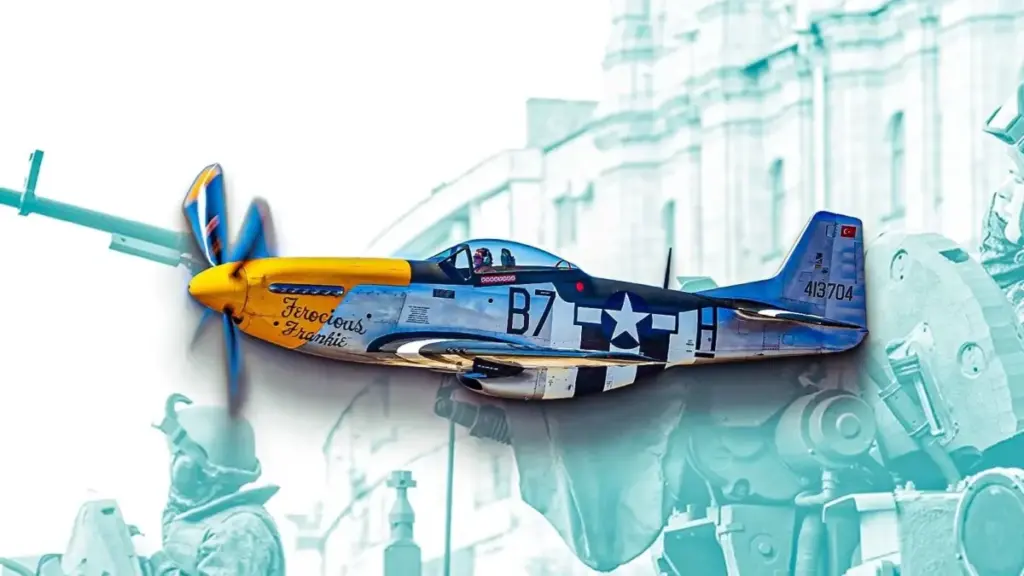
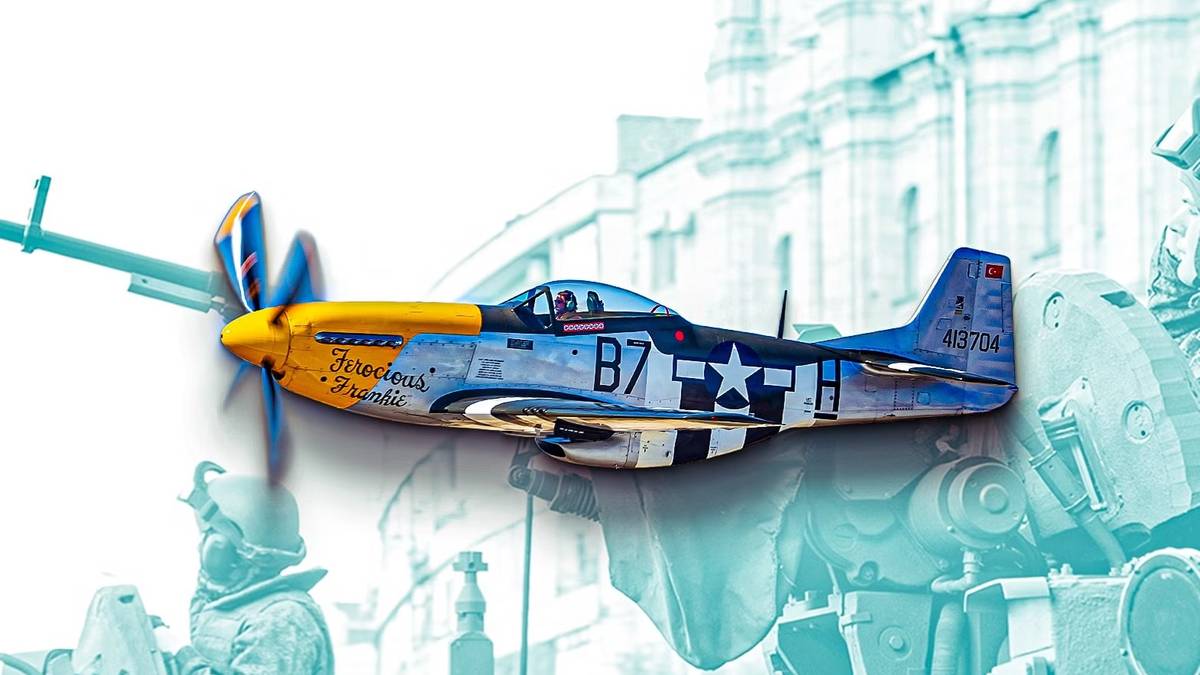
The North American P-51 Mustang is widely regarded as one of the most iconic, aesthetically striking, and historically transformative military aircraft ever constructed. While its initial conception did not point toward immediate, resounding greatness, its ultimate evolution during the latter years of World War II altered the trajectory of the European air war.
It is no historical hyperbole to assert that the P-51 is directly responsible for securing Allied air supremacy over Axis forces. Before the Mustang’s arrival in sufficient numbers, the US Army Air Forces (USAAF) 8th Air Force faced catastrophic combat attrition, losing heavy bombers over Germany at rates that outpaced industrial replacement capacities and crew training pipelines. Long-range escort fighters capable of making the punishing round trip from Allied airfields deep into hostile airspace simply did not exist.
By 1945, however, the balance of power had experienced a profound, irreversible inversion. The once-feared Luftwaffe had been hollowed out, reduced to desperate measures against an unyielding adversary. Although the P-51D variant remains etched in popular memory as the definitive iteration, it was the pioneering P-51B that introduced the structural, aerodynamic, and powerplant breakthroughs necessary to forge a legend. Through unprecedented fuel capacity, laminar-flow wing innovations, the ingenious Meredith radiator effect, the legendary Packard-built Merlin engine, and the revolutionary K-14 gyroscopic gunsight, the Mustang redefined aerial combat.
Detailed Chronology
The Genesis and the Allison Era (1940–1942)
The story of the Mustang began in early 1940, when the British Purchasing Commission approached North American Aviation (NAA) with a request to manufacture Curtiss P-40 fighters under license for the Royal Air Force (RAF). NAA’s visionary president, James "Dutch" Kindelberger, famously countered that his company could design and build a superior, entirely new aircraft from scratch within 120 days.
True to their word, NAA rolled out the prototype NA-73X in just 102 days. The aircraft first flew on October 26, 1940. Equipped with an Allison V-1710 liquid-cooled engine, the early Mustang displayed exceptional low-altitude handling, innovative low-drag cooling, and impressive speed. However, the Allison engine suffered from a severe performance drop-off at altitudes above 15,000 feet due to its single-stage supercharger. While the aircraft served admirably in tactical reconnaissance and low-level ground-attack roles with the RAF (designated as the Mustang Mk I), it was fundamentally limited as a high-altitude interceptor or escort fighter.
The British Catalyst: Marrying the Merlin (1942–1943)
The turning point for the airframe occurred in late 1942, when British test pilots and engineers at Rolls-Royce independently experimented with installing a two-stage, two-speed supercharged Rolls-Royce Merlin 65 engine into a Mustang airframe. The transformation was nothing short of miraculous.
Recognizing the immense potential of this pairing, the USAAF quickly pursued domestic production rights, contracting the Packard Motor Car Company to build the engine under license as the Packard V-1650. The resulting P-51B and P-51C variants—featuring the Merlin powerplant, reinforced airframes, and structural modifications—turned the Mustang into a high-altitude thoroughbred.
Strategic Escort and Aerial Dominance (1943–1945)
By late 1943 and into 1944, armed with internal fuselage tanks and auxiliary drop tanks, P-51Bs and subsequent P-51Ds accompanied Boeing B-17 Flying Fortresses and Consolidated B-24 Liberators all the way to Berlin and back. The introduction of these long-range escorts broke the back of the Luftwaffe’s fighter arm. German interceptors, forced to engage heavily armed Mustangs before they could strike the bomber boxes, suffered irreplaceable losses in veteran pilots. By the spring of 1945, Allied air dominance was absolute, paving the way for the ultimate collapse of the Third Reich.

Supporting Context & Metrics
Unprecedented Fuel Capacity and Drop Tanks
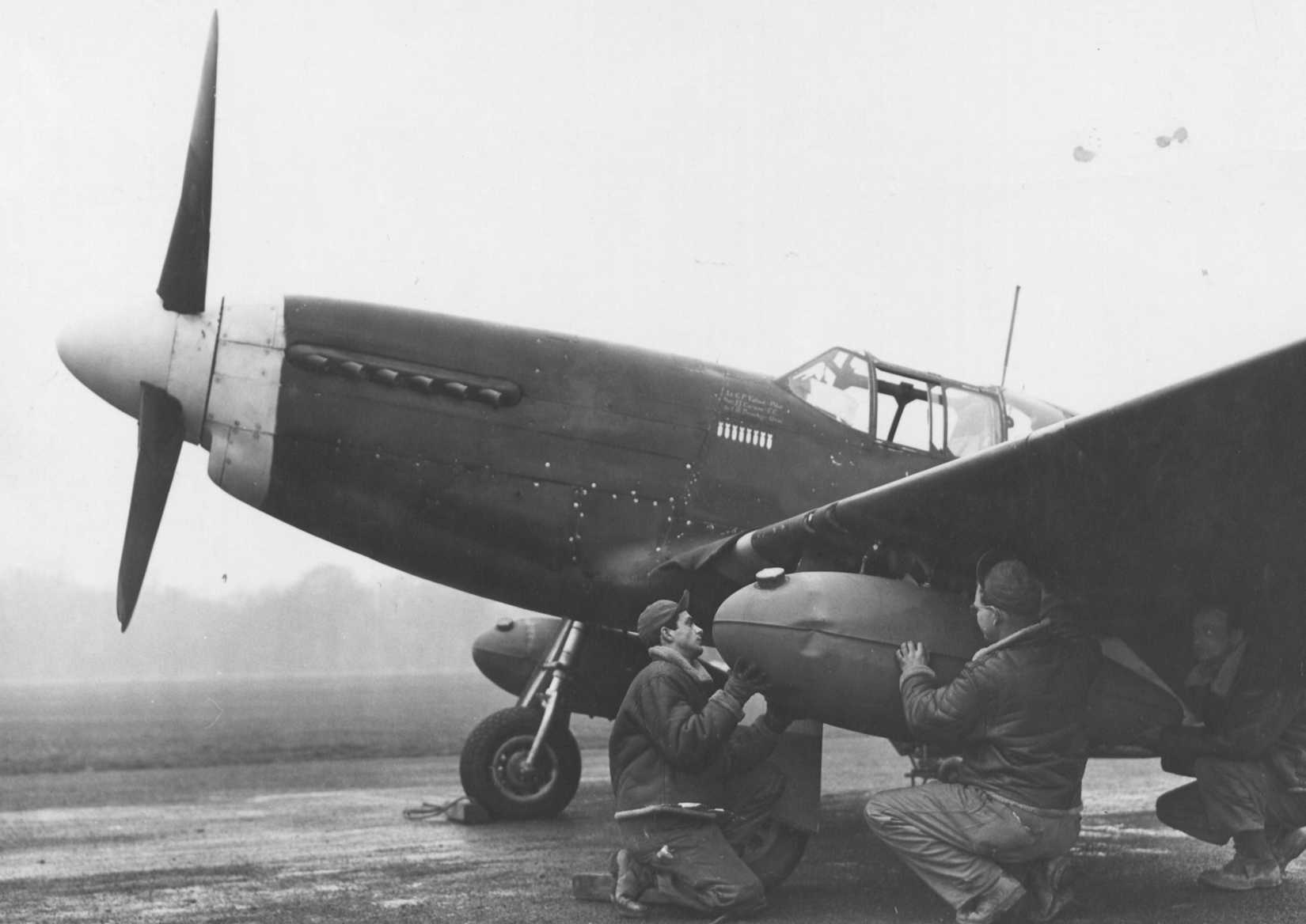
While the performance upgrades of the P-51D are celebrated, the range enhancements implemented during the B-model production run provided the greatest strategic value. North American engineers engineered an 85-gallon self-sealing fuel tank directly behind the pilot’s seat, increasing total internal fuel capacity by roughly 30%.
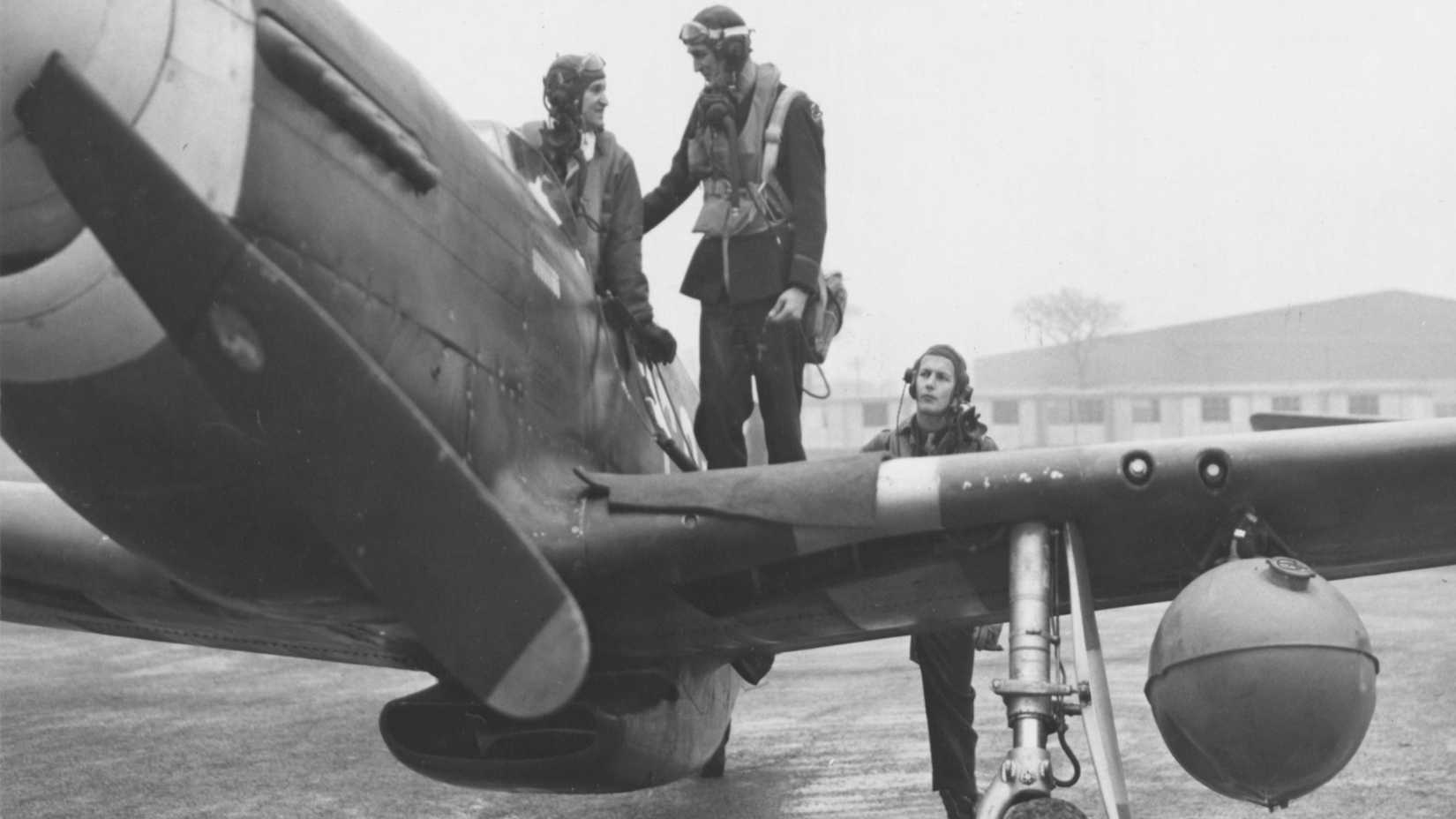
When combined with two external underwing drop tanks (initially 75 gallons each, later increased to 110 gallons in the P-51D), the single-engine Mustang boasted a total fuel load of up to 489 gallons. This outstripped the fuel capacity of the twin-engine Lockheed P-38J Lightning by approximately 20%.
P-51D Mustang Fuel & Performance Metrics:
------------------------------------------
• Total Fuel Capacity: 489 gallons (with maximum drop tanks)
• Combat Radius: Over 1,000 miles (with auxiliary tanks)
• Top Speed: 437 mph at 25,000 feet (P-51D variant)
• Maximum Dive Speed: Approaching Mach 0.8 (operational limit)
This staggering combat radius enabled the 8th Air Force to escort heavy bombers deep into Germany. The psychological deterrent alone was immense; the mere presence of Mustangs loitering over bomber formations forced Luftwaffe pilots to think twice before initiating tactical intercepts.
Laminar-Flow Airfoil Innovations
To maximize aerodynamic efficiency, North American collaborated closely with the National Advisory Committee for Aeronautics (NACA)—the direct precursor to NASA. Together, they developed a revolutionary laminar-flow airfoil.
By shifting the wing’s maximum thickness point further aft along the chord line, the design dramatically reduced lower skin-friction drag by maintaining a laminar boundary layer further back over the wing surface. Wind tunnel testing and flight evaluations confirmed that high-speed drag figures for the P-51B were remarkably low. In official testing, a Merlin-powered Mustang achieved a true airspeed of 453 mph at 28,800 feet.
However, maintaining this laminar flow in harsh operational environments required meticulous upkeep. Factory workers applied a plastic putty (similar to modern automotive Bondo) over forward rivet lines and panel seams, sanded the surfaces flat, and coated them with a thick silver primer. In service, crew chiefs had to constantly clean away mud, crushed insects, and chipped paint; even minor surface imperfections tripped the airflow into turbulence, costing valuable knots of top speed.
The Meredith Fuselage Radiator and the "Meredith Effect"
Liquid-cooled engines inherently carry an aerodynamic tax: radiators placed directly in the airstream create substantial drag that increases exponentially with speed. North American circumvented this obstacle by applying aerodynamic research published in Britain in 1935 by F.W. Meredith.
The "Meredith Effect" utilized a carefully shaped duct ahead of the radiator to slow incoming air, allowing it to absorb waste heat from the coolant before passing through an expanding rear exhaust nozzle. This heated air expanded and exited the nozzle at a higher velocity, producing a small amount of net forward thrust. While historians and aerodynamicists continue to debate the exact net drag reduction—with some contemporary sources claiming up to 90% drag offset and others citing 250 to 400 pounds of recovered thrust—the practical result was undeniable. The cooling system maintained optimal engine temperatures at high power settings without imposing an extreme aerodynamic penalty.
Supercharged Packard V-1650 Merlin
The installation of the Packard V-1650 Merlin engine solved the Mustang’s high-altitude shortcomings. Featuring a two-speed, two-stage mechanical supercharger equipped with an intercooler, the engine compressed thin high-altitude air via two successive impellers. This maintained maximum output—surpassing 1,400 horsepower—at altitudes exceeding 30,000 feet. The National Museum of the United States Air Force documented Merlin-converted test aircraft reaching 441 mph at 29,800 feet, roughly 100 mph faster than the original Allison-powered variants.
Automated Aiming: The K-14 Gyroscopic Gunsight
Air combat literature often focuses exclusively on speed, climb rate, and firepower, yet cockpit innovation played an equally vital role. Late-production P-51Bs and subsequent variants introduced the K-14 gyroscopic computing gunsight.
Historical estimates indicate that only about 5% of World War II fighter pilots possessed the innate spatial awareness and deflection-shooting intuition required to consistently calculate target speed, range, and deflection angles during high-speed dogfights. The remaining 95% routinely missed their deflection shots, wasting precious ammunition reserves.
The K-14 replaced guesswork with an analog mechanical computer. By manually setting a rotary dial to match the known wingspan of an adversary (e.g., "30" for the 30-foot wingspan of a Messerschmitt Bf 109), the gunsight automatically calculated target lead. The pilot simply aligned a dynamic moving ring—the "pipper"—onto the target. This automation vastly increased hit probabilities, conserved ammunition, extended combat endurance, and elevated Allied kill-to-loss ratios.
Official Statements
Reflecting on the transformative impact of the Mustang on strategic air warfare, military historians and aviation authorities have consistently underscored its unmatched legacy.
In retrospective analyses published by the United States Air Force Heritage Program, aerospace historians note:
"The pairing of the North American airframe with British engine technology created a synergy that fundamentally altered the strategic calculus of World War II. It transformed a capable tactical reconnaissance platform into the premier long-range escort fighter of the conflict, directly enabling the sustained destruction of Axis industrial capacity."
Furthermore, test pilot evaluations from the era frequently highlighted the intuitive harmony of the aircraft’s handling characteristics. Renowned test pilot Bob Hoover, who flew the Mustang extensively during and after the war, famously described the P-51:
"The Mustang was the most friendly, forgiving airplane you could ever fly. It had no vices. It did everything you asked of it, and it brought countless pilots home who otherwise would not have survived the skies over Europe."
Future Outlook
Today, eighty years after the guns fell silent across Europe, the North American P-51 Mustang remains an enduring fixture of aviation heritage. Far from being relegated strictly to static museum displays, dozens of airworthy Mustangs continue to grace the skies at global airshows, most notably during the annual Reno National Championship Air Races and events hosted by the Experimental Aircraft Association (EAA) in Oshkosh, Wisconsin.
As vintage aircraft restoration techniques advance, specialized engineering firms continue to employ modern non-destructive testing, precision CAD modeling, and advanced metallurgical analysis to preserve surviving airframes. These efforts ensure that original Merlin powerplants and meticulously maintained laminar-flow wings will continue to roar for generations to come.
Ultimately, the P-51 Mustang stands as a timeless monument to wartime international cooperation, industrial ingenuity, and aerodynamic perfection—a machine that not only bridged the technological gaps of its era but permanently etched its silhouette into the history of human flight.