









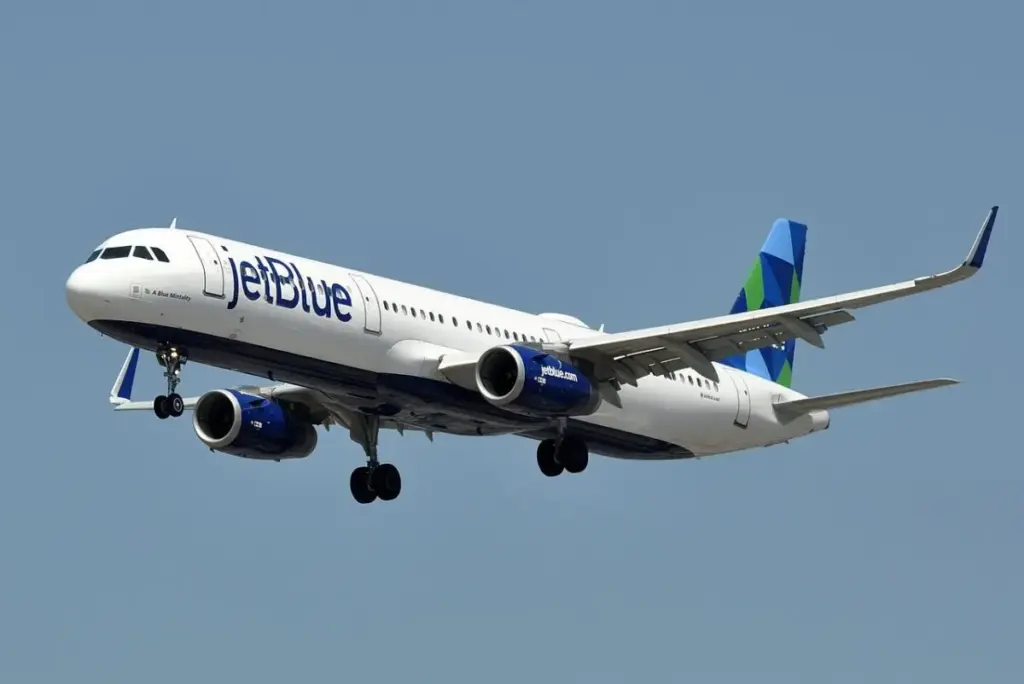
JetBlue Airways announced a significant restructuring of its boardroom on Thursday, revealing that the two directors appointed by billionaire activist investor Carl Icahn will step down immediately. The departures follow a decision by Icahn to reduce his equity stake in the New York-based carrier, marking a pivotal transition point for an airline currently navigating a complex financial and operational turnaround.
The departing board members are Jesse Lynn, the general counsel of Icahn Enterprises, and Steve Miller, a portfolio manager at Icahn Capital. Both had joined the JetBlue board in February 2024 as part of a rapid agreement designed to avert a costly and distracting proxy battle. Their immediate resignations signal a winding down of Icahn’s direct, hands-on oversight of the airline, even as JetBlue continues to execute its multi-year recovery plan.
In a statement released on Thursday, Carl Icahn expressed confidence in the carrier’s current trajectory, framing the departure of his lieutenants as an amicable transition rather than a sign of discord.
“We appreciate the constructive partnership with JetBlue over the years as they have reshaped the airline and we look forward to seeing them continue to successfully execute the JetForward strategy,” Icahn said.
JetBlue Chief Executive Officer Joanna Geraghty echoed this sentiment, acknowledging the contributions of the outgoing board members and emphasizing that the carrier remains fully committed to the strategic goals established during their tenure. Geraghty noted that JetBlue would continue to work toward restoring sustainable profitability and delivering long-term value to its shareholders.
The Rapid Rise and Fall of Icahn’s Influence at JetBlue
To understand the significance of Thursday’s announcement, it is necessary to look back to the turbulent period of early 2024, when Carl Icahn first revealed his position in JetBlue.
In February 2024, regulatory filings disclosed that Icahn had accumulated a roughly 9.91% stake in the airline, making him one of its largest shareholders. At the time, Icahn declared that JetBlue’s stock was undervalued and that he intended to engage with management and the board regarding potential representation.
The timing of Icahn’s entry could not have been more critical. JetBlue was reeling from a series of major strategic setbacks:
- The Blocked Spirit Merger: A federal judge had recently blocked JetBlue’s proposed $3.8 billion acquisition of Spirit Airlines on antitrust grounds, leaving the carrier without a clear path for rapid domestic expansion.
- The Northeast Alliance Dissolution: A court ruling had forced the dissolution of JetBlue’s lucrative "Northeast Alliance" partnership with American Airlines, stripping the carrier of key regional advantages.
- Leadership Transition: Longtime CEO Robin Hayes had just stepped down, handing the reins of the struggling airline to Joanna Geraghty, who became the first female CEO of a major U.S. airline.
Rather than mounting a defensive campaign against the legendary corporate raider, JetBlue’s leadership opted for collaboration. Within days of Icahn’s public disclosure, the airline agreed to expand its board to accommodate Jesse Lynn and Steve Miller.
This swift truce allowed Geraghty and her executive team to focus on stabilization without the distraction of a public war of words. For nearly a year, Lynn and Miller provided direct oversight, bringing Icahn’s signature focus on cost discipline, asset rationalization, and shareholder accountability directly into JetBlue’s boardroom.
The "JetForward" Strategy: A Blueprint for Recovery
The central focus of JetBlue’s current business plan is the "JetForward" strategy, a comprehensive turnaround program championed by Joanna Geraghty and supported by the board. The plan is designed to return the airline to profitability by focusing on operational reliability, cost management, and commercial optimization.
Refocusing on Core Strongholds
A key pillar of the JetForward strategy is the rationalization of JetBlue’s route network. For years, the airline had attempted to expand its footprint into highly competitive markets where it lacked historical strength. Under the new strategy, JetBlue is retrenching, cutting unprofitable routes and redeploying its aircraft to its most profitable hubs and focus cities, particularly in the Northeast and Florida.
This has resulted in several difficult but necessary decisions:
- Exiting Weak Markets: JetBlue has reduced or entirely eliminated service in several cities across the United States and Latin America where yields failed to meet targets.
- Doubling Down on Boston and New York: The airline is reinforcing its dominant positions at Boston Logan International Airport and New York’s John F. Kennedy International Airport, focusing on routes with robust business and premium leisure demand.
- Expanding Premium Leisure Offerings: JetBlue continues to invest heavily in its highly successful "Mint" premium service, which has consistently outperformed standard economy offerings in terms of unit revenue.
Addressing Operational and Fleet Headwinds
The execution of the JetForward strategy has been complicated by external operational challenges. Like many carriers, JetBlue has been severely impacted by issues surrounding the Pratt & Whitney Geared Turbofan (GTF) engines, which power its Airbus A321neo fleet.
Mandatory inspections and engine durability issues have forced JetBlue to ground multiple aircraft, reducing its capacity and putting pressure on operational reliability. To mitigate this, the airline has had to adjust its flight schedules, defer capital expenditures, and extend the leases of older Airbus A320 aircraft to maintain stable operations.
The Broader Context of Activist Investing in Aviation
Carl Icahn’s involvement with JetBlue is part of a broader trend of activist investors targeting the commercial aviation sector. Historically, airlines were avoided by many activists due to their capital-intensive nature, heavy unionization, and vulnerability to macroeconomic shocks and fuel price volatility.
However, the post-pandemic landscape has changed this dynamic. Several legacy and low-cost carriers have struggled to regain consistent profitability despite strong travel demand, making them attractive targets for institutional investors demanding corporate change.
A prominent parallel to the JetBlue-Icahn dynamic is the recent aggressive campaign waged by Elliott Investment Management against Southwest Airlines. Unlike the cooperative agreement reached between JetBlue and Icahn, the conflict at Southwest escalated into a highly public battle that eventually resulted in major board turnover and significant shifts in Southwest’s long-standing business model, including the introduction of assigned seating and premium cabins.
By contrast, the relationship between JetBlue and Icahn’s team appears to have been remarkably constructive. The immediate, quiet resignation of Lynn and Miller suggests that Icahn is satisfied with the structural changes implemented under the JetForward strategy, allowing him to monetize a portion of his investment and reallocate capital elsewhere without leaving a leadership vacuum behind.
What Lies Ahead for Joanna Geraghty and JetBlue?
With the departure of the Icahn representatives, JetBlue’s board of directors will shrink in size, returning to a more traditional composition. For CEO Joanna Geraghty, this transition represents both a vote of confidence and a shift in corporate pressure.
While the direct oversight of Icahn’s top lieutenants has concluded, the pressure to deliver financial results remains intense. Wall Street will continue to scrutinize the execution of the JetForward strategy, keeping a close eye on key performance indicators such as revenue per available seat mile (RASM), cost per available seat mile (CASM), and overall operational reliability.
The airline’s path forward requires a delicate balancing act. Geraghty must continue to cut costs and optimize the network while maintaining the unique, customer-friendly brand identity—characterized by free Wi-Fi, seatback entertainment, and generous legroom—that has historically distinguished JetBlue from its ultra-low-cost competitors.
As JetBlue heads into the next phase of its recovery, the departure of Carl Icahn’s board members marks the end of an intense period of activist-driven surveillance. The airline now has a clear runway to prove that its self-directed strategy can navigate the turbulent skies of the modern aviation industry and restore the carrier to its former position of financial strength.