






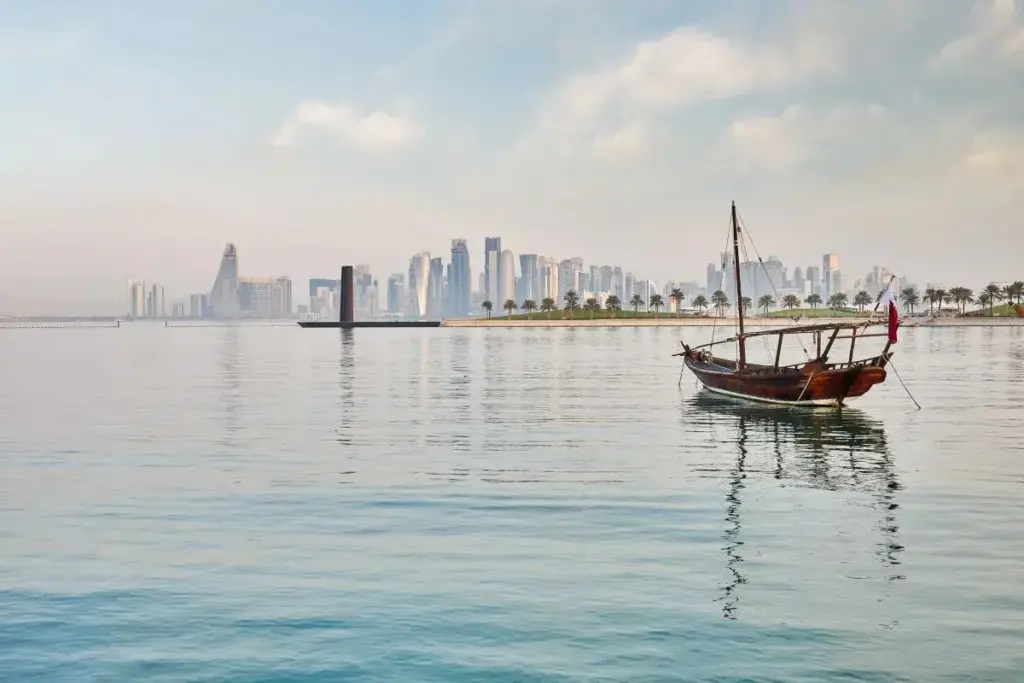
The glitzy skyline of Doha, punctuated by architectural marvels and world-class waterfront developments, has quieted in recent months, serving as a visual reminder of the delicate balance between ambitious economic diversification and regional geopolitical stability. For Qatar, a nation that has spent the better part of the last decade positioning itself as a premier global hub for transit, luxury leisure, and international business, the year 2026 has presented an unprecedented test of resilience.
According to the latest official data released on Wednesday by Qatar Tourism, the small Gulf nation welcomed 303,000 visitors in August. While this represents a encouraging 6.3% increase from the 285,000 arrivals recorded in July, the broader picture reveals a tourism sector still locked in a demanding uphill battle. The monthly uptick offers a glimmer of hope, but the reality remains stark: overall visitor arrivals are down by nearly a third compared to the previous year.
To bridge this gap and reignite its tourism engine, Qatar is returning to a familiar, highly strategic playbook. Much like its approach during the historic 2022 FIFA World Cup, Doha is looking to anchor its recovery on another blockbuster mega-event. By utilizing massive international gatherings to stimulate demand, streamline transit logistics, and reshape global perceptions, the country hopes to reverse the fortunes of a year defined by unforeseen regional disruption.
The February Shockwave: How Geopolitical Tensions Grounded Gulf Aviation
To understand the current state of Qatari tourism, one must look back to the opening weeks of 2026. The year began on an exceptionally high note. Riding the wave of a spectacular 2025—during which Qatar drew a record-breaking 5.1 million visitors—the country welcomed a historic high of 646,000 arrivals in January. Tourism officials were optimistic that the nation was on track to easily surpass its previous annual benchmarks.
However, that momentum came to an abrupt halt on February 28, 2026, with the outbreak of the U.S.-Iran war. The sudden conflict sent shockwaves through the global aviation and travel industries, with the Middle East bearing the immediate brunt of the fallout.
  Qatar Monthly Visitor Arrivals (2026 Peak to Trough)

  600k +------------------ [Jan: 646,000]
        |
  400k |
        |
  200k |                                [Aug: 303,000]
        |                  [July: 285,000]
    0k +----------------------------------[March: 63,000]--
As airspace closures went into effect across critical flight corridors and international carriers scrambled to reroute flights, regional travel demand collapsed. Cautious leisure travelers, spooked by headlines of military engagement and safety advisories, canceled reservations en masse.
The impact on Qatar was immediate and devastating. From the January high of 646,000, visitor arrivals plummeted to a mere 63,000 in March—a staggering 90% drop in the span of just a few weeks. Hamad International Airport, typically a bustling hive of global transit passengers, faced unprecedented scheduling disruptions, and local luxury hotels reported historic lows in occupancy rates. The shockwave threatened to undo years of carefully planned tourism marketing and infrastructure investment.
Analyzing the August Recovery: Progress Amid a Steep Deficit
Despite the severity of the spring collapse, the subsequent months have shown a slow but steady stabilization of the sector. The August figure of 303,000 visitors represents the fourth consecutive month of incremental growth, indicating that the immediate panic of the war’s early days has begun to subside.
However, the cumulative damage of the conflict is clearly reflected in the year-to-date statistics. Through the first eight months of 2026, total arrivals across Qatar’s land, air, and sea ports reached 2.3 million. When compared to the 3.3 million visitors recorded during the same period in 2025, this represents a significant 30% year-on-year contraction.
  YTD Visitor Arrivals (January - August)

  2025: 3.3 Million
  ========================================= (Down 30%)
  2026: 2.3 Million
  =================================
For a country that had grown accustomed to double-digit annual growth, the loss of one million potential visitors in just eight months is a severe economic blow. The drop-off has trickled down through the entire hospitality ecosystem, affecting everything from major hotel chains and fine dining establishments to local tour operators, transport providers, and retail hubs like the Souq Waqif.
The challenge for the remainder of the year is not just to maintain the current modest upward trajectory, but to accelerate it dramatically if the country is to come anywhere close to matching its 2025 performance.
The GCC Lifeline and the Balancing Act of Global Source Markets
An analysis of visitor demographics during the first eight months of 2026 highlights the critical role of regional proximity during times of global crisis. Travelers from the Gulf Cooperation Council (GCC) nations have emerged as the absolute bedrock of Qatar’s tourism recovery.
Between January and August, GCC travelers contributed 958,000 visitors, accounting for a dominant 41% of all international arrivals.
  Visitor Share by Region (Jan-Aug 2026)

  ┌───────────────────────────┬─────────────┬─────────────┐
  │ GCC (Neighboring Gulf)    │ Asia & Oce. │ Europe      │
  │ 41%                       │ 20.9%       │ 20.8%       │
  │ (958,000)                 │ (489,000)   │ (486,000)   │
  └───────────────────────────┴─────────────┴─────────────┘
The resilience of the GCC market can be attributed to several factors:
- The Abu Samra Land Border: The land crossing with Saudi Arabia remains a vital artery, allowing families and weekend travelers to bypass disrupted air corridors entirely.
- Shared Cultural Ties and Short-Haul Flights: Short flight times and deep-rooted cultural connections make Doha an easy weekend destination for regional neighbors, even during periods of heightened geopolitical anxiety.
- Targeted Marketing Campaigns: Qatar Tourism capitalized on this by shifting much of its promotional focus toward neighboring states, offering tailored staycation packages and marketing the country as a safe, nearby escape.
Beyond the Gulf, the remaining visitor share is almost equally split between two major global regions. Asia and Oceania secured the second-largest share, delivering 489,000 arrivals (20.9% of the total). Europe followed by a hair’s breadth, accounting for 486,000 visitors (20.8%).
The near-identical shares of European and Asian travelers underscore Qatar’s geographic positioning as a natural bridge between East and West. However, both markets have been heavily impacted by the increased flight times and higher ticket prices resulting from the detour around restricted airspace, making long-haul leisure travel a harder sell than in previous years.
The Mega-Event Playbook: Doha’s Strategic Counter-Offensive
Confronted with a sluggish recovery and a 30% deficit, Qatar’s leadership is turning to a strategy it knows intimately: the deployment of mega-events.
When Qatar hosted the FIFA World Cup in 2022, it was not merely staging a soccer tournament; it was executing a multi-billion-dollar nation-branding exercise. The event forced the rapid completion of state-of-the-art metro systems, high-capacity luxury hotels, and advanced security infrastructure. Now, in the face of the 2026 crisis, Qatar is leveraging that same infrastructure to host another major international event designed to draw global crowds.
The logic behind the mega-event strategy is multifaceted:
1. Bypassing General Consumer Hesitation
While individual leisure travelers might hesitate to book a vacation to the Middle East during a period of regional tension, mega-events create a powerful, time-sensitive incentive to travel. Whether they are sports fans, industry delegates, or cultural enthusiasts, event attendees are far more likely to overlook geopolitical anxieties to participate in a once-in-a-lifetime experience.
2. Streamlined Logistics and Dedicated Corridors
During major events, Qatar can implement dedicated travel protocols, such as simplified visa-on-arrival schemes, chartered flights, and coordinated security measures. This helps restore confidence among international travelers who may otherwise be concerned about the logistical complexities of traveling through the region.
3. Maximum Global Visibility
A major event puts Doha back in the international spotlight for positive reasons, shifting the narrative away from regional conflict. The media coverage generated by such events serves as a powerful, indirect marketing tool that showcases the country’s safety, modern infrastructure, and readiness to welcome the world.
Navigating the Autumn Horizon: The Path to Full Recovery
As Qatar enters the final third of 2026, the tourism sector is approaching its most crucial season. The cooler autumn and winter months traditionally represent the peak travel period for the Arabian Peninsula, attracting affluent travelers seeking relief from the colder climates of Europe and North Asia.
To maximize this seasonal advantage, Qatar Airways and Qatar Tourism are working in lockstep to roll out aggressive stopover programs. By offering highly subsidized luxury hotel stays for transit passengers, they hope to convert some of the millions of travelers passing through Hamad International Airport into multi-day visitors.
Additionally, the country is focusing on expanding its portfolio of niche tourism offerings, including cruise tourism, wellness retreats, and high-end culinary experiences. By diversifying its appeal beyond traditional sightseeing, Doha aims to build a more resilient tourism model that is less vulnerable to sudden geopolitical shocks.
While the U.S.-Iran war has undoubtedly cast a long shadow over the region, Qatar’s August performance demonstrates a quiet determination to weather the storm. The path back to the 5.1 million visitor mark of 2025 will be long and complex, but through a combination of regional solidarity, targeted stopover incentives, and the proven draw of mega-events, the Gulf nation is positioning itself to emerge from the crisis with its status as a global tourism destination firmly intact.