








Executive Overview
The international air travel market continues to undergo rapid transformation, driven by shifting carrier networks, evolving fare structures, and heightened consumer demand for value-driven European getaways. A prime example of this ongoing evolution is a recently surfaced, highly competitive airfare pairing connecting the Pacific Northwest directly to the heart of Denmark’s vibrant Jutland region: Aalborg.
Priced attractively for travelers willing to look beyond standard itineraries, this promotional pricing structure showcases the complex pricing algorithms utilized by legacy alliance carriers—specifically Delta Air Lines, Air France, and KLM Royal Dutch Airlines. While base economy alternatives hover near the $561 threshold, a more comprehensive standard economy tier priced at $781 provides travelers with essential comforts that are increasingly stripped from modern budget itineraries, including advance seat assignments, normal-sized carry-on baggage allowances, and a checked bag.
This analytical report examines the mechanics of these fare offerings, the operational implications for travelers departing from Portland (PDX), the structural differences between basic and standard economy tiers across major airline alliances, and broader macro-trends shaping European travel in the current aviation landscape.

Detailed Chronology: The Evolution of Transatlantic Promotional Pricing
The Shift Toward Modular Ticketing
The contemporary airline industry relies heavily on unbundled product offerings. Over the past decade, legacy carriers—traditionally viewed as full-service alternatives to low-cost carriers—have adopted modular pricing strategies. This evolution allows airlines to compete directly with budget carriers on pure price point while extracting ancillary revenue from passengers who require additional services.
The introduction of the $561 Basic Economy fare by the Delta, Air France, and KLM joint venture highlights this strategy. Designed for the hyper-price-sensitive consumer, this tier eliminates flexibility, seat selection, and baggage allowances. Conversely, the $781 standard economy tier acts as a modernized legacy product, restoring vital baseline travel comforts.
Mapping the Itinerary: From Portland to Aalborg
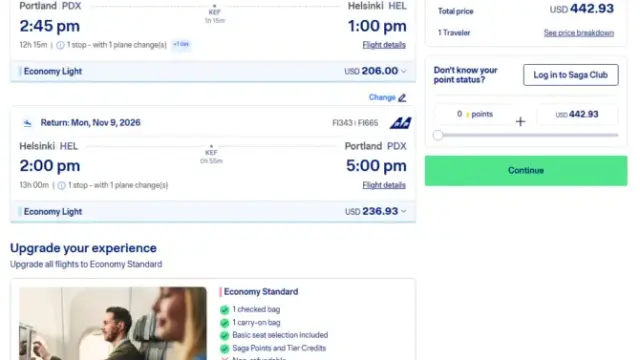
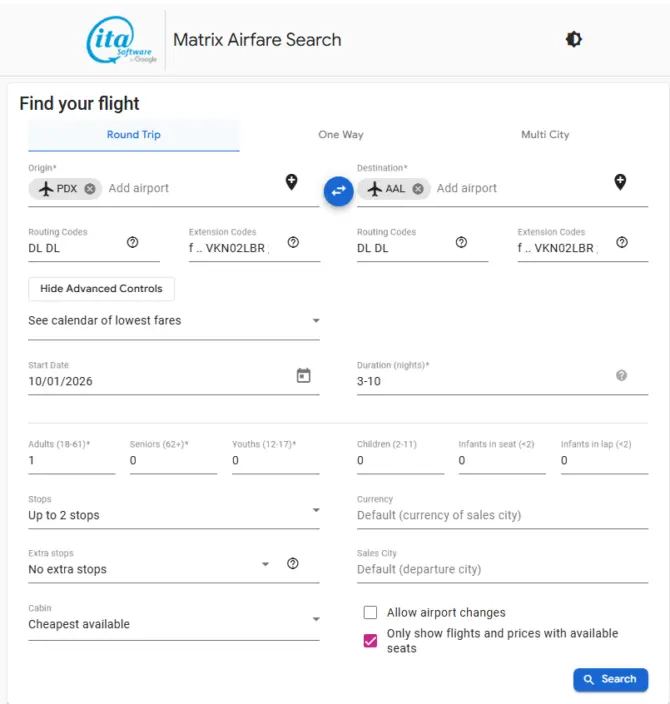
Routing from Portland International Airport (PDX) to Aalborg Airport (AAL) typically involves strategic multi-leg journeys through major European hubs operated by SkyTeam alliance partners. Common connecting points include:

- Amsterdam Airport Schiphol (AMS): Operated extensively via KLM Royal Dutch Airlines.
- Charles de Gaulle Airport (CDG): Facilitated by Air France.
- Minneapolis-Saint Paul (MSP) or Detroit (DTW): Key domestic U.S. transfer nodes managed by Delta Air Lines prior to the transatlantic hop.
Pricing variations inherently depend on the exact routing, layover durations, and operating carrier segments selected during the booking process. The recent availability data indicates robust inventory pools released during specific booking windows, signaling airlines’ tactical efforts to stimulate shoulder-season demand to secondary European destinations.
Supporting Context & Metrics: Unpacking the Fare Structures
Basic Economy vs. Standard Economy: A Comparative Analysis
For travelers evaluating these fare tiers, understanding the fine print is critical to calculating the true cost of travel.
| Fare Feature | Basic Economy ($561 Tier) | Standard Economy ($781 Tier) |
|---|---|---|
| Base Price | Lower entry cost (~$561) | Moderate entry cost (~$781) |
| Carry-On Baggage | Restricted (Personal item only, or subject to strict overhead limitations depending on carrier policy) | Normal-sized carry-on included |
| Checked Baggage | Not included (Additional fees apply per direction) | One checked bag included |
| Seat Assignment | Assigned at check-in; fee for advance selection | Advance seat assignment included |
| Changes & Cancellations | Generally non-changeable / non-refundable | Subject to standard economy fare rules (change fees may apply; fare difference required) |
The Financial Equation
When factoring in the typical cost of checked luggage on international routes (often $75 to $100 each way) and seat selection fees ($30 to $60 per segment), the seemingly attractive $561 basic economy fare can quickly equal or exceed the all-inclusive $781 standard fare. Travelers are urged to evaluate their personal luggage requirements and seating preferences before finalizing transactions.

Official Industry Insights and Strategic Guidance
Maximizing Value on Secondary European Destinations
Aalborg, often celebrated as the cultural capital of northern Denmark, offers a compelling alternative to saturated primary tourist hubs like Copenhagen or Amsterdam. Rich in industrial history, modern architecture, and culinary innovation, secondary cities represent a growing segment of European tourism. Industry analysts note that airlines frequently stimulate demand to these regional airports by introducing aggressive introductory pricing or flash sales.
Navigating International Credit Card Usage
When booking and traveling internationally, financial optimization extends beyond the initial airfare purchase. Experts recommend adhering to several core practices to protect capital while abroad:
- Zero Foreign Transaction Fee Cards: Utilize credit cards that explicitly waive foreign transaction fees (typically 3% per transaction) to avoid unnecessary surcharges on dining, lodging, and local transit.
- Dynamic Currency Conversion (DCC) Avoidance: When presented with the choice to pay in U.S. Dollars (USD) or local currency (Danish Krone – DKK) at point-of-sale terminals abroad, always choose the local currency. DCC relies on highly unfavorable exchange rates set by local merchant banks rather than your card issuer.
- Chip-and-PIN Readiness: Ensure primary cards are equipped with modern chip technology and that PIN numbers are established for automated ticketing kiosks and transit turnstiles across Europe.
Future Outlook: Transatlantic Aviation Trends
The Outlook for Trans-Pacific and Transatlantic Pricing
As fuel costs stabilize and fleet modernizations continue, legacy carriers are expected to maintain dynamic pricing models that fluctuate based on real-time demand elasticity. Secondary European markets will likely continue seeing targeted promotional fare releases as airlines seek to optimize aircraft utilization across secondary and tertiary airport networks.

Technological Advancements in Deal Discovery
The methodology by which travelers discover these ephemeral price drops has also evolved. Platforms specializing in real-time airfare monitoring—such as dedicated subscription newsletters, instant messaging channels, and automated fare-tracking algorithms—have transformed how consumers secure discounted inventory. Because flash sales often disappear within hours of publication, relying on automated alerts remains one of the most effective strategies for securing optimal pricing.
Conclusion
The availability of competitive fares from Portland to Aalborg underscores the dynamic nature of modern airline pricing. By carefully weighing the structural differences between basic and standard economy offerings, utilizing appropriate financial tools for international transactions, and monitoring fare adjustments in real time, travelers can successfully navigate complex itinerary options to secure both value and comfort on their next international journey.