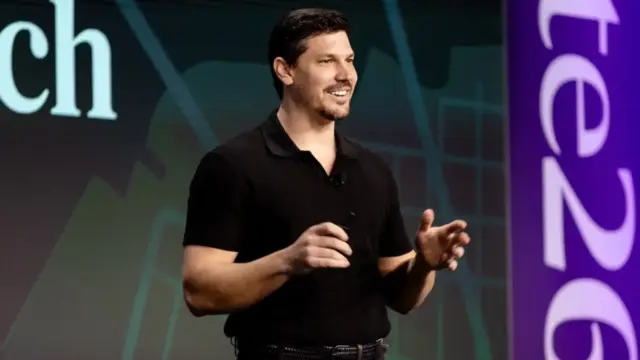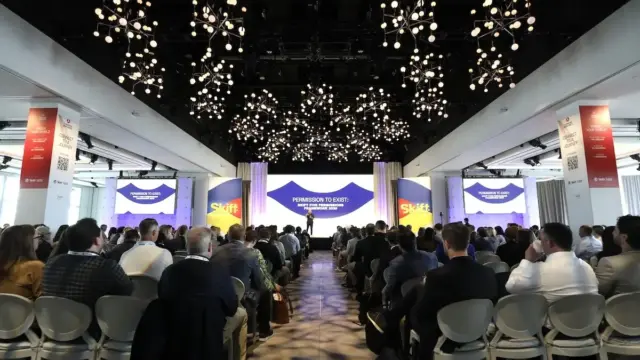
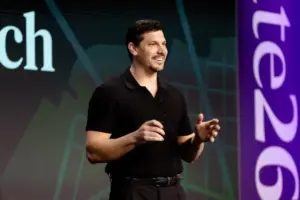







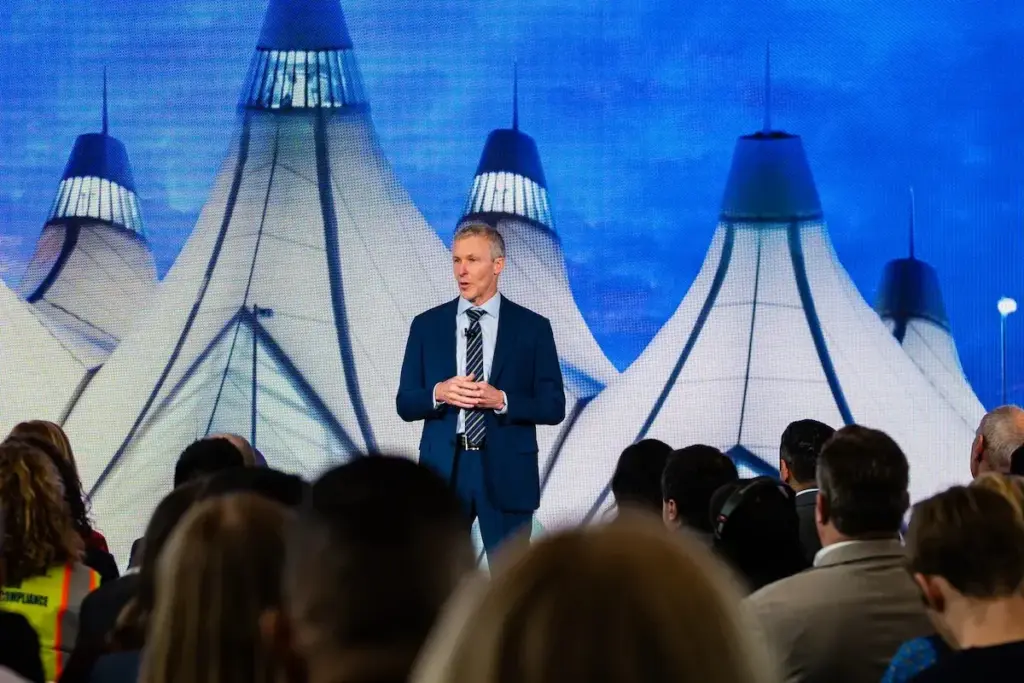
Speaking on stage at the Denver Performing Arts Complex, United Airlines CEO Scott Kirby reflected on a lifetime of watching the climate change. For Kirby, the reality of global warming is not a recent corporate talking point, but a decades-long observation that began when he was a young cadet at the United States Air Force Academy in Colorado Springs.
During a fireside chat with Ryan Warner, host of Colorado Matters, Kirby recalled his early introduction to environmental science in the 1980s.
"I can remember reading in the ’80s, the forecasts were there’s going to be less snow on the Western Slope and the Colorado River’s going to go dry," Kirby told the audience.
Decades later, those early warnings have manifested as a stark ecological crisis. The Western Slope of Colorado, along with three neighboring counties in eastern Utah, has emerged as one of the most severe climate hotspots in the entire Colorado River basin. The region has warmed by more than 2 degrees Celsius (3.6 degrees Fahrenheit) since the pre-industrial era—double the global average.
This localized warming has triggered a destructive feedback loop: rising temperatures drive rapid evaporation, alter seasonal rainfall patterns, and dramatically reduce the winter snowpack that feeds the river. The consequences are visible in the plummeting water levels of Lake Powell and Lake Mead, the nation’s two largest reservoirs, which have hovered at historic lows, threatening the water security of tens of millions of people across the American West.
For the head of one of the world’s largest commercial airlines, this environmental degradation is not just a tragedy to be observed from thirty thousand feet; it is a direct challenge to the future of aviation. Decarbonizing an industry that relies entirely on burning liquid hydrocarbons at high altitudes is perhaps the most difficult engineering challenge of the modern era. To address it, Kirby is pointing toward a solution rooted in the heart of American agriculture—though his vision for achieving it differs sharply from the regulatory strategies being championed across the Atlantic.
The Sustainable Aviation Fuel Bottleneck
To understand Kirby’s urgency, one must understand the unique challenge of aviation emissions. Unlike ground transportation, which can transition relatively quickly to battery-electric systems, long-haul commercial flight is constrained by the laws of physics. Current battery technologies are far too heavy to lift a commercial airliner across oceans, and hydrogen-powered propulsion remains decades away from commercial viability at scale.
Consequently, the aviation industry’s primary hope for meeting its net-zero carbon emissions goals by 2050 lies in Sustainable Aviation Fuel (SAF).
SAF is a drop-in replacement for conventional jet fuel. It can be blended with traditional fossil-based kerosene and used in existing aircraft engines and fueling infrastructure without requiring costly modifications. When produced from organic waste, agricultural residues, or captured carbon, SAF can reduce lifecycle greenhouse gas emissions by up to 80% compared to conventional jet fuel.
However, the industry faces a massive supply chain bottleneck. Today, SAF accounts for less than 1% of the global commercial jet fuel supply. The production capacity simply does not exist to meet the demand of global airlines, and the fuel that is available remains prohibitively expensive, often trading at two to four times the price of fossil fuels.
It is this supply crisis that has led Kirby to look closely at the American agricultural sector.
Repurposing the American Farm: From Biodiesel to Jet Fuel
To bridge the massive supply gap, Kirby believes the aviation industry must tap into feedstocks that are already being grown at an industrial scale. Specifically, he sees immense potential in the vast quantities of corn and soybeans currently cultivated across the United States for the production of biodiesel and ethanol.
For decades, federal mandates and agricultural subsidies have supported a robust domestic biofuel industry. Millions of acres of American farmland are dedicated to growing crops that are processed into fuel for passenger cars and heavy-duty trucks. However, as the ground transportation sector increasingly electrifies—driven by the rapid adoption of electric passenger vehicles and delivery fleets—the long-term demand for road-based biofuels is projected to decline.
Kirby argues that this shifting dynamic presents a golden opportunity. By redirecting corn and soy feedstocks from biodiesel and ethanol production toward the manufacturing of Sustainable Aviation Fuel, the United States can pivot its existing agricultural infrastructure to solve a much harder decarbonization problem.
"We have the land, we have the farmers, and we have the processing technology," Kirby has argued in discussions regarding the agricultural transition.
However, scaling this transition requires massive capital investment to build the specialized biorefineries capable of processing these agricultural lipids and alcohols into high-quality aviation fuel. To de-risk these investments, Kirby is calling for stronger, more coordinated government support to establish a firm foundation for the domestic SAF industry.
Carrots vs. Sticks: Why Kirby Rejects the European Approach
While Kirby is a vocal advocate for government intervention to jumpstart the SAF market, he is highly critical of the regulatory strategy currently being deployed in Europe.
The European Union has adopted a policy of mandates—often referred to as the "stick" approach. Under the ReFuelEU Aviation initiative, airlines departing from European airports will be legally required to use a minimum percentage of SAF in their fuel mix, starting at 2% in 2025 and rising progressively to 70% by 2050. Airlines that fail to meet these quotas face steep financial penalties.
Kirby argues that this punitive approach is fundamentally flawed because it penalizes airlines for a supply shortage they cannot control.
"Mandating something that doesn’t exist doesn’t make it appear," Kirby has noted. He contends that imposing strict mandates in a market with virtually no supply simply drives up the cost of travel for consumers without solving the underlying infrastructure bottleneck. It forces airlines to compete for a tiny pool of available fuel, driving prices to exorbitant levels while doing little to incentivize the construction of new refineries.
In contrast, Kirby favors the "carrot" approach championed by the United States, particularly through the tax credits and incentives embedded in the Inflation Reduction Act (IRA). The IRA provides a sliding-scale blending tax credit ranging from $1.25 to $1.75 per gallon for SAF that achieves at least a 50% reduction in lifecycle greenhouse gas emissions.
By subsidizing the production of SAF rather than penalizing its absence, the U.S. model seeks to attract private capital, lower the financial risk for developers, and rapidly build out the physical refining capacity needed to make SAF commercially viable. According to Kirby, only by lowering the cost of production can the industry hope to scale SAF to the volumes required to make a meaningful dent in global emissions.
United’s Net-Zero Vision and the Rejection of Greenwashing
Under Kirby’s leadership, United Airlines has positioned itself as an industry leader in environmental sustainability, often taking a more aggressive stance than its competitors. Crucially, Kirby has been a outspoken critic of traditional carbon offsetting schemes, which he has dismissed as an ineffective form of "greenwashing."
Many corporations rely on purchasing carbon offsets—such as funding tree-planting initiatives or forest conservation projects—to claim they are "carbon neutral." Kirby has repeatedly argued that these projects are difficult to verify, often temporary, and do not scale to the level required to offset the massive, daily emissions of the global aviation industry. Planting trees, he points out, cannot keep pace with the millions of tons of carbon dioxide pumped into the upper atmosphere by commercial flights every day.
Instead, United has committed to achieving net-zero emissions by 2050 without relying on traditional carbon offsets. To reach this goal, the airline is investing directly in technological solutions. This includes backing direct air capture (DAC) technology, which physically removes carbon dioxide from the atmosphere and stores it permanently underground, as well as signing forward-purchase agreements for billions of gallons of SAF.
The High Stakes of the Transition
As Scott Kirby’s fireside chat in Denver highlighted, the devastating impacts of climate change are no longer distant projections; they are unfolding in real-time across the American West. The drying of the Colorado River and the shrinking snowpacks of the Western Slope serve as a constant reminder of the cost of inaction.
For the aviation sector, the transition to a sustainable future is an existential necessity. Without a viable path to decarbonization, the industry risks facing severe regulatory restrictions, mounting public pressure, and escalating costs related to carbon pricing and climate disruption.
By advocating for the repurposing of domestic agricultural resources and championing incentive-based government policies, Kirby is attempting to plot a pragmatic path forward. The challenge is immense, requiring an unprecedented alignment of agriculture, aviation, finance, and federal policy. But as the reservoirs of the West continue to dry, the timeline for solving these supply chain woes grows shorter by the day.