

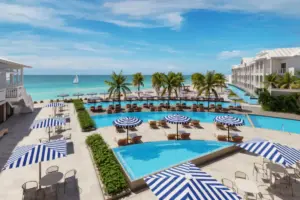




In an era of global travel defined by hyper-connectivity, massive cruise terminals, and sprawling all-inclusive mega-resorts, the Caribbean island of Nevis has quietly executed one of the most daring counter-strategies in modern destination management. Rather than chasing volume, Nevis has commodified scarcity. The island’s tourism framework is built not on what it offers, but on a strict, legally codified list of what it prohibits: no cruise ships, no buildings taller than a coconut tree, no international fast-food chains, no traffic lights, and no large-scale all-inclusive resorts.
This deliberate strategy of subtraction is championed by the Premier of Nevis, Mark Brantley. Under his administration, the local government is confronting a pivotal question: Can a destination sustain its economy by actively limiting its capacity?
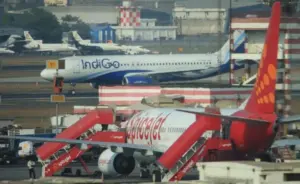
To test this thesis, Nevis is embarking on a high-stakes infrastructure push. The government has broken ground on a state-of-the-art aviation facility designed to park up to 50 private jets at the Vance W. Amory International Airport, while aggressively lobbying major airlines for direct commercial flights from the U.S. East Coast.
This creates a fascinating paradox. The future of Nevis relies on maintaining its hard-won exclusivity and low-density charm, even as it spends millions of dollars to make itself significantly easier to access. This investigative report analyzes the mechanics of Nevis’s "luxury of scarcity" model, the historical decisions that shaped it, the economic metrics underpinning its viability, and the delicate balance the island must maintain to avoid diluting its brand.
Detailed Chronology
[1991] Four Seasons Resort Nevis opens; establishes low-rise luxury paradigm.
[2000s] St. Kitts embraces mass cruise tourism; Nevis formally commits to boutique preservation.
[2010s] Codification of the "No" list (zoning laws, franchise bans, cruise ship restrictions).
[2020-21] Pandemic highlights global demand for low-density, isolated luxury destinations.
[2023-24] Ground broken on 50-capacity private jet parking facility at Vance W. Amory Airport.
[Present] Active negotiations for direct U.S. East Coast commercial flights.
Phase I: The Divergence (1991–2005)
The modern trajectory of Nevis cannot be understood without examining its relationship with its sister island, Saint Kitts. Together, they form the Federation of Saint Kitts and Nevis. In the late 20th century, as the local sugar industry collapsed, both islands turned to tourism to stabilize their economies. However, their paths diverged dramatically.
Saint Kitts embraced high-volume, mass-market tourism. It constructed Port Zante, a deep-water cruise pier capable of hosting the world’s largest cruise ships, and welcomed large-scale resort developments.
Nevis took a different path. In 1991, the island welcomed the Four Seasons Resort Nevis. Rather than building a towering concrete high-rise, the developers constructed low-slung, plantation-style villas that sat below the tree line. This project set a structural and psychological precedent: Nevis would cater to the ultra-high-net-worth individual (UHNWI) who prized privacy, understated luxury, and untouched natural beauty.
Phase II: Codifying the "No" List (2005–2018)
Over the next two decades, successive Nevisian administrations realized that their physical constraints—a land area of just 36 square miles and a population of roughly 11,000—made mass tourism logistically impossible. Instead of fighting these limitations, the government codified them into law and policy.
- The Height Restriction: Zoning laws mandated that no commercial building could exceed the height of a mature coconut palm (effectively capping structures at three stories).
- The Franchise Ban: To protect local entrepreneurs and preserve the island’s authentic aesthetic, international fast-food chains and major retail franchises were restricted.
- The Cruise Embargo: Large cruise ships were barred from docking on the island. Only small, ultra-luxury boutique vessels and yachts were permitted to anchor offshore, tender passengers to the historic capital of Charlestown, and depart before nightfall.
- The Anti-All-Inclusive Mandate: The government restricted the development of large-scale all-inclusive resorts, ensuring that visitors would leave their hotels to spend money at local restaurants, beach bars, and taxi services.
Phase III: The Infrastructure Pivot (2018–Present)
Under the leadership of Premier Mark Brantley, who also serves as the Minister of Tourism, Nevis has entered a new phase. The island’s leadership recognized that while scarcity drove up room rates, poor accessibility remained a major bottleneck.
Historically, reaching Nevis from major North American or European markets required flying into Saint Kitts (SKB) and taking a water taxi across "The Narrows," or connecting through regional hubs like Antigua, San Juan, or Sint Maarten. This multi-leg journey deterred all but the most committed travelers.
To resolve this, the Nevis Island Administration (NIA) initiated a series of targeted infrastructure projects. In late 2023, ground was broken on a major expansion of the Vance W. Amory International Airport. The centerpiece of this expansion is a dedicated private aviation terminal and parking apron capable of accommodating up to 50 private jets simultaneously. Concurrently, the government began high-level negotiations with major U.S. legacy carriers to establish direct, low-frequency flights from the U.S. East Coast using smaller, mainline regional aircraft.
Supporting Context & Metrics
The Economics of Low-Volume, High-Yield Tourism
The core economic thesis of Nevis is that a single overnight luxury visitor contributes far more to the local economy than multiple cruise passengers or mass-market holidaymakers, while placing a fraction of the strain on public infrastructure.
To understand the financial logic of this model, consider the following comparative analysis of visitor spending patterns in the Caribbean:
| Metric | Mass Cruise Visitor (Regional Average) | Stay-Over Luxury Visitor (Nevis Average) |
|---|---|---|
| Average Length of Stay | 4–8 hours | 5–9 days |
| Average Daily Spend (USD) | $80 – $120 | $800 – $2,500+ |
| Primary Economic Beneficiaries | Cruise lines, port operators, duty-free chains | Local boutique hotels, restaurants, taxi drivers, guides |
| Infrastructure Strain (per capita) | High (creates acute surges in water, waste, and transport) | Low (distributed evenly over time and space) |
| Environmental Impact | High (reef damage, heavy carbon emissions in port) | Minimal (focused on low-impact eco-preservation) |
In Nevis, tourism accounts for over 60% of the island’s GDP, either directly or indirectly. By focusing on UHNWIs, the island insulates itself from the price-sensitive fluctuations of the mass travel market. During economic downturns, ultra-luxury travelers tend to maintain their travel habits, providing a more stable revenue stream for the local treasury.
[Typical Cruise Model]
10,000 Visitors x $100 Spend = $1,000,000 (High Infrastructure Strain, Low Retention)

[Nevis Luxury Model]
500 Visitors x $2,000 Spend = $1,000,000 (Low Infrastructure Strain, High Retention)
The Private Jet Imperative
The decision to build a private jet facility capable of housing 50 aircraft is a highly calculated move. During the peak winter season (mid-December to late January), Caribbean private aviation hubs like Saint Barthélemy (St. Barts), Anguilla, and Antigua routinely run out of parking space, forcing private aircraft to drop off passengers and fly to larger islands to park.
By offering a secure, state-of-the-art parking facility and dedicated Fixed-Base Operator (FBO) services, Nevis is positioning itself as a primary aviation hub for the entire Leeward Islands region. This project not only generates immediate landing and parking fees for the Nevisian treasury, but also positions the island as a convenient base for wealthy travelers who own villas or yachts in the neighboring islands.
Official Statements & Strategic Analysis
The Premier’s Philosophy: "Luxury Without Ostentation"
In discussions regarding the island’s unique market position, Premier Mark Brantley has been refreshingly candid about the dual nature of Nevis’s strategy. He acknowledges that the island’s restrictive policies are born out of physical reality as much as deliberate design.
"Nevis is simply not built to handle volume. We do not have the roads, we do not have the water supply, and we do not have the desire to turn our island into a concrete theme park. Rather than treating our size and our physical limitations as a weakness, we have turned them into our greatest marketing asset. Our brand is built on what we do not have."
— Mark Brantley, Premier of Nevis
Brantley’s vision of "luxury without ostentation" directly targets a growing demographic of high-net-worth travelers who are suffering from "luxury fatigue." These travelers are increasingly bypassing heavily developed, highly commercialized luxury destinations in favor of places that offer quiet luxury, privacy, and authentic cultural engagement.
The Challenge of the "No All-Inclusive" Policy
While the ban on large-scale all-inclusive resorts preserves the local economy, it also presents challenges. Global hospitality brands are increasingly shifting toward all-inclusive models to guarantee high occupancy rates and predictable margins. By refusing to permit these developments, Nevis limits the pool of international hotel brands willing to invest in the island.
However, local economists argue that this restriction is vital for wealth distribution. In typical all-inclusive destinations, up to 80% of the traveler’s spend is retained by the resort owner and international booking agencies—a phenomenon known as "economic leakage." In Nevis, because visitors must venture outside their resorts to dine, explore, and shop, a much higher percentage of the tourism dollar remains within the local ecosystem, directly supporting Nevisian-owned businesses.
Future Outlook: The Paradox of Accessibility
The central challenge facing Nevis over the next decade is managing the delicate paradox of accessibility. The island’s entire brand value is anchored in its isolation and scarcity. Yet, the government’s current capital expenditure is focused on making the island easier to reach.
       [Improved Accessibility]
                  │
                  ▼
       [Increased Visitor Inflow]
                  │
                  ▼
   [Risk of Brand Dilution & Crowding]
                  │
                  ▼
      [Erosion of the "Scarcity" Premium]
If Nevis succeeds in establishing multiple direct commercial flights from the U.S. mainland and significantly increases its private jet capacity, it risks upsetting the delicate social and environmental balance that makes the island unique.
Key Scenarios for Nevis’s Tourism Evolution
1. The Managed Growth Scenario (High Probability)
In this scenario, the government successfully limits commercial air traffic to a few high-yield, low-frequency routes (e.g., twice-weekly flights from Miami or Charlotte on regional aircraft). The private jet terminal operates at high margins, catering exclusively to UHNWIs who stay in low-density villas and boutique resorts. The island maintains its strict zoning laws, and the local economy prospers without experiencing social or environmental degradation.
2. The Over-Development Leakage Scenario (Medium-Low Probability)
Under fiscal pressure to service public debt, a future administration might ease zoning restrictions, allowing larger hotels to build above the coconut canopy or permitting mid-market all-inclusive developments. This would increase visitor arrivals but dilute the island’s exclusive reputation, leading to a decline in average daily spend and placing unsustainable pressure on the island’s electrical grid, water reserves, and waste management systems.
3. The Regional Aviation Hub Scenario (High Probability)
By leveraging its new 50-jet parking facility, Nevis becomes a premier logistics and aviation hub for the northeastern Caribbean. The island captures significant ancillary revenue from aircraft servicing, fueling, and crew accommodations, even if the passengers themselves ultimate transfer to yachts or other islands. This diversifies the island’s tourism-adjacent revenue streams without directly increasing the overnight visitor footprint on Nevis itself.
Conclusion
Nevis is conducting a vital experiment in sustainable, high-end tourism management. By proving that a destination can thrive by saying "no" to the traditional drivers of mass tourism, the island offers a compelling blueprint for other fragile island ecosystems worldwide. However, as the runway expands and the private jets arrive, the true test for Nevis will be its ability to remain hard to reach, even as it becomes easier to get to.