









Executive Overview
For the modern globetrotter, the golden age of seamless travel has been severely tested by systemic operational disruptions, staffing shortages, and baggage mishandling crises across global transit hubs. What was once considered an isolated statistical anomaly—arriving at a sun-drenched destination only to stand helplessly at an empty carousel—has escalated into a pervasive reality of international transit. From European airports buckling under seasonal surges to regional routing errors in the Caribbean and Central America, misplaced luggage now threatens to upend even the most meticulously planned itineraries.
The consequences extend far beyond mere inconvenience. For families, cruise-goers, and business travelers alike, delayed bags mean scrambling for emergency provisions, navigating foreign pharmacies for essential toiletries, and sacrificing valuable vacation time to queue in cavernous, understaffed airline service halls. However, seasoned travelers have learned that while airline logistics remain unpredictable, personal preparedness is entirely within one’s control.
This comprehensive guide examines the anatomy of modern baggage delays through firsthand accounts, structural packing frameworks, and technological interventions. By adopting strategic decentralization of belongings, leveraging real-time tracking hardware, and understanding consumer protections under international and national guidelines, travelers can transform a potentially catastrophic trip interruption into a manageable logistical hurdle.
Detailed Chronology: A Traveler’s Crucible
The vulnerability of modern air travel is best understood through the lens of lived experience. Consider a family embarking on an extended eleven-night European holiday. Recognizing the well-documented warnings circulating through travel news networks regarding systemic baggage handling failures at major European transit hubs, the party initially hoped to travel light. Yet, the realities of an eleven-night excursion rendered a carry-on-only approach unfeasible.
Anticipating potential turbulence, the travelers implemented a multi-layered defense strategy. Rather than packing indiscriminately, belongings were intentionally decentralized across a combination of underseat personal items, rolling carry-ons, and checked suitcases. This proved vital when a routine connection through Paris resulted in the checked bags being left behind while the family forged ahead to Portugal.

Because the initial packing process had accounted for this exact failure mode, the impact was cushioned. The carry-on bags contained the first few days’ worth of clothing, organized meticulously via packing cubes designated for specific hotel stays along the route. Nevertheless, certain essentials—most notably deodorant, sunscreen, and specialized hair products—had been relegated exclusively to the checked holds. This necessitated an unscheduled excursion to a local Portuguese pharmacy to procure replacements while awaiting updates from the carrier.
Subsequent travel seasons underscored the relentless frequency of these disruptions. On a separate multi-leg journey, luggage was left behind twice within a single week: first during transit through the Dominican Republic, and later during a connection in Madrid while en route to Athens to board a scheduled cruise.
Each incident exposed the evolving friction points of international airport operations. In Madrid and Athens, language barriers and overwhelmed ground staff compounded the frustration of filing claims. Crucially, terminal staff required exhaustive, granular descriptions of the missing cargo—down to the exact hue, shell texture, and dimensional profile of the roller bags.
Retrieval efforts further highlighted the operational strain placed on airlines. Due to acute staffing shortages and severe backlogs, carriers frequently abandoned home or hotel delivery options, forcing passengers to make round-trip treks back to the airport terminals to reclaim their property. At smaller regional facilities, navigating chaotic backrooms filled with misrouted parcels required both patience and precise technological verification. Fortunately, proactive deployment of digital asset trackers allowed travelers to confirm the physical presence of their gear before engaging with customs or customer service desks, cutting through ambiguity and securing priority placement at service counters.
Supporting Context & Metrics: The Scale of the Crisis
The anecdotal frustrations of individual travelers reflect a broader, systemic challenge facing the global aviation industry. According to data compiled by transport authorities and aviation analytics firms, baggage mishandling rates surged dramatically following the post-pandemic travel rebound and have plateaued at uncomfortably high thresholds.

The Economics and Logistics of Mishandled Bags
- Transfer Vulnerability: The vast majority of delayed or lost bags do not vanish on direct point-to-point flights. Instead, mishandling predominantly occurs during tight connections, where automated sorting systems and ramp crews face compressed windows to transfer luggage between aircraft.
- Hub Congestion: Mega-hubs in Europe and North America process tens of thousands of bags per hour. During peak travel seasons—such as the summer holiday window—minor air traffic control delays cascade through airport systems, forcing baggage handlers to prioritize aircraft turnarounds over baggage matching.
- The Financial Burden of Delay: Beyond the emotional toll, delayed luggage incurs immediate financial costs. Passengers routinely spend hundreds of dollars on emergency clothing, toiletries, and electronic accessories while waiting for their property to be recovered. While consumer protections often mandate reimbursement, the administrative burden of filing receipts and navigating claim portals falls squarely on the traveler.
Official Statements and Consumer Protections
Navigating the aftermath of a lost or delayed bag requires a firm understanding of regulatory rights and carrier obligations. Regulatory bodies, such as the U.S. Department of Transportation (DOT) and international equivalents, enforce strict frameworks governing airline liability for mishandled property.
Regulatory Frameworks
Under international treaties like the Montreal Convention—which governs most international flights—airlines are held financially liable for proven damages resulting from baggage delay, loss, or damage, up to a specified limit in Special Drawing Rights (SDRs). Domestically, the DOT requires airlines to compensate passengers for reasonable, verifiable, and incidental expenses resulting from delayed baggage, provided the passenger can substantiate the costs with physical or digital receipts.
Airline and Insurance Obligations
- Interim Expense Coverage: Major carriers generally outline allowances for essential items (clothing, toiletries) purchased while luggage is delayed. However, travelers are advised to maintain realistic thresholds; luxury purchases or excessive expenditures are frequently rejected during the claims auditing process.
- Credit Card and Travel Insurance Policies: Premium travel credit cards often include robust baggage delay and loss insurance. These policies frequently supplement or exceed baseline airline compensation, covering emergency purchases after a relatively brief waiting period (often as short as 6 to 12 hours).
- The Importance of Documentation: Consumer advocacy agencies consistently emphasize that documentation is the cornerstone of successful claims resolution. Maintaining digital copies of baggage claim checks, airline service incident reports, and itemized receipts ensures a streamlined reimbursement process.
Strategic Blueprints: Actionable Packing and Recovery Frameworks
To mitigate the inherent risks of modern air travel, passengers must adopt an engineering mindset toward packing. By implementing structural redundancies and leveraging consumer technology, travelers can drastically reduce the friction of a missing bag.
1. Decentralize Belongings Across Multiple Bags
The golden rule of resilient packing is never to consolidate an individual traveler’s entire wardrobe into a single checked suitcase. Even when traveling as a family, belongings should be cross-packed across all available luggage. If a family of four checks two bags and carries on two personal items, every single suitcase should contain a proportional mix of clothing for each family member. In the event that one or even two bags are delayed, every traveler retains immediate access to a baseline wardrobe.
2. Strategic Utilization of Packing Cubes
Packing cubes have revolutionized travel organization, but their utility extends into crisis management. By organizing outfits chronologically by destination or hotel stay, travelers can ensure that their immediate needs are localized. Packing the cube designated for the first few days of the trip inside an underseat personal item or carry-on guarantees access to fresh clothing regardless of what happens to the cargo hold luggage.
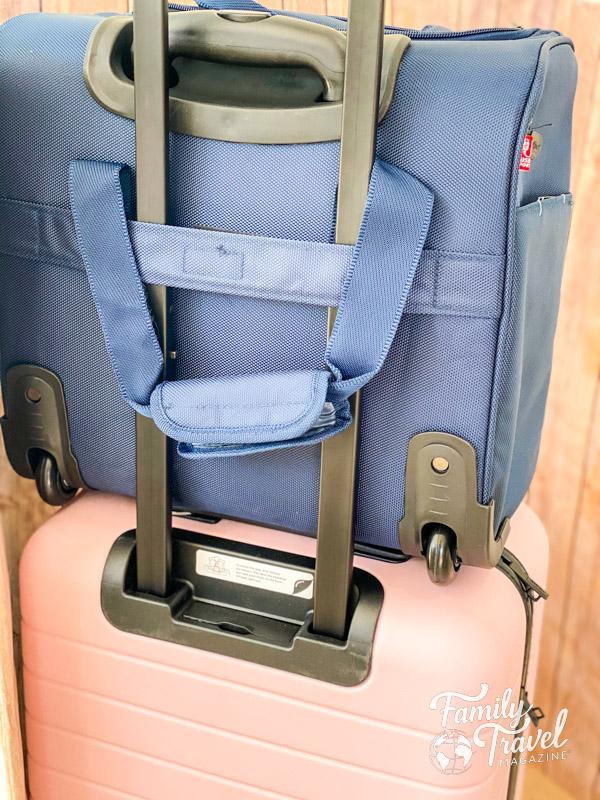
3. Safeguarding Critical Essentials in Personal Items
Certain items must never enter the checked baggage stream. These include:
- Prescription Medications and Medical Devices: Essential health items should always be packed in underseat luggage.
- Optics: Prescription eyeglasses, contact lenses, and specialized cleaning solutions.
- Valuables and Documents: Passports, identification, itineraries, financial cards, and electronic devices.
- Recreational Gear (Destination-Dependent): For travelers heading to beach or resort destinations, packing a lightweight swimsuit and sleepwear in the carry-on prevents immediate vacation disruption if checked bags miss a connection.
4. Deploying Real-Time Tracking Technology
The advent of consumer-grade Bluetooth tracking devices—such as Apple AirTags and similar ecosystem alternatives—has fundamentally shifted the balance of power during baggage disputes. Integrating these trackers into checked and carry-on luggage provides real-time visibility that often outpaces airline tracking systems.
- Secure Placement: Trackers should be housed in dedicated, secure mounts or zippered interior pockets to prevent them from dislodging if the suitcase undergoes rough handling on automated conveyor belts.
- Leveraging Shared Tracking: During claims processing, travelers can generate and share item location links with airline baggage service desks, enabling ground crews to pinpoint misrouted containers rapidly.
- Auditory Location: When searching through crowded airline backrooms or regional holding facilities, the ability to trigger an auditory ping from a tracking device helps locate bags hidden among hundreds of identical black roller cases.
5. Pre-Trip Visual Documentation
In the event of a total loss or extended delay, processing agents require detailed physical descriptions. Language barriers in foreign destinations can severely impede this process. A simple preventative measure is taking high-resolution photographs of all checked and carry-on bags before leaving home. Showing an agent a clear photograph of a unique teal hard-shell roller bag eliminates linguistic ambiguity and accelerates the creation of the Property Irregularity Report (PIR).
Future Outlook: The Evolution of Baggage Handling
Looking ahead, the aviation industry is under immense pressure to modernize baggage handling infrastructure to restore passenger confidence. Industry stakeholders are aggressively exploring several technological and operational transformations:
- RFID Integration: Transitioning away from traditional linear barcodes toward Radio Frequency Identification (RFID) baggage tags is becoming an industry standard. RFID tags allow baggage handlers and automated sorters to scan bags from a distance, dramatically reducing misrouting rates during high-volume connections.
- End-to-End Digital Tracking: Airlines are increasingly integrating real-time baggage status updates directly into consumer mobile applications, empowering passengers to monitor their bag’s journey from check-in counter to aircraft hold.
- Automated Self-Service Claims: Streamlining the claims filing process through mobile portals aims to eliminate the notorious airport service desk queues, allowing stranded passengers to file reports and authorize delivery preferences directly from their smartphones.
Until these technological upgrades are universally deployed across every regional and international hub, however, the burden of resilience remains with the traveler. By combining strategic decentralization, robust tracking hardware, and a calm, methodical approach to dispute resolution, passengers can navigate the uncertainties of modern transit and protect their hard-earned travel experiences.