




Executive Overview
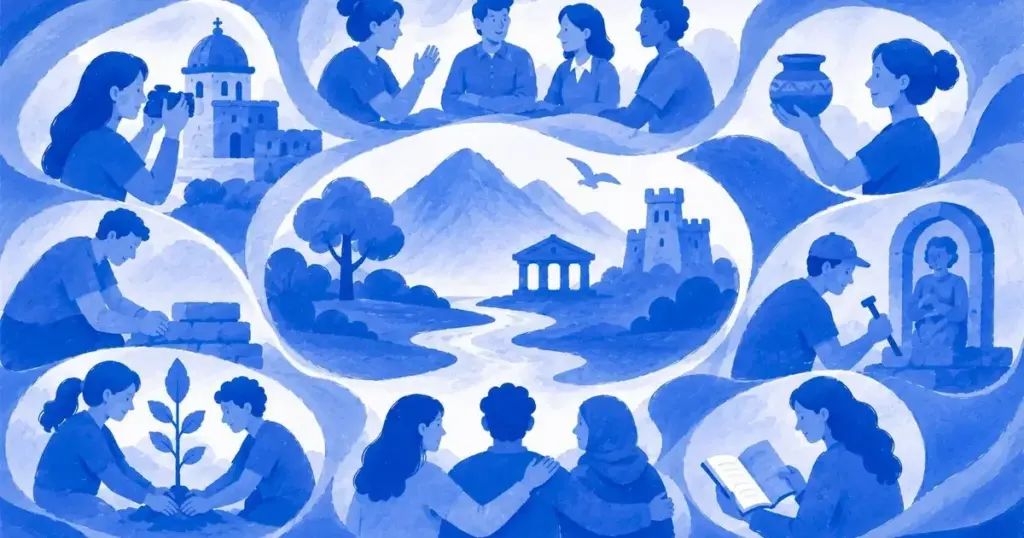
In an era defined by intensifying environmental pressures, rapid urbanization, geopolitical instability, and unprecedented threats to cultural and natural landmarks, the safeguarding of humanity’s shared legacy requires more than just governmental decree—it demands a whole-of-society approach. Recognizing this imperative, the United Nations Educational, Scientific and Cultural Organization (UNESCO) has officially launched the redesigned and comprehensive Civil Society and World Heritage webpage. This digital initiative serves as a centralized, authoritative hub designed to demystify the complex machinery of international heritage governance and to provide actionable, transparent pathways for non-governmental organizations (NGOs), Indigenous Peoples, local communities, academic institutions, media representatives, and other vital stakeholders to engage directly in the preservation of the planet’s most treasured sites.
For decades, the implementation of the 1972 Convention Concerning the Protection of the World Cultural and Natural Heritage—commonly known as the World Heritage Convention—has been driven primarily by State Parties. While governments bear the ultimate legal and administrative responsibility for the conservation of properties inscribed on the World Heritage List, history has repeatedly demonstrated that sustainable protection is impossible without the active, vigilant participation of those who live adjacent to these sites, study them, or advocate for their integrity.
The newly minted platform bridges the historical gap between grassroots action and high-level international diplomacy. By demystifying the governance framework of the World Heritage system, providing rigorous reference materials, and outlining precise mechanisms for engagement—such as participating as observers at World Heritage Committee sessions, submitting Third-Party Information, and contributing to Reactive Monitoring missions—UNESCO is signaling a profound cultural shift. This is not merely an informational upgrade; it is a strategic democratization of heritage management, ensuring that local wisdom, scientific rigor, and public accountability stand at the forefront of international conservation efforts.
Detailed Chronology: The Evolution of Civil Society Engagement in World Heritage
To fully appreciate the significance of UNESCO’s new digital resource, it is necessary to examine the historical trajectory that transformed civil society from an external observer into an integral pillar of the global heritage conservation architecture.
1972–1990s: The Intergovernmental Foundation and Early Exclusions
When the General Conference of UNESCO adopted the World Heritage Convention on November 16, 1972, its foundational architecture was inherently intergovernmental. The treaty was conceived as an agreement between sovereign states, establishing the World Heritage Committee as the primary decision-making body composed exclusively of elected State Parties. During the formative decades of the Convention, the voices of local communities, Indigenous Peoples, and independent civil society organizations were frequently marginalized. Conservation decisions were made behind closed doors in diplomatic capitals, often divorced from the realities on the ground where local populations bore the socio-economic consequences of site designation and conservation restrictions.
The Late 1990s to 2000s: The Rise of the Advisory Bodies and Public Pressure
As the number of inscribed properties grew exponentially throughout the late 20th century, the limitations of a purely state-centric model became glaringly apparent. Environmental degradation, armed conflict, and unsustainable tourism development began threatening properties faster than governments could—or would—respond. During this period, the official Advisory Bodies to the World Heritage Committee—namely the International Union for Conservation of Nature (IUCN) for natural sites, the International Council on Monuments and Sites (ICOMOS) for cultural sites, and the International Centre for the Study of the Preservation and Restoration of Cultural Property (ICCROM)—began acting as crucial conduits for civil society concerns. NGOs and academic institutions increasingly mobilized public opinion, bringing unauthorized developments and environmental violations to the international stage through independent shadow reports and media campaigns.
2007: The Budapest Declaration and the "5Cs" Strategic Objectives
A watershed moment in the modernization of the World Heritage system occurred with the adoption of the Budapest Declaration on World Heritage in 2002, which subsequently birthed the "5Cs" strategic objectives endorsed by the World Heritage Committee in 2007: Credibility, Conservation, Capacity-building, Communication, and Communities.
For the first time, "Communities" was formally elevated to a core pillar of strategic focus. This policy evolution acknowledged that heritage sites cannot be effectively protected in isolation from the people who inhabit, manage, or derive their cultural identity from them. It opened the door for progressive reforms regarding how non-governmental actors could interact with official committee proceedings, laying the groundwork for more formalized participatory mechanisms over the subsequent decade and a half.
2010s–2023: The Digital Pivot and Demands for Transparency
As global connectivity expanded, civil society actors increasingly demanded greater transparency and digital access to UNESCO’s proceedings. The opaque nature of document sharing, accreditation processes, and submission deadlines often acted as an invisible barrier, preventing under-resourced Indigenous groups and grassroots NGOs from participating in critical debates affecting their ancestral lands and local economies. The COVID-19 pandemic further accelerated the need for robust digital infrastructure, as physical attendance at World Heritage Committee sessions was severely restricted, forcing a rapid evolution toward hybrid and digitally mediated engagement models.
2024 and Beyond: The Launch of the Civil Society and World Heritage Webpage
Culminating years of internal dialogue, pressure from civil society coalitions, and institutional modernization efforts, UNESCO’s World Heritage Centre rolled out the dedicated Civil Society and World Heritage webpage. This milestone represents the first time all disparate guidelines, legal frameworks, and submission protocols have been synthesized into a single, user-friendly digital repository. It marks the transition from an era of ad-hoc engagement to a standardized, institutionalized framework of participatory global governance.
Supporting Context & Metrics: The Scale of World Heritage and Civil Society Impact
Understanding the necessity of this new digital portal requires examining the staggering scale of the World Heritage system and the quantitative evidence supporting civil society integration.
The Scope of the World Heritage List
As of the current reporting cycle, the UNESCO World Heritage List comprises over 1,190 properties distributed across more than 165 State Parties. These sites are categorized into:
- Cultural Properties: Monuments, groups of buildings, and sites of historical, aesthetic, archaeological, scientific, ethnological, or anthropological significance (approx. 73%).
- Natural Properties: Outstanding physical, biological, and geological formations, natural habitats of threatened species, and areas of scientific or conservation value (approx. 22%).
- Mixed Properties: Sites that incorporate significant elements of both natural and cultural importance (approx. 5%).
Managing this vast portfolio is an immense logistical and political challenge. State Parties often face severe budgetary constraints, institutional corruption, political instability, or competing economic priorities (such as industrial extraction, logging, and mass tourism) that threaten the "Outstanding Universal Value" (OUV) of these sites.
The Economics and Demographics of Conservation
Quantitative studies conducted by conservation economists and policy institutes consistently reveal that community-led and NGO-supported conservation initiatives yield significantly higher long-term resilience against environmental degradation compared to top-down government mandates alone.
- Indigenous Stewardship: According to environmental assessments, over 40% of all ecologically intact landscapes worldwide—including numerous World Heritage natural sites—are traditionally managed, owned, or occupied by Indigenous Peoples. Their inclusion is not merely a moral imperative; it is a scientific necessity for biodiversity preservation.
- The Threat Matrix: According to periodic reporting by the World Heritage Centre, more than 50% of sites currently inscribed on the List of World Heritage in Danger suffer from governance deficits, institutional weaknesses, or a lack of stakeholder consultation during development planning.
How the New Webpage Addresses Information Asymmetry
Historically, one of the greatest hurdles faced by grassroots organizations was informational friction. Knowing who to contact, when to submit third-party intelligence regarding an endangered site, and how to frame observations in compliance with the stringent legal protocols of the World Heritage Convention was a privilege largely restricted to well-funded international NGOs with permanent liaison offices in Paris or Geneva.
The new webpage dismantles this informational asymmetry by providing:
- Clear Governance Overviews: Step-by-step guides explaining the relationship between the General Assembly, the World Heritage Committee, the Secretariat, and the Advisory Bodies.
- Resource Mapping: Direct access to operational guidelines, state-of-conservation reporting templates, and training materials.
- Procedural Roadmaps: Transparent instructions detailing the exact legal windows during which civil society groups can intervene in committee sessions or submit critical conservation alerts.
Official Statements and Institutional Perspectives
The unveiling of the Civil Society and World Heritage webpage has drawn widespread acclaim from international leaders, environmental advocates, and heritage professionals, underscoring its potential to transform global conservation practices.
In a briefing released by the UNESCO World Heritage Centre, institutional leadership emphasized the indispensable nature of public stewardship:
"The protection of our shared heritage is far too vast a responsibility to rest solely on the shoulders of governments. Around the globe, it is local communities, Indigenous Peoples, dedicated non-governmental organizations, and passionate academics who serve as the true frontline defenders of our cultural and natural treasures. This new webpage is designed to open the doors of international diplomacy, equipping these vital stakeholders with the knowledge, tools, and pathways they need to make their voices heard where decisions are made."
Representatives from major international conservation networks have also voiced their endorsement. Dr. Elena Vance, Senior Director of Global Heritage Policy at the International Conservation Coalition, noted the practical implications of the portal:
"For decades, navigating the bureaucratic intricacies of the World Heritage system felt like trying to enter a fortress without a map. Grassroots organizations often possessed critical on-the-ground intelligence regarding illegal mining, deforestation, or unauthorized construction threatening World Heritage sites, but lacked the procedural literacy to submit that data effectively. By centralizing these resources into an accessible digital format, UNESCO has bridged the gap between local vigilance and international accountability."
Furthermore, Indigenous leadership councils have welcomed the initiative while stressing the ongoing need for continuous dialogue. A pa’i (spokesperson) for the Global Indigenous Heritage Network stated:
"Our peoples have protected these landscapes for generations, long before modern international treaties were written. While this digital platform is a commendable and necessary step toward transparency, its true success will be measured by how effectively it amplifies Indigenous voices in the actual halls of power, ensuring our traditional ecological knowledge is treated not as an advisory afterthought, but as binding wisdom in the protection of our sacred lands."
Future Outlook: The Road Ahead for Participatory Heritage Governance
As the World Heritage Convention approaches its landmark decades of operation, the launch of the Civil Society and World Heritage webpage represents a foundational step toward a more inclusive, transparent, and resilient future for global heritage management. However, experts emphasize that digital tools are only as effective as the institutional commitment behind them.
Emerging Challenges in the Digital and Environmental Age
Looking forward, civil society actors engaging with the World Heritage system will face increasingly complex and high-stakes challenges:
- Climate Change and Environmental Extremes: Rapidly accelerating climate impacts—such as catastrophic wildfires, rising sea levels threatening coastal cultural sites, and glacial retreat—require agile, real-time reporting mechanisms. Civil society networks will play an indispensable role in monitoring climate vulnerabilities where state monitoring systems are overwhelmed.
- Over-Tourism and Commercialization: Post-pandemic tourism surges are placing immense physical strain on urban historic centers and fragile natural ecosystems. Local resident associations and civic groups are often the first to sound the alarm against unsustainable commercial exploitation.
- Digital Disinformation and Greenwashing: As corporate interests increasingly seek to leverage the prestige of World Heritage branding while engaging in environmentally destructive practices nearby, independent academic institutions and investigative media must utilize rigorous third-party reporting frameworks to hold developers and governments accountable.
Strategic Recommendations for Maximizing the Portal’s Impact
To ensure that the new webpage fulfills its transformative potential, heritage policy analysts recommend several key follow-up initiatives by UNESCO and State Parties:
- Multilingual Expansion: While the current platform is robust, ongoing efforts must be made to translate all guidelines, submission templates, and training modules into Indigenous and regional languages to ensure true accessibility for marginalized communities.
- Capacity-Building Workshops: UNESCO, in collaboration with its Advisory Bodies, should deploy regional training seminars targeting grassroots organizations, teaching them how to leverage the newly published resources for maximum legal and conservation impact.
- Institutional Responsiveness: The World Heritage Committee must establish clear feedback loops to demonstrate to civil society contributors that their Third-Party Information and Reactive Monitoring inputs are systematically evaluated and integrated into official state-of-conservation evaluations.
Conclusion
UNESCO’s new Civil Society and World Heritage webpage is far more than a routine administrative update; it is a declaration of democratic intent in the realm of global conservation. By empowering non-governmental organizations, local communities, Indigenous Peoples, and independent experts with transparent guidance and actionable engagement protocols, UNESCO has fortified the global defense network protecting humanity’s shared legacy. As the world navigates an increasingly volatile environmental and geopolitical landscape, the success of the World Heritage Convention will depend fundamentally on the strength, vigilance, and active participation of the global civil society.