



Executive Overview
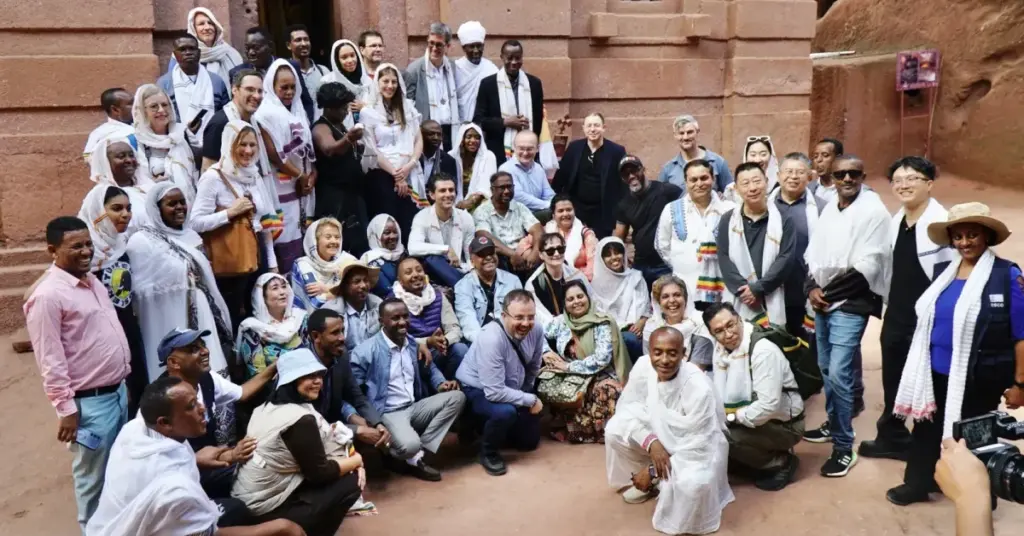
LALIBELA, ETHIOPIA — In a resounding testament to the enduring power of cultural diplomacy, a high-level delegation comprising over 70 representatives from more than 40 foreign embassies, United Nations agencies, and international development partners gathered in the historic highlands of northern Ethiopia. Held from July 3 to July 4, 2026, this unprecedented two-day diplomatic mission was organized to experience, evaluate, and champion the preservation of the Rock-Hewn Churches of Lalibela—a UNESCO World Heritage site universally described by visiting envoys as an architectural achievement that is quite simply “out of this world.”
Co-convened by the UNESCO Addis Ababa Liaison Office in close partnership with the Ministry of Tourism of the Federal Democratic Republic of Ethiopia, the Ethiopian Heritage Authority, the Ethiopian Orthodox Tewahedo Church, the Amhara Regional Government, the Lalibela City Administration, and the French-backed Sustainable Lalibela Project, the visit transcended mere tourism. It served as a vital geopolitical and cultural summit. Against a backdrop of shifting global alliances and competing international priorities, the gathering underscored how shared heritage can serve as a powerful catalyst for international cooperation, community resilience, and renewed financial and technical commitments to safeguarding humanity’s collective past.
For two intensive days, the delegation immersed themselves in the labyrinthine stone trenches, subterranean passageways, and towering monolithic facades of the 13th-century sanctuaries. They engaged in direct dialogues with local religious custodians, community leaders, and conservation experts. The overarching objective of the mission was twofold: to witness firsthand the breathtaking genius of medieval Ethiopian engineering and to confront the mounting, complex vulnerabilities that threaten this irreplaceable living sanctuary in the 21st century.
Detailed Chronology of the Diplomatic Mission
Day One: Arrival, Immersion, and the Northern Cluster
The mission commenced on the crisp morning of July 3, 2026, as a heavily anticipated convoy of international diplomats, UN resident coordinators, and cultural attachés touched down at Lalibela Airport. Welcomed by regional dignitaries, traditional leaders, and clergy of the Ethiopian Orthodox Tewahedo Church, the delegation was immediately enveloped in the palpable spiritual atmosphere that defines the region.
Following a brief opening reception that highlighted the deep historical ties between Ethiopia and the international community, the delegation embarked on a comprehensive tour of the First Group of Lalibela’s rock-hewn churches, situated to the northern bank of the symbolic Jordan River.
- Bete Medhane Alem (House of the Saviour of the World): The delegation’s first major stop set a tone of profound reverence. Widely recognized as the largest monolithic church in the world, Bete Medhane Alem captivated the ambassadors with its imposing exterior colonnade of 72 square pillars—reminiscent of classical Greek architecture yet entirely indigenous in execution. Envoys walked the dimly lit aisles, observing how modern sunlight pierced through centuries-old clerestory windows to illuminate ongoing prayer services.
- Bete Mariam (House of Mary): Moving through a subterranean passageway, the delegation entered Bete Mariam, celebrated for its exquisite interior reliefs, frescoes, and finely carved baptismal basin. Here, local priests demonstrated ancient liturgical chants, offering the international guests a sensory connection to a unbroken Christian tradition spanning over 800 years.
- Bete Golgotha Mikael and the Selassie Chapel: The morning concluded with a visit to the deeply sacred twin sanctuaries of Bete Golgotha and Bete Selassie, known for their hauntingly expressive life-sized bas-reliefs of saints. Given the delicate microclimate of these inner chambers, access was carefully regulated, underscoring to the diplomats the immense logistical challenges of managing high-profile tourism in fragile subterranean environments.
Following a working lunch featuring regional Ethiopian cuisine—where discussions focused on sustainable tourism frameworks—the afternoon session featured technical briefings by conservation architects from the Sustainable Lalibela Project. Experts detailed ongoing structural stabilization projects, drainage management improvements, and the precarious geology of the reddish scoria volcanic tuff from which the churches were carved.
Day Two: The Southern Cluster, Community Engagement, and the Cross of Saint George
The second day, July 4, 2026, shifted focus to the Southern Group of churches across the Jordan River and culminated in an audience with local community stakeholders and religious authorities.
- Bete Amanuel and Bete Qeddus Mercoreus: The morning began at Bete Amanuel, widely considered the finest example of the Aksumite architectural style integrated into the Lalibela complex, featuring intricate friezes and sophisticated multi-tiered masonry patterns carved entirely from solid rock. The diplomats then traversed the rock-cut tunnels to explore Bete Qeddus Mercoreus, an expansive, cave-like sanctuary that reveals the evolving phases of the site’s historical excavation.
- Bete Ghiorgis (The Church of Saint George): The mission reached its emotional and visual climax at midday with a visit to Bete Ghiorgis, the iconic, cross-shaped monolithic church that serves as the universal emblem of Ethiopian Christianity and global heritage. Isolated within a deep, sheer-walled rock pit, the structure elicited audible gasps of awe from the assembled ambassadors. Several envoys spent extended periods sketching, photographing, and discussing the mathematical precision required to carve a 15-meter-high cruciform church from the top down without a single structural miscalculation.
- The Afternoon Symposia and Stakeholder Panels: The final leg of the mission transitioned from aesthetic appreciation to actionable policy. Convened in a traditional venue overlooking the Ethiopian highlands, the delegation participated in high-level roundtables with local youth groups, artisans, women’s cooperatives, and church elders. These sessions provided a platform for local voices to articulate the socio-economic realities of living adjacent to a World Heritage site, emphasizing that conservation efforts must directly benefit the host community through equitable economic opportunities, improved infrastructure, and educational programs.
Supporting Context & Metrics: History, Architecture, and Vulnerability
The Historical and Architectural Genesis
To fully grasp the magnitude of the diplomatic interest in Lalibela, one must examine its extraordinary origins. Inscribed on the UNESCO World Heritage List in 1978, the site was conceived in the late 12th and early 13th centuries by King Lalibela of the Zagwe Dynasty. According to ecclesiastical and historical tradition, following the capture of Jerusalem by Muslim forces under Saladin, King Lalibela sought to construct a “New Jerusalem” on Ethiopian soil, enabling Christian pilgrims who could no longer travel to the Holy Land to experience a physical manifestation of the heavenly city locally.
Unlike traditional masonry architecture, where stones are laid block by block, the 11 churches of Lalibela represent an inverted construction methodology. Artisans carved downward into the living volcanic tuff, excavating deep trenches to isolate massive blocks of stone before meticulously chiseling out the interiors, vaults, columns, windows, and decorative motifs. This feat of monolithic engineering remains one of the greatest technological mysteries of the medieval world, completed—according to historical chronicles—within a remarkably compressed timeframe of approximately 24 years.
Quantifying the Scope and Scale
- 11 Monolithic Churches: Grouped geographically into two primary clusters separated by the River Jordan (itself carved to mimic the biblical river), alongside a third, isolated masterpiece (Bete Ghiorgis).
- 70+ High-Level Envoys: Representing more than 40 nations, bilateral donor agencies, and multilateral bodies, including the European Union, the World Bank, various UN entities, and African Union member states.
- Decades of International Partnership: Marking nearly five decades of formal UNESCO recognition, reinforced by major multilateral interventions such as the French-supported Sustainable Lalibela Project, which has injected millions of euros into structural stabilization and heritage management.
Conservation Vulnerabilities and Modern Threats
Despite their resilience across eight centuries, the Rock-Hewn Churches face unprecedented contemporary threats that galvanized the July 2026 diplomatic mission:
- Geological and Structural Degradation: The soft, reddish volcanic scoria is highly susceptible to weathering, water infiltration, and micro-fracturing. Decades of heavy seasonal rainfall, compounded by changing climate patterns, have accelerated erosion across the subterranean courtyards.
- Environmental Pressures: Deforestation in the surrounding highlands has intensified soil erosion, leading to increased runoff during the rainy season and threatening the integrity of underground drainage networks.
- Socio-Economic Strains: Balancing the demands of a growing population, modern tourism infrastructure, and the sacred requirements of a living pilgrimage site requires delicate spatial and economic planning. The COVID-19 pandemic and subsequent regional conflicts severely impacted local tourism revenues, highlighting the urgent need for diversified, resilient economic support systems.
Official Statements and Diplomatic Perspectives
The gravity of the mission was reflected in the impassioned statements delivered by key figures throughout the two-day event, capturing a unified resolve to protect Lalibela for posterity.
Dr. in a statement echoing the sentiment of the UNESCO Addis Ababa Liaison Office:
"Lalibela is not merely an architectural wonder frozen in time; it is a beating heart of human creativity, spiritual devotion, and cultural continuity. When we look at these monuments, we are reminded of what human beings can achieve when driven by a shared vision of the divine and the eternal. The overwhelming turnout of the diplomatic community this week demonstrates that safeguarding Lalibela is a shared global responsibility that transcends national borders."
A senior European Ambassador, speaking on behalf of the visiting diplomatic corps after viewing Bete Ghiorgis, remarked:
"Words genuinely fail to capture the profound impact of standing before these monolithic sanctuaries. Visiting ambassadors have repeatedly described Lalibela as ‘out of this world,’ and indeed, it feels as though it was shaped by celestial hands. But this visit is much more than sightseeing. It is a reaffirmation of our collective commitment to stand shoulder-to-shoulder with the people and government of Ethiopia to ensure that future generations inherit this priceless chapter of human history intact."
A representative of the Ethiopian Orthodox Tewahedo Church emphasized the spiritual dimensions of the preservation effort:
"These stones have echoed with the prayers, chants, and tears of our ancestors for over eight hundred years. They are alive. They breathe with our faith. We welcome our brothers and sisters from across the globe not just as tourists or observers, but as partners in a sacred duty to protect the earthly manifestation of the New Jerusalem."
A spokesperson for the Ministry of Tourism of the Federal Democratic Republic of Ethiopia added:
"This high-level mission marks a turning point in our post-crisis recovery and sustainable tourism strategy. By aligning the resources of the Ethiopian Heritage Authority, regional administrations, international partners like France through the Sustainable Lalibela Project, and UNESCO, we are building a robust, transparent, and community-centered framework that guarantees Lalibela’s safety and prosperity for centuries to come."
Future Outlook: A Roadmap for Sustainable Preservation
As the diplomatic delegation concluded their two-day mission and departed Lalibela on the evening of July 4, 2026, the focus immediately shifted from reflection to implementation. The insights gathered during the site visits and stakeholder roundtables are set to form the foundation of an enhanced Lalibela Master Conservation and Sustainable Development Plan, scheduled for formal adoption later this year.
Key Pillars of the Future Action Plan:
- Advanced Structural Monitoring and Stabilization: Leveraging cutting-edge engineering technologies—including non-destructive geophysical testing, 3D laser scanning, and advanced hydrological drainage management—to monitor and mitigate rock degradation in real-time.
- Enhanced Community-Based Heritage Management: Establishing formal frameworks that ensure local communities, youth, and religious institutions are central decision-makers in tourism management, revenue sharing, and heritage interpretation.
- Climate-Resilient Infrastructure: Implementing large-scale reforestation and watershed management initiatives in the surrounding highlands to combat soil erosion and protect the subterranean microclimates of the church complexes.
- Strengthened International Funding Mechanisms: Expanding the scope of the Sustainable Lalibela Project through multi-donor trust funds, public-private partnerships, and targeted grants from international cultural preservation funds.
Ultimately, the July 2026 diplomatic mission to Lalibela demonstrated that cultural heritage possesses an unmatched capacity to bridge divides. In an era marked by global fragmentation, the collective gathering of diverse nations beneath the African highlands to safeguard a 13th-century sanctuary of faith and stone sent an unmistakable message: humanity’s shared treasures remain a unifying beacon of hope, resilience, and enduring cooperation.