





Marking its sixth consecutive year of publication, the comprehensive 2014 Cruise Market Forecast arrives at a critical juncture for the global maritime tourism sector. Over the past half-decade, the cruise industry has been forced to navigate some of the most turbulent operational and economic waters in modern history. From the lingering economic tremors of the Great Recession to a series of high-profile, historically rare maritime incidents, cruise operators have repeatedly demonstrated structural adaptability, crisis management proficiency, and remarkable financial recovery.
As we cross the threshold into 2014, the industry is poised to transition away from crisis management and back toward its historic, long-term growth trajectories. Despite encountering unprecedented media scrutiny and consumer confidence hurdles following the tragic grounding of the Costa Concordia in 2012 and the engine-room fire aboard the Carnival Triumph in early 2013, the broader cruise ecosystem has proven resilient.
This year’s forecast details a measured, strategic return to expansion. Fleet modernization programs are accelerating, shipyard order books are swelling, and multi-billion-dollar investments are once again flowing into next-generation vessels designed to redefine the passenger experience. Crucially, underlying consumer demand remains remarkably robust, supported by aggressive pricing strategies, enhanced safety protocols, and expanding geographic source markets.
The structural health of the industry can no longer be measured solely by near-term revenue dips, but rather by its long-term capacity expansion and sustained demographic appeal. With millions of first-time cruisers continuing to enter the market each year, the 2014 forecast serves as an authoritative roadmap for investors, industry executives, and maritime analysts evaluating the sector’s post-crisis recovery.
Detailed Chronology: Weathering the Storm (2008–2013)
To properly contextualize the optimistic projections of the 2014 forecast, one must first examine the compounding pressures that tested the industry’s fortitude between 2008 and 2013. This five-year epoch was defined by macroeconomic instability and a cluster of high-profile operational incidents that challenged public perception of cruise safety.
The Macroeconomic Headwinds: The Great Recession
The journey began in earnest with the onset of the Great Recession in 2008. As global financial markets seized up and consumer discretionary spending plummeted, travel and tourism sectors faced an immediate contraction. Unlike land-based resorts that could easily shutter rooms or cut staff overnight, major cruise corporations—such as Carnival Corporation, Royal Caribbean Cruises Ltd., and Norwegian Cruise Line—faced immense fixed capital costs tied to massive, multi-million-dollar vessels.
To survive the downturn, cruise lines engaged in aggressive discounting and yield-management strategies. While these tactics successfully maintained high occupancy rates and kept ships at sea, they severely eroded baseline profit margins and average ticket revenues. The industry proved that consumers would still sail if the price was right, but rebuilding yield integrity became a multi-year uphill battle that extended well into the recovery phase of the early 2010s.
The Costa Concordia Crisis (January 2012)
Just as global economic indicators began signaling a fragile recovery, the cruise industry was struck by an unprecedented public relations and operational disaster. On January 13, 2012, the luxury liner Costa Concordia, flagship of Carnival-owned Costa Cruises, struck a rock reef off the coast of Isola del Giglio, Italy, resulting in a tragic loss of life and a catastrophic hull breach.
The immediate fallout was seismic. Global media coverage dominated news cycles for weeks, casting an intense, critical spotlight on maritime safety procedures, crew training, evacuation protocols, and corporate crisis communications. Consumer confidence experienced a sharp, palpable dip, particularly in the European source market. Cancellation rates spiked in the weeks following the disaster, forcing lines to ramp up marketing expenditures, reassure jittery travelers, and reiterate the stringent safety measures governed by the International Maritime Organization (IMO) under SOLAS (Safety of Life at Sea) regulations.
The Carnival Triumph Incident (February 2013)
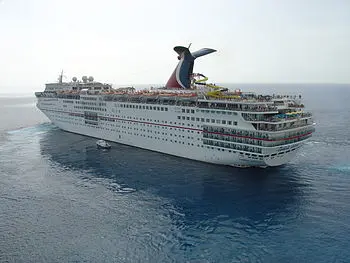
Barely had the industry begun to emerge from the shadow of the Costa Concordia when a second major incident struck the Carnival family of brands. In February 2013, an engine-room fire crippled the Carnival Triumph, leaving the 2,754-passenger vessel dead in the water in the Gulf of Mexico without power, plumbing, or climate control for several days.
The harrowing media images of passengers enduring unsanitary conditions while being towed into mobile, improvised port facilities in Alabama created a secondary public relations storm. The incident forced Carnival Cruise Line—the flagship brand of the world’s largest cruise operator—to launch an immediate, sweeping operational review.
The financial and operational impacts of these consecutive events were tangible. The combined effect of the Costa Concordia and Carnival Triumph incidents directly impacted Carnival Cruise Line’s actual revenues by approximately -5.8% compared to the original 2013 financial forecasts (which had been projected just two months prior to the Triumph fire in November 2012).
However, a critical nuance highlighted in the market data is that the fallout was largely localized to the Carnival brand and the immediate wake of the incidents. Other major cruise lines—including Royal Caribbean, Celebrity Cruises, Princess Cruises, and independent European operators—largely ended 2013 in alignment with prior financial estimates, proving that the broader structural demand for cruising remained fundamentally intact despite the negative headlines.
Supporting Context & Metrics: The 2014 Landscape
With the worst of the reputational and economic fallout receding into the rearview mirror, the 2014 cruise market forecast points toward a definitive normalization. The sector is transitioning away from reactive defensive maneuvers and pivoting back toward sustainable, historic growth trends.
Fleet Expansion and Passenger Capacity Additions
The physical manifestation of this renewed confidence is evident in the delivery schedules for new tonnage. In 2014 alone, a total of six brand-new cruise ships will enter service, injecting a massive wave of passenger capacity into the global fleet. This represents a net gain of 17,410 berths.
Among the standout vessels joining the global fleet in 2014 are:
- Norwegian Getaway: A 4,000-passenger behemoth designed to bolster Norwegian Cruise Line’s contemporary fleet with innovative open-air dining and entertainment venues.
- Regal Princess: A 3,600-passenger luxury vessel continuing Princess Cruises’ tradition of elegant, destination-immersive design.
- Mein Schiff 3: A 2,500-guest contemporary ship tailored by TUI Cruises for the expanding German-speaking vacation market.
- Costa Diadema: A 3,000-berth flagship destined to anchor Costa Cruises’ fleet recovery and reaffirm consumer trust in the brand.
- Quantum of the Seas: A technologically revolutionary 4,100-passenger vessel from Royal Caribbean, featuring unprecedented onboard attractions such as skydiving simulators and robotic bartenders.
Long-Term Order Books and Revenue Projections
Looking beyond the immediate horizon, the industry’s capital expenditure pipeline is exceptionally healthy. Between 2014 and the end of 2016, an additional 17 new cruise ships are scheduled for delivery. These vessels will collectively add 41,162 berths to the global inventory, representing a substantial 9.1% increase in overall passenger capacity over a three-year period.
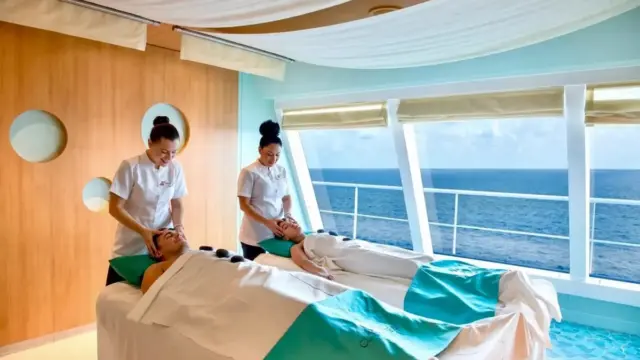
This influx of state-of-the-art hardware is not merely about physical size; it is a direct driver of corporate profitability. Market analysts project that these 17 upcoming vessels will generate an estimated $3.4 billion in incremental annual revenue for the global cruise industry. Newer ships command higher ticket premiums, offer enhanced onboard revenue opportunities through specialty dining, gaming, and spa services, and operate with significantly improved fuel efficiency—a vital operational metric given historical volatility in bunker fuel prices.
Official Statements and Industry Perspectives
Corporate leadership across major cruise lines has universally acknowledged the challenges of the 2008–2013 cycle while expressing profound optimism regarding the multi-year outlook. In statements accompanying the release of the 2014 forecast, industry stakeholders emphasized that the crucible of recent years has ultimately forged a safer, leaner, and more responsive sector.
"We have navigated a period of unique historical anomaly," noted one leading maritime market analyst during the compilation of the forecast data. "When an industry faces simultaneous macroeconomic collapse and isolated but severe operational mishaps, its true resilience is tested. The fact that cruise corporations absorbed a nearly 6% revenue contraction at their largest brand and emerged with stable balance sheets and aggressive new-build pipelines is a testament to the fundamental appeal of the product."
Cruise line executives have echoed these sentiments, stressing that consumer loyalty has remained remarkably sticky. Repeat cruiser rates—traditionally one of the strongest metrics in the leisure travel sector—remained high throughout the crisis years. Furthermore, targeted marketing campaigns emphasizing safety, transparency, and product value successfully converted new demographic cohorts, ensuring that the customer acquisition funnel remained active.
Safety, compliance, and operational transparency have become the foundational pillars of official corporate communications. In the wake of the 2012 and 2013 incidents, major cruise operators voluntarily formed the Cruise Lines International Association (CLIA) Global Maritime Policy Committee, instituting proactive safety enhancements that exceeded mandatory international standards. These included rigorous bridge management audits, enhanced crew training protocols, independent safety reviews, and increased redundancies in critical shipboard systems such as power generation and fire suppression.
Future Outlook: Horizons to 2018 and Beyond
As the industry looks past the immediate milestones of 2014, long-term predictive models point toward sustained, structural growth through the end of the decade. The democratization of cruise travel, combined with rising disposable incomes in emerging economic centers, positions the maritime tourism sector for unprecedented scale.
Demographic Milestones and Passenger Volume Projections
According to long-range forecasts extending out to 2018, the global cruise market is projected to welcome a staggering 24.1 million passengers annually. This milestone represents a monumental expansion in consumer adoption, driven by targeted marketing to Millennials, Gen-X families, and affluent retirees seeking hassle-free multi-destination travel.
The geographic distribution of these future passengers underscores both the maturity of traditional markets and the untapped potential of developing regions:
- North America: Will remain the undisputed powerhouse of the global cruise industry, originating 58.8% of all cruise passengers worldwide. The proximity of major U.S. homeports (such as Miami, Port Everglades, Galveston, and Port Canaveral) to Caribbean itineraries ensures a continuous, high-volume flow of domestic travelers.
- Europe: Representing 27.2% of global passenger origin, Europe continues to be a vital growth engine. Despite the localized impact of the Costa Concordia incident, European demand for both Mediterranean cruising and northern European fjords has rebounded strongly, supported by homeporting initiatives in the UK, Germany, Italy, and Spain.
- Asia-Pacific and Emerging Markets: Accounting for the remaining passenger share, regions such as China, Australia, and Southeast Asia represent the next frontier of explosive growth. Major lines are aggressively repositioning newer, larger vessels to Asian homeports to capture the burgeoning middle class in China.
Technological and Environmental Evolution
Looking toward the horizon, the future of cruising will be heavily defined by technological innovation and environmental stewardship. The ships entering service in 2014 and beyond are technological marvels compared to their predecessors. Innovations in hull design, air lubrication systems, advanced wastewater purification, and exhaust gas cleaning systems (scrubbers) are significantly reducing the environmental footprint of modern cruise fleets.
Furthermore, the integration of digital technology—ranging from wearable tracking devices for seamless embarkation and onboard purchases to high-speed satellite internet connectivity at sea—is transforming the passenger experience. Cruise lines are successfully shifting their demographic appeal, shedding outdated perceptions of the industry and positioning themselves as modern, all-inclusive floating smart-cities.
Conclusion
The release of the 2014 cruise market forecast marks the definitive end of an arduous chapter and the commencement of a confident new era. By successfully absorbing the shocks of the Great Recession and unprecedented operational incidents, the cruise industry has proven its structural integrity. With six new ships adding nearly 17,500 berths in 2014, a robust $3.4 billion revenue pipeline slated through 2016, and a clear path toward 24.1 million annual passengers by 2018, the global cruise sector is sailing into calm, sunlit waters with renewed purpose and formidable momentum.