Published August 23, 2026 By Graham Averill, National Parks Columnist
Executive Overview
As August races past its midpoint, the seasonal pendulum inevitably begins its slow, undeniable swing toward autumn. For outdoor enthusiasts, this late-summer window presents a paradox: the anticipatory crispness of impending fall whispers of flannel and campfires, yet the high-altitude sun and coastal warmth demand one final, unforgettable immersion in the great outdoors. Rather than capitulating prematurely to the changing season, travelers have a fleeting opportunity to extract the absolute maximum value from the dying embers of summer.
Water remains the ultimate antidote to late-season lethargy. Across the United States, the National Park System protects some of the most dynamic aquatic environments on the planet—ranging from glacially carved alpine jewels and wild, free-flowing rivers to secluded ocean beaches and whitewater tubing runs. This comprehensive guide details six premier, water-centric national park destinations designed to serve as the definitive punctuation mark for your summer. Whether you seek the solitude of an isolated coastal barrier island, the heart-pounding thrill of mountain rapids, or the meditative serenity of an alpine tarn beneath granite spires, this curation offers a tailored blueprint for every variety of traveler.
Detailed Chronology & Destination Breakdown
1. Assateague Island National Seashore (Virginia and Maryland)
Stretching 37 miles across the borderlands of Maryland and Virginia, Assateague Island is a dynamic barrier island famous worldwide for the wild horses that roam its dunes, grasslands, and shorelines. While land-based exploration offers immense visual rewards, the true heartbeat of an August adventure here lies in its marine ecosystems.
The OSV Beach Experience: On the Maryland side of the park, visitors can acquire an Over-Sand Vehicle (OSV) permit ($110 annually) to drive directly onto 12 miles of pristine, vehicle-accessible coastline. Because the National Park Service strictly caps the daily OSV zone allowance at 145 vehicles, advance planning is essential; however, this regulatory constraint guarantees a rare luxury: miles of uninterrupted coastline entirely to yourself. Travelers equipped with a longboard will find consistent, manageable beach breaks throughout the OSV corridor, where surfing alongside grazing wild horses creates an unforgettable surrealist landscape.
Side Adventure (Paddle the Bay): Escaping the Atlantic surf leads travelers to the western side of the barrier island. Launching a watercraft from Old Ferry Landing allows paddlers to navigate narrow, marshy channels that open into the expansive waters of Sinepuxent Bay. Clear summer visibility frequently reveals stingrays gliding silently beneath the hull. Local outfitters such as Assateague Outfitters provide kayak and SUP rentals starting at $30, alongside comprehensive guided natural history tours.
2. Lake Crescent, Olympic National Park (Washington)
Carved over millennia by retreating glacial ice and subsequently filled by centuries of pure rainwater, Lake Crescent in western Washington stands as Olympic National Park’s premier aquatic titan. Spanning 12 miles in length and plunging to depths exceeding 600 feet, the lake is an aquatic sanctuary defined by striking clarity. Due to exceptionally low nitrogen levels that inhibit algae growth, underwater visibility can reach up to 60 feet in optimal conditions.
Frontcountry Paddling: Frontcountry accessibility is seamless, featuring boat launches on both the eastern and western shores alongside public beaches and picnic areas. To preserve the tranquil atmosphere, motorized watercraft are strictly limited to a 5-mph speed limit, eliminating aggressive wakes and high-speed traffic. Venturing out in the early morning hours—before the regional winds take hold—yields glassy, reflective waters ideal for a peaceful paddle. Kayak rentals are available through the Log Cabin Resort starting at $25, serving as an ideal launch point for a short excursion to the Devil’s Punchbowl, a striking aqua-blue alcove crossed by a historic iron bridge that invites brave visitors to leap into the depths.
Side Adventure (The Spruce Railroad Trail): Cyclists can trade their watercraft for two wheels on the eight-mile, out-and-back Spruce Railroad Trail. This paved pathway hugs the northern perimeter of the lake, routing riders directly through two historic tunnels and across the wooden span at the Devil’s Punchbowl.
3. Enderts Beach, Redwood National Park (California)
Northern California’s Redwoods National Park preserves an interconnected mosaic of state and national jurisdictions safeguarding ancient forests, roaring rivers, and rugged coastlines. Tucked beneath dramatic seaside cliffs, Enderts Beach represents one of the region’s most visually striking coastal environments, accessible exclusively via a half-mile hiking descent that transitions from panoramic cliffside overlooks into a lush coastal forest.
Tidepool Exploration and Heavy Surf: Large and small rock formations punctuate the sandy expanse of Enderts, which has earned a stellar reputation for its rich marine tidepools. Because the open ocean currents are notoriously aggressive, swimming is strongly discouraged; instead, visitors should align their schedules with official low tide cycles to inspect concentrated pools teeming with sea urchins, anemones, and vibrant starfish. For elite, highly experienced surfers, mid-tide cycles unlock a formidable reef-and-sand-bottom break. The presence of powerful riptides and submerged boulders, however, strictly relegates this surf spot to seasoned veterans.
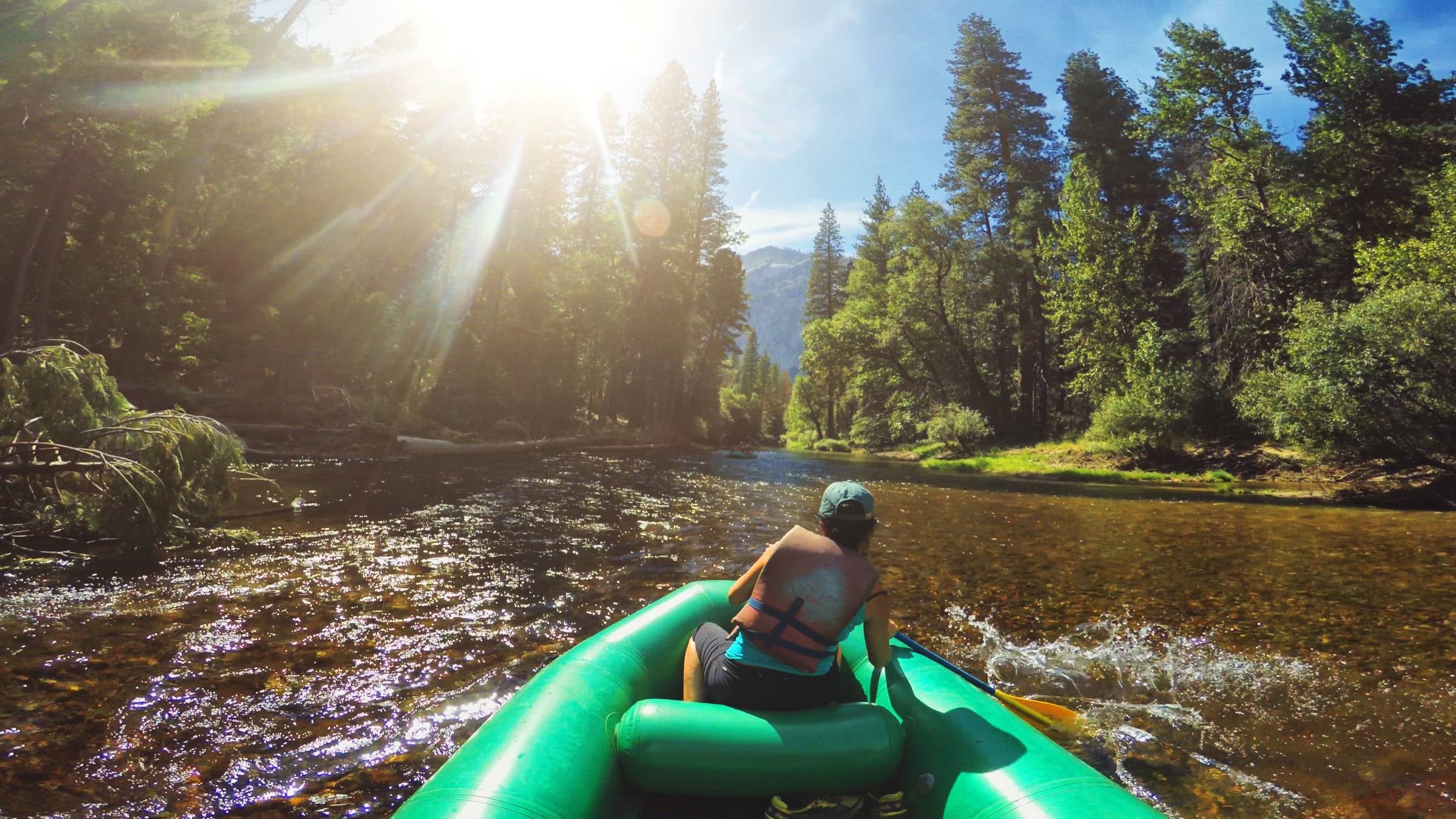
Side Adventure (Paddle the Smith River): Flowing completely free of dams, the Wild and Scenic Smith River represents the largest undammed river system in California. A particularly scenic stretch carves directly through the northern tier of the park. Characterized by mellow Class I-II rapids, the river is prime territory for inflatable kayaks ("duckies"). Equipment rentals and guided excursions are readily available through outfitters like Redwood Rides.
4. Deep Creek, Great Smoky Mountains National Park (North Carolina)
Conventional tubing conjures images of lazy, meandering floats paired with iced beverages. Deep Creek, situated along the southern boundary of the Great Smoky Mountains National Park near Bryson City, shatters this convention entirely.
Whitewater Tubing: Driven by mountain runoff, Deep Creek delivers an adrenaline-fueled whitewater tubing experience punctuated by Class II drops and continuous wave trains designed to thoroughly soak participants. It serves as an optimal late-August thermal refuge for visitors looking to escape the heavy southern humidity. Tubers can bring their own gear or utilize local outfitters located directly at the park entrance. Initiating the route requires a one-mile upstream hike along the Deep Creek Trail from the trailhead to the confluence with Indian Creek, offering numerous natural resting pools and swimming holes along the descent.
Side Adventure (The Waterfall Loop): The 2.4-mile Deep Creek Waterfalls Loop integrates several shorter paths into a cohesive, highly accessible trek. Hikers are treated to three distinct, magnificent waterfalls—Tom Branch Falls, Indian Creek Falls, and Juney Whank Falls—each plunging over sheer granite faces enveloped by dense temperate rainforest canopy.
5. Flathead River, Glacier National Park (Montana)
While Glacier National Park is internationally celebrated for its receding alpine ice fields and dramatic peaks, its hydrological network is equally compelling. The Flathead River offers a premier summer escape characterized by wide-open channels and consistent, gentle flows that prioritize wildlife observation over strenuous rapid navigation.
Scenic Floats: The Middle Fork of the Flathead River holds a Wild and Scenic designation, protecting its pristine ecological character. The southern border of the park is traced by a five-mile river corridor that translates into a tranquil three-hour float framed by massive mountain vistas and gravelly, sun-warmed beaches ideal for swimming pauses. Rafting operations are anchored by regional snowmelt cycles, typically running from late May through October, with August offering the absolute peak air temperatures. Companies such as Glacier Guides operate guided scenic floats starting at $84 per person, allowing passengers to sit back while professional guides manage the navigation.
Side Adventure (Hike to Avalanche Lake): The six-mile round-trip Avalanche Lake trail winds through an old-growth cedar and hemlock forest before terminating at a backcountry cirque lake anchored by towering granite walls. Depending on the residual snowpack, numerous ephemeral waterfalls cascade down the cliff faces into the icy alpine pool.
6. Cathedral Lakes, Yosemite National Park (California)
Countering the widespread assumption that Yosemite National Park is defined solely by its heavily visited main valley, the high country offers profound alpine isolation. The Cathedral Lakes sit directly at the base of 10,911-foot Cathedral Peak, defined by striking granite spires that dominate the horizon.
Backcountry Alpine Immersion: Accessing these high-altitude lakes requires a four-mile trek along the John Muir Trail, originating at the Tuolumne Meadows Visitor Center. Upper Cathedral Lake features small, sandy-granite beaches where visitors can unpack and wade into the crisp, transparent waters while surrounded by the Cathedral Range. Because high-elevation trails remain snowbound well into summer and succumb to early autumn storms by October, August is the premier window for visitation. Given that these alpine lakes remain frozen through early summer, the water temperature is bracingly cold—effectively functioning as a high-altitude cold plunge.
Side Adventure (Bouldering Upper Cathedral Lake): For climbers, the granite ledges along the southern shore of Upper Cathedral Lake offer concentrated bouldering opportunities. Bringing climbing shoes and a crash pad transforms a standard alpine hike into a multi-sport expedition, though simple scrambling across the low-angle granite expanses provides ample entertainment for visitors looking to test their balance.
Supporting Context & Metrics
The late-summer surge in national park visitation reflects broader trends within the American outdoor recreation economy. According to recent National Park Service (NPS) public use statistics, water-based recreational hubs within the park system experience a 35% spike in activity during the final six weeks of meteorological summer (July through August). This seasonal push is driven by visitors seeking climate resilience as regional heatwaves impact urban centers, turning alpine lakes and coastal seashores into vital refugia.
National Park Destination
Primary Water Activity
Key Environmental Feature
Operational / Access Constraint
Assateague Island
Beach Driving & Surfing
37-mile barrier island, wild horses
OSV permit required; capped at 145 vehicles/day
Olympic National Park
Kayaking & Cold Plunge
600-foot-deep glacial lake
5-mph motorized speed limit
Redwoods National Park
Tidepool Inspection & Surfing
Ancient coastal cliffs, marine life
Rugged hike-in access; dangerous riptides
Great Smoky Mountains
Whitewater Tubing
Class II drops, mountain streams
1-mile upstream hike required for float
Glacier National Park
Scenic River Floating
Wild and Scenic Middle Fork
Season runs late May to October
Yosemite National Park
Alpine Hiking & Cold Plunge
10,911-ft Cathedral Peak backdrop
High-elevation seasonality (July–October)
Official Statements
Land management agencies continue to emphasize the necessity of proactive planning and ecological stewardship as seasonal transitions approach.
"The late-summer period places unique demands on both our frontcountry and backcountry aquatic resources," notes an NPS regional visitor services spokesperson. "While we encourage the public to experience the profound restorative benefits of our marine, riverine, and lacustrine environments, visitors must remain vigilant regarding changing weather patterns, water temperatures, and regulatory capacities. Safety and resource protection must always take precedence over recreation."
Local outfitters and conservation partners echo these sentiments, emphasizing that responsible recreation directly safeguards the pristine condition of these delicate ecosystems for future generations.
Future Outlook
As climate variability alters seasonal baselines across North America, the traditional boundaries defining summer and autumn are increasingly blurred. Extended warm-weather windows are likely to shift peak recreational pressure deeper into September and October, forcing land managers to adapt operational strategies regarding seasonal permits, campground access, and water safety monitoring.
For the immediate future, however, the mandate for the modern traveler is clear: the window to experience the national parks at the intersection of high summer warmth and pristine aquatic immersion is rapidly closing. Securing a permit, packing a wetsuit or a river tube, and answering the call of these protected waters offers the most fitting conclusion to the seasonal cycle before the inevitable arrival of autumn frost.