

For decades, the mechanics of travel planning followed a predictable, place-first hierarchy. A traveler would select a destination—perhaps drawn by its beaches, its historic architecture, or its culinary reputation—and then look for activities, tours, and events to fill the itinerary. The place was the anchor; the activities were the accents.
Today, that traditional funnel has been completely inverted.
We have entered the era of the "event-first" journey, where a single date on a calendar—a stadium concert, a championship match, or a weekend music festival—serves as the primary catalyst for travel. The show or the game is no longer an optional add-on; it is the very reason the trip exists. The destination itself has become secondary, functioning as the stage upon which the primary event unfolds.
This behavioral pivot is reshaping the global travel landscape, forcing tourism boards, hotel chains, airlines, and local economies to rethink how they attract, host, and monetize visitors. The central question is no longer just how to convince travelers to visit a city, but how to capture and retain the massive financial windfall that arrives when hundreds of thousands of passionate fans descend upon a market all at once.
The Structural Shift in Consumer Demand
This phenomenon is not a temporary anomaly or a passing post-pandemic trend. Instead, it represents a permanent, structural shift in consumer priority. Modern travelers are increasingly prioritizing experiences and shared cultural moments over material goods, and they are willing to cross international borders to secure them.
Data from the world’s leading travel platforms underscores the sheer scale of this transformation. In the first quarter of 2026, Trip.com Group reported that entertainment-driven travel was one of its fastest-growing business segments, experiencing a staggering 74% year-over-year increase. This rapid growth indicates that booking travel around live events has transitioned from a niche behavior practiced by die-hard fans into a mainstream consumer habit.
What was once viewed as a series of isolated spikes in demand—such as a city hosting a major sports tournament once a decade—has now become a continuous cycle of event-driven migration. Whether it is a multi-city stadium tour by a pop superstar or a seasonal schedule of international sporting events, travel demand is increasingly concentrated around specific dates and venues, creating a highly dynamic and sometimes volatile market for hospitality operators.
Fandom as a Borderless Catalyst for Travel
The emotional connection between fans and their favorite artists or sports teams has become one of the most powerful economic forces in the travel industry. Fandom does not recognize geographic boundaries; a dedicated supporter will routinely plan international flights, secure visas, and arrange lodging just to experience a ninety-minute performance or match.
According to research conducted by Skift, over 70% of travelers now report that they are more likely to plan a trip around a live event than they were just five years ago. This surge in willingness to travel for entertainment has fundamentally altered how tourism demand forms.
Traditionally, destination marketing organizations (DMOs) worked to smooth out seasonality, using marketing campaigns to spread visitor numbers evenly across the spring, summer, and autumn months. Live tourism, however, operates on its own timeline. A tour routing or a tournament schedule compresses massive waves of visitors into highly specific weekends.
This compression presents both a massive opportunity and a logistical challenge. When hundreds of thousands of people arrive in a city simultaneously, they bring a concentrated burst of economic activity that can match or exceed an entire off-season’s worth of traditional tourism revenue. However, it also means that the destination’s tourism economy is dictated by the schedules of event promoters and sports leagues, rather than the natural seasonal patterns of the locality.
Tracking the Dollar: The Microeconomics of Event Spillover
When a live event serves as the anchor for a trip, the financial impact ripples far beyond the venue’s box office. The initial ticket purchase is merely the entry point for a much larger ecosystem of consumer spending that spreads across hotels, restaurants, retail shops, and transportation networks.
During Taylor Swift’s historic Eras Tour, for example, fans spent an average of $1,300 per show on accommodation, dining, retail, and local transport, according to data from the US Travel Association. This level of spending demonstrates that event-driven tourists are highly motivated consumers who view the trip as a milestone experience worthy of significant financial investment.
Importantly, this economic value does not land evenly across all sectors, nor does it remain confined within the walls of the venue. Skift Research has found that 84% of event tourists choose to explore the surrounding destination beyond the event itself. This means that while promoters and ticketing platforms capture the upfront transaction, the vast majority of the overall economic value actually spills over into the broader local economy.
For municipal governments and local business owners, this spillover is highly lucrative, but it is not guaranteed. The critical challenge facing any host city is whether its local operators are structurally equipped to capture and hold this circulating capital, or whether the money simply flows through the city and out to national hotel chains, global rideshare platforms, and corporate ticketing giants without leaving a lasting local footprint.
The Operational Strain of Sudden Crowds
While the economic upside of live tourism is undeniable, the operational realities can strain a destination’s infrastructure to its limits. When a mid-sized city suddenly plays host to a major international event, the immediate surge in demand can lead to severe operational friction.
- Infrastructure Stress: Public transit systems, airport terminals, and local road networks face acute congestion as tens of thousands of visitors attempt to navigate the city simultaneously.
- Price Volatility: Hotel room rates and short-term rental prices routinely skyrocket during major event weekends. While this boosts short-term revenue for lodging operators, extreme price hikes can alienate traditional leisure travelers and damage a city’s long-term reputation for affordability.
- Vulnerability to Cancellations: Relying heavily on single-event weekends exposes a destination to significant risk. If a headliner cancels a performance due to illness, or if a match is postponed due to weather, local businesses that staffed up and purchased inventory in anticipation of a peak weekend are left holding the financial burden.
To mitigate these risks, destinations are moving away from treating major events as isolated, one-off booking spikes. Instead, forward-thinking cities are focused on building "standing capacity"—developing coordinated playbooks between municipal transit authorities, hospitality associations, and event organizers to ensure the city can scale its operations seamlessly when a major crowd arrives.
From One-Off Spikes to Compounding Value
One of the most valuable insights emerging from recent tourism research is the long-term economic value of repeat visitation. While a single, high-spending visitor who travels for a blockbuster concert provides a welcome boost to local tax coffers, they may never return to that city again.
In contrast, Skift Research indicates that a traveler who returns to a destination three times with modest, consistent spending ultimately delivers far more cumulative value to the local economy. Crucially, these repeat visitors are much more likely to patronize locally owned restaurants, boutique hotels, and independent retail shops, ensuring that the economic benefits are distributed more equitably throughout the community.
The goal for destinations, therefore, is to use the initial live event as a hook. If a fan has a seamless, memorable experience in a city during a concert or match, they are far more likely to return in the future for a traditional vacation. In this way, live tourism serves as a highly effective, experiential customer acquisition channel for the destination.
Building a Collaborative Experience Infrastructure
To successfully transition from surviving major event weekends to compounding their value, the travel and live entertainment industries must work in tandem. Historically, these two sectors operated in separate silos: tourism boards marketed destinations, while promoters sold tickets.
Today, those lines are blurring rapidly. The industry’s largest players are actively building integrated ecosystems that merge travel booking with event access. Airlines and hotel loyalty programs are beginning to bundle flight and lodging packages with guaranteed concert tickets, while ticketing platforms and online travel agencies (OTAs) are exploring unified booking paths that allow consumers to purchase a concert ticket, a hotel room, and a flight in a single transaction.
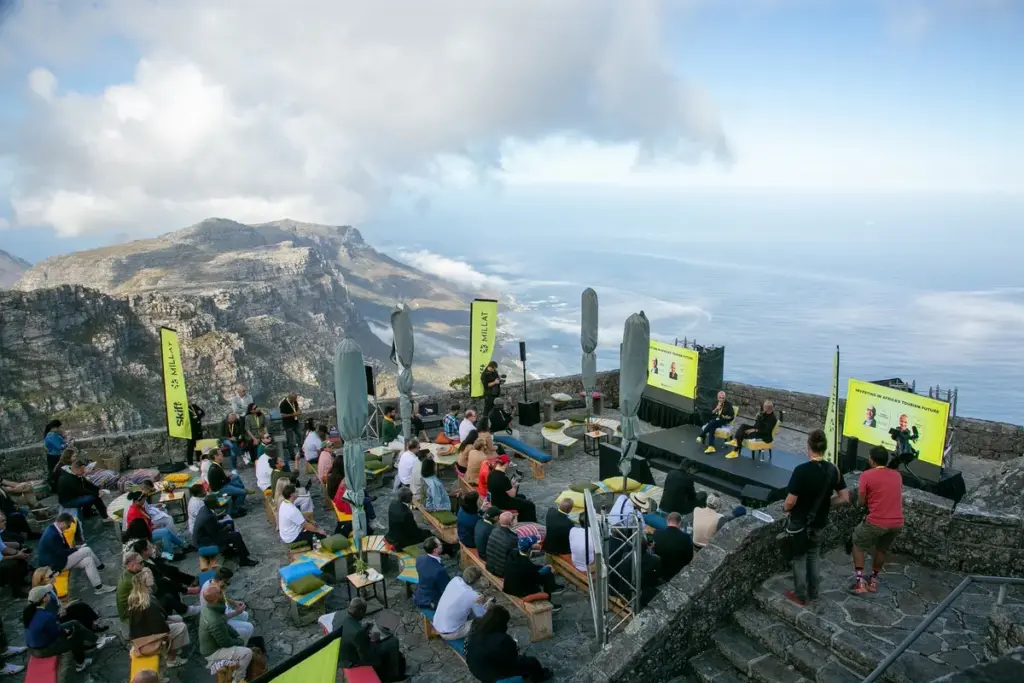
This systemic convergence is the focal point of the upcoming Skift Live Tourism Summit, presented by Live Nation. The summit is designed as a collaborative forum where destination marketing organizations, hotel executives, aviation leaders, and live entertainment promoters can align their strategies.
By bringing the entities that control the events together with the businesses that house and transport the fans, the industry aims to solve the complex logistical and financial puzzles of the experience economy. As fandom continues to drive global movement, the destinations and operators that succeed will be those that treat live tourism not as a series of fortunate calendar coincidences, but as a permanent, foundational pillar of their economic infrastructure.