








The Airbus A350 has firmly cemented its status as the crown jewel of modern long-haul commercial aviation. Serving flagship intercontinental routes for premier carriers across Europe, Asia, the Middle East, and North America, the twin-engine widebody has established a new gold standard for passenger comfort. Thanks to its revolutionary carbon-composite fuselage, the A350 delivers a quieter cabin environment, a lower effective cabin altitude (pressurized to a comfortable 6,000 feet), higher ambient humidity levels, and expansive panoramic windows. These engineering marvels collectively reduce traveler fatigue on ultra-long-haul journeys—a capability that will be pushed to unprecedented limits with the rollout of ultra-long-range variants destined for grueling 20-plus-hour missions.
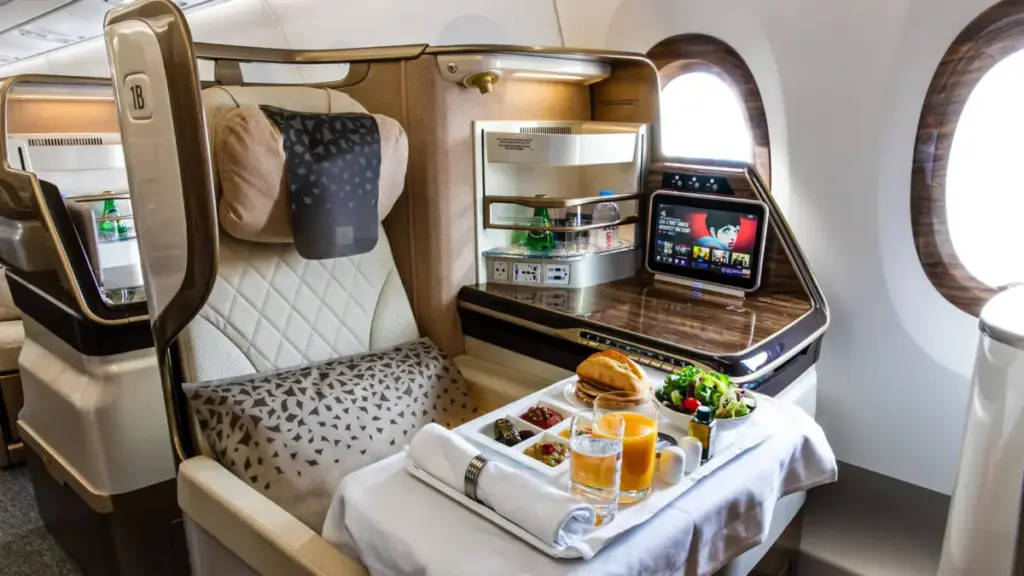
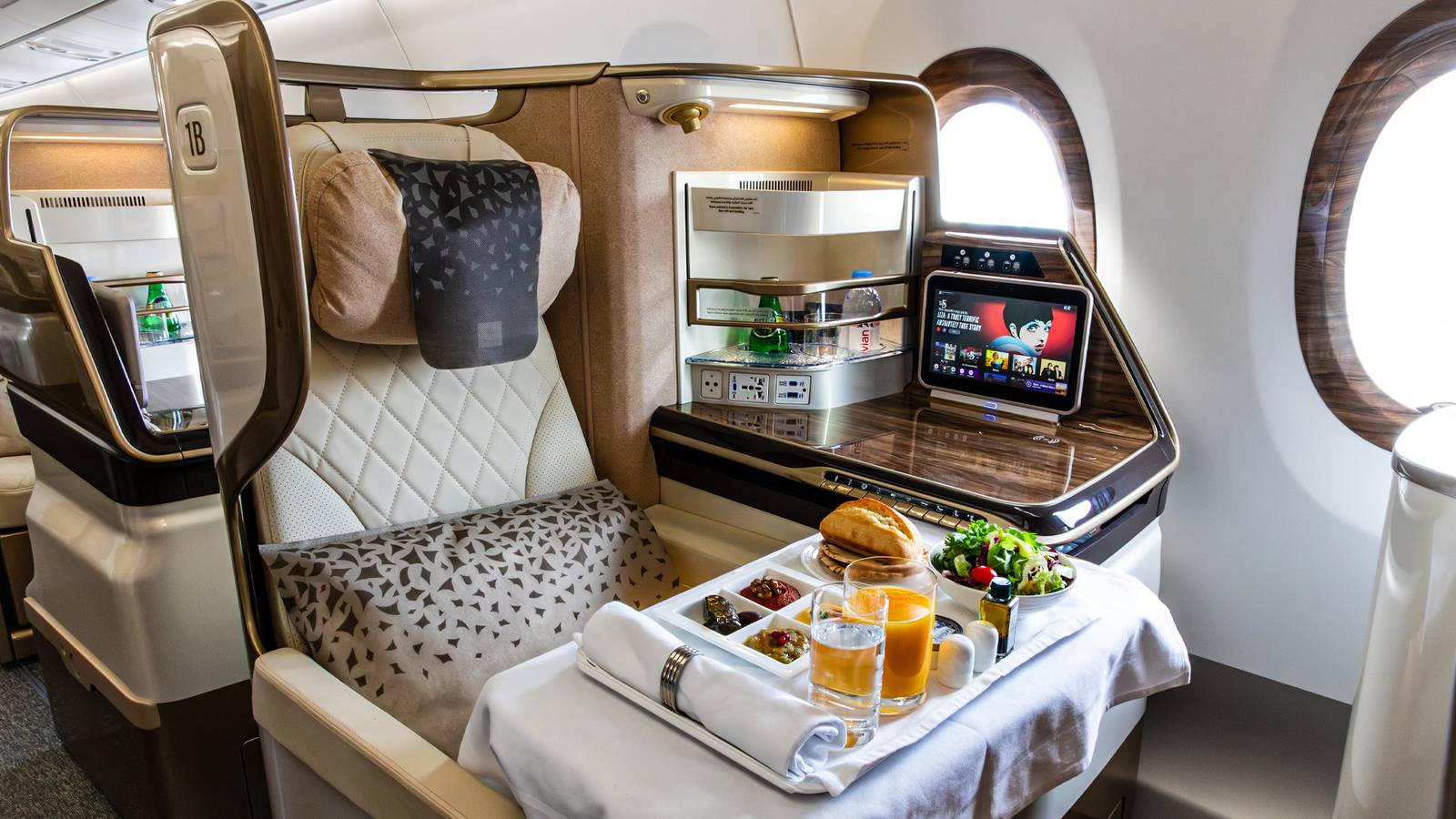
Beyond its aerodynamic and structural excellence, the A350 has served as a pristine canvas for the aviation industry’s most sophisticated cabin interiors. Yet, this showcase of luxury reveals a fascinating industry contradiction. Even as business-class products have evolved by leaps and bounds—offering sliding privacy doors, direct aisle access, fully flat beds, and restaurant-grade dining—first class has grown increasingly endangered on the A350. Today, only a tiny fraction of operators continue to feature a dedicated first-class cabin on the aircraft.
This scarcity forces a critical evaluation for high-spending travelers: With modern business-class suites delivering an extraordinary baseline of luxury, does first class—which typically commands fares two to four times higher—still justify its staggering price premium? This report investigates the engineering advantages of the A350, analyzes the dwindling first-class marketplace, compares the onboard experiences, and explores the economics driving one of the most intriguing divides in modern commercial aviation.
Detailed Chronology: The Evolution of A350 Premium Cabins
To understand how the A350 became the definitive benchmark for modern long-haul travel, one must trace the timeline of its development and cabin evolution over the past decade.
- Mid-2010s (The Entry into Service): The Airbus A350-900 officially entered commercial service in January 2015 with Qatar Airways. Early configurations primarily focused on establishing a competitive edge in business class, utilizing standard reverse-herringbone or staggered layouts. At this stage, first class was largely expected to remain the domain of four-engine behemoths like the Airbus A380 and Boeing 747.
- Late-2010s (The Widebody Width Advantage Realized): As airlines began taking delivery of the stretched A350-1000 variant, designers capitalized on the aircraft’s internal cabin width of 18 feet, 5 inches. This extra breathing room—roughly five inches wider than the Boeing 787 Dreamliner—enabled carriers to conceptualize wider, deeply private business-class suites without sacrificing aisle space or seat length.
- 2023–2024 (The Renaissance of Select First Class Products): Breaking the industry trend of eliminating ultra-premium cabins, major carriers chose the A350 to debut their next-generation flagships. Japan Airlines (JAL) introduced its stunning A350-1000 international first-class cabin, redefining luxury on routes to Europe and North America. Simultaneously, Lufthansa announced and began rolling out its highly anticipated "Allegris" concept, bringing an ultra-exclusive first-class suite to the A350-900.
- 2025–2026 and Beyond (The Ultra-Long-Range Era): With programs like Qantas’s "Project Sunrise" pushing the boundaries of non-stop globe-spanning flights, the A350 family has become the platform of choice for the future of aviation. However, airlines continue to lean heavily into business-class maximization, leaving first class as an ultra-exclusive, highly constrained niche.
Supporting Context & Metrics: Engineering Comfort and Economic Realities
The Passenger Experience: Why the A350 Wins
The architectural design of the A350 provides intrinsic physiological benefits that directly impact passenger well-being on flights exceeding eight hours.
- Cabin Altitude: Traditional aircraft are pressurized to an altitude equivalent to 8,000 feet. The A350 lowers this threshold to 6,000 feet, leaving more oxygen in the bloodstream, reducing headaches, and mitigating dehydration.
- Cabin Width: With an external fuselage diameter of 19 feet, 7 inches and an internal width of 5.61 meters (18 feet, 5 inches), the A350 outpaces the Boeing 787 Dreamliner by roughly 30 centimeters (5 inches).
- Implications for Seating: While 30 centimeters may sound negligible to an aerospace engineer, to a cabin designer, it represents the vital margin needed to install fully enclosed sliding-door suites in business class without compromising personal aisle width or storage capacity.
The Carrier Landscape: Who Offers First Class on the A350?
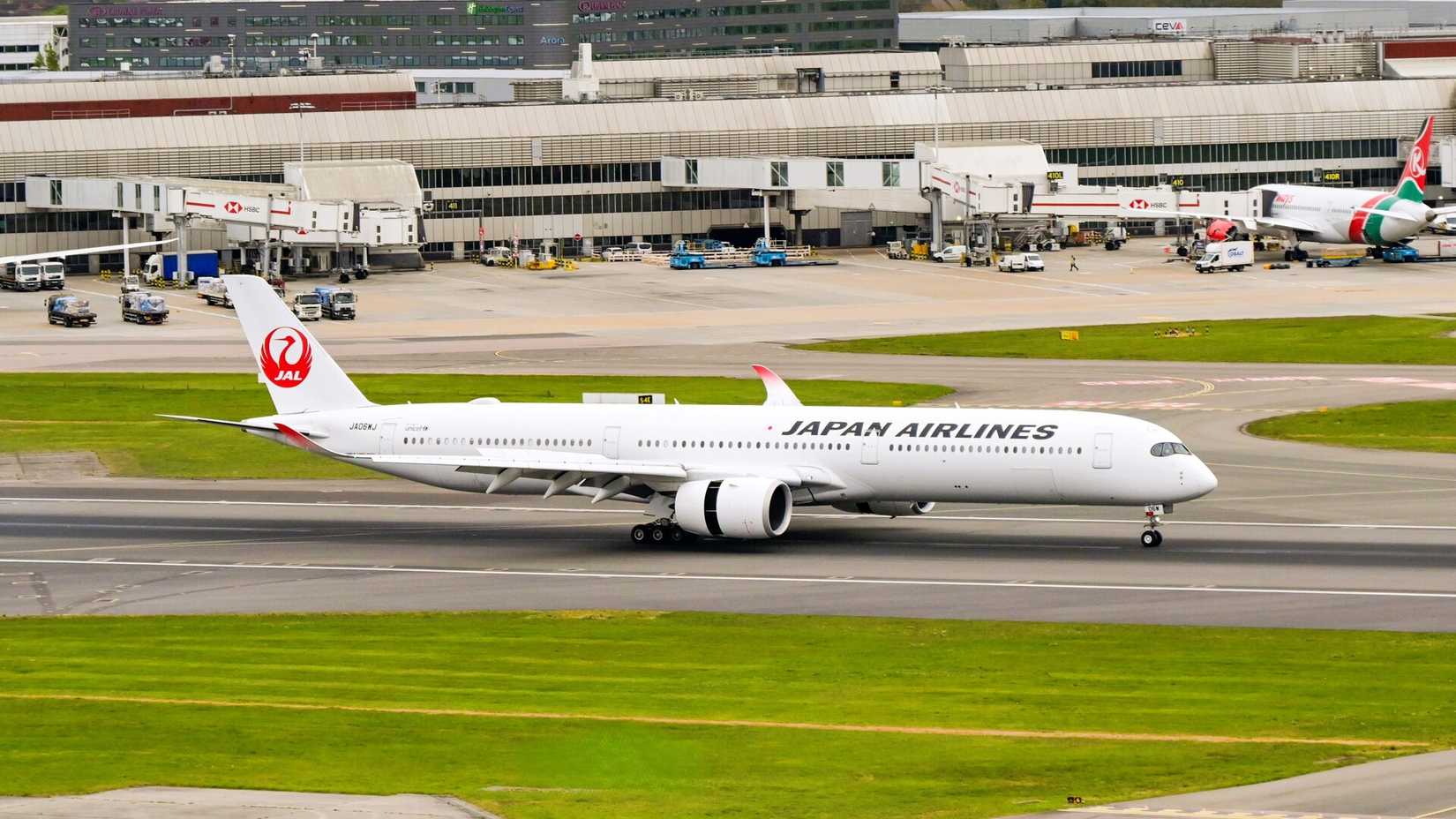
Out of a global fleet exceeding 650 operational A350 family aircraft, the vast majority are deployed in strict three-class (Business, Premium Economy, Economy) or two-class configurations. Only a select duo of global network carriers currently operate A350s equipped with an international first-class cabin:
| Airline | A350 Variant | First Class Offered? | Highest Premium Cabin (if no First) |
|---|---|---|---|
| Lufthansa | A350-900 | Yes | Allegris First Class Suite |
| Japan Airlines (JAL) | A350-1000 | Yes | International First Class Suite |
| Etihad Airways | A350-1000 | No | First Suite (Historic/Other Fleet variants feature it, but A350s are typically two-class) |
| Singapore Airlines | A350-900 / ULR | No | Business Class |
| Cathay Pacific | A350-900 / -1000 | No | Aria Suite (Business) |
| Air France | A350-900 | No | Business Suite (La Première reserved for Boeing 777) |
| Delta Air Lines | A350-900 | No | Delta One Suite |
| Virgin Atlantic | A350-1000 | No | Upper Class Suite |
| Finnair | A350-900 | No | AirLounge Business |
| Iberia | A350-900 | No | Business Class |
The Economic Equation
The primary driver behind the scarcity of A350 first class is simple economics. A modern first-class suite requires an immense amount of floor space—often occupying the footprint of two or even three business-class seats. Because contemporary business-class products command high yields while appealing to a vastly larger market segment, airlines frequently find that ripping out first class in favor of an expanded business cabin maximizes revenue generation per square foot.
Official Statements and Industry Insights
Industry executives and interior designers have repeatedly emphasized that the role of ultra-premium cabins is shifting. Rather than being sold merely as a superior seat, first class is increasingly marketed as an experiential ecosystem.

Aviation analysts note that the psychological gap between business and first class has narrowed because modern business suites have adopted features once exclusive to first class. Modern business class now routinely includes:
- Direct aisle access for 100% of passengers.
- Lockable sliding doors for enhanced privacy.
- Fully flat beds measuring between 78 and 80 inches in length.
- Wireless smartphone charging, ambient mood lighting, and Bluetooth audio connectivity.
Conversely, first-class operators argue that their product cannot be replicated within a dense business-class cabin. Representatives from Japan Airlines have emphasized that their A350-1000 first-class suite—featuring expansive personal wardrobes, massive personal screens, and paired central seating options—is engineered for travelers for whom absolute privacy and bespoke service are non-negotiable.
Similarly, Lufthansa’s development of the Allegris First Class Suite Plus demonstrates a commitment to ultra-high-net-worth individuals seeking a private-jet-like experience within a commercial aircraft.
Comparative Analysis: Business vs. First Class on the A350
1. Personal Space and Seat Architecture
- Business Class: Seat widths typically range from 20 to 23 inches (51–58 cm). While perfectly adequate for sleeping and lounging, the surrounding space is strictly confined to the immediate footprint of the suite.
- First Class: Seat widths exceed 30 inches (76 cm), supplemented by massive side consoles, large ottomans capable of accommodating a dining companion, and integrated private wardrobes.
2. Cabin Density and Atmosphere
- Business Class: Cabins are typically expansive, housing anywhere from 30 to over 50 passengers across multiple aisles or sections. While comfortable, it remains a high-density corporate environment.
- First Class: Cabins are exceptionally intimate, featuring between 1 and 6 suites total. This translates to an ultra-quiet atmosphere and an exceptionally high crew-to-passenger ratio, ensuring instantaneous, highly personalized service.
3. Ground Infrastructure and Pre-Flight Experience
- Business Class: Access to high-quality airline lounges, priority boarding, and expedited security lanes at most major airports.
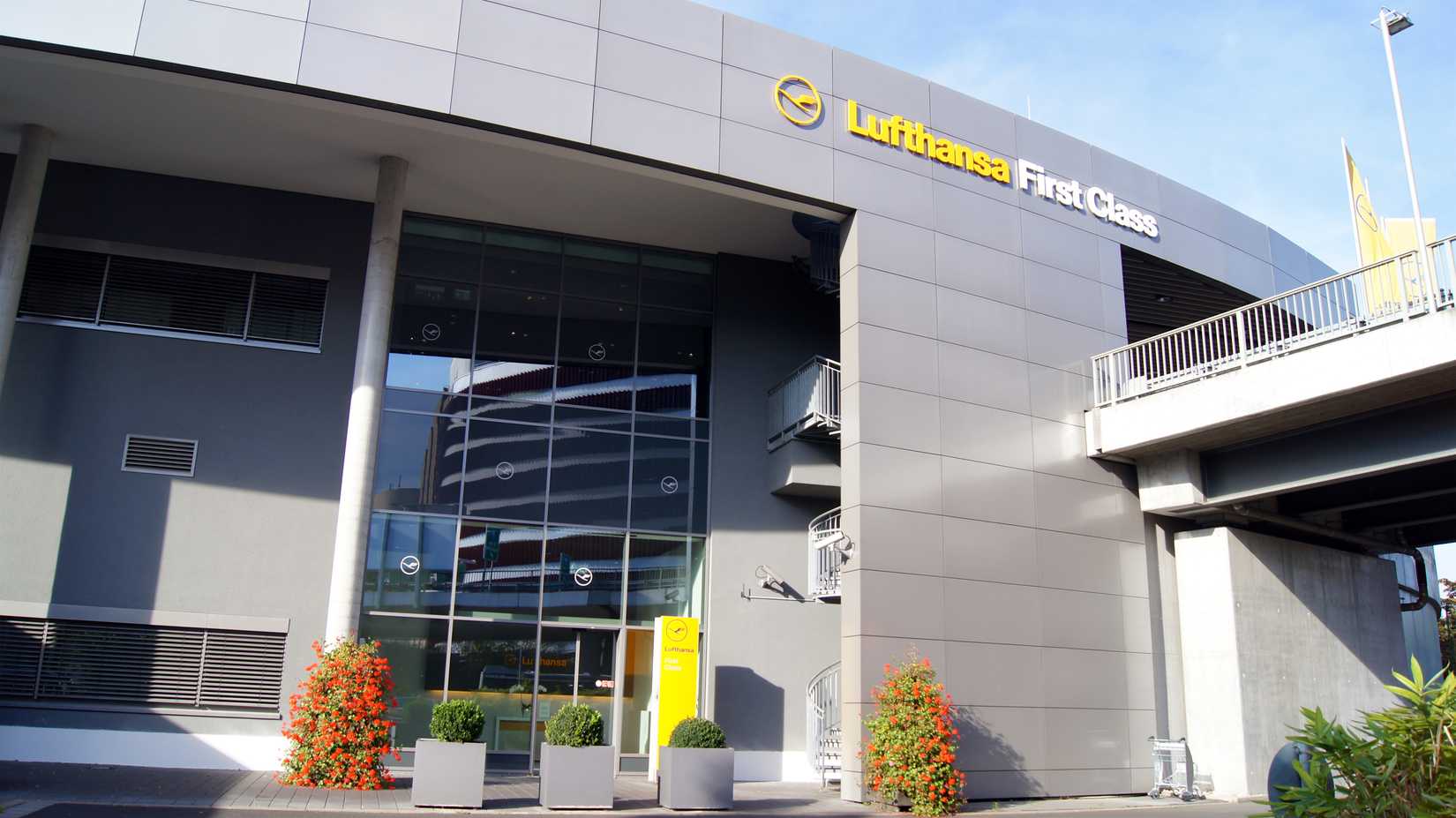
- First Class: Access to world-class, exclusive facilities such as the Lufthansa First Class Terminal in Frankfurt or dedicated private lounges featuring fine-dining à la carte restaurants, private day-rooms, spa treatments, and tarmac transfers via luxury chauffeured vehicles.
Future Outlook: Is First Class on the A350 Sustainable?
As commercial aviation looks toward the horizon, the future of first class on the Airbus A350 remains a study in contrasts. On one hand, the overwhelming market trend points toward the extinction of first class on twin-engine aircraft. Airlines prioritize fuel efficiency, high-density revenue streams, and standardized business-class layouts that satisfy corporate travel policies. For the vast majority of executive and affluent leisure travelers, modern business suites—such as Cathay Pacific’s Aria Suite or Delta One—provide more than enough comfort to arrive refreshed.
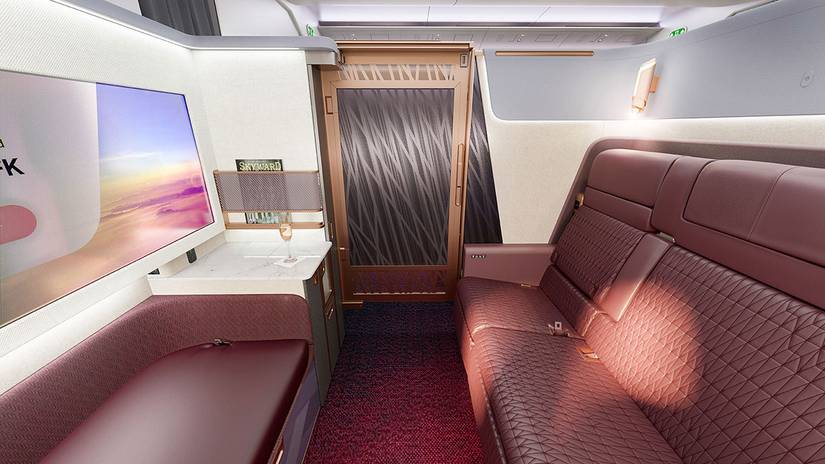
On the other hand, the ultra-luxury segment is proving remarkably resilient. Wealth disparity continues to drive demand for hyper-exclusive travel experiences. For high-net-worth individuals, diplomats, and celebrities, the commercial airline cabin must rival private aviation. Carriers like Lufthansa and Japan Airlines have proven that by keeping first-class cabins vanishingly small (six seats or fewer), they can maintain high load factors and strong yields from passengers willing to pay top dollar.
Ultimately, for cash-paying passengers, business class remains the undisputed champion of value and comfort. However, for those utilizing accumulated frequent-flyer miles, celebrating monumental life milestones, or demanding absolute seclusion above the clouds, first class on the Airbus A350 remains an unmatched pinnacle of human engineering and bespoke luxury—an endangered species well worth experiencing while it lasts.