








Google is taking a major step forward in its transition from a search engine that directs traffic to a platform that actively facilitates transactions. Nine months after first teasing its "agentic" travel capabilities, the technology giant has officially launched its AI-driven hotel booking feature within its AI Mode interface.
The feature, which begins rolling out to users in the United States, marks a significant evolution in how travelers interact with Google. Rather than merely presenting a list of links to hotels and online travel agencies (OTAs), Google’s conversational AI can now guide users through the entire lodging research, comparison, and booking process without requiring them to navigate away from the chat interface.
While skeptics may view this update as a reiteration of previous, shuttered Google travel initiatives, the company is betting that the integration of advanced artificial intelligence and a frictionless user experience will yield a far more successful outcome this time around.
Inside the AI-Driven Booking Experience
The newly launched capability delivers on the hotel-focused portion of the agentic travel booking tools that Google first teased in November. For years, travelers have used Google to compare hotel prices, read reviews, and view locations on maps. However, the actual booking process historically required users to click through to an external website—either a direct hotel portal or a third-party OTA—to complete their transaction.
With the rollout of this new feature in AI Mode, the booking funnel is condensed into a single conversational stream. The user experience is designed to mimic a conversation with a highly efficient travel agent:
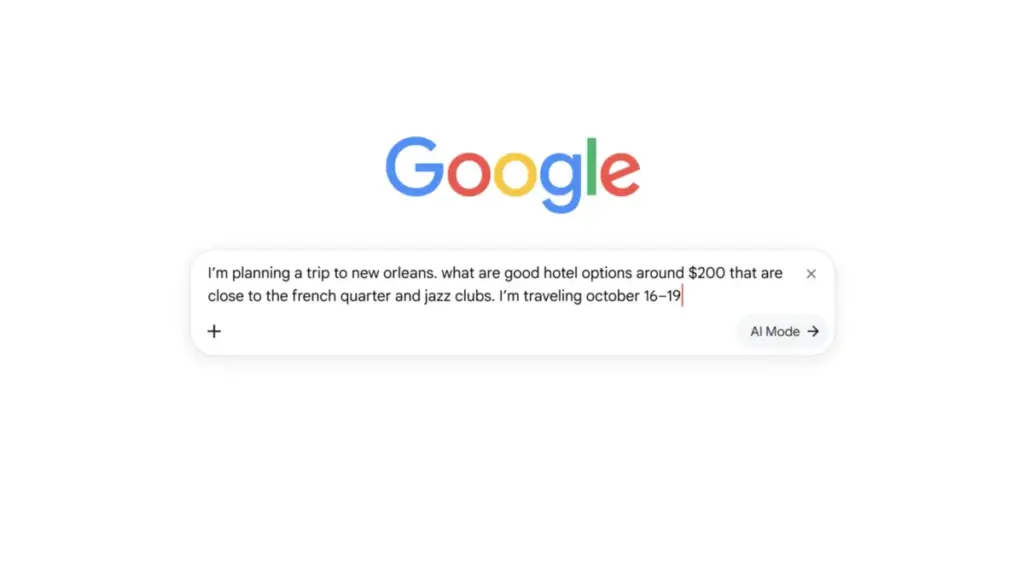
- Discovery and Comparison: Users can initiate a chat to describe what they are looking for, such as "a boutique hotel in downtown Boston with a gym and free breakfast." The AI filters options and presents tailored recommendations.
- Deep Dive and Selection: Travelers can ask follow-up questions, compare specific room types, and review cancellation policies directly within the chat interface.
- Seamless Checkout: Once a selection is made, the user can complete the reservation using Google Pay, bypassing the need to fill out tedious payment and contact forms on an external site.
By keeping the entire process within AI Mode, Google aims to eliminate the friction points that often lead to abandoned bookings on mobile devices, such as slow-loading external pages, complex navigation menus, and repetitive data entry.
The "Agentic" Mechanics: What Happens Behind the Scenes
Though Google describes this technology as an "agentic" tool, the company is quick to clarify that the AI does not operate with complete autonomy. It will not, for instance, make executive decisions or book a room on a traveler’s behalf without explicit consent and direct input.
Instead, the "agentic" work occurs behind the scenes. Google’s AI agents manage the complex orchestration required to retrieve real-time inventory, cross-reference pricing, extract and summarize cancellation terms, and securely pass payment credentials to the booking partner.
Crucially, Google is not positioning itself as a merchant of record or a traditional online travel agency. Once a user clicks to finalize the booking through the AI interface, the backend logistics remain in the hands of the travel provider:
Transaction Processing
The hotel brand or the partner OTA charges the customer’s credit card directly. Google acts as the secure facilitator via Google Pay but does not hold or process the funds on its own ledger.
Confirmation and Documentation
The booking partner generates and sends the reservation confirmation email, receipt, and check-in details directly to the traveler.
Customer Support
Any subsequent modifications, cancellations, or customer service inquiries are handled directly by the hotel or OTA, ensuring that travelers still have access to established customer support networks.
This hybrid model allows Google to provide a unified user interface while leaving the operational complexities of travel management—such as room inventory management, customer service, and direct financial liability—to the industry specialists.
A Powerhouse Lineup of Launch Partners
For a transactional search tool to succeed, it requires deep integration with inventory providers. Google has secured a robust roster of launch partners that spans both major global hotel chains and the world’s largest online travel agencies.
The initial launch partners participating in the rollout include:
- Online Travel Agencies (OTAs): Booking.com, Expedia, Hotels.com, Priceline, and Trip.com.
- Hotel Brands: Choice Hotels, Hilton, IHG, Marriott, and Wyndham.
The inclusion of both direct hotel brands and major OTAs is a strategic win for Google. It ensures that users have access to a vast array of properties worldwide, ranging from budget accommodations to luxury resorts. It also prevents the tool from feeling limited or biased toward a single booking channel, maintaining the comprehensive search utility that users expect from Google.
For the partners, participation represents a double-edged sword. While it keeps their inventory front and center in Google’s high-intent AI search results, it also inserts Google deeper into the customer acquisition funnel. However, the decision by industry giants like Expedia Group, Booking Holdings, Marriott, and Hilton to participate indicates a recognition that AI-driven conversational search is a channel they cannot afford to ignore.
The Ghost of "Book on Google" and Why This Time is Different
Industry observers and travel technology skeptics will inevitably draw comparisons between this new AI feature and "Book on Google," a direct-booking tool that the search giant phased out and eventually shuttered in 2022.
Book on Google allowed users to book flights and hotels directly on Google’s platform using a simplified checkout form, ostensibly to improve conversion rates for partners. However, the product struggled to gain significant traction. Travelers were often confused about who they were buying from, and many partners were hesitant to hand over the customer relationship to Google, fearing a loss of direct communication and brand loyalty.
Google believes the new agentic AI approach has a much stronger chance of success for several key reasons:
Natural Language Processing
Unlike the rigid, form-based interface of Book on Google, the new AI Mode relies on natural language. This allows users to express complex, multi-layered preferences that traditional search filters cannot easily accommodate.
Mobile-First Design
The conversational interface is inherently optimized for mobile screens, where typing, navigating tabs, and filling out checkout forms are notoriously difficult. A conversational checkout powered by Google Pay drastically reduces the physical effort required to book on a phone.
Clearer Partner Branding
By explicitly maintaining the partner’s role as the merchant of record and the provider of customer support from the outset, Google is attempting to assuage partner fears of disintermediation. The AI interface clearly communicates which partner is fulfilling the booking.
Contextual Integration
The booking tool is integrated directly into Google’s broader AI ecosystem. This means a user can transition seamlessly from planning an entire itinerary—asking for sightseeing recommendations and restaurant suggestions—to booking the hotel that best fits that itinerary, all within the same chat thread.
The Broader Implications for the Travel Industry
The launch of agentic hotel booking in AI Mode is more than just a product update; it represents a fundamental shift in the economics of travel search.
Historically, Google has acted as the primary gateway for travel traffic, monetizing its platform through highly lucrative search advertising. Hotels and OTAs bid billions of dollars annually on keywords to ensure their links appeared at the top of search results.
As search transitions from a list of blue links to synthesized AI responses, the traditional ad-bidding model faces disruption. If a user can find and book a hotel entirely within an AI chat, the value of a top-ranking search ad diminishes. Google’s move into agentic booking suggests the company is preparing for this paradigm shift, creating new transactional touchpoints that can be monetized or leveraged to keep users locked into its ecosystem.
For hotel brands, the tool offers an opportunity to capture direct bookings if they can successfully optimize their data feeds for Google’s AI. For OTAs, it represents both a threat to their direct traffic and a powerful new distribution channel, depending on how effectively they can convert these AI-facilitated leads into repeat customers.
As the rollout progresses across the United States, the travel industry will be watching closely to see how consumers adopt the technology. If conversational, agentic booking becomes the preferred method for planning trips, it could redefine the digital travel landscape for years to come.