


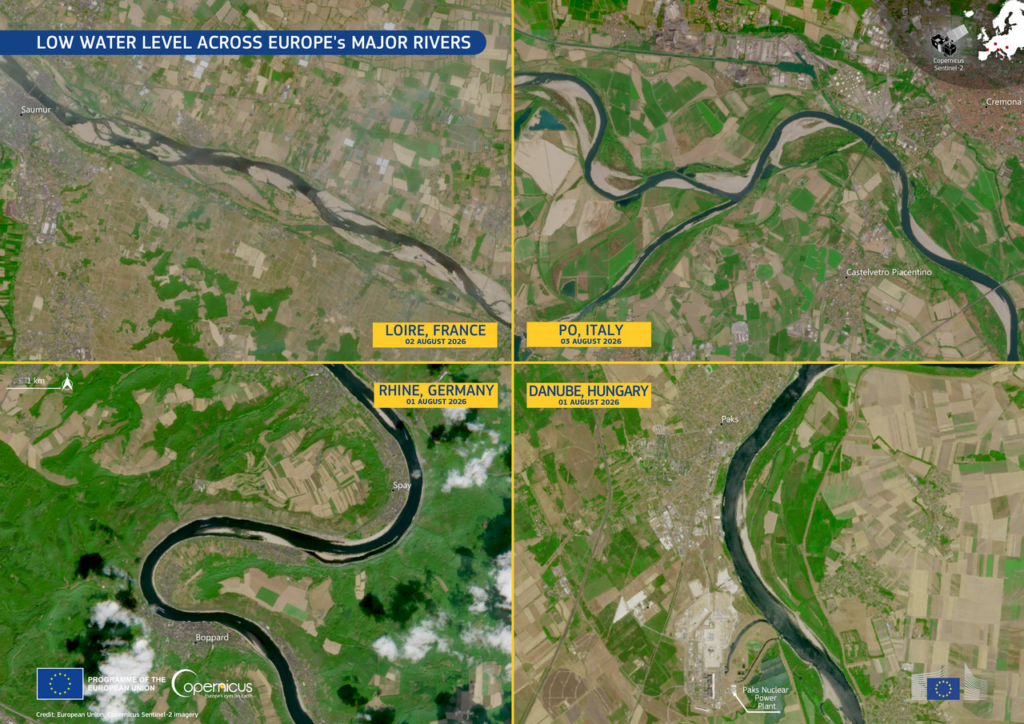
Europe’s historic waterways, long celebrated as the romantic lifeblood of luxury travel, are facing an unprecedented ecological and operational crisis. A combination of human-induced climate change, successive extreme heatwaves, and the compounding effects of the El Niño weather pattern has left the continent’s major rivers—most notably the Rhine, the Danube, and the Po—at near-historic lows.
For the multibillion-dollar river cruise industry, which relies on consistent water depths to navigate luxury vessels through Europe’s cultural heartlands, the consequences have been immediate and disruptive. From stranded vessels and emergency groundings—such as a recent high-profile incident involving a Viking Cruises vessel—to the logistical triage of "ship swaps" and bus transfers, operators are grappling with a rapidly changing environment.
As itineraries are disrupted and travelers face the prospect of "cruises" conducted largely via motorcoach, consumer frustration is mounting. Yet, amid the operational chaos, one sector is experiencing a significant surge: the consumer travel insurance industry. As travelers scramble to protect their investments against the unpredictable realities of modern climate patterns, insurance providers are positioning themselves as the ultimate sellers of peace of mind.
This investigative report examines the mechanics of the current low-water crisis, the operational hurdles facing cruise lines, the financial and regulatory implications for travelers, and the long-term adaptation strategies required for the industry to survive an increasingly volatile future.
Detailed Chronology of the Waterway Crisis
The current crisis did not emerge overnight; rather, it is the culmination of consecutive seasons of diminished snowfall in the Alps, prolonged spring droughts, and intense summer heatwaves that have baked the European continent.
[Winter: Low Alpine Snowpack]
       │
       ▼
[Spring: Prolonged Drought]
       │
       ▼
[Summer: Intense Heatwaves & El Niño]
       │
       ▼
[Critical Low Water Levels (Rhine, Danube, Po)]
       │
       ├───────────────────────────────┤
       ▼                               ▼
[Operational Disruption]      [Travel Insurance Surge]
 - Vessel Groundings           - "Cancel For Any Reason"
 - "Ship Swaps" & Busing       - Climate Rider Policies
 - Itinerary Cancellations
The Drying of Europe’s Arteries
By mid-summer, water levels across Europe’s primary river systems began dropping at alarming rates:
- The Rhine: Flowing from the Swiss Alps through Germany and the Netherlands to the North Sea, the Rhine is Europe’s most critical commercial waterway. By late summer, key choke points—most notably the Kaub Gauge near Frankfurt—dropped to record-low levels, preventing deep-draft vessels from passing safely.
- The Danube: Spanning ten countries and serving as the primary route for central European river cruises, the Danube dropped to its lowest point in nearly 30 years. Sandbars emerged in stretches across Hungary, Serbia, and Bulgaria, effectively halting river traffic.
- The Po: In northern Italy, the Po River basin suffered from a complete lack of meaningful rainfall, causing saltwater intrusion from the Adriatic Sea and reducing the river to a series of disconnected pools in some sectors, shutting down local cruise operations entirely.
The Viking Grounding and Logistical Triage
The operational reality of these low levels came to a head when a Viking Cruises vessel ran aground on a shallow stretch of a major European waterway. While no injuries were reported and guests were safely evacuated, the incident highlighted the razor-thin margins under which river captains are currently operating.
To keep operations running, cruise lines have resorted to a series of disruptive logistical maneuvers:
The "Ship Swap"
When a river is impassable at a specific choke point, operators will position identical sister ships on either side of the barrier. Passengers are disembarked from Ship A, transferred via motorcoach around the shallow stretch, and boarded onto Ship B, which continues the itinerary in the opposite direction. While this allows travelers to experience the same cabin category and onboard service, it disrupts the seamless, unpack-once promise of river cruising.
"Bus Cruises"
In more severe cases, where entire stretches of a river are unnavigable, cruises effectively transform into bus tours. Guests remain stationed in hotels or on a stationary ship while being bussed hours daily to scheduled sightseeing destinations.
Sudden Cancellations
When logistics fail entirely, operators are forced to cancel sailings at the eleventh hour, leaving passengers stranded at boarding ports or scrambling to rebook flights home.
Supporting Context & Metrics: The Climate and Economic Math
To understand the scale of the disruption, it is necessary to examine the underlying climatological and economic data driving this crisis.
Climatological Drivers
According to data from the Copernicus Climate Change Service, Europe has been warming at a rate twice the global average since the 1990s. The summer of 2024 saw successive heatwaves characterized by temperatures exceeding 40°C (104°F) in southern and central Europe.
| Metric | Historical Average | Current Crisis Levels | Environmental Impact |
|---|---|---|---|
| Rhine Water Level (Kaub) | 1.5 to 2.0 meters | Below 40 centimeters | Vessels must reduce cargo/passenger loads by 70% |
| Danube Depth (Average) | 2.5 to 3.5 meters | Under 1.2 meters in key sectors | Large-draft cruise ships unable to pass; groundings risk |
| Alpine Snowpack Runoff | Baseline (100%) | < 60% of historic mean | Failure to replenish river basins during peak summer heat |
The lack of winter snowpack in the Alps meant that the natural reservoir of meltwater, which historically sustains the Rhine and Danube during dry summer months, was largely absent. This deficit was exacerbated by El Niño, which altered global jet stream patterns, locking high-pressure systems over Europe and preventing rain-bearing Atlantic fronts from reaching the continent’s interior.
The Travel Insurance Boom
As cancellations and itinerary alterations mount, consumer behavior is shifting rapidly. Historically, river cruises were viewed as stable, low-risk vacations, appealing heavily to retirees and affluent travelers. However, the unpredictability of low water levels has transformed travel insurance from an optional add-on into a critical necessity.
Travel Insurance Inquiries (Year-over-Year Increase)
[■■■■■■■■■■■■■■■■■■■■] 140% Increase in "Low-Water" Coverage Searches
[■■■■■■■■■■■■■■] 95% Increase in "Cancel For Any Reason" (CFAR) Policies
Insurance brokerages report a marked increase in inquiries specifically targeting "low-water" coverage. Standard travel insurance policies often do not cover itinerary changes if the cruise line offers alternative transportation (such as buses). Consequently, savvy travelers are turning to premium "Cancel For Any Reason" (CFAR) policies, which typically reimburse 50% to 75% of non-refundable trip costs if a traveler decides to pull out of a cruise due to predicted low water levels before departure.
Official Statements and Consumer Sentiment
The crisis has exposed a growing rift between cruise operators, regulatory bodies, and the consumers who fund the industry.
Cruise Line Perspectives
Major river cruise operators maintain that safety and customer satisfaction remain their top priorities. In official communications, companies emphasize their ability to adapt to environmental challenges.
A representative from Viking Cruises stated:
"Our nautical teams monitor water levels continuously. While low water levels are an industry-wide challenge during dry spells, our unique fleet size allows us to perform ship swaps that keep our guests on their journeys with minimal disruption to their overall experience."
Similarly, AmaWaterways and Scenic Cruises have pointed to their proactive customer outreach programs, offering future cruise credits (FCCs) or partial refunds to guests whose itineraries are substantially altered.
The Consumer Backlash
Despite these assurances, consumer sentiment on travel forums and social media platforms has split dramatically.
Consumer Sentiment Split:
┌─────────────────────────────────────────┐
│ [■■■■■■■■■■■■■■■■] Defend Operators     │ -> Appreciate staff efforts, understand weather is beyond control.
├─────────────────────────────────────────┤
│ [■■■■■■■■■■■■■■■■■■■■■■■■] Express Anger │ -> Frustrated by "bus tours" sold as luxury cruises, late notifications.
└─────────────────────────────────────────┘
One faction of travelers defends the cruise lines, praising the crew’s hospitality and the operational gymnastics performed to salvage vacations under difficult circumstances. They argue that weather is an act of God and that adaptability is part of travel.
Conversely, an increasingly vocal segment of consumers expresses frustration over what they perceive as a lack of transparency. Many complain that they were only notified of major itinerary changes—such as being transferred to buses—upon arrival in Europe, leaving them no opportunity to cancel or postpone their trips under standard cancellation windows.
"We paid over $10,000 for a luxury river cruise, not a budget bus tour of European highways," wrote one traveler on a popular cruise review forum. "If the cruise line knew the river was impassable weeks in advance, they should have given us the option to reschedule rather than forcing us into a bait-and-switch scenario."
Future Outlook: Adaptation, Engineering, and the New Normal
As climate models predict that hot, dry summers will become more frequent and severe in Europe, the river cruise industry faces an existential need to adapt. The business-as-usual model is no longer viable.
Innovative Ship Design
To combat shallow waters, shipbuilders and cruise lines are investing in next-generation vessel designs.
- Flat-Bottomed Hulls: Future river ships are being engineered with wider, flatter hulls to distribute weight more evenly, reducing the draft (the depth of water needed to float) to under one meter, even when fully loaded.
- Lightweight Materials: The integration of advanced carbon composites and lightweight alloys in ship construction is helping to shave tons off the vessel’s displacement.
- Paddlewheel Propulsion: Some operators are looking back to historical engineering, utilizing modern paddlewheel propulsion systems that require significantly less clearance than traditional screw propellers.
Shifting Seasons and Dynamic Itineraries
Cruise operators are also rethinking the traditional European cruise calendar.
[Traditional Peak: June - August] ──► [High Risk of Low Water / Heatwaves]
[New Target Peak: April - May]    ──► [Spring Runoff / High Water Levels]
[New Target Peak: Sept - October] ──► [Autumn Cool / More Stable Flows]
To mitigate risks, companies are expanding their shoulder-season offerings, promoting spring (April to May) and autumn (September to October) departures when water levels are historically more stable due to spring runoff and autumn rains. Conversely, some lines are reducing their mid-summer capacities or shifting vessels to deeper waterways, such as the Douro in Portugal or the Seine in France, which are less prone to the extreme fluctuations seen on the Rhine and Danube.
The Evolution of Travel Insurance
The travel insurance sector is expected to formalize its response to climate-induced disruptions. Industry analysts predict the rise of specialized "Climate Rider" policies. These products will use real-time hydrological data from key river gauges (like Kaub) as triggers for automatic, parametric payouts. If a river drops below a predetermined level for a set number of consecutive days, policyholders will receive an immediate refund option, bypassing the lengthy claims processes that currently frustrate consumers.
Conclusion
The low-water crisis in Europe is a stark reminder that no sector of the global tourism economy is immune to the realities of a changing climate. For the river cruise industry to sustain its lucrative trajectory, it must evolve beyond temporary operational fixes like ship swaps and bus transfers. Only through structural adaptation—combining cutting-edge marine engineering, transparent customer relations, dynamic scheduling, and robust financial protection products—can the industry continue to offer travelers the timeless allure of Europe’s historic waterways.