

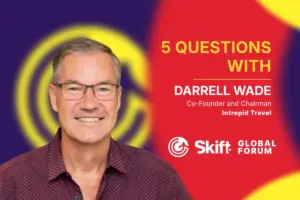


This provocative assertion from Darrell Wade, co-founder and chairman of Intrepid Travel, challenges the foundational assumptions of modern travel operations. For years, the global tourism industry has operated under a convenient consensus: while tour operators take credit for the magical itineraries they curate, they routinely distance themselves from the carbon footprints of the flights their customers book to reach those destinations. By leaving international and domestic transit off their carbon ledgers, brands have managed to present a highly sanitized version of their environmental impact.
Wade is determined to dismantle this industry standard. Under his leadership, Intrepid has spent the year redrawing the boundaries of carbon responsibility. Ahead of his appearance at the Skift Global Forum, scheduled for September 22–24, 2026, in New York, Wade has laid out a compelling business and ethical case for why operators must take full ownership of their entire product lifecycle—even when it hurts their bottom line.
The industry is watching closely. Whether other major travel brands can afford to follow Intrepid’s ambitious lead, or whether competitive pressures will keep them tethered to the old playbook, remains one of the most critical questions facing global tourism today.
A Radical Shift in Carbon Accounting: Why Intrepid is Taking Responsibility for Customer Flights
For decades, sustainable travel was defined by incremental improvements: eliminating single-use plastics, choosing energy-efficient accommodations, and purchasing carbon offsets to neutralize the emissions of local ground transport. While these efforts were steps in the right direction, they consistently ignored the most significant contributor to travel-related climate change: aviation.
In January, Intrepid officially overhauled and relaunched its climate playbook, moving away from what Wade calls "technical carbon targets" toward a comprehensive, total product lifecycle approach.
The "Elephant in the Room" of Tour Operations
Historically, the carbon accounting boundary for tour operators was drawn tightly around direct operations. Under the traditional model, a company would meticulously count and offset the carbon generated by on-trip transport, local accommodations, and ground operations. However, the flights taken by travelers to get to and from the trip’s starting point were omitted. Because customers usually book these flights independently, operators argued they fell outside their operational control.
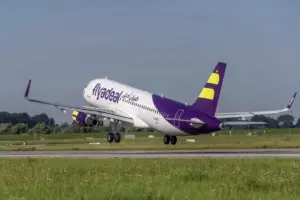
Wade rejects this logic. "That wasn’t ‘wrong,’ but it ignored the elephant in the room," Wade explains. "Flights are the largest emitter in our overall product. Regardless of who books those flights themselves, we’re ultimately responsible for creating that demand."
THE EVOLUTION OF CARBON BOUNDARIES IN TOUR OPERATIONS

[ The Old Playbook ]
Counted: On-trip transport, accommodation, ground operations.
Excluded: Customer flights to and from the trip (The largest emission source).

        VS.

[ The Relaunched Playbook ]
Counted: On-trip transport, accommodation, ground operations, AND customer flights to and from the trip.
By shifting to a total product lifecycle target, Intrepid has moved these flights inside its carbon boundary. The company is now actively investing in decarbonization projects around the world to address this expanded footprint. It is a decision that voluntarily inflates Intrepid’s reported emissions profile, but Wade believes it is the only honest way forward for an industry that claims to care about the planet.
The Ten-Year Test: Decision-Making Beyond the Quarterly Report
Voluntarily absorbing the carbon liability of international aviation is a move that few publicly traded companies would dare to make. The immediate financial and administrative costs of tracking and mitigating such a massive footprint can easily depress short-term margins, drawing the ire of Wall Street.
When asked how he navigates these complex, high-stakes decisions, Wade reveals a remarkably straightforward filter: "I ask one question: will we be proud of this decision in ten years?"
Balancing Multiple Stakeholders in a Private Business Model
This long-term perspective is a luxury that Wade attributes directly to Intrepid’s corporate structure. As a privately owned business, the company is shielded from the relentless pressure of quarterly earnings reports, allowing leadership to think in decade-long cycles rather than three-month increments.
"We have long-term decision making, which is the beauty of being a privately owned business," Wade says. "We don’t have to report on the next quarter, so we can think in longer cycles."
This independence enables Intrepid to employ a multiple-stakeholder approach. Rather than operating solely for the financial benefit of shareholders, the company balances the needs of a diverse ecosystem, including local partners, host communities, employees, and the natural environment.
Wade admits that maintaining this balance is an ongoing challenge. "Having this long-term thinking and balanced approach really helps," he notes. "Although it’s also not necessarily easy because you’re always having to balance one thing off against another. I like to think we get it right most of the time."
From Price to Purpose: The Modern Traveler’s Trust Economy
The transformation of Intrepid’s climate strategy reflects a broader, systemic shift in the relationship between travel brands and consumers. The days when a travel company could compete solely on transaction-based metrics are long gone.
Thirty years ago, according to Wade, the formula for a successful tour operator was simple and transactional: deliver a reliable, high-quality trip to an interesting destination at a competitive price. If you met those criteria, customer loyalty followed. Today, the consumer decision-making process is far more complex and values-driven.
Modern travelers want to peer behind the corporate curtain. They are asking difficult questions: How does this company treat its staff? What are its core values, and does it stand by them when global crises emerge? Is this business extracting wealth from vulnerable destinations, or is it actively contributing to the well-being of the local people and ecosystems?
"That doesn’t mean you have to be perfect," Wade points out. "But you do need to be transparent and authentic. Trust is now one of the most valuable assets a company can build, and one of the easiest to lose." For Intrepid, building and preserving this trust is a continuous, decades-long endeavor that cannot be taken for granted.
Redefining Tourism as a Vehicle for Wealth Creation and Poverty Alleviation
While environmental sustainability frequently dominates industry headlines, Wade believes the travel sector is missing a massive opportunity to address the social side of the ESG (Environmental, Social, and Governance) equation. Specifically, he argues that the industry does not talk enough about tourism’s potential as a powerful tool for global wealth creation and poverty reduction.
"Tourism has lifted millions of people out of poverty globally by providing jobs and supply chains for small businesses," Wade says, recalling a recent visit with Intrepid team members and community partners in Africa that reinforced this reality. "As an industry, we have a huge opportunity to make a real difference in people’s lives and futures."
Wade recognizes that his own path to success was paved by systemic advantages, including a supportive family and access to excellent education—opportunities denied to millions of people in the destinations where tourism operates. To bridge this gap, Intrepid focuses on three primary avenues of economic empowerment:
- Fair and Equitable Earning Opportunities: Providing sustainable, well-paying jobs for local tour leaders who serve as the face of the brand.
- Supplier Growth and Integration: Actively sourcing services from local, independently owned businesses, ensuring that tourism dollars remain within the host communities.
- Democratizing Corporate Equity: Implementing employee shareholder programs that allow staff at all levels of the organization to build genuine wealth.
The Power of Shared Success: Intrepid’s Employee Shareholder Program
The employee shareholder program is a cornerstone of Wade’s vision for a more equitable business model. Today, Intrepid boasts approximately 1,000 employee shareholders across its global operations.
By distributing equity to the people who facilitate and execute their trips daily, Intrepid ensures that the financial rewards of the company’s growth are shared globally, rather than concentrated solely at the executive level in head offices. Wade’s goal is to see these shareholders thrive, eventually paying that success forward within their own families and local communities.
Setting the Agenda for the Skift Global Forum 2026
As the travel industry gathers in New York for the Skift Global Forum from September 22–24, 2026, the ideas championed by Darrell Wade will undoubtedly provoke intense debate. In an era where greenwashing is under intense regulatory and consumer scrutiny, Intrepid’s decision to assume liability for customer aviation emissions sets a challenging new benchmark.
Wade will share the stage with some of the most influential figures in global travel and hospitality, including Accor CEO Sébastien Bazin, Expedia Group CEO Ariane Gorin, and Revolution Chairman and CEO Steve Case.
The forum will serve as a vital testing ground for these ideas. As climate pressures mount and consumer expectations continue to rise, the broader industry must decide whether it will continue to look the other way on aviation emissions, or if it will finally muster the courage to follow Intrepid’s lead and take responsibility for the demand it creates.