



Executive Overview
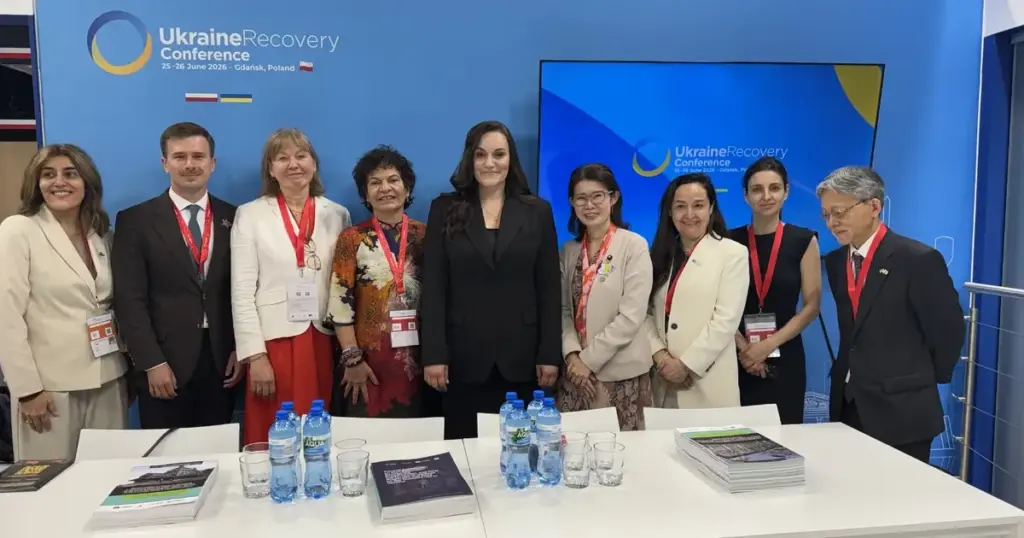
On June 25, 2026, against the backdrop of the high-profile Ukraine Recovery Conference (URC) in Gdańsk, Poland, the United Nations Educational, Scientific and Cultural Organization (UNESCO) formally handed over a comprehensive suite of strategic tools designed to transform the protection and management of World Heritage properties across Ukraine. This milestone event marks the culmination of more than three years of intensive, collaborative efforts among UNESCO, the Ministry of Culture of Ukraine, and two pivotal advisory bodies to the World Heritage Committee: the International Council on Monuments and Sites (ICOMOS) and the International Centre for the Study of the Preservation and Restoration of Cultural Property (ICCROM).
The initiative, generously financed by the Government of Japan, arrives at a critical juncture in Ukraine’s contemporary history. As the nation continues to navigate the devastating impacts of ongoing military aggression, its irreplaceable cultural fabric faces unprecedented threats from missile strikes, artillery fire, structural fires, and secondary hazards associated with wartime conditions. The newly delivered package is far more than a theoretical set of guidelines; it represents a robust, field-tested, and immediately operational framework engineered to address the complex challenges of safeguarding heritage in active conflict and post-disaster scenarios.
By bridging the gap between immediate emergency response and long-term, sustainable recovery, these strategic tools establish a vital continuum. They empower national authorities, local site managers, and a dedicated network of over 150 Ukrainian heritage professionals to move fluidly from crisis triage to structural rehabilitation and strategic reconstruction. Furthermore, beyond providing direct utility to Kyiv, the methodologies codified in this package serve as a pioneering global reference model—a scalable blueprint that UNESCO can deploy to protect endangered cultural treasures in other crisis zones worldwide.
Detailed Chronology: A Three-Year Path to Resilience
The formal handover in Gdańsk did not materialize in a vacuum; it is the product of a meticulously coordinated, multi-year international intervention that began immediately following the escalation of the conflict. Understanding the timeline of this endeavor reveals the depth of dedication required to forge operational strategies under active wartime pressures.
Phase 1: Emergency Triage and Initial Assessment (2022–2023)
In the chaotic opening months of the full-scale invasion, the immediate priority for international organizations and Ukrainian cultural workers was emergency triage. Cultural sites, museums, archives, and sacred architectural landmarks were thrust onto the frontlines of a war that showed little regard for international conventions protecting cultural property.

- Mobilization: UNESCO immediately mobilized resources, deploying remote-sensing technologies, satellite imagery analysis, and damage-assessment mechanisms to document the destruction of cultural assets in real-time.
- The First Coalition: Recognizing that ad-hoc measures were insufficient for long-term survival, UNESCO forged a tripartite working arrangement with the Ministry of Culture of Ukraine, ICOMOS, and ICCROM. This alliance pooled global expertise in conservation science, structural engineering, and risk management.
Phase 2: Capacity Building and Collaborative Drafting (2024–2025)
As the conflict settled into a protracted war of attrition, the focus shifted from pure emergency response to systematic capacity building.
- Engaging the National Network: A vital element of this phase was the formation and empowerment of a national network comprising over 150 Ukrainian heritage professionals. These local experts—archivists, conservators, site managers, and historians—provided invaluable ground-level insights, ensuring that the developing frameworks were practically applicable rather than purely academic.
- Japanese Backing: With financial backing secured from the Government of Japan, expert working groups began drafting tailored methodologies for high-risk properties. Workshops, virtual consultations, and field simulations were conducted to test emergency evacuation protocols, inventory digitization, and structural stabilization techniques.
Phase 3: Operationalization and the Gdańsk Handover (June 2026)
- June 25, 2026: At the Ukraine Recovery Conference in Gdańsk, the years of preparation culminated in the official transfer of the strategic tools to Ukrainian authorities.
- Integration into National Policy: The handover marked the transition from development to active implementation, as site managers across Ukraine integrated the new protocols into their daily operational structures, positioning cultural preservation as a central pillar of the nation’s broader recovery strategy.
Supporting Context & Metrics: The Framework in Detail
The newly delivered package is structured as a coherent, mutually reinforcing framework tailored to the specific vulnerabilities of Ukrainian cultural assets. It covers a vast spectrum of risk reduction, emergency preparedness, first aid, and long-term governance.
1. Tailored Emergency Response Preparedness (ERP) Plans
The framework establishes rigorous, site-specific methodologies for hazard identification and operational planning. Two cornerstone properties have received dedicated ERP interventions:
- Kyiv: Saint-Sophia Cathedral and Related Monastic Buildings, and Kyiv-Pechersk Lavra (World Heritage ID: 527): As spiritual and architectural masterworks of the region, these complexes face severe risks from nearby aerial attacks. The new ERP guidelines provide structured protocols for structural protection, emergency fire-suppression coordination, rapid inventory documentation, and stakeholder communication.
- Wooden Tserkvas of the Carpathian Region in Poland and Ukraine (World Heritage ID: 1424): Comprising fragile timber structures deeply vulnerable to fire and blast concussions, these churches required specialized tactical guidance. The framework details immediate stabilization techniques, fire-retardant applications, and localized community-based monitoring networks.
2. Wartime Management Adaptation for Odesa
- The Historic Centre of Odesa (World Heritage ID: 1703): Listed both as a World Heritage property and placed on the List of World Heritage in Danger due to repeated port and urban bombardments, Odesa required a radical reimagining of its governance. The new recommendations support the total revision of the city’s Management Plan, weaving together municipal governance, structural conservation, and dynamic risk management under wartime conditions.
3. The Roadmap to De-listing from Danger
A critical component of the UNESCO package is a forward-looking strategic roadmap. This document defines the precise Desired State of Conservation for the Removal (DSOCR) of Odesa and other endangered sites from the List of World Heritage in Danger. It outlines clear priorities, quantifiable indicators, and realistic timelines for recovery, ensuring that rehabilitation efforts are measured, transparent, and aligned with international conservation standards.
4. Alignment with the CURE Framework
All tools are anchored in UNESCO’s overarching Culture in Emergencies (CURE) Framework. This holistic approach ensures continuity across three distinct temporal phases:
- Emergency Response: Immediate safeguarding, debris clearing, and stabilization.
- Early Recovery: Damage documentation, risk mitigation, and management plan updates.
- Sustainable Reconstruction: Long-term rebuilding rooted in authenticity, local identity, and community resilience.
Official Statements and International Perspectives
The significance of the Gdańsk handover was underscored by high-level pronouncements from leaders across the international heritage and diplomatic communities.
Reflecting on the collaborative milestone, a senior UNESCO spokesperson emphasized the broader global implications of the initiative:
"This initiative demonstrates the value of sustained international cooperation. Thanks to the support of Japan and collaboration of all partners, including ICOMOS and ICCROM, UNESCO has been able to develop tools that not only support Ukraine, but also provide valuable reference models for other countries facing crisis situations worldwide."
Ukrainian cultural officials at the Ukraine Recovery Conference welcomed the delivery, noting that the inclusion of local heritage professionals in the design phase ensures that the tools address the authentic, gritty realities on the ground. Representatives from ICOMOS and ICCROM reiterated their institutional commitments, pointing out that protecting heritage during conflict is fundamentally an act of defending human dignity and historical continuity.
Furthermore, international donors and financial institutions attending the URC recognized the framework as a crucial de-risking mechanism for philanthropic and state investments. By providing clear methodologies, accountable governance structures, and transparent roadmaps, the UNESCO package reassures donors that recovery funds will be deployed efficiently and effectively.
Future Outlook: Challenges and Imperatives Ahead
While the delivery of these strategic tools represents a monumental leap forward, the path ahead remains fraught with formidable challenges. The active nature of the conflict means that sites currently stabilized can easily become targets anew. Consequently, the transition from paper frameworks to active, ground-level resilience requires unwavering commitment from both domestic and international actors.
1. Scaling Implementation and Resource Mobilization
UNESCO has issued an urgent appeal to Member States, international partners, and private donors to financially and technically support the scaling up of these operational tools. Translating sophisticated risk-management frameworks into physical fortifications, specialized conservation training, and rapid-response equipment requires sustained capital investment.
2. Capacity Building on the Frontlines
With over 150 heritage professionals already integrated into the national network, the imperative now is to cascade this expertise down to municipal workers, first responders, and local volunteer groups. Continuous training programs must be maintained despite infrastructural disruptions, power outages, and ongoing security threats.
3. Culture as a Driver of Peace and Sustainable Development
Ultimately, the preservation of Ukraine’s World Heritage is not merely about protecting ancient stones, timber beams, or historical archives; it is about safeguarding the psychological and cultural foundation of a nation under siege. Heritage provides a tangible link to identity, memory, and continuity across generations.
As the international community looks toward the eventual reconstruction of Ukraine, the actions taken today under the guidance of UNESCO, ICOMOS, ICCROM, and their partners send an unequivocal message. By investing in the protection of Ukrainian World Heritage, the global community reaffirms its collective solidarity, upholds the enduring principles of the 1972 World Heritage Convention, and champions culture as an indispensable driver of peace, resilience, and sustainable development.