





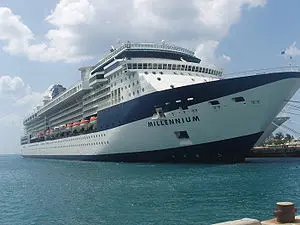
In the fast-paced, highly competitive ecosystem of the modern global cruise industry, maintaining reliable mechanical operations is not merely a matter of logistics; it is the cornerstone of brand loyalty and financial viability. On August 18, 2013, this reality was underscored once again when the Celebrity Millennium—a prominent vessel in the Celebrity Cruises fleet, owned and operated by Royal Caribbean Cruises Ltd.—suffered a catastrophic propulsion failure in the waters of Southeast Alaska.
The mechanical breakdown forced an abrupt end to the ship’s ongoing seven-night voyage, cutting short a journey that held high expectations for the approximately 2,200 passengers and 960 crew members aboard. Instead of navigating the majestic fjords and glaciers of the Last Frontier, guests found themselves stranded and diverted to the port of Ketchikan, Alaska.
The immediate fallout extended far beyond a single interrupted itinerary. Faced with the intricate challenges of marine engineering repairs and safety compliance, Royal Caribbean Cruises Ltd. made the decisive choice to cancel not only the remainder of the active voyage but also four subsequent sailings scheduled through mid-September 2013. This sweeping series of cancellations instantly disrupted the vacation plans of thousands of international travelers and triggered a massive logistical and financial containment operation for the cruise line.
According to preliminary estimates compiled by Cruise Market Watch, the direct loss of ticket revenue alone across the five affected sailings totals a staggering $13,851,093. When compounded by the costs of emergency mechanical repairs, port fees, logistical accommodations for stranded guests, administrative overhead, and the unquantifiable impact of lost onboard spending—such as spa treatments, specialty dining, excursions, and casino revenue—the total economic footprint of this single mechanical failure reaches multi-million-dollar proportions.
This in-depth investigative report examines the chronology of the incident, evaluates the comprehensive financial data and lost revenue projections, reviews the corporate compensation and refund framework deployed by Royal Caribbean, and analyzes the broader implications of mechanical vulnerabilities on passenger sentiment and cruise line market valuation.
Detailed Chronology of the Incident
To understand the cascading series of events that led to the grounding of the Celebrity Millennium, it is necessary to trace the timeline of the voyage from its departure to its premature termination in Ketchikan.
Departure and the Outbound Journey
The ill-fated voyage commenced in mid-August 2013, as the Celebrity Millennium set sail on a standard seven-night Alaskan itinerary. Carrying roughly 2,200 guests—comprising families, couples, and solo travelers from around the globe—alongside a dedicated crew of approximately 960 personnel, the atmosphere upon departure was celebratory. The ship, known for offering an upscale cruising experience within the Celebrity Cruises portfolio, was navigating one of the most popular cruise corridors in the world.
For the initial days of the voyage, operations proceeded according to schedule. Passengers enjoyed the ship’s array of amenities, dining rooms, and entertainment lounges while taking in the breathtaking coastal vistas of the Inside Passage. However, beneath the waterline, early indicators of mechanical strain were beginning to manifest within the propulsion architecture of the vessel.
The Breakdown and Emergency Diversion
The critical turning point occurred on August 18, 2013. While navigating regional waters, the Celebrity Millennium experienced a severe propulsion failure. Modern cruise ships rely heavily on complex, computer-managed propulsion systems—often utilizing Azipod or similar podded electric propulsion units that rotate 360 degrees beneath the hull. A failure in these systems can severely compromise a vessel’s maneuverability, speed, and safety parameters.
Recognizing the severity of the propulsion issue and prioritizing the safety of everyone on board, the ship’s captain and engineering officers made the decision to abort the itinerary. The vessel reduced speed and altered course toward the nearest available deep-water port capable of handling a ship of its size and accommodating thousands of displaced passengers: Ketchikan, Alaska.
Arrival in Ketchikan and Immediate Passenger Impact
Upon arrival in Ketchikan on August 18, the reality of the mechanical failure set in for the 2,200 guests on board. Docked indefinitely while marine engineers assessed the extent of the damage, passengers were faced with abrupt itinerary changes. The remaining days of glacier viewing, port stops in towns like Juneau and Skagway, and cultural excursions were officially canceled.
Ketchikan, a vibrant community heavily reliant on the tourism economy, suddenly absorbed thousands of stranded cruise passengers seeking alternative travel arrangements, hotel accommodations, and flights home. The logistical burden on Celebrity Cruises’ shore-side support teams was immense. Representatives scrambled to coordinate emergency flights, issue communication updates, and manage customer service desks inside the cruise terminal and onboard the vessel.
Realizing that the repairs required to restore the propulsion system to certified operational standards could not be completed within a matter of hours or even days, corporate leadership in Miami made the executive decision to cancel the remainder of the current cruise and clear the schedule for the subsequent weeks.
Supporting Context & Metrics: Financial Fallout and Revenue Analysis
The business of cruising operates on tight operational margins and high asset utilization. A modern cruise ship is a floating resort that must generate continuous revenue to offset capital expenditures, fuel costs, crew wages, port taxes, and corporate overhead. When a flagship vessel is removed from service unexpectedly, the financial ledger absorbs an immediate shock.
Breakdown of Lost Ticket Revenue
Cruise Market Watch, a leading analytics firm tracking the cruise industry, conducted a detailed financial assessment of the five voyages directly impacted by the propulsion failure. By evaluating actual historical ticket pricing models across different cabin categories (interior, ocean-view, balcony, and suites) for the specific dates in question, analysts calculated the direct baseline loss in passenger ticket revenue.
The table below outlines the specific sail dates impacted by the cancellations and their corresponding projected ticket losses:
| Sail Date | Estimated Ticket Revenue Loss |
|---|---|
| August 16, 2013 (Active Voyage Disrupted) | $3,058,593 |
| August 23, 2013 (Full Cancellation) | $2,908,601 |
| August 30, 2013 (Full Cancellation) | $2,555,152 |
| September 6, 2013 (Full Cancellation) | $2,512,067 |
| September 13, 2013 (Full Cancellation) | $2,816,680 |
| TOTAL ESTIMATED LOSS | $13,851,093 |
As demonstrated by the data, the financial impact of the canceled sailings alone amounts to nearly $14 million in top-line ticket sales. The active voyage starting August 16 suffered the highest individual loss at $3,058,593, reflecting the fact that passengers had already boarded and initiated their vacations before the disruption occurred.
Beyond Ticket Sales: The Hidden Costs of Mechanical Failure
While the $13.8 million figure provides a clear baseline for ticket revenue loss, industry financial analysts emphasize that the total economic impact on Royal Caribbean Cruises Ltd. is significantly higher due to several secondary cost centers:
- Onboard Revenue Streams: Modern cruise lines generate a substantial portion of their gross operating profit from onboard spending. This includes alcoholic beverage packages, specialty restaurants, art auctions, shore excursions, spa treatments, photo packages, and casino gaming. The cancellation of five consecutive voyages eliminates millions of dollars in high-margin onboard revenue.
- Emergency Repair and Dry-Dock Costs: Repairing complex marine propulsion systems is notoriously expensive. Specialized parts, marine engineering contractors, dry-dock facility rental fees in the Pacific Northwest or regional shipyards, and tugboat assistance all contribute to a rapidly escalating capital expenditure bill.
- Logistics, Repatriation, and Compensation: Transporting 2,200 stranded passengers out of Ketchikan—a destination with finite commercial airline capacity—required chartering flights, booking blocks of hotel rooms, providing meal vouchers, and issuing full cash refunds alongside future cruise credits. These out-of-pocket operational costs add immediate friction to corporate cash flow.
- Reputational and Brand Equity Impact: While difficult to quantify on a quarterly balance sheet, the erosion of consumer confidence can lead to softened booking curves in subsequent quarters, requiring increased marketing spend or promotional discounting to fill cabins.
Official Statements and Corporate Response
In the wake of the crisis, Royal Caribbean Cruises Ltd. and Celebrity Cruises activated their crisis communication protocols. Corporate representatives issued formal statements aimed at addressing public concern, outlining refund procedures, and offering transparency regarding the mechanical nature of the incident.
Corporate Accountability and Transparency
In official press releases distributed on Tuesday following the incident, executive management acknowledged the frustration experienced by travelers whose vacations were cut short or entirely eliminated. The company emphasized that safety remains the absolute priority of the organization, noting that operating a vessel with compromised propulsion is entirely inconsistent with maritime safety regulations and internal quality standards.
Marine engineers employed by Celebrity Cruises, in collaboration with external technical consultants and propulsion manufacturers, initiated an intensive diagnostic review of the faulty pod unit. Initial technical briefings indicated that the failure stemmed from internal mechanical components within the propulsion assembly, necessitating specialized machine shop intervention rather than routine maintenance.
The Compensation Framework
To mitigate the reputational damage and demonstrate accountability to its customer base, Royal Caribbean structured a comprehensive compensation package for all affected guests. The remediation plan included:
- Full Monetary Refunds: Every passenger booked on the active August 16 voyage—who experienced the disruption firsthand in Ketchikan—received a 100% refund of their cruise fare. Similarly, guests booked on the four subsequent canceled sailings (August 23, August 30, September 6, and September 13) were granted complete financial refunds.
- Travel Expense Reimbursement: For passengers stranded in Alaska or those who incurred non-refundable domestic and international flight change fees, the cruise line established dedicated reimbursement channels to cover out-of-pocket travel expenses directly attributable to the itinerary termination.
- Future Cruise Credits (FCC): In addition to cash refunds, each affected guest was issued a certificate for a future cruise with Celebrity Cruises. This strategic incentive is designed to retain brand loyalty, encouraging disgruntled travelers to give the cruise line a second chance rather than defecting to competitor brands such as Princess Cruises, Holland America Line, or Norwegian Cruise Line, all of which operate competing Alaskan itineraries.
Industry observers noted that while this compensation framework represented a significant immediate cash outflow for Royal Caribbean Cruises Ltd., it was a necessary investment to protect long-term customer lifetime value (CLV) and prevent viral consumer backlash across social media and consumer review platforms.
Future Outlook: Industry Implications and Market Dynamics
The grounding of the Celebrity Millennium serves as a case study in the broader vulnerabilities inherent to the cruise industry. As cruise ships grow in physical size and incorporate increasingly sophisticated, computerized propulsion and navigation technologies, the reliance on specialized engineering expertise becomes more pronounced.
Technological Vulnerabilities in Modern Cruising
The shift toward podded propulsion systems over the past two decades has yielded significant gains in fuel efficiency, hydrodynamic performance, and vessel maneuverability. However, these systems are notoriously complex. When a pod experiences mechanical failure, repairs cannot be performed easily while the ship is afloat; they frequently require dry-docking or specialized underwater intervention by certified diving technicians.
Following the Millennium incident, maritime analysts anticipated that fleet-wide engineering audits would become standard operating procedure across major cruise holding companies, including Royal Caribbean, Carnival Corporation, and Norwegian Cruise Line Holdings. Proactive maintenance schedules and redundancy systems are under continuous review to prevent single-point-of-failure scenarios from cutting short multi-million-dollar voyages.
Market Sentiment and Consumer Resilience
An enduring question in the aftermath of such disruptions is how consumer sentiment influences forward-looking sales. Within the broader travel and leisure market, occasional mechanical failures are viewed by seasoned travelers as isolated operational anomalies rather than systemic hazards.
To put the financial scale of the cruise market into perspective, industry analysts often point to the remarkable value propositions frequently found across the global cruise sector during promotional windows. For instance, comparative database tracking within the cruise market occasionally reveals high-value, deep-discount itineraries—such as promotional repositioning voyages where inside cabins can be booked on a per-passenger, per-day basis for nominal rates (as observed in vintage comparative bookings on vessels like the Carnival Sunshine traversing Southern Europe).
Despite temporary shocks caused by propulsion breakdowns or itinerary modifications, consumer demand for cruise vacations has historically demonstrated remarkable resilience. The combination of all-inclusive pricing, diverse global destinations, and aggressive promotional pricing ensures that millions of passengers continue to step onto gangways each year.
Conclusion
The mechanical failure of the Celebrity Millennium in August 2013 and the subsequent cancellation of five vital Alaskan sailings stands as a stark reminder of the delicate balance between mechanical engineering and corporate profitability in the cruise sector. With direct ticket losses exceeding $13.8 million—bolstered by extensive repair expenditures, logistical outlays, and comprehensive customer refunds—Royal Caribbean Cruises Ltd. absorbed a substantial financial blow.
However, by swiftly deploying a transparent communication strategy, issuing full monetary refunds, and providing attractive future cruise credits, the company successfully cushioned the blow to its brand equity. As the Celebrity Millennium eventually returned to service following rigorous shipyard repairs, the incident reinforced the critical importance of robust preventive maintenance, stringent quality control, and unwavering dedication to passenger safety across the global maritime industry.