





Executive Overview
Kuala Lumpur, Malaysia’s sprawling and dynamic capital, stands as a testament to Southeast Asia’s rapid economic modernization while fiercely preserving its rich multicultural heritage. From the iconic, gleaming Petronas Twin Towers piercing the skyline to centuries-old sacred Hindu shrines carved into ancient limestone hills, the city is a masterclass in contrasts. For international travelers, understanding the logistics of arrival, mastering the public transit grid, and timing visits to navigate the equatorial climate are essential steps to unlocking the capital’s full potential.
This comprehensive briefing serves as an authoritative travel intelligence report, detailing arrival options from Kuala Lumpur International Airport (KUL), efficient local transit frameworks, structured three-day exploration itineraries, culinary hotspots, accommodation strategies, and vital planning metrics. Whether you are arriving for a quick layover or embarking on an extended exploration of the Malay Peninsula, this guide synthesizes all operational parameters required for an exceptional journey.
Arrival Logistics: Getting to Central Kuala Lumpur from KUL
Kuala Lumpur International Airport (KUL) is located approximately 55 kilometers south of the city center. The airport operates under two primary terminal complexes sharing the same IATA code: KLIA (the primary terminal handling full-service carriers) and KLIA2 (dedicated predominantly to low-cost carriers like AirAsia). Despite the physical separation of the terminals, both share identical transit connectivity into the urban core.

1. Rail Transit: The KLIA Ekspres
For speed and predictability, the rail network is the undisputed gold standard. The KLIA Ekspres is a non-stop commuter service that connects both KLIA and KLIA2 directly to the central transit hub, KL Sentral. Bypassing all vehicular traffic, the train journey takes roughly 28 to 33 minutes, making it the most efficient option for business travelers and time-sensitive tourists alike.
2. Road Transport: Taxis and Grab
Travelers seeking point-to-point service directly to their accommodations can choose between traditional airport taxis and Grab, the preeminent ride-hailing application across Southeast Asia. While convenient, road transit is heavily susceptible to urban congestion. During peak commuting hours, vehicular travel from the airport to the city center can easily stretch past 90 minutes.
3. Airport Buses
Budget-conscious travelers often look toward airport shuttle buses as the most economical route into the city. However, seasoned travel advisors urge caution: while financially attractive, unpredictable highway traffic patterns render buses unreliable for tight schedules compared to the fixed-schedule efficiency of the rail network.

Currency & Financial Operations: The official currency of Malaysia is the Malaysian Ringgit (RM). While contactless and card payments are widely accepted across urban establishments, maintaining a reserve of physical cash is strongly recommended for street food vendors (hawker centres) and smaller suburban vendors. ATMs are ubiquitous throughout the city, offering competitive exchange rates with only standard domestic banking fees.
Detailed Chronology: A Structured 3-Day Exploration Itinerary
To maximize a short stay in Malaysia’s capital, the following optimized three-day operational schedule balances modern architecture, cultural landmarks, culinary immersion, and historical context.
Day 1: Petronas Towers, KLCC Park, and Bukit Bintang
Morning: Architectural Icons
- 09:00 AM – The Petronas Twin Towers: Begin your journey at the city’s defining landmark. Ascend to the Skybridge connecting the two towers on the 41st and 42nd floors, followed by the observation deck on the 86th floor for sweeping panoramic views of the Klang Valley. (Advance booking online is mandatory due to strict daily visitor quotas.)
- 11:00 AM – KLCC Park: Descend into the sprawling green oasis situated at the base of the towers. Designed by the late Brazilian landscape architect Roberto Burle Marx, the park features tranquil walking paths, reflective pools, and the Symphony Lake water fountain.
Afternoon: Retail and Culinary Immersion
- 01:00 PM – Suria KLCC: Transition from the park into the high-end shopping complex nestled at the foot of the towers for lunch, featuring a mix of international dining and local Malaysian food courts.
- 03:30 PM – Bukit Bintang Shopping District: Take the air-conditioned pedestrian walkway linking KLCC to Bukit Bintang. Explore retail hubs like Pavilion KL and Lot 10, or sample artisanal goods at the historic Fahrenheit88.
Evening: Nightlife and Street Energy
- 07:30 PM – Jalan Alor: As night falls, immerse yourself in Kuala Lumpur’s most famous culinary street. Jalan Alor transforms into a bustling, open-air food market illuminated by glowing red lanterns, offering everything from grilled stingray to durian stalls.
Day 2: Historic Core, Sacred Temples, and Cultural Enclaves
Morning: Colonial Heritage
- 08:30 AM – Merdeka Square (Dataran Merdeka): Stand on the historic field where the Malayan flag was first raised in 1957 upon gaining independence from British rule. Admire the striking Moorish architecture of the adjacent Sultan Abdul Samad Building.
- 10:30 AM – Masjid Jamek & Central Market: Visit one of the city’s oldest mosques, situated at the confluence of the Klang and Gombak rivers. Afterward, walk over to Central Market (Pasar Seni), a converted art-deco hub celebrating local handicrafts, textiles, and local art galleries.
Afternoon: Spiritual Sanctuaries
- 01:30 PM – Chinatown (Petaling Street): Navigate the vibrant, covered market lanes of Chinatown. Sample traditional snacks, browse heritage shophouses, and visit the ornate Sri Maha Mariamman Temple, the oldest functioning Hindu temple in the city.
- 04:00 PM – Thean Hou Temple: Head slightly southwest to this majestic six-tiered Chinese temple dedicated to the sea goddess Mazu. Perched atop Robson Heights, it offers striking architectural details and sweeping vistas of the urban landscape.
Evening: Sunset Views
- 06:30 PM – KL Tower (Menara Kuala Lumpur): Conclude your day by catching the sunset from the observation deck or open-air Sky Deck of the telecommunications tower, which rises higher than the Petronas Skybridge and offers 360-degree views of the twilight city lighting up.
Day 3: Batu Caves and Neighborhood Identity
Morning: The Sacred Limestone Sanctuary
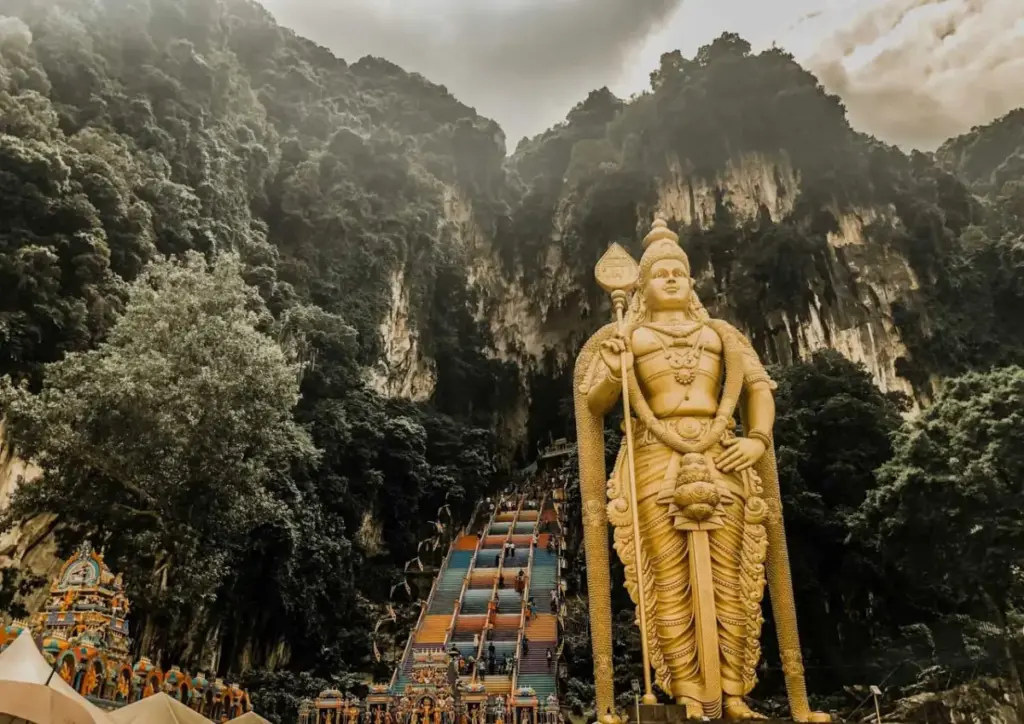
- 08:00 AM – Batu Caves: Depart early for this iconic Hindu temple complex located just north of the city in Selangor. Ascend the 272 vibrant, rainbow-painted steps flanked by wild macaque monkeys to reach the cathedral limestone caverns housing sacred shrines. (Arriving early beats both the equatorial heat and peak tour bus crowds.)
Afternoon: Artistic Expression and Bohemian Enclaves
- 01:00 PM – Kampung Bharu: Return to the city to experience Kampung Bharu, a remarkable traditional Malay village frozen in time amidst a sea of modern skyscrapers. Savor traditional Malay dishes for lunch in wooden stilt houses.
- 03:30 PM – Kampong Glam & Street Art Tours: Explore creative independent art spaces, boutique coffee shops, and photographic street murals hidden within the urban alleyways.
Evening: A Grand Farewell
- 07:00 PM – Rooftop Bar Experience: Toast the conclusion of your Malaysian adventure at one of Kuala Lumpur’s upscale rooftop lounges (such as Helipad Lounge or Troika Sky Dining), enjoying unobstructed night views of the illuminated skyline.
Supporting Context & Metrics: Getting Around and Staying Connected
Public Transit Infrastructure
Kuala Lumpur boasts a robust, multimodal public transportation network overseen by RapidKL. The system integrates:

- LRT (Light Rapid Transit) and MRT (Mass Rapid Transit): The backbone of urban rail transit, connecting residential sectors directly to commercial hubs.
- Monorail: Crucial for traversing the bustling Bukit Bintang and Golden Triangle retail corridors.
- KTM Komuter: Suburban rail lines linking the capital to outlying regions.
- RapidKL Buses: Extensive surface-level coverage supplementing rail transit.
Connectivity & Data Management
For seamless navigation and booking ride-hail services (Grab), securing reliable mobile data upon arrival is essential. International travelers are advised to pre-purchase digital eSIM profiles from providers like ROAMIC. These data packages eliminate physical SIM card swapping at airport kiosks, offer competitive pricing tiers compared to legacy roamers, and typically provide activation bonuses when utilizing promotional partner codes such as TRAVELPHOTOMAGAZINE during checkout.
Official Statements and Travel Advisory Standards
Insurance and Medical Preparedness
International travel authorities and destination management bodies consistently emphasize the necessity of comprehensive travel medical insurance when visiting Southeast Asia. While Kuala Lumpur possesses world-class private healthcare facilities, out-of-pocket costs for unexpected medical interventions, emergency repatriation, or trip cancellations can be substantial. Travelers are encouraged to compare policies from leading global providers prior to departure to ensure adequate coverage for urban exploration and adventure excursions (such as climbing Batu Caves or day trips into national parks).
Regional Excursion Protocols
For travelers opting to extend their journey beyond the capital into peninsular Malaysia, intercity bus networks are renowned for their comfort. Modern long-distance coaches feature wide, reclining single seats, generous legroom, and individual entertainment screens, often surpassing regional air travel in terms of comfort and convenience.

- Departure Hub: Long-distance buses primarily depart from the Terminal Bersepadu Selatan (TBS), seamlessly integrated with the city’s rail grid via the Bandar Tasik Selatan station.
- Booking Protocol: Travelers should secure tickets 24 to 48 hours in advance, either via physical counters on Level 3 of the TBS terminal or through trusted digital booking platforms such as Redbus and Busonlineticket.
Culinary Intelligence: Where and What to Eat
Kuala Lumpur is universally recognized as a premier global epicurean destination. Its culinary profile is defined by the harmonious intersection of Malay, Chinese, Indian, and Peranakan (Nyonya) traditions.
Dining Venues
- Hawker Centres & Food Markets: Budget-friendly open-air food courts like Jalan Alor, Hutong (inside Lot 10), and Kampung Baru night markets offer unmatched authenticity and affordability.
- Mid-Tier Air-Conditioned Cafes: Ideal for escaping midday heat while sampling localized comfort foods.
- High-End Fine Dining: Sky-high restaurants pairing avant-garde gastronomy with direct views of the illuminated city towers.
Essential Dishes to Sample
- Nasi Lemak: Universally regarded as Malaysia’s national dish—fragrant rice cooked in coconut milk and pandan leaf, served with crispy anchovies, roasted peanuts, hard-boiled egg, fresh cucumber slices, and spicy sambal.
- Char Kway Teow: Wok-fried flat rice noodles tossed over intense heat with prawns, Chinese chives, bean sprouts, eggs, and cockles, imparting a distinct smoky flavor (wok hei).
- Roti Canai: A flaky, griddled flatbread influenced by Indian heritage, stretched thin and served piping hot with rich dahl or curry dipping sauces.
- Laksa: A fragrant, spicy noodle soup blending rich coconut broth or sour tamarind bases with fresh herbs, seafood, or chicken.
- Hokkien Mee: Thick yellow noodles braised in a rich, dark soy sauce gravy with pork, squid, and cabbage, topped with crispy lard bits.
Climate Analysis and Future Outlook
Equatorial Climate Dynamics
Kuala Lumpur experiences a tropical equatorial climate, characterized by high ambient temperatures and consistent relative humidity throughout the entire calendar year. Seasonal shifts do not bring traditional winter cooling; instead, temperatures reliably hover between 24°C (75°F) and 33°C (91°F).
The primary variable governing travel planning is precipitation:

- Drier Windows: To minimize encounters with heavy tropical downpours, the optimal travel windows are June to August and, to a lesser extent, January to March.
- Daily Weather Mitigation: Rain showers in Kuala Lumpur are often intense, short-lived afternoon thunderstorms. Savvy travelers schedule outdoor excursions (such as visiting Batu Caves or walking heritage trails) for the early morning hours, reserving air-conditioned museums, galleries, and mega-malls for the intense heat and afternoon downpours of mid-day.
Future Outlook for Travelers
As infrastructural upgrades continue to modernize transit links and expand urban regeneration projects across the Klang Valley, Kuala Lumpur remains one of the most accessible, culturally rich, and economically vibrant metropolises in the developing world. By combining methodical transit planning, careful seasonal timing, and an adventurous palate, visitors to Malaysia’s capital are guaranteed an unforgettable, seamless journey.