









Executive Overview
When preparing for a multi-day backcountry trek, the average hiker’s preparation checklist is predictable: break in the boots, map out the elevation profiles, check the weather forecasts, and obsess over shaving ounces off base weight. Yet, despite meticulous planning, thousands of hikers hit the trail every weekend only to be sidelined by a familiar, agonizing adversary: debilitating lower back pain, sore hips, and a compromised center of gravity caused by a heavy backpack.
Conventional fitness wisdom often tells us that conquering a heavy pack is all about leg strength. While powerhouse quads and resilient calves are undoubtedly necessary for vertical ascent, they are only part of the equation. According to spinal health and movement experts, the true gatekeepers of load-management efficiency are the abs and lower back—specifically, the deep stabilizer muscles that wrap around your spine like a natural corset.
Ditch the superficial, aesthetic-driven crunches. To truly protect your spine, improve your balance, and ensure all-day comfort on rugged terrain, you need a functional, whole-system core conditioning routine. Designed in consultation with Robyn Fog, owner of Hypermobility Exercise Solutions in Golden, Colorado, this specialized training regimen targets the deep abdominal and back musculature required to keep you upright and pain-free when hauling a heavy load. Incorporate these four dynamic exercises into your routine three times a week, beginning at least four weeks before your next major expedition, to transform your trail performance.

Detailed Chronology: Building a Trail-Ready Core
Preparing your body for the physical demands of backpacking requires a progressive, disciplined approach. A haphazard routine will leave you sore and unprepared; a structured, chronological training block ensures your nervous system and deep stabilizer muscles adapt safely to heavy loads.
Phase 1: Foundation and Neuromuscular Awareness (Weeks 1–2)
Before introducing complex movements or external loads, you must master the fundamental mechanics of core engagement. The most common error fitness enthusiasts and hikers make is improperly engaging the core, which places undue stress on the lumbar spine and invites injuries such as herniated discs or acute muscle strains.
- The Activation Protocol: Place one hand on your chest and the other on your abdomen. Take in the deepest breath you can. Your stomach should push outward while your ribcage remains stationary.
- The Exhalation Lock: Exhale fully. As you do, you will feel a deep, internal contraction in your lower abs. Maintain this contraction, squeeze your glutes, and gently posterior-tilt your pelvis toward your belly button while breathing shallowly into your chest. Hold this sensation for a few seconds to imprint it on your neuromuscular memory.
Replicate this exact lower-abdominal tightening during every repetition of the exercises outlined below.

Phase 2: Dynamic Stabilization & Asymmetry Training (Weeks 3–4)
Once you can reliably engage your deep core, introduce movements that challenge your balance and force your spine to resist unwanted rotation. This is where the Uneven Farmer’s Carry and Modified Side Planks enter your regimen. These exercises mimic the unpredictable shifting of a poorly packed rucksack or the sudden lateral slip of a boot on scree.
Phase 3: Advanced Synergy and Load Integration (Weeks 5+)
In the final weeks leading up to your trip, transition to compound, multi-planar movements like Hanging Leg Raises and Bosu Bicycle Crunches. These movements teach your upper body, core, and lower extremities to work in absolute harmony, ensuring that energy is efficiently transferred from your foot strike all the way up to your load-bearing shoulder straps.
Supporting Context & Metrics: The Four Essential Core Exercises
To build a resilient backcountry core, integrate these four expert-approved movements into your training schedule three times weekly.
+-----------------------------------------------------------------------------------+
|                        THE BACKCOUNTRY CORE MATRIX                                |
+----------------------------+-----------------------------+------------------------+
| Exercise                   | Primary Focus               | Trail Benefit          |
+----------------------------+-----------------------------+------------------------+
| 1. Uneven Farmer's Carry   | Lateral Stability & Grip    | Controls shifting loads|
| 2. Hanging Leg Raises      | Core-Glute Synergy          | Power transfer efficiency|
| 3. Bosu Bicycle Crunch     | Unstable Surface Adaptation | Navigating uneven terrain|
| 4. Modified Side Planks    | Trunk Rotation & Obliques   | Protects lower back    |
+----------------------------+-----------------------------+------------------------+
1. Uneven Farmer’s Carry
- The Move: Walking while holding asymmetric loads to challenge lateral balance.
- Why It Works: It forces your core and obliques to aggressively fire, preventing your spine from bending sideways under an unevenly distributed load—a frequent occurrence when traversing sloping trails or carrying lopsided gear.
- How to Do It: Select a weighted object for each hand (such as kettlebells or heavy dumbbells). The combined weight of both objects should equal approximately 40 percent of your body weight, with one side loaded 10 pounds heavier than the other. Walk slowly and deliberately for 50 paces, keeping your torso completely vertical. Switch the heavier weight to the opposite hand and repeat.
- Progression Strategy: Make the movement harder by adding 5 pounds to the heavy side every other week, working your way up to a 20-pound differential (ensuring the total weight never exceeds 50 percent of your body weight).
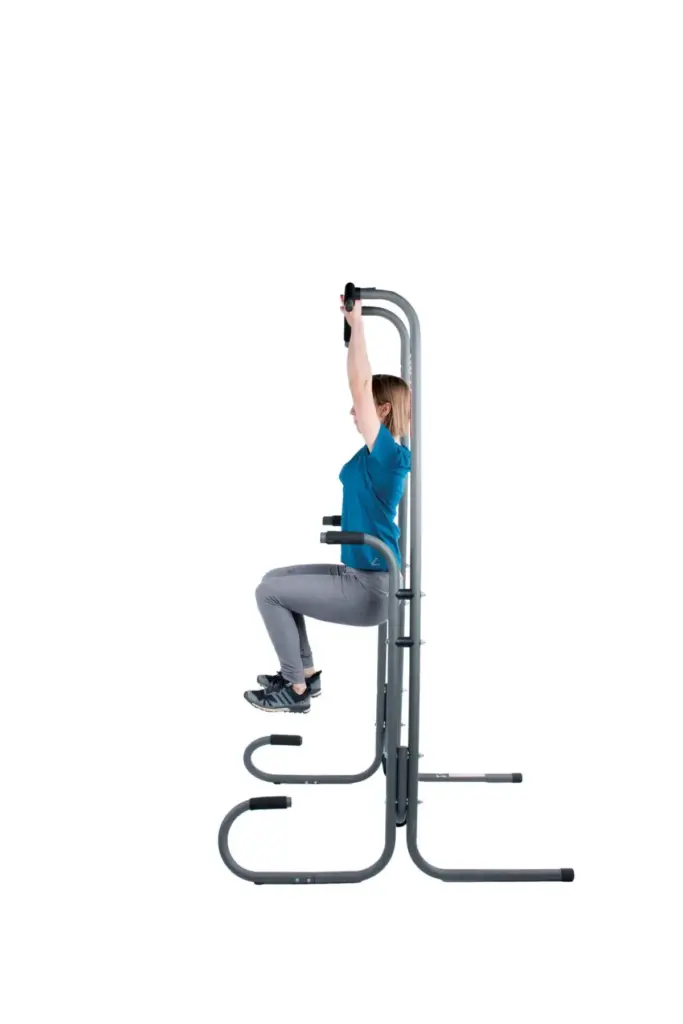
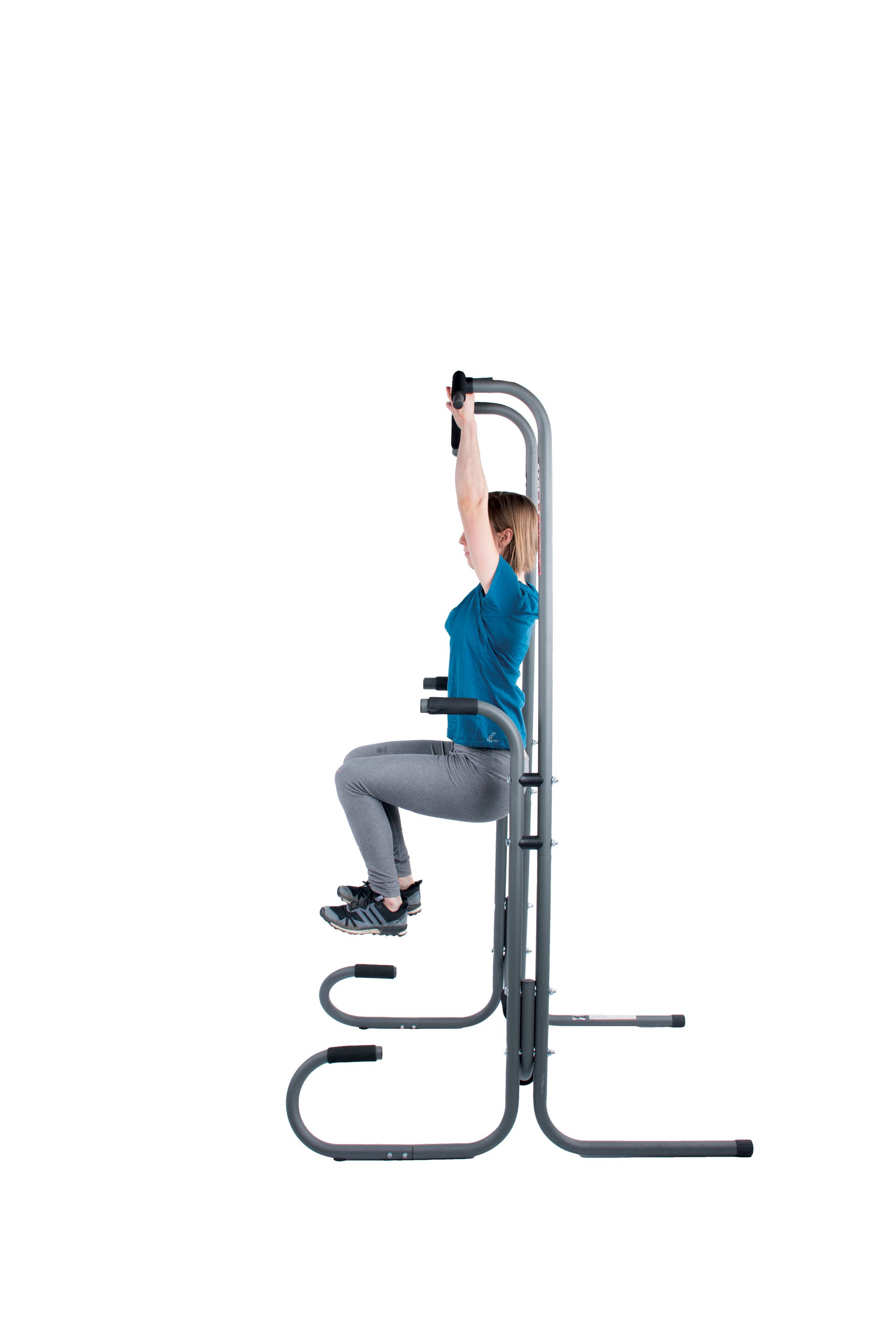
2. Hanging Leg Raises
- The Move: A suspended lower-body elevation that engages the entire kinetic chain.
- Why It Works: It promotes vital neuromuscular synergy between your glutes, hamstrings, and deep core, ensuring your pelvis remains stable as you lift your legs over trail obstacles like fallen logs and boulders.
- How to Do It: Hang from a pull-up bar with an overhand grip. Keeping your legs as straight as possible, engage your lower abs and raise your legs upward in a controlled arc.
- Progression Strategy: Elevate your straight legs until they are completely parallel to the ground. For advanced hikers, touch your toes directly to the pull-up bar above your head without using momentum or swinging your torso.
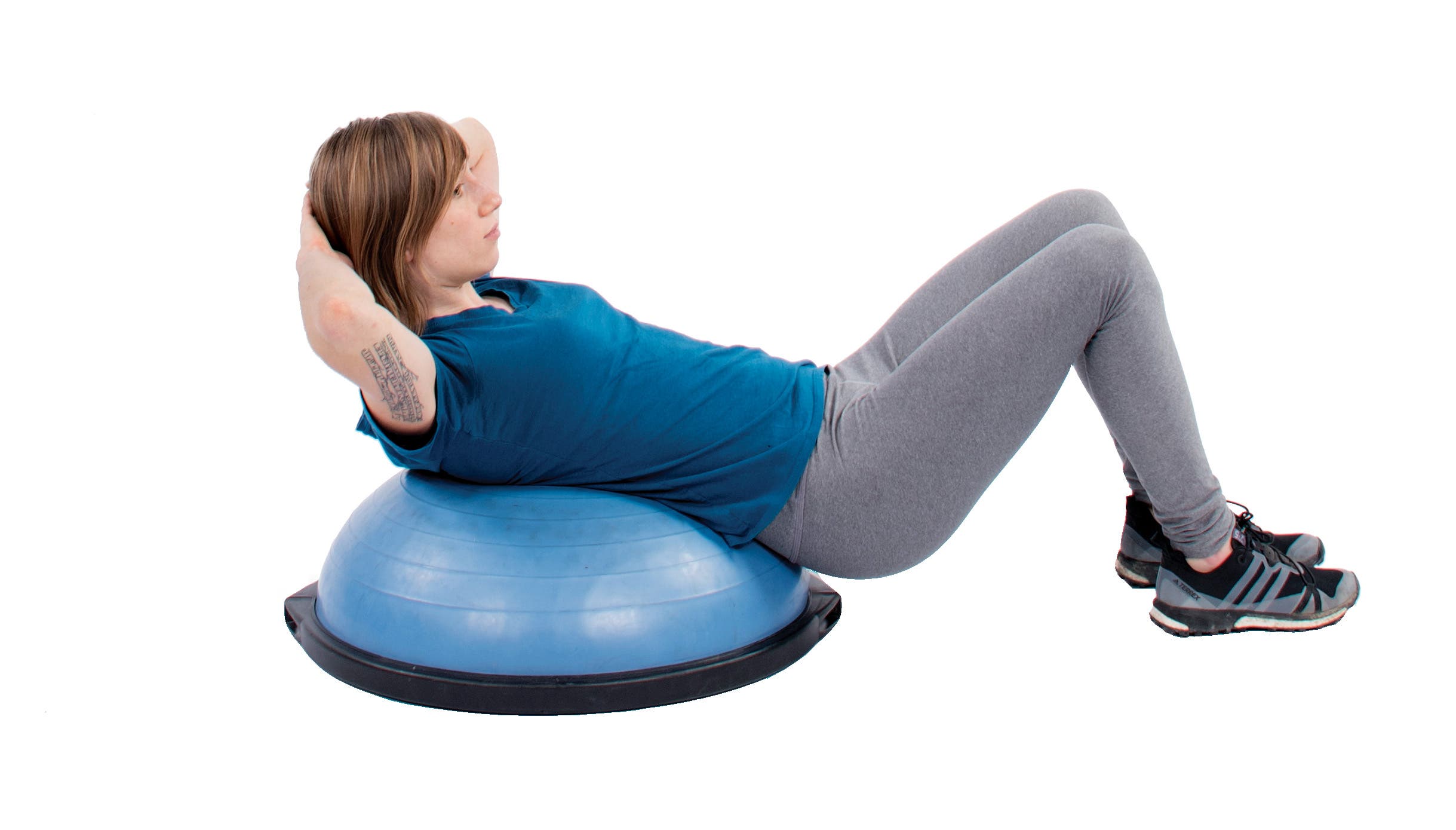
3. Bosu Bicycle Crunch
- The Move: A traditional core-rotational exercise performed on an unstable dome surface.
- Why It Works: By introducing an unstable platform, this exercise trains your nervous system to make rapid, micro-adjustments in unstable or loose terrain, protecting your joints when footing gives way.
- How to Do It: Sit on a Bosu ball with the flat side down, leaning back slightly to engage your core. Perform a standard bicycle crunch motion, bringing your right elbow toward your left knee, then alternating sides in a slow, highly controlled cadence.
- Progression Strategy: Increase the difficulty by keeping your arms and legs extended so your body stretches out parallel to the floor (your heels may touch the floor, but your arms must not). Instead of tapping your elbow to the opposite knee, reach straight upward to touch your hand to the opposite foot.
4. Modified Side Planks with Rotation
- The Move: A dynamic side plank incorporating a reach-under and reach-over motion for full trunk rotation.
- Why It Works: It strengthens the often-neglected load-bearing muscles in your lateral obliques and lower back, which act as structural guy-wires preventing your spine from twisting under heavy compression.
- How to Do It: Assume a standard side plank position on your forearm, with your hips elevated and body in a straight line. Slowly reach your top arm underneath your torso, then rotate upward and reach toward the sky. Complete all reps on one side before switching.
- Progression Strategy: Hold a light dumbbell or weight plate in your upper hand during the rotation to amplify the resistance on your oblique sling.
Expert Insights and Professional Perspectives
According to Robyn Fog, overlooking the deep abdominal wall in favor of superficial vanity muscles is the single biggest mistake recreational athletes make.
"No offense to your legs, but it’s your abs and lower back that matter most when it comes to managing pack weight," Fog emphasizes. "Not just those superficial six-pack muscles, either. You need whole-system activation to target the deeper back and abdominal muscles that physically protect and stabilize your spine against compressive loads."
Furthermore, personal trainer and mountain guide Jason Antin notes that core stability is just as much about passive endurance as it is about dynamic movement. By integrating static core holds alongside dynamic carries and rotations, hikers can build an ironclad midsection capable of enduring ten-hour days above treeline.
Future Outlook: Injury Prevention and Long-Term Trail Longevity
As outdoor enthusiasts push deeper into remote backcountry environments and tackle increasingly ambitious thru-hikes, the conversation around physical conditioning is shifting from simple cardiovascular endurance to structural durability.
The integration of functional, deep-core training into pre-hike preparation routines is no longer reserved for elite mountaineers. By dedicating just three sessions a week to asymmetrical carries, stability-ball rotations, and strict neuromuscular engagement, everyday hikers can drastically reduce their incidence of debilitating trail injuries.
Investing in your core today ensures that whether you are stepping out for a casual weekend overnighter or embarking on a grueling multi-week trek, your spine will remain protected, your balance unwavering, and your journey pain-free from trailhead to summit.