




Executive Overview
Biographical cinema often falls prey to a predictable, wearying formula: the "cradle-to-grave" march. These films race through childhood milestones, career plateaus, personal collapses, and eventual redemption, sacrificing psychological depth for chronological thoroughness. When A24 announced Tony, its highly anticipated feature film chronicling the formative years of the late chef, author, and cultural icon Anthony Bourdain, cinephiles and food lovers alike braced themselves. Would Hollywood sanitize his sharp edges? Would it indulge in heavy-handed foreshadowing of his tragic 2018 death?
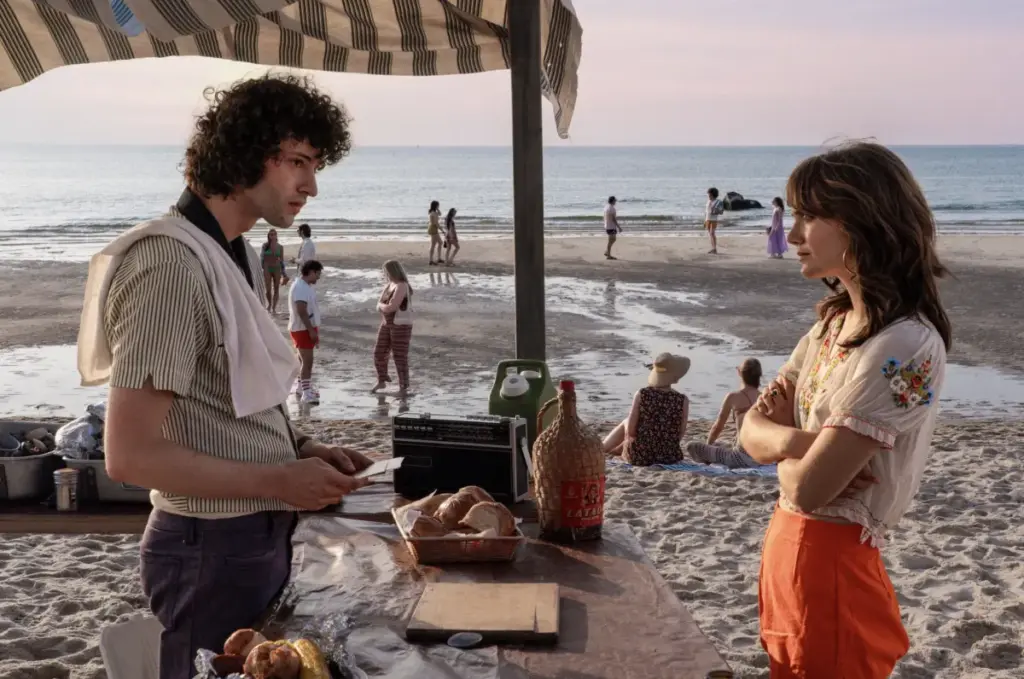
According to screenwriters Todd Bartels and Lou Howe, the answer was a definitive no. Instead of attempting to compress a vast, globe-trotting life into two hours, the creative team chose a hyper-specific, highly atmospheric window: the summer of 1975 in Provincetown, Massachusetts. There, a young, volatile Bourdain—portrayed by breakout star Dominic Sessa—first cut his culinary teeth in a high-pressure commercial kitchen.
This deep-dive interview and production overview explores how Bartels and Howe collaborated with Bourdain’s closest confidantes, secured the blessing of his estate, cast an ensemble featuring Antonio Banderas and Leo Woodall, and fought to keep the movie as unpolished, punk-rock, and uncompromising as the man himself. Tony arrives in theaters on August 21, 2026, positioning itself not as a melancholy obituary, but as a gritty, coming-of-age portrait of a young man raging against his own limitations.
Detailed Chronology & Production History: From Concept to Clambake
The journey to bring Tony to the silver screen was neither straightforward nor accidental. It required a strategic approach to win over an estate protective of Bourdain’s complex legacy, spearheaded by executive producer Emily Rose. Recognizing that conventional pitches focusing on Bourdain’s global television career or his later years would fail to capture his true essence, the writers opted for a microscopic examination of his youth.
Pitching the Estate: The Provincetown Window
When screenwriters Todd Bartels and Lou Howe first approached Bourdain’s literary agent and friend Kimberly Witherspoon alongside Ottavia Busia-Bourdain—co-executors of the estate—they presented an unexpected vision.
"The elevator pitch was that it would be a love letter: a Provincetown summer coming-of-age story that ends in a clambake," Howe recalls. Witherspoon and Busia-Bourdain were immediately receptive, noting that most pitches they received obsessively circled his later years and tragic death. The estate’s response was simple yet daunting: Prove it.
With the backing of A24, co-writer and director Matt Johnson, and lead actor Dominic Sessa, the team returned with a finalized script. Witherspoon came aboard as an executive producer, taking an active creative role that would permanently shape the film’s tonal integrity.
Navigating the Script and Historical Accuracy
To ensure the screenplay captured emotional truth rather than mere biographical trivia, the writers relied heavily on Laurie Woolever’s authoritative biography of Bourdain. Woolever, Bourdain’s longtime assistant and collaborator, provided invaluable context on how a young man who famously described himself as "in need of a good ass-kicking" evolved into an enlightened cultural figure.
Bourdain’s own writings often painted a searing portrait of his youth: narcissistic, insufferable, and treating the world like an ashtray. The central narrative challenge was tracing that steep trajectory from "little shit to guru" without making him a sympathetic victim of bad influences.
Here, Kimberly Witherspoon’s oversight proved vital. Whenever the writers tested scenes to see if they honored Bourdain’s spirit, Witherspoon consistently pushed them to go darker. "She’d say, ‘No, don’t make him so nice. [At this stage] he was a punk,’" Bartels shares. To maintain this friction, the narrative structured two primary mentors as psychological counterweights: Sal, the devil on his shoulder played by Leo Woodall, and Ciro, the seasoned chef played by Antonio Banderas.
Supporting Context & Metrics: Recreating 1975 Massachusetts
Recreating the visceral, high-stress environment of a 1970s Cape Cod kitchen required meticulous attention to detail, extensive culinary training, and an immersion in the distinct cultural and geographic history of Provincetown.

Culinary Authenticity on Set
The production placed heavy emphasis on kitchen realism. Christine Tobin served as the lead culinary consultant, operating out of a makeshift shack behind the primary set to churn out authentic period dishes.
The cast’s physical dedication matched the culinary demands:
- Dominic Sessa (Tony Bourdain): Threw himself completely into the role, humorously recalling that he consumed roughly eight lobster rolls at a single sitting during breaks.
- Leo Woodall (Sal): Mastered the art of oyster shucking to the point of absolute fluency, making the difficult task look effortless on camera—a crucial physical marker for his character’s bravado.
- Antonio Banderas (Ciro): Brought authentic real-world restaurant experience to the production. Unlike actors requiring intensive boot camps, Banderas was frequently found off-camera simply cooking paella for the cast and crew because of his genuine passion for the craft.
Capturing the "Old-School" P-Town Vibe
To absorb the authentic atmosphere of Provincetown’s historic commercial strip, Bartels and Howe spent days immersed in the Old Colony Tap, a legendary dive bar on Commercial Street still operating amidst maritime memorabilia and Boston Red Sox flags. Both writers describe it as a masterclass in local texture.
The production also wove in Provincetown’s rich heritage as a Portuguese fishing town. Subtle atmospheric elements, such as the melancholic, longing folk music known as fado, echo in the background during critical sequences, including the striper run scene and a quiet bonfire chat between Tony and Ciro.
Official Statements & Insights from the Creators
In conversations with the screenwriters, several behind-the-scenes anecdotes illuminate the deep reverence—and lighthearted camaraderie—that drove the production forward.
On the Balance for Fans vs. Newcomers:
"I was anxious about that, especially at the very beginning," says Lou Howe. "But [we] just [tried] to make a good movie, and hope that the entertainment factor and emotional engagement hits the target well enough… Of course, there are some Kitchen Confidential Easter eggs."
Among those Easter eggs is the infamous bride story and the moment a young Tony naively picks up a hot pan and asks for burn cream.On the Legacy Keepers:
"She’s really one of the keepers of his legacy," Todd Bartels says of Kim Witherspoon. "She didn’t want him to look like the innocent little victim of bad influences." Witherspoon’s direct intervention also led to a poignant cameo appearance by renowned chef Eric Ripert. Describing Ripert on set, Bartels laughs, "Ripert is a Buddhist, always wearing his mala beads, and was extremely humble and just curious about the acting process. At no point was he swaggering around like the grand chef from Le Bernardin that he is."
Future Outlook & Casting Legacy
As Tony prepares for its nationwide theatrical release via A24 on August 21, 2026, industry watchers are already predicting breakout awards buzz for Dominic Sessa’s performance. Yet, the creative team has permitted themselves some playful speculation about the future. When asked who could potentially portray an older, wiser, post-Provincetown version of Anthony Bourdain in a theoretical sequel or companion piece, Bartels and Howe offered inspired suggestions.
While a friend initially pitched Bobby Cannavale—noting he would effortlessly nail Bourdain’s distinct cadence and vocal delivery—Bartels confessed an even stronger preference for actor Eric Bogosian.
Whether Tony spawns future chapters remains to be seen, but by rejecting the easy traps of the standard Hollywood biopic, Bartels, Howe, and director Matt Johnson have forged something rarer: an honest, bruising, and deeply affectionate portrait of a man learning how to channel his restless fury into a lifelong love affair with food, storytelling, and the world.