









The modern recreational vehicle (RV) has long transcended its mid-20th-century roots as a rudimentary metal box on wheels outfitted with a simple icebox and a two-burner stove. Today, mobile living represents a booming, multi-billion-dollar cultural movement defined by two distinct demographics: weekend warriors seeking refuge from corporate burnout, and full-time digital nomads embracing a minimalist, location-independent lifestyle. However, transitioning from a stationary sticks-and-bricks home to a mobile living environment introduces significant logistical challenges, chief among them being the management of utilities, spatial constraints, and domestic comforts.
While factory-installed appliances are engineered to meet baseline requirements, they frequently fall short of modern consumer expectations regarding energy efficiency, culinary precision, and day-to-day convenience. Upgrading an RV’s internal ecosystem is no longer merely a hobbyist’s weekend pastime; it is a complex optimization science. Whether mitigating high humidity in coastal campgrounds, managing tight amperage thresholds while boondocking off-grid, or integrating smart culinary hardware into a compact galley, the selection of onboard hardware dictates the success of any journey.
This comprehensive report provides an authoritative, investigative analysis of RV appliance upgrades. Designed for both novice travelers and seasoned full-timers, this guide evaluates the strategic considerations of weight distribution, electrical and plumbing compatibility, budgetary allocation, and long-term maintenance. Furthermore, it examines the market-leading upgrades transforming the contemporary mobile living experience—from continuous tankless water heaters to all-in-one laundry systems—and offers actionable insights to maximize both comfort and asset valuation.
Detailed Chronology: The Evolution of RV Engineering and Appliance Integration
To understand the current landscape of RV appliances, one must examine the chronological trajectory of mobile architecture. For decades, the recreational vehicle industry operated on a specialized, siloed manufacturing model. RV appliances were constructed by a handful of legacy component suppliers who prioritized low electrical draw, extreme vibration tolerance, and compatibility with propane systems over domestic performance.
Era 1: The Mechanical and Propane Foundation (Mid-20th Century to Late 1990s)
In the early decades of mass-market RV production, electrical grids at campgrounds were fragile, and onboard battery banks were limited to lead-acid batteries with minimal amp-hour capacities. Consequently, appliances relied heavily on liquefied petroleum gas (LPG) and 12-volt direct current (12V DC) systems.
- The Absorption Refrigerator: Operating on the 3-way principle (110V AC, 12V DC, and propane), these units utilized heat to circulate ammonia refrigerant without a noisy, vibration-prone compressor. While highly efficient for off-grid camping, their cooling capacities were heavily influenced by ambient outdoor temperatures.
- Pilot-Light Cooktops and Furnaces: Ignition systems required manual intervention or simple piezoelectric sparks. Water heaters were overwhelmingly tank-based (typically 6 to 10 gallons), requiring extended heating cycles and manual pilot lighting.
Era 2: The Residential Integration Wave (2000s to 2015)
As campgrounds expanded their infrastructure to offer 30-amp and 50-amp shore power hookups, consumer demand shifted. Travelers no longer wished to compromise on culinary capability or domestic luxury.
- Inverter Technology: The widespread adoption of pure sine wave inverters allowed RVers to convert 12V DC battery power into 110V AC household current, paving the way for standard microwave ovens, coffee makers, and entertainment systems.
- Early Residential Adaptations: Luxury Class A motorhomes and fifth wheels began offering residential-style, compressor-driven refrigerators, providing vastly superior cooling and freezing capacities compared to traditional absorption units, albeit at the cost of higher electrical consumption.
Era 3: The Smart, Energy-Dense Modern Epoch (2016 to Present)
The convergence of the lithium-iron-phosphate (LiFePO4) battery revolution, high-output rooftop solar arrays, and lightweight composite manufacturing has entirely redefined what is possible inside a mobile footprint.
- High-Efficiency DC Compressors: Modern RV refrigerators now utilize ultra-efficient 12V variable-speed compressors that rival residential cooling speeds while consuming a fraction of the energy required by older inverter setups.
- Tankless On-Demand Hydronics: The phasing out of traditional static water heaters in favor of digital, gas-modulated tankless systems has revolutionized water and energy management.
- Multi-Functional Galley Hardware: The rise of space-saving convection microwaves, compact induction cooktops, and digital multi-cookers has enabled complex meal preparation in galleys measuring less than twenty square feet.
Supporting Context & Metrics: The Physics of Mobile Living
Upgrading an RV appliance is fundamentally different from purchasing a replacement unit for a conventional home. Every modification must be evaluated through the rigorous lens of three critical constraints: Weight, Space, and Power (WSP).
1. The Weight and Payload Equation
Every RV possesses a Gross Vehicle Weight Rating (GVWR) established by the manufacturer. Exceeding this rating risks structural failure, catastrophic tire blowouts, and severe legal liabilities.
- The Metric: A standard residential refrigerator can weigh anywhere from 180 to 250 pounds, whereas a traditional RV absorption refrigerator typically hovers between 100 and 130 pounds. Transitioning to a residential unit instantly consumes upwards of 120 pounds of precious cargo carrying capacity (CCC).
- Mitigation: Upgraders must weigh the mechanical advantages of heavier, luxury-grade appliances against the loss of fresh water, greywater capacity, or gear weight.
2. The Electrical Load Threshold (Amperage and Inversion)
Electrical capacity in an RV is finite. Understanding the difference between shore power (AC), battery storage (DC), and inverter conversion losses is paramount.
- The Metric: A standard household coffee maker or toaster draws approximately 1,200 to 1,500 watts. Running a 1,500-watt appliance on a 12V battery system via an inverter requires drawing roughly 125 to 135 amps of DC power (accounting for conversion inefficiencies). Without a robust lithium battery bank and a 2,000W–3,000W inverter, such an appliance will instantly trip breakers or deplete batteries.
- Power Management: Modern RVers increasingly rely on energy-auditing tools and smart battery management systems (BMS) to sequence heavy electrical draws, ensuring that air conditioners, water heaters, and induction burners do not operate simultaneously.
3. Spatial Geometry and Ventilation Dynamics
RV walls are constructed with lightweight sandwich panels (typically aluminum or fiberglass skins bonded to rigid foam insulation and interior paneling) rather than traditional drywall and stud framing.
- The Metric: Cabinet depths in travel trailers often max out at 24 inches, while camper van galleys may offer only 18 to 20 inches of counter depth. Furthermore, appliances that generate heat or combustion gases—such as refrigerators and tankless water heaters—require precise intake and exhaust baffling to prevent interior carbon monoxide accumulation and thermal degradation of surrounding cabinetry.
Official Industry Insights and Expert Frameworks
When evaluating appliance upgrades, industry veterans and certified RV technicians emphasize a strategic, phased approach rather than impulsive purchasing.
The Travel Style Matrix
According to leading mobile living consultations, upgrades must directly reflect user habits. The market generally divides RVers into three distinct operational categories:
- The Weekend Warrior: Prioritizes quick setup, speed of comfort, and low maintenance. Upgrades should focus on convenience items like high-speed coffee makers, instant multi-cookers, and lightweight portable vacuums.
- The Extended-Trip / Seasonal Traveler: Spends weeks or months on the road across diverse climatic zones. Priorities shift toward laundry solutions, increased refrigeration storage, and robust climate control (dehumidifiers and advanced water heaters).
- The Full-Time Nomad / Boondocker: Lives permanently on the road, frequently camping off-grid without utility hookups. Upgrades must emphasize ultra-low energy consumption, water conservation, and dual-source (propane/electric) redundancy.
Comprehensive Review of Essential RV Appliance Upgrades
1. The RV Refrigerator: The Heart of the Galley
The refrigerator is arguably the single most critical appliance in any recreational vehicle. Factory models often feature modest capacities and slow cooling recovery times.
+---------------------------+-----------------------------------+-----------------------------------+
| Feature / Metric          | Absorption (Propane/Electric)     | Residential (12V Compressor)      |
+---------------------------+-----------------------------------+-----------------------------------+
| Off-Grid Efficiency       | Excellent (runs weeks on propane) | Moderate (requires robust solar)  |
| Cooling Speed             | Slow (12–24 hours to chill)       | Rapid (chills within hours)       |
| Sensitivity               | Requires level parking surface    | Operates at any angle             |
| Capacity                  | Moderate                          | High (optimized interior space)   |
+---------------------------+-----------------------------------+-----------------------------------+- Strategic Consideration: When swapping an absorption unit for a residential compressor refrigerator, verify that the cabinetry can accommodate the different dimensional footprints and that adequate passive or active ventilation is maintained behind the chassis.
2. RV Washer and Dryer Systems: Eliminating Campground Laundromats
For full-time travelers, visiting public laundromats is a persistent operational friction point. All-in-one washer-dryer combination units have transformed extended mobile living.
- Engineering Realities: Combination units utilize ventless condensation drying technology, meaning they do not require an exterior dryer vent cut into the RV’s sidewall. However, water consumption can be significant (often using 15 to 30 gallons per cycle), making greywater tank management critical during dry camping.
- Structural Integrity: Because spin cycles generate intense rotational vibration, reinforced floor mounting brackets and transit locking brackets are mandatory to prevent structural fatigue along the RV chassis.
3. Tankless Water Heaters: Endless Comfort in a Compact Footprint
Traditional 6-gallon water heaters require constant heating cycles to maintain a reserve of hot water, consuming valuable propane or electricity even when not in use.
- The Upgrade Advantage: Tankless water heaters ignite propane burners only when water flow is detected, providing a continuous, endless supply of hot water while eliminating the bulky storage tank.
- Water Flow Dynamics: Upgraders must pay close attention to minimum activation flow rates. Low-flow water pumps in older RVs may fail to trigger the electronic ignition, requiring the installation of a high-pressure, constant-demand water pump.
4. Environmental Control: The RV Dehumidifier
Condensation is the silent enemy of recreational vehicles. Breathing, cooking, and showering generate gallons of water vapor daily. Trapped inside a tightly sealed RV hull, this moisture leads to mold growth, delamination of wall panels, and structural rot.
- Selection Criteria: Look for compact, compressor-based or Peltier-type dehumidifiers equipped with continuous drain hose options so the unit can empty directly into a shower drain or sink without requiring manual tank emptying every few hours.
5. Multi-Functional Culinary Hardware (Instant Pot & Convection Ovens)
In tight galleys, single-purpose appliances are a liability.
- The Multi-Cooker: Replacing standalone slow cookers, rice cookers, pressure cookers, and steamers with a single digital multi-cooker reduces galley clutter by over 70%. Furthermore, pressure cooking significantly reduces cooking times, conserving precious propane or electrical amp-hours.
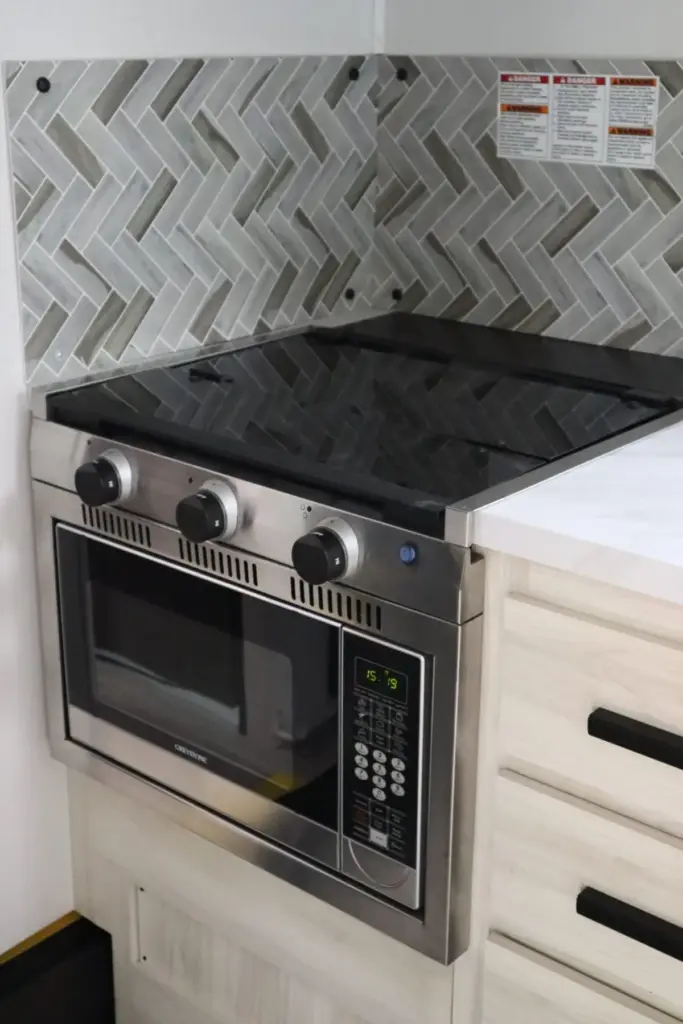
- Microwave-Convection Ovens: Traditional RV microwaves reheat food, but convection units combine radiant heat elements with high-speed convection fans, effectively replacing a bulky conventional oven for baking, roasting, and broiling.
Economic Optimization: How to Strategically Budget for Upgrades
Upgrading an RV does not require an immediate, capital-intensive overhaul. A calculated, phased financial strategy ensures optimal return on investment and prevents buyer’s remorse.
- Conduct a 30-Day Audit: Before purchasing any hardware, track your daily routines for one month. Identify which appliances you use daily versus those that sit idle. Allocate your budget exclusively to high-frequency pain points.
- Prioritize Energy Infrastructure First: Never purchase a high-draw appliance (such as a residential refrigerator or high-wattage induction cooktop) before verifying that your electrical system—specifically your inverter, battery bank, and charging architecture—can safely support the load.
- Leverage the Secondary and Surplus Market: Many RV owners upgrade their rigs and immediately remove factory-fresh appliances to install custom units. Sourcing lightly used components from specialized RV salvage yards, owner forums, and community marketplaces can yield savings of 40% to 60% off retail pricing.
Frequently Asked Questions (FAQ)
What appliances are absolute necessities in an RV?
Every recreational vehicle requires a functional refrigeration system, a reliable cooking apparatus (stovetop or multi-cooker), a safe heating source, and a dependable water heater. Secondary appliances—such as dishwashers, washing machines, and dehumidifiers—are dictated entirely by travel frequency, family size, and geographic destination.
Can standard household appliances be safely installed in an RV?
In many cases, yes, but with major caveats. Household appliances are not engineered to withstand the continuous, high-frequency vibrational G-forces, road shocks, and humidity fluctuations experienced during transit. Furthermore, household units often draw significantly more electrical current and water than RV-specific equivalents. Always verify weight tolerances, electrical phase requirements, and mounting security before installation.
Which RV appliance consumes the most electricity?
Climate control systems (air conditioners and electric space heaters) consume the highest volume of electricity, frequently drawing between 1,200 and 1,800 watts. Following HVAC units, residential refrigerators, electric water heater heating elements, and microwave ovens represent the largest electrical loads.
Are tankless water heaters truly worth the investment?
For travelers who frequently take extended showers, wash dishes regularly, or camp with full hookups, tankless water heaters offer unmatched convenience by eliminating the waiting period associated with traditional tank recovery times. However, for extreme off-grid boondockers, their water usage patterns require careful monitoring to avoid filling greywater tanks prematurely.
Do RV combination washer-dryers dry clothes effectively?
Yes, modern ventless combination units clean clothes exceptionally well. While drying cycles take considerably longer than conventional household machines (often 2 to 3 hours per load) due to their reliance on condensation drying rather than heated exhaust venting, they provide an invaluable independence from public laundromats for full-time travelers.
Future Outlook: The Next Generation of Mobile Living Technology
As the recreational vehicle industry continues to innovate, the future of RV appliances points unmistakably toward smart automation, hyper-efficient power management, and lightweight composite engineering.
Looking ahead, industry analysts anticipate several major technological shifts:
- IoT and Smart Diagnostics: Future RV appliances will feature integrated Internet of Things (IoT) sensors capable of predicting mechanical failures, monitoring power draws in real-time, and automatically adjusting operating profiles based on available solar yields and battery states of charge.
- Solid-State Refrigeration: The ongoing development of solid-state cooling technologies promises to eliminate moving compressor parts entirely, resulting in silent, vibration-free, and hyper-efficient refrigeration units impervious to vehicle leveling angles.
- Advanced Lithium Integration: As factory-installed 48V electrical architectures become standard in high-end motorhomes, high-draw domestic appliances—including full-sized residential induction cooktops and central air conditioning systems—will operate off-grid with the same performance metrics as a permanent sticks-and-bricks residence.
By approaching appliance upgrades with a rigorous understanding of physical constraints, electrical limits, and personal travel styles, mobile adventurers can transform their recreational vehicles into sophisticated, comfortable, and highly efficient homes on wheels. Whether preparing for a weekend getaway in a national park or embarking on a multi-year cross-country migration, investing in the right hardware ensures that the journey is defined not by compromise, but by absolute comfort and freedom.