







: The Dawn of Autonomous Travel
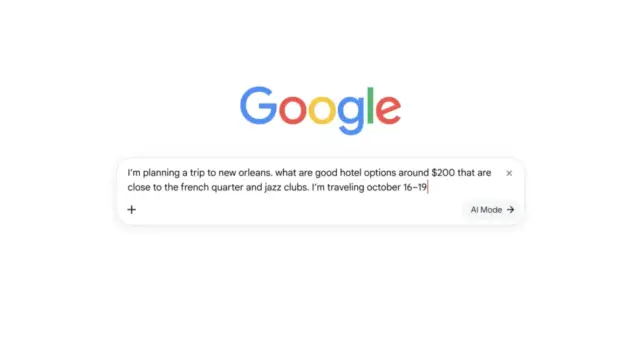
The global travel technology sector is on the precipice of its most significant structural shift since the transition from physical travel agencies to the internet in the late 1990s. Google has officially commenced live, limited public testing of an "agentic" hotel booking system in the United States. This development, confirmed by both Google and Booking Holdings CEO Glenn Fogel, marks a transition from information retrieval to autonomous execution.
For over two decades, search engines have functioned as directories, redirecting users to third-party platforms to complete transactions. "Agentic AI" represents a paradigm shift. Rather than presenting a list of blue links or metasearch comparison grids, an agentic system acts as an autonomous proxy. Utilizing advanced Large Language Models (LLMs) integrated with real-time transactional APIs, these agents can interpret complex user intent, evaluate options, select accommodations, and execute the booking process on behalf of the user—often within a single, conversational interface.
[User Intent] ──> [Google Gemini Agent] ──> [Partner APIs (Booking.com)] ──> [Transaction Executed]This pilot program is not a solitary experiment; it is a collaborative effort involving major industry players. Booking Holdings, the parent company of Booking.com, Priceline, and Agoda, has emerged as a primary launch partner. The implications of this test are profound. It reshapes the delicate power dynamic between Google—the world’s primary gateway for travel search—and Online Travel Agencies (OTAs), which collectively spend billions of dollars annually on Google advertising.
As Google tests these autonomous booking agents, the travel industry must confront fundamental questions regarding customer ownership, transaction monetization, data privacy, and the future viability of traditional search engine optimization (SEO) and performance marketing.
Detailed Chronology: From Metasearch to Agentic Action
The path to agentic travel booking has been defined by technological evolution, strategic pivots, and shifting relationships between Google and global travel intermediaries.
2010: Google acquires ITA Software (Founding of Google Flights)
  │
2015: Launch of "Book on Google" (Facilitated transaction experiment)
  │
2022: Retirement of "Book on Google" due to low adoption & partner friction
  │
2023 (Nov): Google announces plans for Gemini-powered agentic travel tools
  │
2024 (Present): Live, limited US pilot of agentic hotel booking launched
The Foundations of Google Travel (2010–2019)
Google’s structured entry into travel began with its $700 million acquisition of ITA Software in 2010, which formed the infrastructure for Google Flights. This was followed by the rapid expansion of Google Hotel Ads. Throughout the 2010s, Google transitioned from a standard search engine to a dominant metasearch player, aggregating rates and reviews directly within search results.
In 2015, Google launched "Book on Google," an early attempt to streamline the booking funnel. This feature allowed users to book flights or hotels directly on Google’s interface, though the actual transaction was processed by a partner OTA or hotel brand. However, "Book on Google" faced resistance from travel brands concerned about losing direct customer relationships and valuable first-party data. Due to limited adoption and changing partner priorities, Google retired the program for hotels in 2022.
The Generative AI Paradigm Shift (2023)
The launch of ChatGPT in late 2022 and Google’s subsequent rollout of its Bard (now Gemini) LLM transformed the industry’s approach to search. By mid-2023, Google began integrating generative AI into search via the Search Generative Experience (SGE), experimenting with conversational travel planning.
In November 2023, Google laid out its vision for autonomous, agentic travel booking tools. The company detailed how future iterations of its AI models would not only suggest itineraries but also utilize APIs to execute bookings, handle payment processing, and manage confirmations autonomously.
The Live Pilot and Executive Disclosure (Present)
In late October 2024, Booking Holdings CEO Glenn Fogel revealed during an third-quarter earnings call that Google had quietly initiated a live pilot of its agentic booking system. Fogel stated:
"I think Google may have come out today, a small percentage of their traffic seeing their agentic booking… we are one of the first with them. We’ve been working very hard with them as we have for many years, but working hard on this one."
Following Fogel’s remarks, a Google spokesperson confirmed to travel research firm Skift that the company had indeed initiated a limited, live test for select users in the United States. The test represents the practical application of the vision Google presented in late 2023, signaling that autonomous booking technology has progressed from internal labs to live production environments.
Supporting Context & Metrics: The High-Stakes OTA-Google Dynamic
To understand the significance of this pilot, one must examine the financial and operational relationships between Google and the major online travel agencies.
The Marketing Spend Dynamic
OTAs like Booking Holdings and Expedia Group are among Google’s largest advertising clients globally. Historically, these companies spend billions of dollars annually on Google’s auction-based advertising products (such as Google Hotel Ads, Search Ads, and Performance Max) to acquire traffic.
| Financial Metric (FY 2023) | Booking Holdings | Expedia Group |
|---|---|---|
| Total Marketing Spend | ~$6.8 Billion USD | ~$6.1 Billion USD |
| Primary Channel Allocation | Google Search / Metasearch | Google Search / Metasearch |
| Estimated Share to Google | 60% – 70% | 55% – 65% |
This massive expenditure highlights a complex, co-dependent relationship. OTAs rely on Google for traffic, while Google relies on OTAs for advertising revenue and comprehensive inventory data.
The Conversion Funnel Transformation
The traditional search-and-booking funnel involves multiple steps, resulting in friction and drop-offs:
[Google Search Query]
       │
       ▼
[Compare Search Results]
       │
       ▼
[Click Ad / Organic Link]
       │
       ▼
[Navigate to OTA / Hotel Site]
       │
       ▼
[Create Account / Input Payment]
       │
       ▼
[Transaction Confirmed]
An agentic model compresses this entire sequence into a single, automated interaction:
[User: "Book a highly-rated, quiet hotel in downtown Chicago under $250/night for next Thursday."]
       │
       ▼
[Google Gemini Agent processes query, checks real-time inventory via Booking.com API, selects room, inputs user profile details & payment credentials]
       │
       ▼
[Transaction Completed Instantly]
This compression of the conversion funnel offers clear benefits in user experience, but it also alters customer ownership. If the user completes the transaction entirely within Google’s interface, the brand affinity shifts from the OTA or hotel to Google’s AI assistant.
Official Statements and Industry Reaction
The public disclosures surrounding the pilot reveal a carefully managed strategic alignment between Google and Booking Holdings.
The Strategic Alignment: Booking Holdings
Glenn Fogel’s disclosure during the earnings call reflects a pragmatic approach to technological change. Rather than resisting Google’s entry into transactional facilitation, Booking Holdings is positioning itself as an essential partner.
By collaborating early, Booking Holdings ensures that its vast inventory of over 2.8 million properties remains the primary fulfillment engine behind Google’s AI. Fogel’s emphasis on "working hard on this one" indicates that significant engineering resources have been allocated to integrate Booking’s APIs with Google’s agentic frameworks.
The Controlled Rollout: Google
Google’s response to inquiries remains guarded. While confirming the live test to Skift, the company declined to provide specific technical details regarding the percentage of search traffic included in the pilot, the precise user experience, or the payment processing infrastructure.
A spokesperson reiterated that the current test is a limited experiment in the United States, designed to gather user feedback and refine the system’s accuracy. The company stated that more comprehensive details would be released as the technology matures.
Industry Implications and Competitor Reaction
The broader travel industry is watching this pilot closely. Competitors like Expedia Group and TripAdvisor face a strategic choice: build competing proprietary AI agents, integrate with Google’s ecosystem, or focus on direct-to-consumer mobile applications to bypass search engines entirely.
Additionally, independent hotel brands are concerned about how this shift will affect direct bookings. If Google’s agent defaults to OTA fulfillment partners like Booking.com, independent hotels may find themselves further dependent on intermediaries, paying commission fees rather than capturing lower-cost direct bookings.
Regulatory Hurdles and the Antitrust Shadow
Any expansion of Google’s transactional capabilities in the travel sector will face intense regulatory scrutiny, particularly in the United States and the European Union.
                         ┌──────────────────────────┐
                         │   Google Search Dominance│
                         └─────────────┬────────────┘
                                       │
                                       ▼
                         ┌──────────────────────────┐
                         │   Self-Preferencing Risk │
                         └─────────────┬────────────┘
                                       │
                     ┌─────────────────┴─────────────────┐
                     ▼                                   ▼
       ┌──────────────────────────┐        ┌──────────────────────────┐
       │ EU Digital Markets Act   │        │ US DOJ Antitrust Actions │
       │  - Gatekeeper penalties  │        │  - Search & AdTech focus │
       │  - Fair access mandates  │        │  - Remediation threats   │
       └──────────────────────────┘        └──────────────────────────┘
The European Union’s Digital Markets Act (DMA)
Under the European Union’s Digital Markets Act, Google is designated as a "gatekeeper." The DMA strictly prohibits gatekeepers from self-preferencing their own services over those of competitors.
If Google’s agentic search tool defaults to its own booking services or restricts access to preferred partners, it could face investigations and fines of up to 10% of its global annual turnover. Consequently, Google must design its agentic booking systems to offer a level playing field for all travel providers, which complicates the system’s design and user experience.
United States Antitrust Litigation
In the United States, the Department of Justice (DOJ) has pursued antitrust actions against Google, focusing on its search dominance and advertising technology practices. Any move by Google that appears to monopolize the travel booking vertical by leveraging its search engine dominance will likely be scrutinized by antitrust regulators and advocacy groups.
Future Outlook: The Autonomous Travel Landscape
As Google refines its agentic booking capabilities, several key trends are likely to shape the future of travel search and transactions.
1. The Transition from Advertising to Transaction-Based Monetization
Historically, Google’s travel vertical has operated on a Cost-Per-Click (CPC) or Cost-Per-Acquisition (CPA) advertising model. In an agentic future, where the user does not click through to external websites, the traditional CPC model becomes less relevant. Google may transition toward a transaction-fee or commission-based model, similar to traditional GDS (Global Distribution System) operators or OTAs. This shift would fundamentally alter Google’s financial relationship with the travel industry.
2. The Battle for Customer Data and Relationship Ownership
The primary asset in the modern travel ecosystem is customer data—specifically, user preferences, loyalty program details, and payment credentials. If Google’s AI agent manages the transaction, Google becomes the primary custodian of this relationship. OTAs and hotel brands will need to negotiate terms to ensure they receive the customer data required to build brand loyalty, offer ancillary services, and manage on-property experiences.
3. Technical Challenges in Agentic Execution
While the concept of agentic booking is compelling, real-world execution presents several technical challenges:
- Real-Time Inventory and Price Volatility: Hotel rates and availability fluctuate constantly. AI agents must execute transactions with zero latency to prevent booking failures caused by price mismatches.
- Complex Intent and Personalization: Interpreting nuanced user requests (e.g., "adjoining rooms with a crib and a view of the skyline") requires highly specialized LLMs and rich metadata from partners.
- Error Resolution and Customer Service: If an autonomous agent books the wrong room, dates, or rate class, determining liability between Google, the partner OTA, and the end user remains a complex legal and operational challenge.
Ultimately, Google’s live pilot of agentic hotel booking is more than a simple product test. It represents an early look at a future where search engines do more than just find information—they act on it. As this technology matures, the travel industry must adapt to a landscape where success is defined not by search visibility, but by how effectively a brand’s inventory integrates into autonomous AI workflows.