






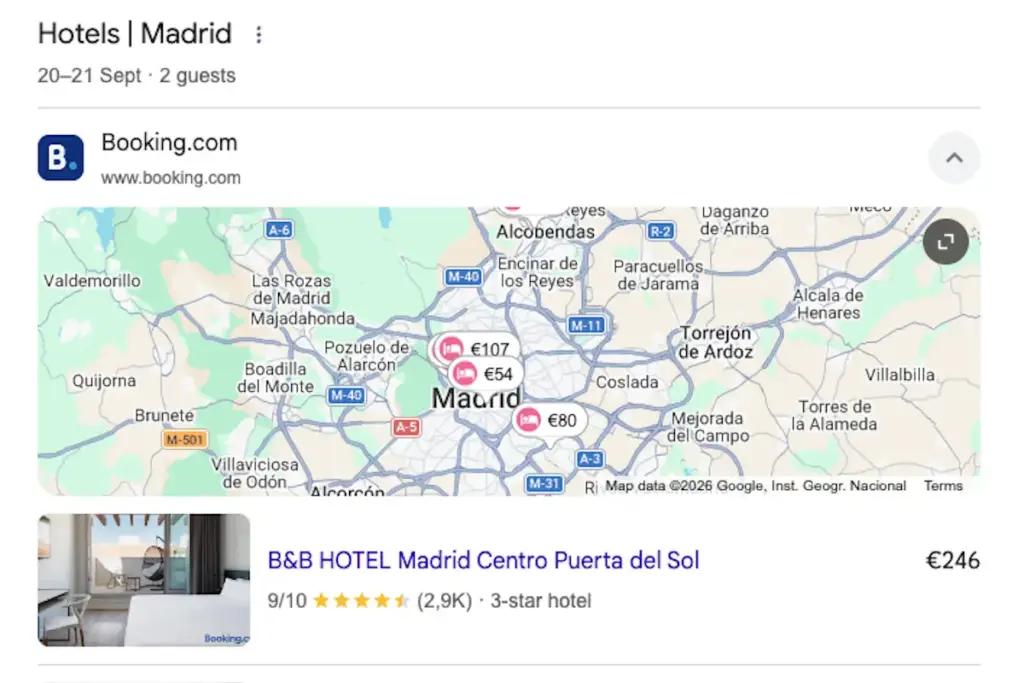
Google has rolled out a sweeping update to its hotel and flight search results across Europe. This represents the latest in a series of significant design and algorithmic alterations prompted by the European Union’s stringent antitrust enforcement.
The redesigned search engine results page (SERP) is now live for European users. It introduces a highly segmented layout designed to level the playing field between tech giants, independent travel providers, and dominant digital intermediaries.
The revamp fundamentally alters how European consumers discover and book flights, lodging, and dining options. Under the new layout, Google has introduced two distinct, highly visible search modules: an "aggregator unit" and a "supplier unit."
This structural division marks a dramatic departure from Google’s historical practice of displaying its own consolidated travel comparison tools—such as Google Flights and Google Hotels—at the very top of search results. These practices have long been a point of contention for European regulators and industry rivals.
The Dual-Unit Architecture: Aggregators vs. Direct Suppliers
To understand the scale of this update, one must look at how Google now presents search queries related to travel and hospitality. When a user in the European Union searches for travel accommodations or transit options, Google’s algorithm segregates the results into two parallel tracks.
+-------------------------------------------------------------+
|                     GOOGLE SEARCH QUERY                     |
|                   e.g., "Madrid Hotels"                     |
+-------------------------------------------------------------+
                              |
       +----------------------+----------------------+
       |                                             |
       v                                             v
+-----------------------------+               +-----------------------------+
|       AGGREGATOR UNIT       |               |        SUPPLIER UNIT        |
|  - Third-party platforms    |               |  - Direct service providers |
|  - e.g., Booking.com, Agoda |               |  - Individual hotels        |
|  - Top result expanded      |               |  - Airlines & restaurants   |
+-----------------------------+               +-----------------------------+
The Aggregator Unit
The first of these new modules is the aggregator unit. This section is dedicated entirely to third-party platforms, such as online travel agencies (OTAs), metasearch engines, and review portals.
Within this unit, users will find a stacked list of prominent industry intermediaries, including brands like Booking.com, Agoda, Expedia, and TripAdvisor.
To maximize user interaction, Google has configured this unit so that the top-ranked aggregator’s results are expanded by default. This design choice gives the leading third-party platform immediate visibility, displaying specific prices, ratings, and booking options directly on the search page. Clicking on any listing within this unit redirects the user directly to the corresponding third-party website to complete their transaction.
The Supplier Unit
Directly contrasting the aggregator module is the supplier unit. This dedicated space is reserved exclusively for direct service providers, such as individual hotels, boutique inns, airlines, and local restaurants.
By isolating direct suppliers from massive aggregators, Google aims to give independent businesses and brand-direct channels a dedicated storefront on the web. This prevents them from being entirely overshadowed by the multi-billion-dollar marketing budgets of global OTAs.
The Madrid Case Study: How the New Interface Functions in Practice
The practical implications of this redesign are best observed through a real-world search query. For instance, a user located in Spain searching for "Madrid hotels" will experience a vastly different interface than a user performing the same search in the United States or Asia.
In the European version of this search, the traditional Google Map and integrated "Google Hotels" booking engine—which previously dominated the top fold of the page—are replaced or heavily supplemented by these new units.
The Spanish user is greeted by the aggregator unit at the top of the organic results. Here, a stack of major booking sites is displayed. Booking.com or Agoda might occupy the premier position, with its search options fully expanded to show available properties, average nightly rates, and user reviews.
Immediately adjacent to or below this stack is the supplier unit. This module highlights individual properties in Madrid, such as independent boutique hotels or established local chains.
Each listing in the supplier unit features a direct link to the hotel’s official website. This allows travelers to bypass intermediaries entirely and book their stay directly with the property.
This dual-unit approach represents a delicate balancing act. It attempts to satisfy the EU’s demand for fair competition while preserving a functional, intuitive user experience for consumers who want to compare prices quickly.
The Regulatory Catalyst: The Digital Markets Act and EU Antitrust Pressures
This major redesign of Google’s travel search is not a voluntary aesthetic update. Instead, it is a direct response to intense regulatory pressure from the European Commission, culminated by the enforcement of the Digital Markets Act (DMA).
The DMA, which took full effect earlier this year, establishes strict guidelines for designated digital "gatekeepers"—a category that includes Alphabet (Google’s parent company), Amazon, Apple, and Meta.
One of the core tenets of the DMA is the strict prohibition of "self-preferencing." This is the practice wherein a gatekeeper platform gives preferential treatment to its own services over those of its competitors.
For years, European travel companies, airlines, and hotel associations argued that Google was abusing its search monopoly by placing its own travel comparison products at the top of search results. This practice effectively pushed organic listings and rival platforms below the fold.
PRE-DMA SEARCH RESULTS                 POST-DMA SEARCH RESULTS
+------------------------+             +------------------------+
| Google's Own Travel    |             | Aggregator Unit        |
| Comparison Module      |             | (OTAs, Third-Parties)  |
+------------------------+             +------------------------+
| Paid Ads / Sponsored   |             | Supplier Unit          |
+------------------------+             | (Direct Hotels/Airlines|
| Organic Search Results |             +------------------------+
+------------------------+             | Organic Search Results |
+------------------------+             +------------------------+
By separating search results into distinct aggregator and supplier modules, Google is attempting to demonstrate compliance with the DMA. The company aims to show that it no longer steers users exclusively toward its own monetized travel ecosystem.
Failure to comply with the DMA carries severe financial consequences. The European Commission can impose fines of up to 10% of a company’s total global annual turnover, rising to 20% for repeated infractions. For a company of Alphabet’s scale, these penalties could run into tens of billions of dollars, making compliance an absolute priority.
The Battle for Search Real Estate: Implications for Online Travel Agencies
The introduction of the aggregator unit has sent shockwaves through the online travel agency sector. For major players like Booking.com, Expedia, and Agoda, search engine visibility is the lifeblood of their business models. These companies spend billions of dollars annually on search engine optimization (SEO) and search engine marketing (SEM) to secure top-tier placement on Google.
On one hand, the new aggregator unit is a major victory for these third-party platforms. It restores a significant portion of the search engine real estate that had previously been occupied by Google’s native travel products. By grouping aggregators together, Google has made it easier for users to navigate directly to these platforms to compare deals.
However, this redesign also intensifies the competition among the aggregators themselves. Because Google’s new interface expands only the top-ranked aggregator result by default, the stakes for securing that premier position have never been higher.
The platform that lands the top spot receives maximum exposure, with its search options fully visible. Meanwhile, its competitors remain collapsed within the stack, requiring an extra click from the user to be seen.
This dynamic is expected to drive fierce competition among OTAs to optimize their search rankings. This could potentially lead to increased advertising spend on Google’s platform as companies vie for that coveted, expanded top spot.
Empowering the Long Tail: How Direct Suppliers Benefit
While the aggregator unit streamlines comparison shopping, the supplier unit represents a potential paradigm shift for direct providers like hotels, airlines, and restaurants.
For decades, the hospitality industry has waged a quiet war against the high commission rates charged by online travel agencies. These commissions typically range from 15% to 25% per booking.
Hotels and airlines have spent heavily on "book direct" campaigns, offering loyalty points, free Wi-Fi, and best-rate guarantees to convince consumers to bypass third-party platforms.
Google’s new supplier unit provides these direct operators with a powerful, free tool to capture consumer attention at the very beginning of the travel planning process. By separating direct suppliers from aggregators, Google ensures that a local hotel in Madrid does not have to compete directly in the same list against a global giant like Booking.com.
For independent properties that lack the marketing budget to compete in traditional search auctions, this dedicated space offers a vital lifeline. It allows them to capture high-intent traffic directly from the search results page, boosting their direct booking margins and fostering direct relationships with their guests from day one.
The Consumer Trade-Off: Efficiency vs. Fragmentation
For European consumers, the updated search interface presents a mix of benefits and drawbacks. The primary advantage is increased transparency. By clearly distinguishing between third-party intermediaries and direct suppliers, Google allows users to make more informed choices about where and how they book their travel.
However, this increased transparency may come at the cost of user convenience. Prior to these changes, Google’s integrated travel modules allowed users to search, compare, and sometimes even book flights and hotels without ever leaving the Google ecosystem. This streamlined, single-platform experience has now been replaced by a more fragmented journey.
Under the new system, a traveler looking to book a multi-city European vacation may find themselves navigating between multiple aggregator sites and direct supplier portals. This requires managing several open tabs and manually comparing prices across different platforms.
While this layout aligns with the EU’s goal of promoting a competitive digital marketplace, some users may find the added steps and clicks less convenient than the older, highly integrated search experience.
Looking Ahead: The Future of Global Search and Regulatory Scrutiny
As Google rolls out these updates across the European Union, the global travel industry is watching closely to see if similar changes will be implemented in other jurisdictions.
While the current redesign is specifically tailored to comply with European antitrust laws, regulatory bodies in the United States, the United Kingdom, and various Asian markets are increasingly scrutinizing the market dominance of major tech platforms.
If the European rollout is deemed a success by regulators and consumers alike, it could serve as a blueprint for future search engine modifications worldwide. Conversely, if the changes lead to a decline in user satisfaction or search quality, Google may face pressure to refine the system further.
For now, travel marketers, SEO specialists, and hotel operators in Europe must quickly adapt to this new reality. In a digital landscape where search layout changes can instantly impact booking volumes, understanding the nuances of Google’s aggregator and supplier units is no longer just a technical exercise. It is a critical business necessity.