






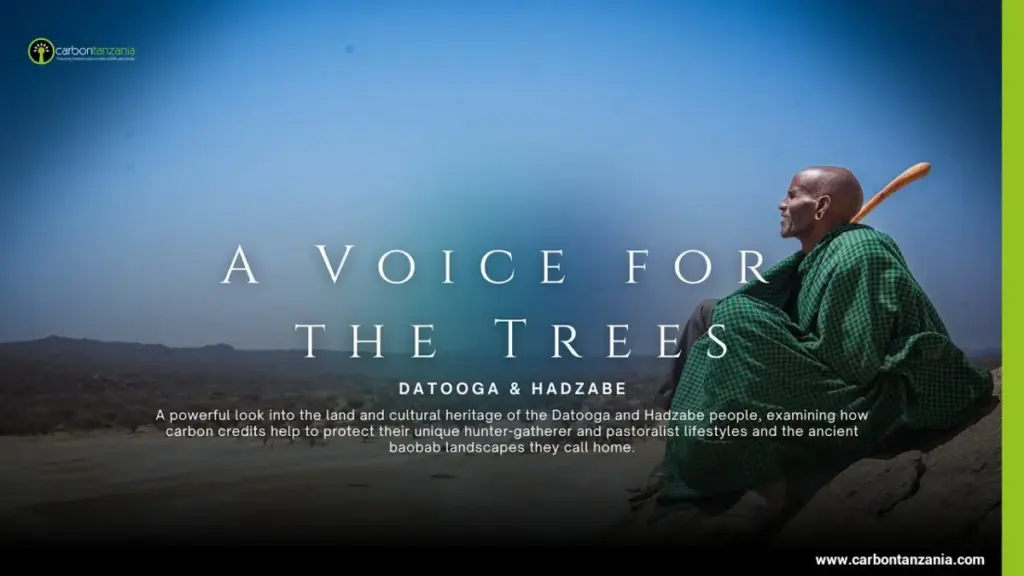
In an era defined by the urgent search for scalable climate solutions, the intersection of indigenous land rights and carbon finance has emerged as one of the most promising frontiers in environmental conservation. At the heart of this global movement lies the Yaeda-Eyasi Carbon Offset Project in northern Tanzania. Featured prominently in recent outreach by Sustainable Travel International and powered on the ground by Carbon Tanzania, this initiative offers a masterclass in how localized, community-led forest management can yield profound ecological, social, and economic dividends.
For generations, Tanzania’s Indigenous Datooga and Hadza communities have inhabited the semi-arid landscapes surrounding the Yaeda Valley and Lake Eyasi. Their traditional ways of life—rooted in pastoralism, foraging, and deep ecological knowledge—have faced mounting pressures from external agricultural encroachment, illegal land grabbing, and systemic marginalization. However, the introduction of a robust, community-centered carbon offset framework has fundamentally altered this trajectory.
By leveraging international carbon markets, the project financially incentivizes these indigenous communities to act as the primary guardians of their ancestral forests. Carbon revenues fund community-led patrols, secure legal land tenure, and underwrite vital social infrastructure, including local schools and healthcare clinics. The result is a dual triumph: the atmospheric sequestration of carbon and the preservation of irreplaceable indigenous cultures. As global institutions increasingly scrutinize the ethics and efficacy of carbon offsetting, the Yaeda-Eyasi model stands as a beacon of integrity, proving that when indigenous peoples are empowered as stewards of their lands, both people and the planet thrive.
Detailed Chronology: The Evolution of Yaeda-Eyasi
To fully understand the current success of the Yaeda-Eyasi Carbon Offset Project, it is necessary to examine the historical and operational timeline that transformed a vulnerable ecosystem into a model of community-based conservation.
Phase 1: Pre-Project Vulnerability and Marginalization (Pre-2010s)
Long before carbon credits became a mechanism for conservation financing, the Hadza—one of the last remaining hunter-gatherer groups in Africa—and the pastoralist Datooga faced severe existential threats. As surrounding populations grew and commercial agriculture expanded northward, fertile lands and vital wildlife corridors in the Yaeda Valley were steadily chipped away.
- Land Insecurity: Without formal land titles recognized by the central government, indigenous populations were routinely displaced by incoming farmers and livestock herders.
- Deforestation Pressures: Lacking economic alternatives, local woodlands were increasingly cleared for charcoal production and subsistence agriculture, degrading the habitats essential for Hadza foraging and Datooga grazing.
Phase 2: Genesis of the Project and Legal Recognition (Early 2010s)
Recognizing the impending collapse of both the ecosystem and the traditional livelihoods it supported, conservation NGOs—most notably Carbon Tanzania—partnered with local communities to pioneer a localized REDD+ (Reducing Emissions from Deforestation and Forest Degradation) initiative.
- Securing Customary Rights: The foundational step involved working with Tanzanian authorities to secure Certificates of Customary Rights of Occupancy (CCROs). For the first time, indigenous communities were granted legal ownership and management rights over their traditional lands.
- Establishing the Carbon Framework: Baseline studies were conducted to measure existing forest carbon stocks and calculate historical rates of deforestation. This established the metrics required to generate verified carbon offsets.
Phase 3: Operationalization and Community-Led Enforcement (Mid-2010s)
Once the project was officially registered under reputable carbon standards, the financial mechanism went live, translating tonnages of sequestered carbon into direct monetary flows.
- Ranger Networks: Locally appointed community rangers were hired and trained to patrol the forests, utilizing modern GPS technology alongside indigenous tracking skills to monitor illegal intrusions, logging, and poaching.
- Direct Benefit Distribution: Unlike top-down conservation models where funds are swallowed by intermediaries, carbon revenues were channeled directly into community bank accounts, allowing residents to democratically decide how to allocate funds.
Phase 4: Scaling Infrastructure and Ecological Recovery (Late 2010s–Present)
In recent years, the project has matured from a fledgling conservation experiment into a robust engine for sustainable regional development.
- Infrastructure Boom: Carbon revenues have successfully financed the construction and operation of local primary schools and health dispensaries, drastically reducing the physical distance required to access education and medical care.
- Biodiversity and Livelihood Resilience: Forest cover has visibly rebounded. Simultaneously, sustainable secondary enterprises—such as community-managed honey production—have flourished, providing diversified income streams that insulate families against climate shocks.
Supporting Context & Metrics: The Mechanics of Community-Led Conservation
The success of the Yaeda-Eyasi project is not merely anecdotal; it is grounded in rigorous ecological metrics and socioeconomic impact assessments.
The Ecological Engine: Forest Recovery and Carbon Sequestration
Forests in the Yaeda Valley act as vital carbon sinks, absorbing thousands of metric tons of carbon dioxide annually. By halting the advance of slash-and-burn agriculture and illegal timber harvesting, the project prevents massive greenhouse gas emissions while simultaneously driving active regeneration.
- Habitat Connectivity: The protected landscape maintains crucial ecological corridors for iconic African wildlife, ensuring that biodiversity thrives alongside human habitation.
- Ecosystem Services: Beyond carbon, the restored acacia-commiphora woodlands regulate local microclimates, prevent soil erosion, and secure subterranean water tables essential for survival in a semi-arid environment.
Socioeconomic Metrics: Financial Empowerment at the Grassroots
The financial architecture of the Yaeda-Eyasi project is designed to ensure maximum transparency and direct benefit sharing.
- Stable Incomes: Locally appointed rangers earn consistent, reliable salaries through carbon finance. This elevates household purchasing power and injects liquidity into the local rural economy.
- Social Dividends: A significant percentage of carbon revenues is allocated to community development funds. These funds have directly translated into tangible assets:
- Healthcare Access: Reduced incidence of untreated illnesses due to closer, better-funded health posts.
- Educational Advancement: Higher school enrollment and attendance rates as families are better equipped to cover educational costs and children no longer need to travel exhausting distances to learn.
- Livelihood Diversification: The revitalization of forest health has spurred a boom in traditional and semi-modern enterprises, notably sustainable wild honey harvesting, which provides a high-value, low-impact commodity for international markets.
Official Statements and Indigenous Perspectives
The true measure of any conservation initiative lies in the lived experiences and voices of those most affected by it. Across documentaries, field reports, and interviews, members of the Datooga and Hadza communities, alongside project management, offer compelling testimony regarding the project’s impact.
Voices from the Hadza and Datooga Communities
For the indigenous residents, the land is not merely a resource to be managed; it is an ancestral archive, a spiritual anchor, and an identity.
"This land has been our home forever. It is part of who we are."
— Member of the Indigenous Datooga Community
This sentiment underscores the existential stakes of the project. For the Hadza, whose foraging lifestyle depends entirely on an intact, wild ecosystem, the preservation of the Yaeda Valley means the survival of their culture into the 22nd century. Without the legal and financial armor provided by the carbon project, these nomadic and semi-nomadic groups would have faced forced assimilation and destitution.
Project Management Insights
The human element of carbon finance is further illuminated by those tasked with day-to-day administration. German Sedoyeka, the Yaeda-Eyasi Project Manager, captures the irreplaceable nature of the initiative through a striking conversational anecdote:
"I once asked a community member what would happen if the carbon project were to leave. He said, ‘If the carbon project were to leave today, the situation would be very bad. Life would be very difficult.’"
— German Sedoyeka, Yaeda-Eyasi Project Manager
Sedoyeka’s observation highlights a critical reality of modern conservation: sustainability is not just about planting trees; it is about permanently embedding economic and social resilience. The carbon project has rapidly woven itself into the social fabric of the Yaeda Valley, transforming from an external intervention into an indispensable pillar of community survival.
Future Outlook: Challenges and Horizons for Yaeda-Eyasi
As the Yaeda-Eyasi Carbon Offset Project looks toward the future, it navigates both immense opportunities and complex systemic challenges.
Navigating the Global Voluntary Carbon Market
The integrity of the global voluntary carbon market (VCM) has faced intense scrutiny in recent years, with critics rightly questioning the baseline methodologies and actual climate benefits of certain international offset schemes. However, projects grounded in indigenous rights and rigorous community monitoring—such as Yaeda-Eyasi—represent the gold standard of what offsets should be.
- The Imperative of Quality: Moving forward, corporate buyers are increasingly demanding high-integrity credits that offer verifiable co-benefits. Yaeda-Eyasi is exceptionally well-positioned to meet these stringent criteria because its impacts are transparent, measurable, and directly tied to human rights and biodiversity preservation.
- Scaling Without Compromise: A key challenge for Carbon Tanzania and its partners will be scaling the model to adjacent landscapes without diluting community ownership or overburdening local governance structures.
Climate Resilience and Long-Term Sustainability
East Africa is on the frontlines of global climate change, experiencing increasingly erratic rainfall patterns, prolonged droughts, and rising temperatures.
- Adaptive Land Management: Future phases of the project will need to integrate advanced climate-smart pastoralism and water-harvesting technologies to help the Datooga and Hadza adapt to shifting environmental baselines.
- Enduring Autonomy: The ultimate goal of the Yaeda-Eyasi initiative is to foster complete institutional autonomy, ensuring that local communities possess the legal, financial, and technical capacities to manage their lands independently for generations to come.
Conclusion
The Yaeda-Eyasi Carbon Offset Project transcends traditional conservation paradigms. It is a vital nexus where ecological restoration meets social justice, demonstrating that the fight against climate change cannot be won by sequestering carbon at the expense of human dignity. By placing land ownership, economic agency, and ecological stewardship directly into the hands of Tanzania’s indigenous Datooga and Hadza communities, the project offers a profound lesson for the global community: to save our planet’s forests, we must empower the people who have called them home forever.