





Executive Overview
In a historic leap forward for environmental and cultural conservation in the Pacific, the Republic of Nauru has successfully completed its inaugural International Assistance project under the 1972 UNESCO World Heritage Convention. This achievement marks a monumental turning point for the Small Island Developing State (SIDS), which officially acceded to the Convention in July 2024 as its 196th State Party.
Supported financially through the UNESCO World Heritage Fund and executed with rigorous technical backing from international experts, the project has fundamentally transformed Nauru’s domestic capacity to identify, protect, and sustainably manage its unique natural and cultural treasures. Facing unique geographical, ecological, and historical vulnerabilities, Nauru’s proactive integration into the global heritage framework signals a renewed commitment to preserving its national identity for future generations.
The successful conclusion of this foundational initiative delivers tangible outcomes: a comprehensive assessment of the island’s priority heritage sites, concrete recommendations for future World Heritage nominations, targeted proposals for legislative reform, and an ambitious, actionable five-year workplan for heritage conservation. Implemented locally by the Naoero Museum under the Department of National Heritage—with crucial oversight from the UNESCO World Heritage Centre and the UNESCO Regional Office for the Pacific States in Apia—this milestone underscores the power of international collaboration in safeguarding the irreplaceable assets of the world’s most vulnerable island communities.
Detailed Chronology: From Accession to Action
The realization of Nauru’s first International Assistance project is the culmination of a fast-tracked, highly strategic timeline of diplomatic engagement, institutional capacity-building, and intensive on-the-ground fieldwork. Understanding the trajectory of Nauru’s World Heritage journey requires examining the precise sequence of milestones that brought the nation to this historic juncture.
July 2024: Joining the Global Conservation Community
Nauru’s formal accession to the World Heritage Convention in July 2024 established the nation as the 196th State Party to the landmark international treaty. This accession was not merely symbolic; it represented a deliberate policy shift by the Nauruan government to align its domestic development goals with international standards of environmental protection and cultural preservation. By joining the Convention, Nauru unlocked access to global networks of technical expertise, financial assistance, and peer learning designed to help nations shield their most exceptional heritage from the compounding pressures of modernization, resource extraction, and global environmental change.
February 2025: Securing International Assistance
Capitalizing on its newly minted status as a State Party, the Government of Nauru moved swiftly to mobilize resources. In February 2025, the UNESCO World Heritage Committee officially approved Nauru’s first International Assistance request. Financed through the World Heritage Fund, this allocation provided the necessary capital to design and deploy a comprehensive national capacity-building program. The funding was specifically earmarked to demystify the Convention’s complex mechanisms for local stakeholders, bridge institutional silos within the Nauruan government, and lay the groundwork for long-term site stewardship.
May 2025: The First National Consultation
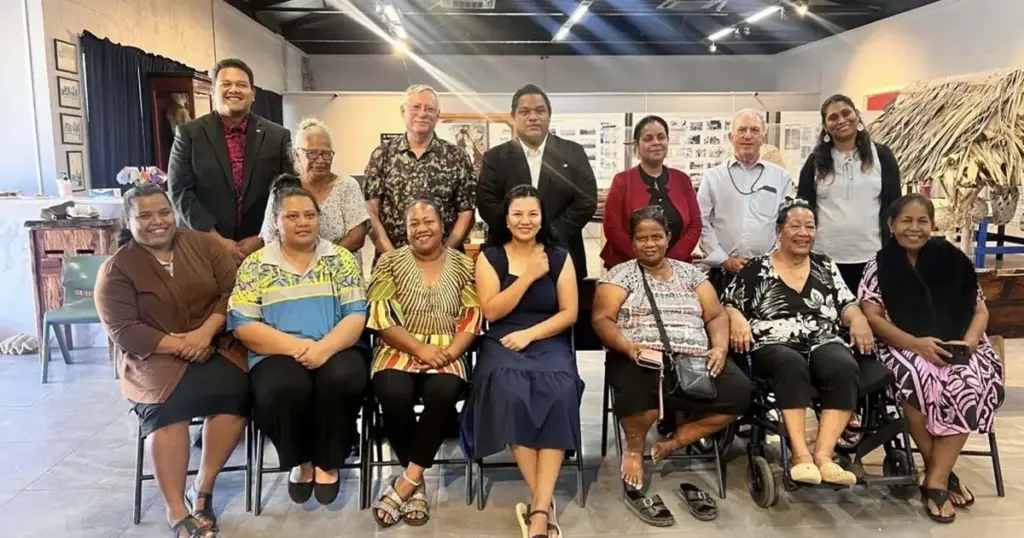
With project financing secured, UNESCO and the Nauruan government convened the first national consultation meeting on the World Heritage Convention in May 2025. This pivotal gathering served as an orientation workshop for key national stakeholders, including government ministers, civil servants, traditional leaders, and civil society representatives. The meeting introduced the core principles of the Convention, demystified the requirements of the International Assistance project, and collaboratively established a localized roadmap for its implementation. It fostered an early sense of national ownership, ensuring that the project would be shaped by the lived realities and aspirations of the Nauruan people rather than imposed from the outside.
February 2026: The Critical Field Mission
The operational pinnacle of the project unfolded over a rigorous seven-day field mission to Nauru in February 2026. A multidisciplinary team of international heritage experts, alongside representatives from the UNESCO World Heritage Centre and the Apia Regional Office, deployed to the island to conduct exhaustive site inspections.
During this mission, experts traversed Nauru to evaluate potential cultural and natural heritage locations, assessing their historical integrity, ecological value, and conservation needs. Simultaneously, the delegation facilitated a series of intensive workshops and focus-group consultations with government agencies, community representatives, and museum curators. Crucially, the mission also involved a thorough legal review of the National Heritage Act and associated domestic statutes, providing the analytical backbone for subsequent legislative overhaul recommendations.
Supporting Context & Metrics: Nauru’s Heritage Landscape
To fully grasp the significance of Nauru’s recent accomplishments, one must examine the specific geographic, cultural, and socio-economic context of the island nation, as well as the quantitative and strategic outputs generated by the International Assistance project.
+---------------------------------------------------------------------------------+
|                        NAURU WORLD HERITAGE PROJECT METRICS                     |
+----------------------------------+----------------------------------------------+
| UNESCO State Party Rank          | 196th (Acceded July 2024)                    |
+----------------------------------+----------------------------------------------+
| International Assistance Approval| February 2025                                |
+----------------------------------+----------------------------------------------+
| Key Field Mission Execution      | February 2026 (7-Day Intensive Deployment)   |
+----------------------------------+----------------------------------------------+
| Primary Implementing Agency      | Naoero Museum (Dept. of National Heritage)   |
+----------------------------------+----------------------------------------------+
| Strategic Horizon of Workplan    | 5-Year Comprehensive Conservation Roadmap    |
+----------------------------------+----------------------------------------------+
The Unique Realities of a Pacific SIDS
As a Pacific Small Island Developing State, Nauru presents a fascinating and fragile canvas of human history and natural evolution. Encompassing a land area of just 21 square kilometers (8.1 square miles), Nauru is one of the smallest independent republics in the world. Historically renowned for its rich phosphate rock deposits, the island experienced intensive mining operations throughout the 20th century, which profoundly reshaped its interior topography, ecosystems, and socio-economic fabric.
Despite these transformations, Nauru retains a rich tapestry of intangible cultural heritage, oral traditions, archaeological remnants, and unique coastal and marine ecosystems. However, as a SIDS, Nauru confronts acute vulnerabilities. Climate change, sea-level rise, coastal erosion, and limited institutional and financial resources pose existential threats to both its natural environment and its historical sites. The World Heritage Convention provides Nauru with a structured, internationally backed shield to identify what remains, protect it from further degradation, and leverage global partnerships to secure sustainable management solutions.
Tangible Outputs of the Project
The International Assistance project was not designed merely to produce theoretical reports; it delivered a suite of concrete, operational instruments tailored to Nauru’s administrative capacity:
- Priority Site Assessment & Nomination Recommendations: Experts cataloged and evaluated key cultural and natural sites across the island, delivering prioritized recommendations on which locations hold the highest potential for future consideration on the UNESCO World Heritage Tentative List and, ultimately, the World Heritage List.
- Legislative Framework Review: A comprehensive legal audit of the National Heritage Act and related statutes was completed. The resulting recommendations identify critical legislative gaps and propose statutory amendments required to align Nauru’s domestic laws with international heritage protection standards.
- The Five-Year Heritage Conservation Workplan: Perhaps the most vital deliverable, this draft strategic roadmap establishes a clear, chronological action plan for the next five years. It translates broad conservation ideals into manageable, step-by-step administrative and operational tasks.
Core Pillars of the Five-Year Workplan
The newly minted five-year workplan outlines six priority measures designed to institutionalize heritage management within Nauru:
- Systematic Documentation: Establishing rigorous, digital inventories and scientific documentation of all known cultural and natural heritage sites across the island.
- Institutional Governance: Creating a dedicated National Heritage Committee to coordinate cross-ministerial efforts, streamline decision-making, and oversee conservation policy.
- Legislative Strengthening: Updating and enforcing national laws to provide robust legal penalties for site destruction, looting, or unauthorized alterations.
- Public Awareness & Interpretation: Developing educational campaigns, signage, and cultural interpretation programs to foster national pride and public understanding of heritage values.
- Educational Integration: Weaving local heritage, history, and environmental stewardship into national school curricula to engage the younger generation.
- Community Engagement & Partnerships: Building enduring collaborative networks with landowners, traditional leaders, and civil society organizations to ensure community-led, long-term conservation.
Official Statements and Stakeholder Perspectives
The milestone has drawn praise from international leaders and national officials alike, highlighting the collaborative spirit that defined the project’s execution.
Expressing the sentiment of the international preservation community, a senior representative from the UNESCO World Heritage Centre noted:
"Nauru’s rapid transition from acceding to the World Heritage Convention in 2024 to successfully executing its first International Assistance project by early 2026 is an inspiring testament to the government’s dedication. Pacific SIDS face some of the most complex environmental and developmental challenges on the planet, yet Nauru has demonstrated that with political will, targeted technical cooperation, and community involvement, local heritage can be effectively secured for global appreciation."
Leadership from the Naoero Museum and the Department of National Heritage emphasized the profound domestic impact of the initiative:
"For too long, Nauru’s rich history and natural landscapes have been overshadowed by our industrial past. This partnership with UNESCO has provided our local experts, museum staff, and community leaders with the tools, knowledge, and structured roadmap we need to reclaim and protect our story. The five-year workplan is not just a government document; it is a promise to our children that Nauru’s cultural identity and natural beauty will endure."
Regional coordinators from the UNESCO Office in Apia added:
"The success of this project lies in its participatory nature. By bringing together government agencies, traditional custodians, and international specialists during the February 2026 mission, we ensured that the resulting legal recommendations and site assessments are deeply rooted in Nauruan realities. This is capacity-building at its finest—empowering local institutions to become the ultimate stewards of their own heritage."
Future Outlook: Sustaining the Momentum
The successful completion of Nauru’s first International Assistance project represents not a finish line, but a foundational starting point. As the country looks toward the future, the primary challenge will shift from planning to execution—translating the recommendations of the five-year workplan into sustained, on-the-ground reality.
UNESCO has reaffirmed its unwavering commitment to supporting the Republic of Nauru in this next phase. Through ongoing technical cooperation, targeted capacity-building workshops, and facilitation of international partnerships, UNESCO will continue to work hand-in-hand with the Government of Nauru, the Naoero Museum, and local communities.
Immediate next steps will likely involve the formal establishment of the National Heritage Committee, the introduction of proposed legislative amendments to Parliament, and the initiation of pilot public awareness and school education programs. Furthermore, as local capacities mature, Nauru will begin the meticulous, long-term groundwork required to prepare potential sites for formal consideration on the UNESCO World Heritage List.
In an era defined by rapid globalization and mounting environmental uncertainty, Nauru’s proactive embrace of the World Heritage Convention sends a powerful message to the international community. By honoring its past, strengthening its legal safeguards, and empowering its local communities, Nauru is ensuring that its unique Pacific heritage will not only survive, but thrive for generations to come.