



In an era defined by hyper-convenience, digital automation, and a relentless ocean of synthetic media, the global hospitality industry is experiencing a profound identity crisis. Across major culinary capitals from Manhattan to Toronto, a quiet counter-revolution is taking shape. Independent restaurants, bars, and culinary spaces are aggressively turning their backs on generative artificial intelligence, pivoting instead toward tactile, slow-grown, and deliberately imperfect human craftsmanship.
This shift is more than a fleeting aesthetic preference; it is a cultural pushback against what contemporary cultural critics have dubbed "AI slop." As social media feeds become saturated with gravity-defying sandwiches, optically impossible cocktail lighting, and cynically generated marketing flyers, diners are exhibiting a fatigue-driven aversion to digital homogeneity. In response, restaurateurs are embracing "frictionmaxxing"—a deliberate choice to reject frictionless technological shortcuts in favor of analog processes, slow materials, and deeply personal touches.
From custom-stitched lace restaurant announcements in New York City to handwritten weekly menus and hand-engraved glassware, the culinary vanguard is proving that true hospitality cannot be synthesized. This report examines the driving forces behind the analog rebellion in contemporary dining, analyzing how the return to the handcrafted is reshaping restaurant marketing, interior design, and consumer trust.
Detailed Chronology: The Rise of the Tactile Aesthetic
The tipping point for the culinary world’s analog pivot did not happen overnight. It has been a steady accumulation of visual fatigue, running parallel to the explosive, unchecked growth of generative AI tools across marketing agencies and small businesses alike.
Phase 1: The Inundation of Synthetic Imagery
In the early days of widespread generative artificial intelligence, digital tools were lauded for democratizing content creation. Small business owners, exhausted by the grueling operational demands of running a restaurant, could suddenly generate promotional flyers, menu mockups, and social media announcements in seconds.
However, this democratization quickly curdled into saturation. Consumers were suddenly bombarded with digital artifacts: hands with too many fingers clutching glossy, sterile plates of food; surreal restaurant interiors that morphed endlessly; and event posters crammed with overstylized, text-mangled typography. Far from looking professional, these images began to evoke a distinct sense of "semi-defeated revulsion" among web users. The lack of human intent—the complete absence of lived experience—rendered these images emotionally hollow.
Phase 2: The Cultural Backlash and "Frictionmaxxing"
As digital noise peaked, a cultural vocabulary emerged to describe the rejection of technological convenience. Writer Kathryn Jezer-Morton popularized the term "frictionmaxxing," capturing a broader societal weariness with automated solutions. People began actively opting for analog alternatives, preferring a messy event poster drawn with a Sharpie on scrap paper over a pristine, mathematically generated graphic.
In the design and fashion worlds, this sentiment translated into a wholesale embrace of "true materials." Photographers like Szilveszter Makó won acclaim for rejecting digital manipulation in favor of physical props, chaotic lighting, and daylight. Publications like Bon Appétit leaned into tactile creativity, utilizing stop-motion animations featuring wobbly-edged paper cutouts to tell human-centric stories.
Phase 3: The Hospitality Pivot to the Analog
Recognizing that diners were craving authenticity, independent restaurateurs began weaponizing anti-efficiency as a badge of honor.

- Summer/Fall 2025–2026: Restaurants stopped treating social media as a sterile advertising billboard. Instead, feeds filled up with lo-fi snapshots of handwritten menus, textured fabrics, and behind-the-scenes glimpses of physical creation.
- The Launch of Somssi (July 2026): In Manhattan, the impending opening of the Korean restaurant Somssi set a new standard for analog marketing, utilizing custom-stitched lace announcements that instantly halted users mid-scroll.
- Institutional Adoption: Even legacy institutions and regional mainstays—such as New England’s Market Basket releasing a hand-illustrated weekly circular—began signaling that human art and imperfection hold a currency that automation can never replicate.
Supporting Context & Metrics: The Economics and Psychology of Craft
The flight from artificial intelligence to human craftsmanship is underpinned by shifting consumer psychology and distinct economic realities.
The Psychology of "Proof of Labor"
In consumer behavior, "proof of labor" refers to the visible evidence of time, effort, and care expended to create a product or experience. When a diner sees an AI-generated advertisement for a restaurant, their brain registers zero labor. It requires no sacrifice, no artistic struggle, and no physical presence.
Conversely, when a customer encounters a menu written in human handwriting—complete with ink smudges, variable stroke pressure, and cross-outs—they subconsciously register the physical investment of the creator. This creates an immediate psychological bridge between the diner and the establishment. It establishes trust. As culinary operators note, a restaurant that cuts corners on its visual identity by using AI-generated art invites skepticism: if an owner is willing to outsource their brand’s soul to a server farm, what compromises are they making in the kitchen?
Comparative Marketing Metrics
While precise cross-industry financial data on AI marketing ROI versus analog commissioning is still emerging, qualitative indicators point decisively toward the power of the lo-fi approach.
- Engagement Spikes: Independent cafes, such as Fearless Coffee in Johnson City, Tennessee, reported that their deliberate return to 1990s-styled, human-photographed promotional shoots resulted in their most-liked and most-commented-upon social media posts to date.
- Customer Retention: Diners subjected to endless streams of algorithmic content exhibit higher rates of banner blindness toward polished digital ads. Tactile, imperfect content cuts through this cognitive clutter because it defies the expected digital template.
Official Statements & Industry Perspectives
The architectural and operational choices of contemporary restaurateurs reveal a unified philosophy: every touchpoint must reflect human intentionality.
Ahris Kim on the Philosophy of "Somssi"
At Manhattan’s newly announced restaurant, Somssi, the name itself serves as a guiding manifesto. Managing partner Ahris Kim explains that the Korean word translates to "a skill or a knack that you polish over time, and has a lot to do with things that you craft with your hands."
This ethos dictates every physical and digital choice the restaurant makes. The logo is literally stitched into cloth using a custom typeface modeled after Asian calligraphy. The front door curtain is fashioned from vintage crochet and lace tablecloths supplied by Kim’s childhood best friend’s mother, drawn from a decades-old fabric collection.
"Anywhere where we could impose a handmade detail, we did," Kim states. "Even AI-generated work would go against what ‘somssi’ should stand for."
Annie Shi and Tommy Hunt on Dean’s Handwritten Menus
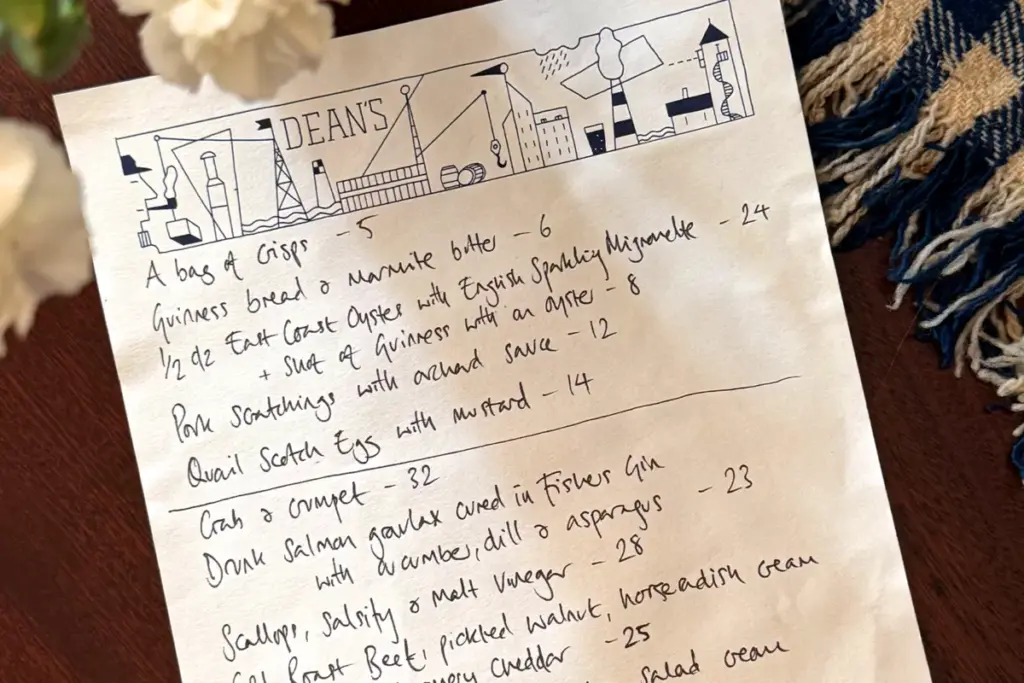
At Dean’s, a long-awaited British restaurant in New York City, the commitment to the analog extends directly to the table. Co-owner Annie Shi notes that weekly menu updates are physically written out by interim director of operations Tommy Hunt before being photocopied for guests.

"When we talked about the pubs that we admired most, like our sources of inspiration in the U.K., there was always a handwritten menu, because it’s a really personal experience," Shi explains. She describes Hunt’s penmanship as bold and distinct, hovering dynamically between cursive and print.
Rather than viewing handwriting inconsistencies as a flaw, Shi embraces them as a living archive of the restaurant’s journey. "I think there are other ways where you can indicate that this is a personal, craft-driven project, and it’s in those little touches like a handwritten menu."
Melissa Martin on Mosquito Supper Club’s Stand Against Automation
Chef Melissa Martin of Mosquito Supper Club in New Orleans has similarly discarded polished promotional toolkits in favor of raw, immediate human expression. Utilizing simple snapshots of handwritten paper menus posted to social media, Martin finds immense personal satisfaction in the tactile process.
"I like the feeling of handwriting the menu, trimming it down with scissors, taking a picture, and posting," Martin shares. Emphasizing her hardline stance against technological shortcuts, she adds: "I’ve never used AI for anything and I don’t plan on it."
Future Outlook: Where Hospitality Meets the Post-AI Landscape
As generative artificial intelligence continues to mature and flood the internet with increasingly indistinguishable digital content, the value proposition of human imperfection will only escalate. The future of independent hospitality is unlikely to be won through technological optimization; rather, it will be secured through radical authenticity.
1. The Death of Generic Perfection
Consumers are developing sophisticated radar for synthetic media. As polished, algorithmically optimized perfection becomes free and infinitely reproducible, it loses its status symbol value. Perfection is now cheap; flaws, labor, and human error are expensive and precious. Restaurants that lean into the rough edges of human creation will be viewed as cultural sanctuaries.
2. Hyper-Local and Hyper-Analog Branding
We can expect a continuing boom in micro-collaborations between hospitality groups and local artisans. Rather than hiring anonymous digital marketing firms, restaurants will increasingly partner with local calligraphers, textile artists, ceramicists, and printmakers to establish their visual identities. The menu, the sign on the door, and the Instagram announcement will be treated as extensions of the plate—crafted with the same dedication to origin, ingredient, and human touch.
3. The Ultimate Test of Integrity
Ultimately, the culinary landscape serves as a mirror for broader societal anxieties about automation. Cooking is, at its core, one of the most ancient and visceral human arts—a transformation of raw earth into nourishment through heat, time, and human labor.
When a restaurant uses AI-generated art to market its food, it creates an ontological fracture: it asks diners to celebrate a human culinary craft while consuming an aesthetic born of algorithmic theft and computational laziness. The restaurants thriving in this new paradigm are those closing that gap entirely. If a human grew the vegetables, and a human cooked the meal, then surely a human hand should write the words that invite you to the table.