







Executive Overview
The World Heritage Committee has concluded a landmark session in Busan, Republic of Korea, reshaping the contours of international cultural preservation by officially inscribing 25 new properties onto the UNESCO World Heritage List. This latest cohort brings the total number of universally recognized sanctuaries to 1,273 across 173 States Parties.
Beyond the sheer numerical growth, the Busan session will be remembered as a watershed moment for geographic equity and institutional inclusivity. For the first time in the history of the 1972 World Heritage Convention, African Small Island Developing States (SIDS)—namely the Comoros and São Tomé and Príncipe—alongside South Sudan, successfully secured their inaugural World Heritage inscriptions. These additions reduced the number of unrepresented States Parties from 26 to 23.
Against a backdrop of escalating geopolitical instability and climate vulnerability, the international community also mobilized around emergency inscriptions, extended targeted protections to sites facing immediate existential threats, and adopted a $13 million strategy explicitly engineered to safeguard heritage in fragile island economies. Through a renewed commitment to multilateral consensus, the Busan assembly has laid down a robust blueprint for how global heritage preservation must adapt to the multifaceted crises of the 21st century.
Detailed Chronology and Breakdown of Inscriptions
The rigorous evaluation process undertaken by the World Heritage Committee resulted in the addition of 19 cultural properties, five natural wonders, and one mixed site. Furthermore, the committee approved critical extensions to two existing properties and executed a high-profile re-nomination.
The Geographic and Typological Distribution
The newly minted properties reflect a deliberate effort by UNESCO to bridge historical imbalances on the World Heritage List. While cultural landscapes and architectural complexes continue to form the backbone of the register, the inclusion of vital natural and mixed sites underscores the parallel urgency of protecting Earth’s biodiversity.
- Cultural Sites (19): Ranging from ancient urban foundations to historic waterways and sites of modern memory, these locations represent the deep, layered trajectories of human civilization. Notably, this category now embraces contemporary spaces of collective trauma and reconciliation, continuing a policy shift initiated in 2023.
- Natural Sites (5): These additions safeguard critical ecological habitats, marine ecosystems, and rich geological formations, providing them with the highest level of international oversight and legal scaffolding.
- Mixed Sites (1): Blending exceptional natural and cultural values, this property highlights the profound interplay between human societies and their surrounding environments.
Historic Milestones for Underrepresented Nations
The most poignant narrative emerging from Busan is the long-overdue inclusion of nations that have historically been sidelined in global heritage frameworks.
- Comoros and São Tomé and Príncipe: Marking their debut on the World Heritage List, these two island nations represented a triumphant moment for the Small Island Developing States (SIDS) constituency. Comoros President Azali Assoumani personally attended the Busan session, signaling the profound national and cultural weight attached to this international recognition.
- South Sudan: Marking its first-ever inscription, the young East African nation successfully navigated the emergency nomination process to protect its priceless ecological and cultural assets.
Extensions, Renominations, and Institutional Adjustments
In addition to entirely new inscriptions, the Committee approved significant structural updates to existing properties:
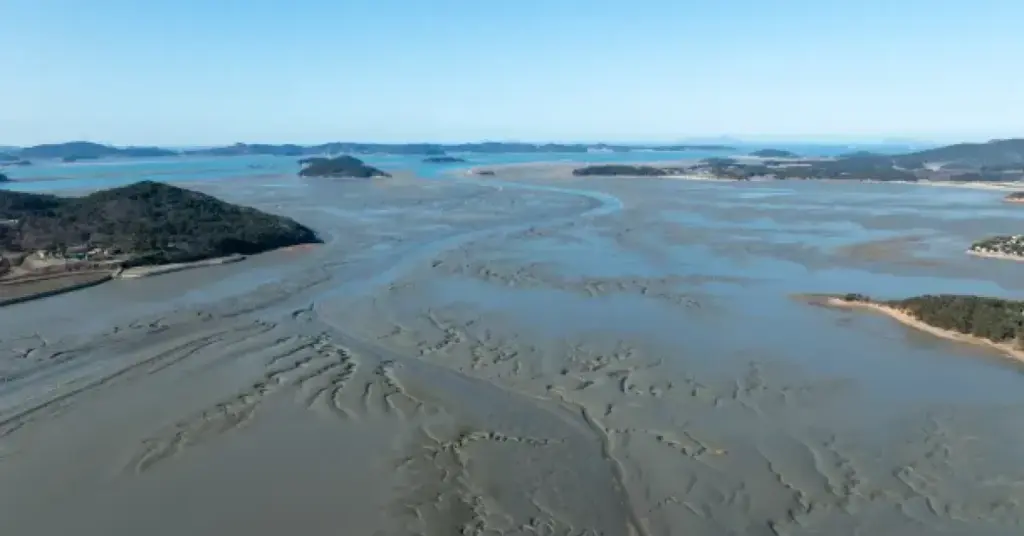
- Getbol, Korean Tidal Flats (Phase II): Serving as a testament to the hosting nation’s ecological stewardship, this extension expands the protected area of the vital South Korean tidal flats, reinforcing their transregional ecological significance.
- Garamba National Park (Democratic Republic of the Congo): The Committee agreed to a comprehensive renomination of this legendary park. By re-examining the site against expanded criteria, the international community has formally acknowledged new dimensions of its Outstanding Universal Value (OUV).
- Removal from Danger: Offering a rare note of unmitigated positive news, the Committee voted to officially remove the Historic Centre of Vienna from the List of World Heritage in Danger, validating years of concerted urban management and conservation efforts by Austrian authorities.
Supporting Context and Metrics: The State of the Global List
To fully grasp the magnitude of the Busan decisions, one must examine the macro-level data governing the 1972 World Heritage Convention.
Universality and Institutional Scale
With 196 States Parties, the World Heritage Convention remains one of the most universally ratified international treaties in human history. This near-global buy-in underpins its unmatched soft power and moral authority. Following the Busan session, the distribution of the 1,273 properties across 173 countries is broken down as follows:
| Metric Category | Pre-Busan Status | Post-Busan Status | Net Change |
|---|---|---|---|
| Total World Heritage Sites | 1,248 | 1,273 | +25 |
| States Parties with Sites | 170 | 173 | +3 |
| Unrepresented States Parties | 26 | 23 | -3 |
| Ratifying Member States | 196 | 196 | 0 |
The Emergency Mechanism and Sites in Danger
The dark shadow of modern conflict, climate disruption, and civil unrest loomed large over the Busan proceedings. The invocation of the emergency submission mechanism for three distinct sites—the Boma-Badingilo Migratory Landscape (South Sudan), the Mount Amel Castles (Lebanon), and Sebastia (State of Palestine)—signals an alarming trend: heritage is increasingly on the front lines of geopolitical conflict.
Simultaneously, these properties—alongside the Historic Inner City of Paramaribo (Suriname), the Ancient City of Tauric Chersonese and its Chora (Ukraine), and Tyre (Lebanon)—were inscribed directly onto the List of World Heritage in Danger. While this designation is a sobering acknowledgment of vulnerability, it serves as a critical operational catalyst. Inclusion on this list unlocks immediate technical assistance, emergency funding mechanisms, and heightened international mobilization to stave off destruction, looting, or irreversible degradation.
The SIDS Strategy 2026–2034: Bridging the Island Divide
Small Island Developing States face disproportionate threats from climate change, rising sea levels, and rapid economic development, yet they have historically struggled to navigate the complex bureaucratic and technical requirements of World Heritage nominations.

To rectify this, the Busan session endorsed the landmark World Heritage Strategy for Small Island Developing States (SIDS) 2026–2034, backed by a dedicated budget of US$13 million. This ten-year roadmap is designed to build localized institutional capacity, streamline nomination pathways, and integrate indigenous knowledge systems into conservation management. Paired with ongoing efforts under the World Heritage Strategy for Africa, this financial and strategic commitment represents a seismic shift toward distributive justice within international heritage conservation.
The Evolution of Memory: Sites of Reconciliation
The Busan session also reaffirmed the evolving definition of what constitutes human heritage. Since 2023, the World Heritage Committee has expanded its scope to formally embrace "sites of memory"—places tied to dark chapters of history, conflict, or profound societal transformation that communities choose to memorialize not as monuments to war, but as spaces for contemplation, education, and reconciliation.
In this vein, the Beaches of the D-Day Landings, Normandy, 1944 (France) were officially inscribed. This designation honors the monumental Allied landings that catalyzed the liberation of Europe, transforming a historic theater of industrial warfare into an immortalized classroom for peace and international solidarity.
Official Statements and Perspectives
The historic nature of the Busan session drew reflections from key leaders within the international cultural preservation community.
Highlighting the spirit of multilateral cooperation that defined the fortnight, UNESCO Director-General Khaled El-Enany delivered a powerful assessment of the proceedings:
"This session in Busan marks an important step forward for纽the World Heritage Convention. Together, we welcomed the first World Heritage sites from three African countries, celebrated the first inscriptions for two Small Island Developing States, and adopted the first ten-year Strategy for SIDS. These achievements demonstrate what multilateral cooperation can deliver when Member States work together in a spirit of dialogue and consensus."
El-Enany further emphasized that inscription is merely the beginning of an intergenerational contract:
"Inscribing a site marks the start of a lasting commitment: to protect it, manage it effectively, and ensure that it benefits its communities. As a force for cohesion and sustainable development, I am convinced that the World Heritage List must reflect the full diversity of our world—this is why the World Heritage Committee has adopted its landmark World Heritage Strategy for Small Island Developing States 2026–2034 and why, after Busan, UNESCO will further strengthen its support to the 23 State Parties still without an inscribed site."
Local and national leaders echoed these sentiments. President Azali Assoumani of the Comoros, attending the sessions in person to witness his country’s long-awaited debut on the registry, spoke passionately about the psychological and cultural validation that international heritage recognition brings to post-colonial and developing nations. Observers noted that the rare achievement of adopting every single inscription decision by consensus demonstrated a revitalized diplomatic ecosystem within the Committee, a stark contrast to the polarized debates that have occasionally paralyzed other international bodies.
Future Outlook: The Road to Istanbul 2027
As the delegates packed their papers in Busan and the dust settled on the historic resolutions, attention immediately pivoted toward the horizon. The complexities managed during this session—balancing emergency conservation in active conflict zones with long-term capacity building in climate-vulnerable island states—have set a demanding precedent for future committees.
The immediate priorities for UNESCO and its 196 States Parties over the coming year include:
- Deploying the SIDS Strategy: Operationalizing the $13 million budget for the World Heritage Strategy for Small Island Developing States 2026–2034, ensuring that technical advisory missions reach the Caribbean, Pacific, and Atlantic island nations without delay.
- Monitoring Endangered Properties: Delivering emergency financial aid and specialized conservation teams to the newly designated sites on the List of World Heritage in Danger, particularly in Lebanon, Palestine, Ukraine, and South Sudan.
- Targeting the Remaining 23: Launching focused regional workshops and mentorship programs to assist the 23 remaining States Parties that still lack a single inscribed property, keeping alive the goal of true global representation.
Looking ahead, the international conservation community will reconvene in 2027 in Istanbul, Türkiye, for the next scheduled session of the World Heritage Committee. As the global community looks toward Istanbul, the legacy of Busan will serve as both a standard and a challenge: proving that in an increasingly fractured world, humanity’s shared past remains one of our most potent bridges to a peaceful and sustainable future.