










By Christoph Lymbersky
Founder and CEO, Limitless Sky
Executive Overview
There is a question that inevitably surfaces whenever private aviation enters a conversation: What does it actually cost?
On the surface, it sounds as though there should be a straightforward answer. A flight has a departure point, a destination, and a calculated distance. Surely, those variables ought to dictate a reasonably predictable, standardized price tag. Yet, if you ask for a private jet quote from London to Nice across three different dates, you are almost guaranteed to receive three distinct, wildly varying quotations.
For first-time flyers and seasoned corporate travelers alike, this dynamic pricing model can be a source of constant frustration. Unlike commercial aviation—where you purchase a single seat on a predetermined route that would operate regardless of your presence—private jet chartering involves orchestrating the movement of an entire aircraft and its flight crew exclusively around your personal itinerary.
Where the aircraft is parked prior to your departure, where it needs to fly next, seasonal demands, airport slot availability, passenger counts, and luggage volume all act as moving parts in a complex financial equation. Once these underlying mechanics are understood, private jet pricing transforms from an opaque mystery into a logical, highly responsive marketplace.

Detailed Chronology: The Anatomy of a Private Jet Quotation
To truly grasp how a private jet flight is priced, one must trace the operational lifecycle of a charter mission. It rarely begins on the tarmac when you board; rather, it starts days or even weeks beforehand as brokers and operators synchronize a multi-variable puzzle.
Phase 1: The Positioning Imperative
Imagine you want to travel from London to Nice. Coincidentally, a suitable Citation light jet is sitting idle at Farnborough Airport. Its crew is already on duty, the aircraft has no awkward positioning requirements, and it may even have another revenue flight booked out of the South of France later that same afternoon. For the operator, your journey fits seamlessly into the aircraft’s natural workflow.
Now, imagine requesting that exact same journey twenty-four hours later. This time, there is no appropriate aircraft stationed in the United Kingdom. The closest available jet is parked in Paris. Before that aircraft can collect you in London, it must fly empty from Paris to London—an operational maneuver known as positioning.
To you, the passenger, the ticket reads London to Nice. Operationally, however, the aircraft has flown Paris-to-London-to-Nice. The cost of that empty sector—encompassing fuel, crew hours, and airport fees—is inevitably factored into your charter quotation. This explains why choosing an aircraft based purely on a headline-grabbing hourly rate is a perilous strategy; a supposedly inexpensive jet parked hundreds of miles away will frequently incur higher total costs than a slightly higher-rate aircraft already waiting on your local tarmac.
Phase 2: Seasonal Shifts and High-Demand Windows
Seasonality introduces yet another layer of volatility into the charter market. Private aircraft are migratory assets, shifting dynamically across Europe in response to lifestyle migration.

- Summer Peak: Demand heavily concentrates around Mediterranean leisure hubs such as Ibiza, Mallorca, Nice, Cannes, Olbia, and Mykonos.
- Winter Peak: Traffic pivots toward Alpine gateways like Geneva, Sion, and Innsbruck.
- Hyper-Peak Events: Specific micro-windows—such as the Monaco Grand Prix, the Cannes Film Festival, Art Basel, and the World Economic Forum in Davos—create intense bottlenecks.
During these high-pressure windows, runway slots, hangar parking, and crew availability become severely constrained. Consequently, flying from London to Ibiza on a quiet Tuesday in May is an entirely different economic proposition than booking the exact same route on a congested Friday afternoon in late July.
Phase 3: The Reality of Representative Pricing
While headline figures provide a helpful compass, they must be contextualized. Standard one-way charter ranges within Europe generally land within the following parameters under normal operating conditions:
- London to Nice: €5,000 to €9,000 (Light to Midsize Jet)
- London to Ibiza: €6,000 to €12,000
- Geneva to Mykonos: €7,000 to €13,000
However, these are indicative baselines, not fixed tariffs. Introducing peak-season congestion, heavy baggage loads, or complex positioning requirements can easily push these figures well past €15,000 to €20,000 for midsize categories.
Supporting Context & Metrics: Decoding Value, Aircraft, and Airports
Evaluating private aviation solely through a financial lens often misses the holistic value proposition. To make informed decisions in 2026, travelers must look beyond the glossy brochure and examine three critical pillars: aircraft suitability, airport economics, and schedule flexibility.
+--------------------------------------------------------------------------+
|                 THE TOTAL PRIVATE TRAVEL VALUE EQUATION                  |
+------------------------------+-------------------------------------------+
| Commercial Travel            | Private Charter                           |
+------------------------------+-------------------------------------------+
| - Fixed airline schedules    | - Schedule built around your day          |
| - Major terminal navigation  | - Private FBO departure (minutes prior)   |
| - Strict luggage limits      | - Ample baggage & cabin pet access        |
| - Rigid hub-and-spoke routes | - Direct point-to-point routing           |
+------------------------------+-------------------------------------------+
1. Choosing the Right Aircraft Over the Most Impressive One
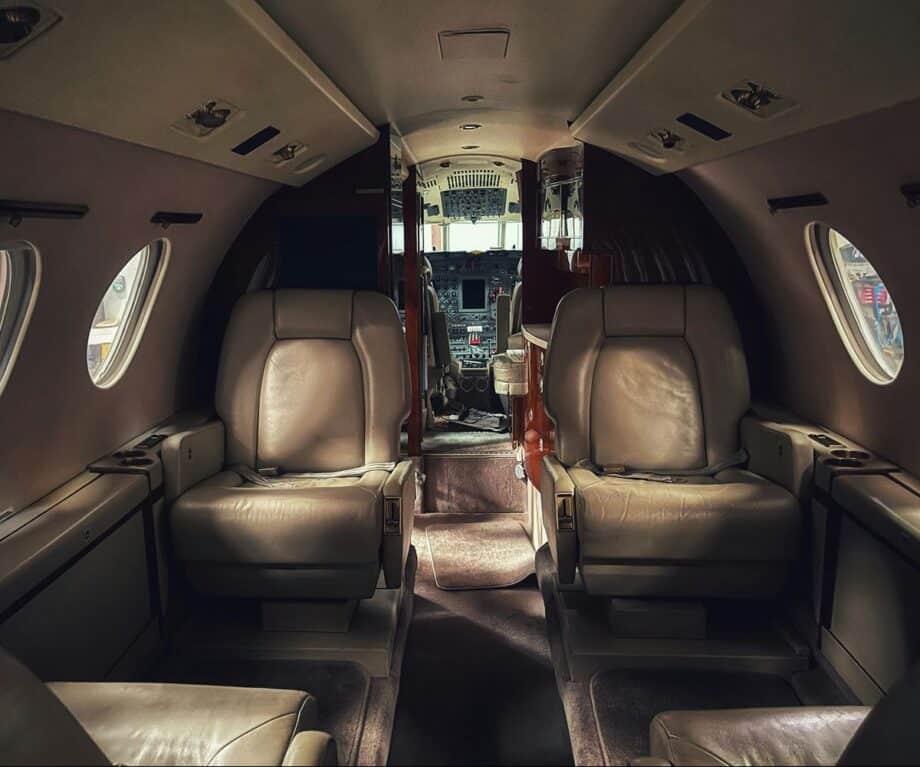
First-time clients frequently gravitate toward heavy, ultra-long-range cabins—such as a Gulfstream or a Dassault Falcon—seduced by photographs of sprawling, apartment-style interiors. Yet, for a 90-minute European sector, deploying a heavy jet is rarely economically or practically efficient unless passenger numbers or extreme baggage volume strictly demand it.

Conversely, going too small introduces its own operational hazards. A light jet may boast seven certified passenger seats, but that metric rarely accounts for seven passengers plus golf clubs, ski equipment, multi-week holiday luggage, or family pets. Payload and range calculations are dictated by physics; temperature, headwinds, and runway lengths actively constrain aircraft capabilities in real-world scenarios.
2. The Strategic Impact of Airport Selection
The choice of airport fundamentally alters the economics of a flight. In major metropolitan areas like London, private aviation is distributed across Farnborough, Biggin Hill, Luton, and Stansted. Paris centers around Le Bourget.
Opting for an alternative airfield can occasionally shave thousands off an itinerary due to lower handling fees, better aircraft positioning, or extended operating hours. However, this must be balanced against ground transit times; saving €1,500 on handling fees is a false economy if it introduces an additional ninety minutes of road travel for a time-sensitive executive.
3. Round Trips and Empty Legs Demystified
- Round Trips: A common misconception is that a return trip is simply a linear doubling of a one-way quote. In practice, operators weigh whether the aircraft should remain parked on-site (incurring crew per diems, parking fees, and minimum daily utilization charges) or reposition elsewhere between legs.
- Empty Legs: These occur when an aircraft must fly unbooked to reposition for its next assignment. Offering these sectors at steep discounts benefits both parties, provided the traveler’s schedule aligns entirely with the original passenger’s itinerary. If the primary booking shifts, the empty leg vanishes or alters course. They are best viewed as opportunistic windfalls rather than reliable, cheap scheduled flights.
Official Industry Insights & Strategic Advisory
Navigating the 2026 private aviation marketplace requires moving away from rigid hourly rates and embracing holistic mission planning. According to independent booking platform data, travelers who build buffers into their itineraries secure significantly better charter terms.
The Power of Flexibility
Consider two contrasting charter requests:
- "I need a light jet from Farnborough to Nice departing precisely at 10:00 AM."
- "There are six of us traveling to Nice by 2:00 PM. Farnborough is preferred, but Biggin Hill or Luton work, and we can depart an hour or two earlier if it improves efficiency."
The second request unlocks a much broader pool of aircraft, opening doors to more efficient operator schedules, alternative positioning assets, and potential empty-leg synergies. Often, possessing a single hour of schedule flexibility yields greater financial savings than aggressive price negotiation.
Practical Pre-Flight Due Diligence
Before signing a charter contract, travelers are advised to look past the aesthetics and investigate foundational operational safeguards:
- Specific Aircraft Identification: Demand clarity on the exact aircraft make and model, rather than generic category labels like "light jet."
- All-Inclusive Cost Transparency: Ensure quotes explicitly outline handling fees, de-icing provisions, international permits, and potential overage clauses.
- Technical Contingency Protocols: Sophisticated machinery occasionally experiences technical snags. Verify what contractual guarantees the operator or booking platform has in place to secure a replacement aircraft swiftly.
Future Outlook: The Evolution of Private Travel in 2026 and Beyond
As we look toward the remainder of the decade, the private aviation sector is undergoing a profound technological transformation. Travelers increasingly expect instant, digital visibility—accessing live aircraft options, indicative pricing, and real-time availability without needing to initiate a cumbersome chain of phone calls and emails.
At the same time, the human element remains irreplaceable. Automated route alerts, AI-guided empty-leg matching, and instant booking platforms work best in tandem with a dedicated 24/7 charter desk. Human expertise is essential when managing multi-city itineraries, traveling with pets, navigating complex international customs, or handling unexpected weather disruptions.
Ultimately, private aviation does not magically make every journey better simply because it carries a premium price tag. For a solo traveler commuting between London and Paris, the high-speed Eurostar remains an unbeatable alternative. But for a family of six navigating a complex holiday with children and luggage, or for a corporate board requiring seamless multi-city connectivity, private aviation remains an invaluable tool.

By understanding the underlying mechanics of positioning, seasonality, and flexible routing, travelers can navigate the market with confidence—ensuring that every euro spent solves a genuine logistical challenge rather than merely paying for a more luxurious seat.