When travelers speak of the Catalan Pyrenees, their minds frequently wander toward soaring peaks, pristine ski resorts, and rugged hiking paths framed by dramatic granite cliffs. Yet, the Girona Pyrenees—specifically the verdant corridors of the Ripollès region—offer an entirely distinct narrative. Beyond the arresting physical geography lies a dense, multidimensional cultural landscape where history, industry, architecture, and gastronomy intertwine.
This three-day itinerary transcends the typical sightseeing excursion. It is a curated, immersive route designed not merely to check off picturesque coordinates, but to unpack the complex historical layers of Catalonia’s interior. From the foundational Romanesque grandeur of Ripoll and the pioneering female monastic rule of Sant Joan de les Abadesses, to the water-driven iron foundries of Campdevànol, the bourgeois summer retreats of Camprodon, the culinary havens of Ribes de Freser, and the ascetic, cloud-scraping sanctuary of Montgrony, this journey offers an authoritative exploration of an often-overlooked heartland.
Structured as an ideal round-trip getaway, this guide acts as both a practical manual for first-time explorers and a conceptual blueprint for those seeking an interior Catalonia defined as much by its intellectual depth as its striking visual identity.
Detailed Chronology
Day 1: Ripoll, the Grand Historical Gateway
The expedition begins in Ripoll, a locale that sets an uncompromising tone for the entire journey. Some towns serve merely as transit points; Ripoll belongs firmly to the category of places that dictate the historical gravity of a region. Widely regarded in the cultural imagination as the "cradle of Catalonia," its foundational weight in the architectural and political genesis of the nation remains immense.
The Monastic Magnetism of Santa Maria de Ripoll
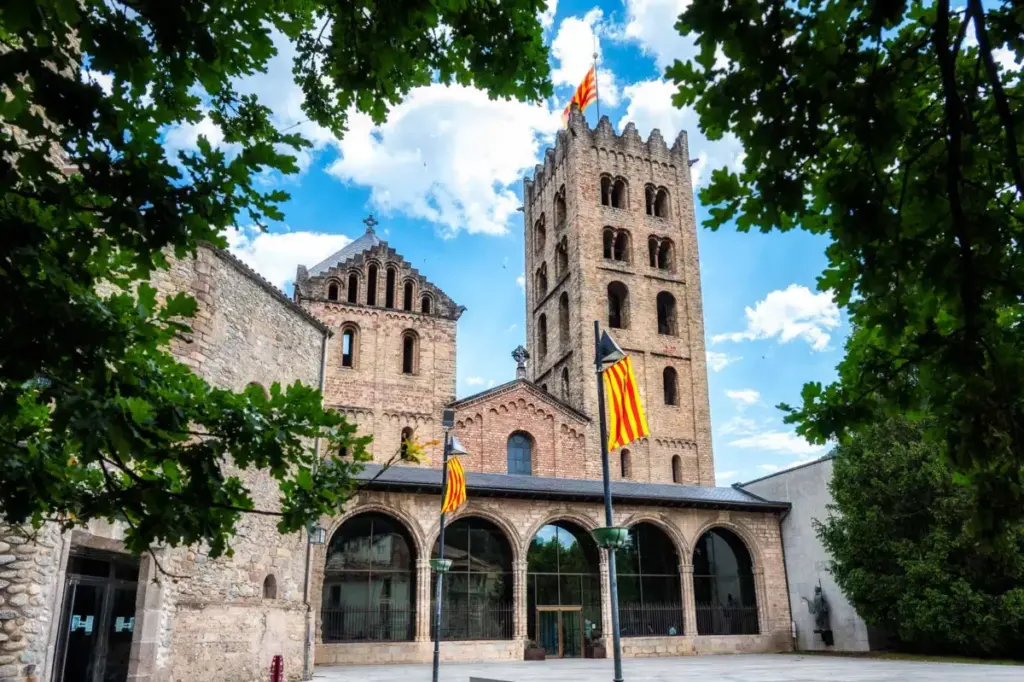
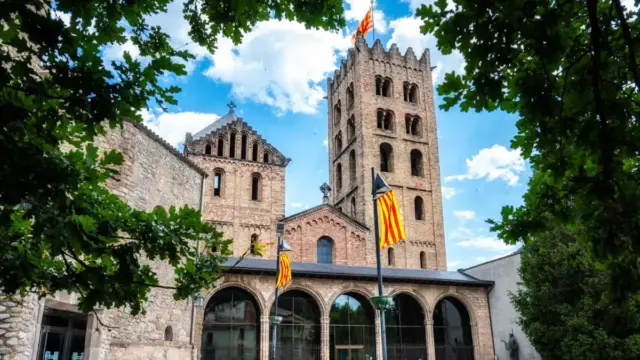
At the center of this historical gravity sits the Monastery of Santa Maria de Ripoll. Founded in 879 by Count Wifredo the Hairy (Guillem el Pilós), the complex quickly evolved into one of the paramount spiritual and intellectual powerhouses of medieval Catalonia.
Visitors standing before the Romanesque portal—added in the 12th century—immediately recognize its status as one of the supreme achievements of medieval Catalan sculpture. The intricate relief work functions as a stone-carved bible, teaching theology, morality, and cosmology to a largely illiterate medieval populace.
Stepping inside the basilica reveals a complex composed of a luminous central nave, an evocative medieval cloister, and critical archaeological remains. Most notably, the church houses the tombs of pivotal historical figures, including Ramon Berenguer III and Wifredo the Hairy himself.
Wifredo is intrinsically tied to the foundation of the monastery and, through popular romantic folklore, the genesis of the Catalan flag, the Senyera. According to legend, following a fierce battle against the Normans, a mortally wounded Wifredo was visited by the Frankish king Charles the Bald. The king dipped his fingers into the count’s bleeding wounds and traced four crimson stripes across Wifredo’s golden shield, instantly creating the emblem of Catalonia. While modern historians confirm this is a romantic 19th-century myth devoid of contemporary documentary evidence—the heraldic bars do not appear in the historical record until three centuries later—the legend remains so deeply embedded in the cultural consciousness that it enhances the resonance of the monastic site.
The Scriptorium and Medieval Intellectual Rigor
A few steps from the basilica lies the Scriptorium of Ripoll, a space dedicated to illuminating the intellectual infrastructure of the Middle Ages. Far from the simplistic, caricatured notion of a "dark age," the scriptorium reveals a society capable of extraordinary technical precision, literacy, and artistic output.
The exhibition demonstrates how medieval manuscripts were laboriously manufactured. Visitors learn about the preparation of parchment (requiring vast amounts of animal skins), the formulation of inks and mineral pigments, and the economic value of a book—which in the Middle Ages functioned as an item of extreme luxury and ostentation. The exhibition employs immersive elements, allowing visitors to attempt writing with a traditional quill and iron-gall ink.
The physical mechanics of the scriptorium reveal brilliant innovations: the use of egg yolk to bind delicate pigments, the careful conservation of precious vellum through micro-calligraphy, and the heavy reliance on natural cloister light. This environment shatters the myth of a stagnant medieval society, proving instead that the high Pyrenees were engines of textual preservation and cultural transmission.
Ethnographic Realities and Pastoral Gastronomy
The first day deepens its cultural footprint with a visit to the Ripoll Ethnographic Museum. Housing thousands of original artifacts, the museum expands the narrative beyond monumental stone architecture into the daily lives, domestic routines, agricultural cycles, textile crafts, and folkloric traditions of the Pyrenean populace.
As day transitions to evening, the route grounds itself in contemporary local production through a curated cheese-tasting session with Som Formatgers. Sampling artisanal cheeses crafted from the raw milk of free-roaming mountain herds provides a direct link to the modern pastoral landscape. These cheeses, marked by intense, earthy flavor profiles derived from native alpine grasses, bring the traveller back to the immediate, tangible present.
The first night concludes at the Hotel Abbatissa in Sant Joan de les Abadesses. Perched on a quiet hill with sweeping valley views, this municipal hotel offers a profound sense of acoustic and visual calm. Beyond its local gastronomy and commitment to regional sourcing, the hotel boasts a remarkable social mission: a significant portion of its professional staff consists of individuals with varying degrees of intellectual or physical disabilities. This human dimension infuses the stay with a quiet ethical grace that matches the quality of its hospitality.
Day 2: Sant Joan de les Abadesses, Campdevànol, and the Alchemy of the Valley
The Monastic Rule of Women
Day two opens at the Monastery of Sant Joan de les Abadesses. If Ripoll impresses through political and symbolic weight, Sant Joan startles through its unique historical lineage: for over a century, this foundational institution was governed exclusively by women.
Established in the late 9th century as Catalonia’s first female monastery, it was not an anomalous or token institution. The abbesses functioned as sovereign lords, wielding immense religious, economic, and territorial authority across the valley. They managed vast estates, dispensed justice, and engaged in high-level geopolitical maneuvering in an era scarcely recognized for female autonomy.
The political drama culminated in the late 10th century when the community was abruptly dissolved following scandalous ecclesiastical accusations—largely manufactured by rival male clerical factions seeking to wrest control of the lucrative territorial holdings. The Romanesque church, consecrated in 1150, stands as an architectural testament to this extraordinary period of female ecclesiastical dominion.
Literary Resonance and Industrial Heritage
A brief stroll through the Vila Vella (Old Town) reveals an urban fabric that expanded outward from the monastic core. The town’s historical identity is further enriched by literary associations: the eminent Catalan poet Joan Maragall resided and vacationed here, penning canonical literary works such as El comte Arnau and La vaca cega (The Blind Cow).
The itinerary then shifts southward to Campdevànol, introducing the visitor to the region’s industrial archaeology. The Centre PyFer del Ferro i de l’Aigua (Centre for Iron and Water), housed within a meticulously restored 17th-century flour mill, charts how hydrologic power and metallurgy shaped the modern history of the Ripollès.
During the height of industrialization, Campdevànol transformed from scattered parishes into a manufacturing hub. The local geography, rich in iron ore and connected by a network of mule tracks (arriers), gave rise to specialized artisans known as claveteros (nail-makers). At its peak, individual workshops produced up to 60,000 hand-forged nails per month, distributed across the Iberian Peninsula. The presence of the traditional Catalan forge and the entrepreneurial legacy of families like the Casanovas underscores a vital historical truth: the Pyrenees were never merely an enclave of pastoral isolation, but an active participant in early European industrial engineering.
Following a meticulously prepared midday meal at the restaurant S’ha Acabat el Bròquil—where traditional Pyrenean recipes are reinterpreted with contemporary culinary techniques—the afternoon leads to Ribes de Freser and a masterclass in apiculture at La Botiga de la Mel.
The Architecture of Apiculture and Alpine Respite
The honey-tasting experience at La Botiga de la Mel transcends standard gastronomic tourism. Visitors receive an in-depth entomological education detailing the complex social structures of honeybee colonies, the roles of drones and queens, and the biochemical extraction of high-altitude floral nectars. The session explores raw honey derivatives, including propolis, royal jelly, beeswax candles, organic soaps, and natural waterproofing balms.
The second day culminates with an overnight stay at the Hotel Resguard dels Vents, situated on the heights overlooking the Freser Valley. Featuring a sprawling thermal spa—complete with indoor and outdoor Finnish saunas, a hammam, an indoor lap pool, and an infinity pool facing the dramatic mountain drop—the hotel redefines relaxation. Dinner and breakfast menus rely exclusively on hyper-local ingredients, cementing the establishment’s philosophy that holistic rest is an integral component of cultural travel.
Day 3: Wool, Bourgeois Escapism, and High-Altitude Silence
OvellaLab and the Ancient Craft of Wool
The final day initiates in Campdevànol with an intimate masterclass at OvellaLab, a specialized wool workshop dedicated to preserving and modernizing traditional Pyrenean textile practices.
In an era dominated by synthetic fibers, OvellaLab highlights the labor-intensive reality of organic textiles. The workshop operates entirely without automated machinery, utilizing traditional spinning wheels and manual cleaning combs. Educational metrics presented during the workshop reveal the staggering effort behind sustainable fashion:
From every raw, unwashed metric ton of sheep’s wool, only 500 to 600 kilograms survive the intensive washing and carding process.
A single fleece from the native Ripollesa sheep yields approximately 700 usable grams of clean fiber.
Producing just 50 kilograms of finished yarn requires processing 120 kilograms of raw, washed wool.
Furthermore, the workshop dismantles modern consumer expectations regarding synthetic textiles, noting that 100% natural, untreated wool naturally pills with friction precisely because it is an organic, breathable, and fully repairable material. This stop provides a sobering, highly educational look at sustainable manufacturing traditions that predate the industrial revolution by millennia.
Camprodon and the Architectural Legacy of the Bourgeois Summer
The journey proceeds northward to Camprodon, a town whose contemporary identity is deeply bound to the 19th-century phenomenon of bourgeois summer retreats (el veraneo). As industrial fortunes surged in Barcelona, wealthy elites sought cooler mountain climates, transforming quiet Pyrenean agricultural towns into elegant leisure colonies.
The Passeig de la Font Nova stands as a primary monument to this era. Doctors, lawyers, architects, and industrialists constructed modernist and eclectic chalets, infusing the town with sophisticated urban infrastructure. Details such as historical flood barriers constructed from recycled hospital gurneys add a layer of localized vernacular charm to the grand architecture.
Camprodon’s historical narrative also encompasses commercial innovation, such as the legendary Birba biscuit factory, which originated as a local grocery store (colmado) that recognized the immense purchasing power of wealthy urban summer residents seeking high-end baked goods to take back to Barcelona.
The Maristany Promenade and the Translocated Romanesque Cloister
Continuing the exploration, visitors encounter the Passeig Maristany, developed between 1924 and 1925 as an upscale residential expansion. Flanked by monumental shade trees and wide, curving avenues designed to evoke alpine elegance, this district hosted prominent historical figures—including Spanish Prime Minister Juan Negrín, who resided at the Vora del Ter estate near the end of the Spanish Civil War.
Passeig Maristany guards one of the region’s most eccentric architectural curiosities: within the grounds of a private estate, an entire Romanesque church and monastic cloister—originating from San Esteban de Gormaz in the province of Soria—were systematically dismantled, transported stone by stone across hundreds of kilometers, and painstakingly reconstructed in the Catalan Pyrenees. This fascinating exercise in architectural relocation encapsulates the immense wealth, aesthetic eccentricity, and distinct cultural ambitions of the early 20th-century Barcelona bourgeoisie.
Montgrony: The Ascent to Stone and Silence
The expedition concludes at its highest physical and spiritual elevation: the Santuario de Montgrony. Nestled deep within a dramatic limestone amphitheater, the complex is divided into two distinct levels. Below sits the traditional sanctuary; above stands the ancient stone church, accessed via a monumental staircase of 144 steps carved directly into the living rock.
The stair count is not merely an architectural statistic; it serves as a deliberate nod to the biblical metaphor of Jacob’s Ladder, imbuing the final climb with profound ascetic symbolism. Montgrony operates on an entirely different temporal frequency than the rest of the route. The onsite guesthouse offers rustic, spacious rooms entirely devoid of televisions—a deliberate ascetic luxury in a hyper-connected world.
Meals consist of unpretentious, high-altitude comfort food served in absolute quiet. As twilight descends over the jagged limestone peaks, legendary tales of ancient telluric energy currents lingering in the valley floor feel entirely plausible. Montgrony provides the ultimate narrative resolution: after three days of navigating intense historical archives, industrial foundries, bustling artisan workshops, and sophisticated culinary stops, the journey closes in pure, uninterrupted contemplation.
Supporting Context & Metrics
To contextualize the geographic compactness and density of experiences along this three-day Pyrenean route, consider the following data points:
Reflecting on the philosophy behind the integration of cultural heritage and sustainable local tourism within the region, regional tourism representatives and project directors emphasize the importance of multi-layered storytelling:
"The true potential of the Girona Pyrenees does not lie in a single monument or a postcard view. Our landscape is a palimpsest. When a traveler walks from the scriptorium of Ripoll to the female-governed halls of Sant Joan de les Abadesses, and onward to the wool looms of Campdevànol, they are reading a continuous, unbroken book of European social history. Our mission is to ensure that every visitor departs not just with photographs, but with a profound understanding of the human effort that shaped these mountains."
— Pyrenean Cultural Heritage & Sustainable Tourism Initiative
Local artisan producers similarly emphasize the symbiotic relationship between historical preservation and contemporary economic survival:
"When we demonstrate the carding of native Ripollesa wool or explain the delicate biochemistry of high-altitude apiculture, we are preserving an endangered intangible heritage. Tourism in the interior Pyrenees must be participatory. It must ask the traveler to slow down, to touch the raw materials, and to taste the terroir directly from the hands of the shepherds and artisans who sustain it."
As European tourism increasingly pivots away from over-saturated coastal destinations toward regenerative, slow-travel alternatives, interior regions like the Girona Pyrenees are uniquely positioned for sustainable growth.
Future infrastructural developments across the Ripollès region prioritize low-impact mobility, expanding historical cycling corridors (such as the Ruta del Ferro i del Carbó), and strengthening municipal programs that integrate local social enterprises—such as the inclusive hospitality models seen at Hotel Abbatissa—into mainstream itineraries.
Furthermore, initiatives uniting historical agricultural preservation (such as safeguarding native livestock breeds and traditional cheesemaking cooperatives) guarantee that modernization will not dilute the authentic character of the valleys. For the discerning traveler, the Girona Pyrenees represent a blueprint for the future of cultural tourism: a destination where historical depth, environmental stewardship, and human storytelling converge to create an unforgettable, multi-dimensional expedition.