







As artificial intelligence increasingly steps into the role of travel concierge, a fundamental shift is occurring in how hotels are discovered, evaluated, and booked. When a traveler asks a generative AI assistant to plan a trip, the system does not simply browse the web like a human searcher; it relies on structured, machine-readable data to make its recommendations. If a hotel group’s digital assets cannot be easily digested by these large language models, those properties risk becoming functionally invisible.
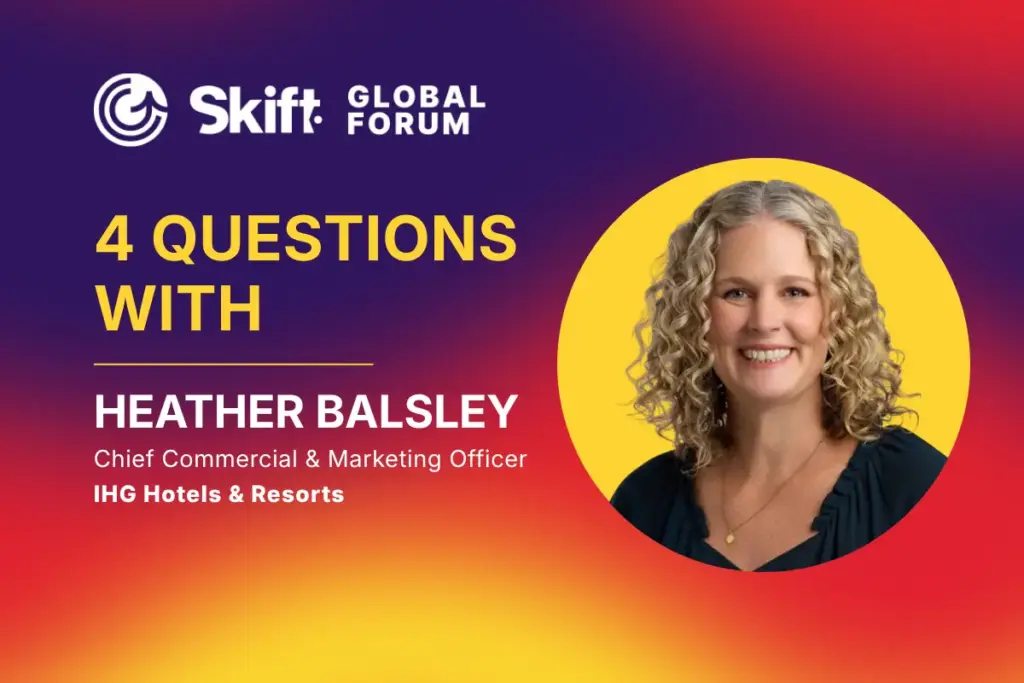
This emerging reality has prompted IHG Hotels & Resorts to embark on a comprehensive digital transformation. Led by Heather Balsley, IHG’s Chief Commercial & Marketing Officer, the hospitality giant is actively restructuring its vast repository of property data to ensure its portfolio is fully "legible" to AI engines.
Balsley, who will detail this strategic overhaul at the upcoming Skift Global Forum in New York on September 22–24, 2026, is operating on a dual conviction: while IHG must invest heavily to ensure AI platforms recommend its properties, the technology itself will never replace the genuine, direct relationship between a hotel brand and its guests. This two-pronged approach—optimizing for algorithmic discovery while doubling down on physical hospitality and brand loyalty—forms the cornerstone of IHG’s commercial strategy.
Teaching Machines to Read: The Shift to AI Legibility
For decades, search engine optimization (SEO) focused on keywords, backlinks, and meta tags designed to rank highly on static search engine results pages. However, the rise of conversational AI has fundamentally changed the nature of travel queries. Travelers are no longer just searching for "hotels in London with a pool." Instead, they are inputting highly specific, multi-layered prompts: "Find me a boutique hotel in London suitable for a business traveler who needs a quiet workspace, has an early morning flight, and prefers sustainable dining options nearby."
To answer such nuanced queries, AI models must parse vast amounts of information. If a hotel’s digital footprint consists only of basic descriptions and a standard checklist of amenities, the AI model cannot confidently match it with the user’s specific criteria.
"AI tools can only be as helpful as the content they’re drawing from, so content has become increasingly important," Balsley explains. She notes that travelers are seeking highly tailored recommendations based on their unique preferences, trip purposes, and immediate needs.
To bridge this gap, IHG is moving beyond superficial property summaries. The goal is to provide deep, structured, and highly contextual data that allows AI algorithms to understand what makes each property distinct. This means digitizing and categorizing nuanced details—such as the specific quiet hours of a property, the exact layout of its workspace, or the provenance of its culinary ingredients—and making that data easily accessible to external AI crawlers.
Restructuring the Digital Foundation: IHG’s Upcoming Platform
To execute this strategy, IHG is preparing to launch a new, sophisticated content management platform later this year. This technology is designed to fundamentally change how the company structures, updates, and distributes its hotel information.
The upcoming platform will serve as a centralized engine, allowing individual hotels within the IHG portfolio to easily curate and showcase their unique attributes. By organizing this content into a highly structured format, the platform will strengthen the digital signals that external AI tools rely on to surface and recommend properties.
"The goal is to ensure the right hotel information is showing up on the right channels at the right time," says Balsley.
Beyond improving visibility on third-party AI assistants, the platform is designed to enhance IHG’s internal capabilities. It will provide the company with greater flexibility in how content is created, delivered, and personalized across its own direct digital channels. As traveler expectations continue to shift, this architectural flexibility will allow IHG to rapidly update property profiles, adapt to changing consumer trends, and better match prospective guests with the specific on-property experiences they desire.
The Paradox of the Modern Guest Journey
While the technology powering search is growing more complex, the user-facing journey is undergoing a simultaneous consolidation. Historically, booking a trip required a fragmented process: researching destinations on social media, reading reviews on third-party forums, comparing prices across online travel agencies (OTAs), and finally booking on a hotel’s website—often shifting across multiple devices along the way.
Today, AI is consolidating this fragmented path into a single, streamlined experience. Conversational interfaces can generate itineraries, suggest destinations, filter lodging options, and facilitate bookings within a single chat window or mobile application.
"AI is quickly becoming a new front door to travel planning," Balsley observes. "Whether it’s generating destination ideas, helping build itineraries, or narrowing down hotel options, travelers are turning to AI to simplify decisions and reduce the amount of time and effort required to plan a trip."
This consolidation presents both an opportunity and a threat. While it reduces friction for the consumer, it also introduces a powerful new intermediary between the hotel brand and the guest. For IHG, navigating this environment requires maintaining a presence across all emerging digital touchpoints while ensuring that the value proposition of its diverse brand portfolio and loyalty program remains clear and accessible.
The Commercial Litmus Test: Balancing Innovation and Owner Value
In an industry frequently distracted by shiny new technologies, maintaining strategic focus is a constant challenge. For Balsley, navigating the rapid pace of technological change requires a disciplined decision-making framework. When evaluating new digital tools, platforms, or strategies, she applies a straightforward, two-part test:
- Does this create a better experience for the guest?
- Does this deliver tangible value for hotel owners?
This framework is particularly critical for a franchise-heavy business model like IHG’s. Hotel owners and franchisees invest capital to affiliate with IHG’s brands, expecting that the group’s central marketing and technology engines will drive high-value bookings and lower customer acquisition costs.
"If something helps travelers make more confident decisions, reduces friction, strengthens loyalty, or improves hotel performance, it’s worth pursuing," Balsley states. "If it doesn’t, it’s probably a distraction."
By grounding technology investments in these core business fundamentals, IHG aims to avoid the pitfalls of over-engineering its digital solutions, ensuring that every algorithmic optimization directly supports property-level profitability and guest satisfaction.
History as a Guide: Why Intermediaries Cannot Own the Guest Relationship
The rise of AI as a major discovery channel has sparked familiar anxieties within the travel industry, with some predicting that AI assistants will completely sever the direct link between hotels and their guests. However, Balsley views this shift through a historical lens, noting that the hospitality sector has successfully navigated similar disruptions before.
The industry witnessed a comparable evolution with the rapid ascent of online travel agencies (OTAs) in the early 2000s, the transition to mobile-first booking apps, and the emergence of massive, all-in-one super apps in key international markets like China. In each of these instances, new platforms fundamentally altered how consumers discovered and booked travel, initially sparking fears that hotel brands would be relegated to mere utility providers.
Yet, as those digital ecosystems matured, the core drivers of long-term hotel success remained unchanged: strong, recognizable brands and direct, value-added relationships with customers.
"Those shifts created new opportunities and new challenges, but they didn’t diminish the importance of strong brands or direct customer relationships," Balsley emphasizes. "I see AI and emerging discovery platforms following a similar path."
While AI tools may direct a traveler to a specific hotel lobby, they cannot replicate the experience of checking in, the comfort of a well-appointed room, or the personalized recognition provided by a hospitality team. For IHG, the ultimate defense against intermediary platforms remains its physical product and its loyalty program, IHG One Rewards. By delivering consistent, high-quality stays and personalized rewards, the hotel group ensures that even if a guest discovers them through an AI assistant, they will choose to return directly in the future.
A Broad Industry Dialogue at Skift Global Forum
The intersection of generative AI, brand equity, and distribution strategy will be a key point of discussion at the Skift Global Forum, taking place from September 22 to 24, 2026, in New York.
Balsley’s insights into IHG’s content transformation and relationship-first philosophy will share the stage with perspectives from other major industry leaders, including Glenn Fogel, CEO of Booking Holdings, and Ariane Gorin, CEO of Expedia Group. Together, these executives will address how the global travel landscape is adapting to the next generation of digital distribution, offering a comprehensive look at the strategies shaping the future of travel discovery and hospitality.