








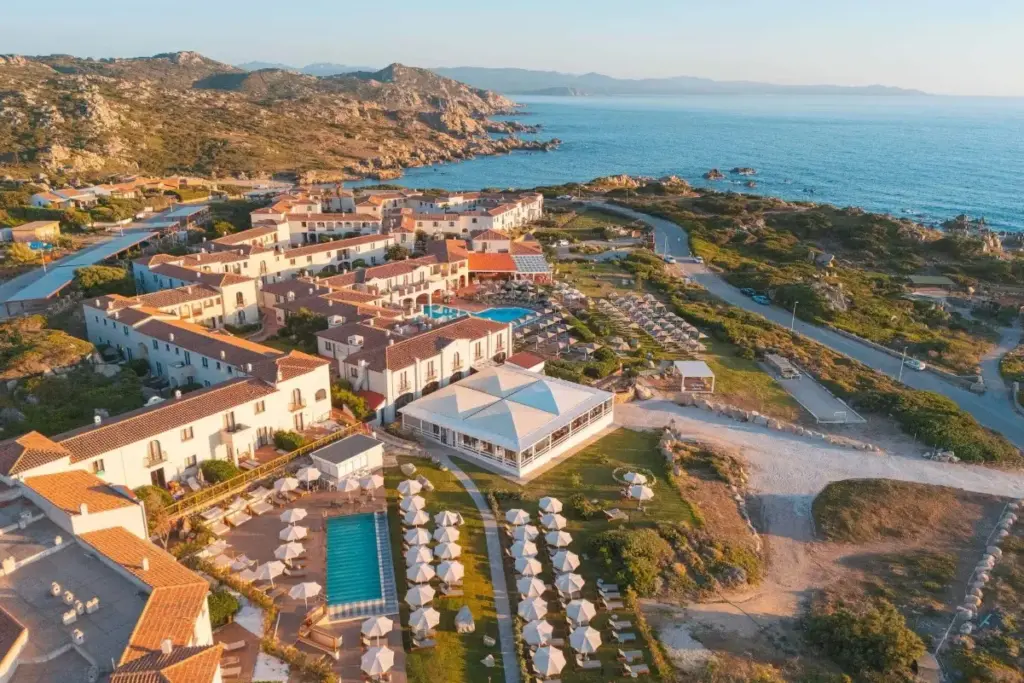
In a move that could signal a major shift in the European hospitality capital markets, private equity titan Blackstone is reportedly preparing to take its Barcelona-based subsidiary, Hotel Investment Partners (HIP), public. According to reports from the Spanish financial daily Cinco Días, the asset manager is aiming for an initial public offering (IPO) on the Spanish stock exchange that would value the Mediterranean resort owner at a minimum of $6.9 billion (€6 billion to €7 billion).
The prospective listing, targeted for late October or early November, represents the culmination of nearly two years of strategic deliberations. During this period, Blackstone weighed various exit strategies for its sprawling Mediterranean portfolio, including a potential outright sale to sovereign wealth funds or other institutional buyers.
The decision to pursue a public listing in Madrid, with an official filing expected to be submitted to Spain’s securities regulator, the Comisión Nacional del Mercado de Valores (CNMV), in early October, highlights a growing confidence in both the European IPO market and the enduring strength of Southern European leisure tourism.
While neither Blackstone nor HIP has officially confirmed the plans or responded to requests for comment, the details leaked to the financial press suggest a highly structured timeline designed to capitalize on the autumn market window.
The Strategic Shift from Private Sale to Public Markets
For nearly twenty-four months, investment banking circles have closely monitored Blackstone’s intentions for HIP. As one of the largest owners of seasonal resort hotels in Southern Europe, HIP has long been viewed as a crown jewel in Blackstone’s European real estate allocation.
The decision to steer the company toward an IPO rather than a private secondary sale reflects a complex set of market dynamics. While private equity firms typically prefer the clean exit of a bilateral sale, the sheer size of the HIP portfolio—valued at up to €7 billion—limits the pool of potential buyers capable of executing an all-cash acquisition of this scale, especially in an era of elevated borrowing costs.
By opting for a public listing on the Bolsa de Madrid, Blackstone can achieve several objectives simultaneously:
- Partial Liquidity: Blackstone can monetize a portion of its equity while retaining a significant stake to benefit from future operational upside.
- Price Discovery: A public listing establishes a clear market valuation for a unique, highly specialized asset class—Mediterranean leisure real estate.
- Access to Permanent Capital: As a public entity, HIP will have direct access to equity and debt markets to fund its next phase of regional expansion without relying solely on private equity fund life cycles.
The timing of the expected filing in early October is critical. It allows the underwriters to conduct investor roadshows throughout October, tapping into institutional demand before the winter holidays and avoiding the potential market volatility associated with late-year macroeconomic reports.
Inside the HIP Portfolio: A Mediterranean Powerhouse
To understand the €6 billion to €7 billion valuation, one must look at the physical and geographic footprint of Hotel Investment Partners. Founded in 2015 and acquired by Blackstone in 2017, HIP has grown rapidly to become a dominant force in the Mediterranean leisure sector.
Today, the company’s portfolio comprises 61 hotels, representing thousands of rooms across prime coastal destinations in Spain, Greece, Italy, and Portugal. Unlike traditional hotel companies that focus on brand management and franchising, HIP’s business model is rooted in real estate ownership. The company acquires underperforming or under-capitalized beachfront properties, invests heavily in physical renovations, and repositions them under international brand umbrellas.
The "Buy, Fix, Sell" Playbook in Action
Under Blackstone’s ownership, HIP has systematically applied a value-add real estate strategy. This involves:
- Capital Expenditure: Injecting millions of euros into upgrading older three- and four-star properties into premium four-star superior and five-star luxury resorts.
- Global Brand Partnerships: Partnering with leading international hospitality operators—such as Marriott International, Hyatt Hotels Corporation, Hilton, and Meliá Hotels International—to manage the properties. This brings global loyalty programs and institutional-grade distribution channels to formerly independent European resorts.
- Asset Optimization: Repositioning food and beverage concepts, beach clubs, and wellness facilities to drive higher average daily rates (ADRs) and revenue per available room (RevPAR).
This institutional approach to resort management has transformed HIP from a predominantly Spanish hotel owner into a diversified, multi-country Mediterranean platform. Its heavy concentration in the Canary Islands, the Balearic Islands, the Greek islands, and coastal Italy positions it directly in the path of affluent European and North American leisure travelers.
The Resilient Appeal of Southern European Leisure Tourism
The proposed valuation of HIP is deeply intertwined with the broader macroeconomic trends shaping European travel. While business travel and urban hotels have faced a more gradual recovery curve post-pandemic, the leisure resort sector in Southern Europe has experienced unprecedented demand.
Spain, Greece, and Italy have reported record-breaking tourism seasons over the past two years. Despite inflation and rising living costs across Europe, consumer spending on experiences and vacations has remained highly resilient. This "revenge travel" phenomenon has evolved into a structural preference for high-end coastal experiences, allowing resort operators to raise room rates significantly to offset inflationary pressures on labor and food costs.
Furthermore, Southern European resorts benefit from a high barrier to entry. Coastal environmental regulations, zoning restrictions, and a scarcity of beachfront land make it exceedingly difficult for competitors to build new properties. Consequently, existing institutional-grade portfolios like HIP’s command a scarcity premium from investors looking for exposure to tangible, inflation-hedged real estate assets.
Why Madrid is the Logical Venue for the Listing
The choice of Madrid for the IPO is both practical and symbolic. Although HIP has expanded its footprint across the Mediterranean basin, its operational headquarters remain in Barcelona, and the core of its portfolio is still rooted in Spanish tourist hotspots.
Spain is the second most visited country in the world, and its capital markets have a deep understanding of the tourism and hospitality sectors. Listing on the Spanish stock exchange allows HIP to target local institutional investors, Spanish pension funds, and European real estate investment trusts (REITs) that are highly familiar with the underlying assets and the dynamics of the Iberian tourism market.
Additionally, a Madrid listing positions HIP alongside other prominent Spanish travel and real estate giants, providing a natural benchmark for analysts and investors. It also avoids some of the regulatory complexities and higher listing costs associated with London or New York, while still offering full access to global capital through European passporting rules.
What the IPO Signals for the Broader Real Estate Market
The progression of HIP toward a public listing is being watched closely by rival private equity firms, sovereign wealth funds, and institutional lenders. For the past two years, the global real estate transaction market has suffered from a significant disconnect between buyer and seller expectations, largely driven by the rapid rise in central bank interest rates.
A successful IPO of HIP at a €6 billion to €7 billion valuation would serve as a powerful bellwether for several reasons:
1. Validation of the Leisure Asset Class
Historically, institutional real estate investors favored office buildings, logistics hubs, and residential portfolios, often viewing hotels as too volatile due to daily fluctuations in occupancy and room rates. The HIP IPO could solidify the transition of resort hospitality from an "alternative" asset class to a mainstream institutional target.
2. A Catalyst for European IPOs
The European IPO market has been relatively quiet over the past eighteen months, with many companies delaying listings due to market volatility. A high-profile, multi-billion-euro listing by a sponsor as prominent as Blackstone could boost underwriting confidence and encourage other large-scale corporate and real estate listings in late 2024 and early 2025.
3. A Benchmark for Portfolio Valuations
Other major hospitality asset managers holding Mediterranean portfolios will use HIP’s trading multiples as a benchmark to revalue their own holdings or to plan their own exit strategies, whether through public listings or recapitalizations.
Looking Ahead: The October Milestones
As the calendar moves toward October, the financial community will be watching for several key indicators to gauge the progress of the transaction.
The first major milestone will be the formal filing of the prospectus with the CNMV. This document will reveal the detailed financial health of HIP, including its exact debt load, historical revenue figures, occupancy rates, and average daily rate growth across its 61 hotels. It will also outline the percentage of the company Blackstone intends to float and whether the offering will consist entirely of existing shares or include new share issuance to fund future acquisitions.
Following the filing, the focus will shift to the institutional bookbuilding process. The reception of the IPO by large-scale European and international asset managers will ultimately determine whether the final pricing lands at the upper or lower end of the projected €6 billion to €7 billion range.
Regardless of the final pricing, Blackstone’s move to transition HIP from a private fund structure to the public stage marks a defining moment for Mediterranean tourism real estate, highlighting how a regional portfolio of holiday resorts can scale into a multi-billion-dollar public enterprise.