



In an era of hyper-globalization, the world’s most celebrated luxury hospitality brands are locked in a relentless race to scale. From Tokyo to London, Paris to New York, the industry is in a self-consciously triumphant "flag-planting" mood. Successful boutique concepts are rapidly exported, shoehorned into new developments, and scaled across continents.
Yet, this aggressive expansion often comes at a steep cost. When a highly localized, soulful concept is transplanted to the other side of the world, its most distinctive qualities are frequently diluted. What made the original venue magical is too often reduced to a set of visual codes, predictable design motifs, and scripted service interactions—sacrificed to the gods of operational efficiency. The brand’s soul is left behind, atomized in transit.
However, a quiet counter-movement is beginning to take shape. Projects like The Selvedge in Healdsburg, California, and SoNoMa in Kyoto, Japan, suggest an entirely different blueprint for global luxury. Rather than copying and pasting a successful physical concept, these ventures champion a more sophisticated philosophy: expand by transferring the underlying culture, not the rigid concept.
The Trap of the Carbon-Copy Franchise
To understand why this shift is necessary, one must look at the current state of high-end travel and dining. Historically, luxury was defined by predictability. A traveler checking into a five-star hotel in Hong Kong expected the exact same thread-count sheets, the same club sandwich, and the same obsequious service style as they would find in London.
Today, the modern luxury traveler demands the exact opposite: authenticity, specificity, and a deep, unrepeatable connection to place.
Despite this shift in consumer desire, the business of luxury hospitality remains stubbornly wedded to replication. When a restaurant or hotel achieves critical acclaim in its home market, the immediate corporate impulse is to franchise or duplicate it in global gateway cities.
This mechanical approach to expansion almost always falters. When a concept is stripped of its local purveyors, its specific architectural context, and the community that gave it life, it becomes culinary theater. It is an imitation of itself—a high-end theme park exhibit designed for consumption rather than connection. The operations take over, the corporate standard operating procedures (SOPs) stifle spontaneity, and the original magic is "lost in the sauce."
SoNoMa in Kyoto: A Masterclass in Cultural Translation
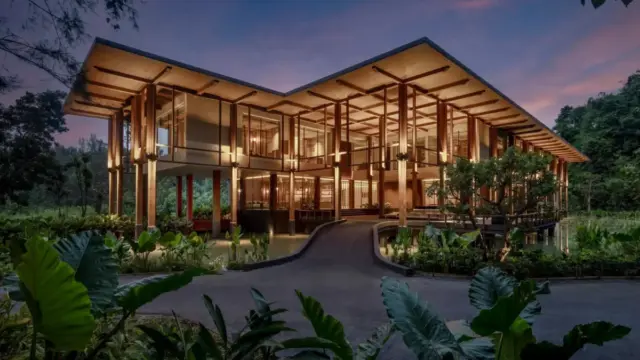
The antidote to this creative stagnation can be found inside the historic, refined enclave of Capella Kyoto. Here, the culinary team behind SingleThread—the legendary three-Michelin-starred restaurant and inn based in Healdsburg, California—has introduced SoNoMa.
On paper, the proposition of SoNoMa could easily have gone wrong. A restaurant celebrating the agricultural bounty and laid-back elegance of Northern California, dropped into the heart of Kyoto—Japan’s cultural and historical capital—could have felt like an unwelcome, imported novelty. It risked being an exercise in culinary imperialism.
Instead, the experience of dining at SoNoMa is specific, assured, and wildly creative. Rather than a superficial replica of Healdsburg, it functions as an elegant translation.
[Sonoma County, CA]                  [Kyoto, Japan]
   Agricultural Bounty                 Omotenashi & Craft
                                         /
                                        /
                                       /
             v                         v
               [Cultural Translation]
                         |
                         v
                SoNoMa inside Capella
To understand why this translation works, one must understand the DNA of SingleThread itself. Founded by chef Kyle Connaughton and agriculturalist Katina Connaughton, SingleThread was built from its inception on a profound appreciation for Japanese hospitality (omotenashi) and traditional farming techniques. Kyle Connaughton spent formative years cooking in Japan, and the couple’s culinary philosophy is deeply intertwined with the country’s ancient clay-pot (donabe) cooking and hyper-seasonal sensibilities.
Thus, when SingleThread went to Kyoto, they were not introducing an alien culture to Japan. They were returning home, carrying with them a California sensibility that had itself been shaped by Japanese traditions.
SoNoMa does not fly in California vegetables to Kyoto to recreate a Sonoma menu. Instead, the team applies the creative, free-thinking spirit of Northern California to the legendary, pristine ingredients of the Kansai region. It is a dialogue between two rich agricultural terroirs, mediated by a team that understands the soul of both places.
The Selvedge: Anchoring Culture in Healdsburg
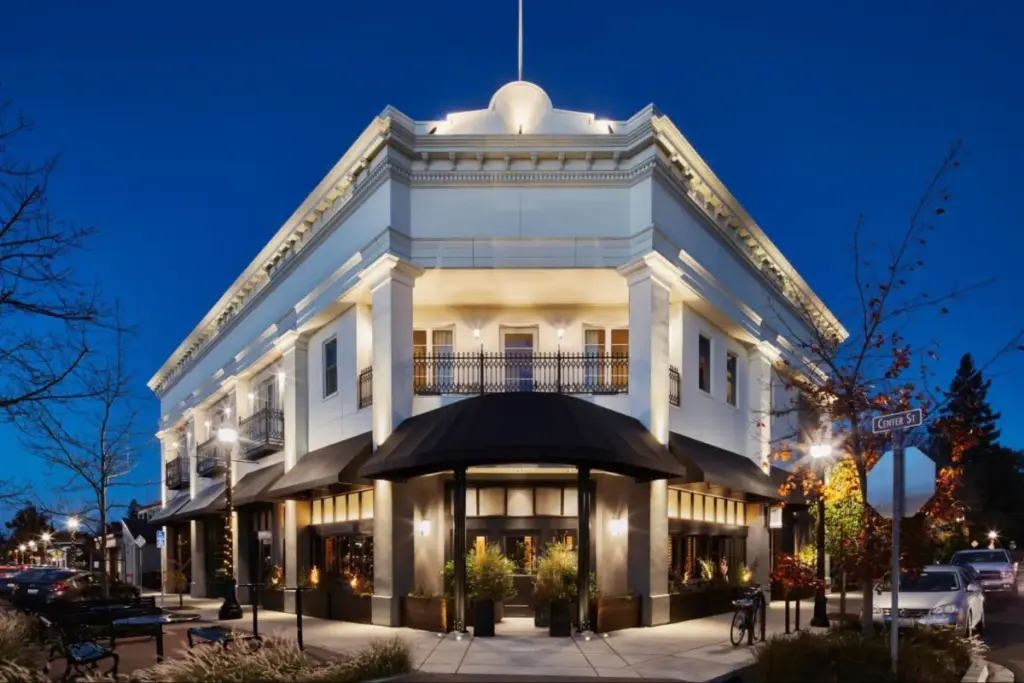
While SoNoMa represents this cultural transfer on an international stage, The Selvedge in Healdsburg demonstrates how the same philosophy anchors a brand’s home base.
In textile manufacturing, the "selvedge" is the self-finished edge of a fabric that keeps it from unraveling. It is a fitting metaphor for this new school of luxury hospitality. The Selvedge does not seek to be a loud, ostentatious monument to luxury. Instead, it acts as a subtle, structural edge that holds the local community and the hospitality ecosystem together.
In Healdsburg—a town that has rapidly transformed from a rustic agricultural hub into a world-class destination for wine and food—the pressure to cater exclusively to wealthy tourists is immense. It is easy for local businesses to lose their connection to the community that birthed them, transforming into polished, sterile environments designed solely for visitors.
The Selvedge resists this pull by focusing on tactile, localized storytelling. It prioritizes craft, raw materials, and human-scale interactions over corporate slickness. By reinforcing the cultural fabric of Healdsburg, it ensures that as the brand grows and engages with the world, its home base remains grounded, authentic, and creatively vital.
The Core Philosophy: Concept vs. Culture
The success of these projects highlights a fundamental distinction that global hospitality brands must learn to navigate:
| Metric / Dimension | Concept-Driven Expansion (The Old Model) | Culture-Driven Expansion (The New Model) |
|---|---|---|
| Primary Goal | Replicate a successful aesthetic and menu. | Transfer core values, philosophy, and work ethic. |
| Supply Chain | Relies on importing specific, branded ingredients. | Integrates deeply with local farmers and artisans. |
| Design Language | Standardized visual codes and signature decor. | Architectural dialogue between home and host cultures. |
| Staff Training | Rigid service scripts and operational manuals. | Empowering staff to express hospitality genuinely. |
| Relationship to Place | Imposed upon the host city as an import. | Developed in partnership with the local community. |
When a brand expands via concept, it assumes that its value lies in its tangible assets: its signature dishes, its specific furniture, its logo.
When a brand expands via culture, it understands that its value lies in its intangible assets: its way of seeing the world, its relationship to producers, its respect for craftsmanship, and its approach to human connection.
Why "Culture Transfer" is the Future of Global Luxury
As hospitality groups look to the future, the lessons of SoNoMa and The Selvedge offer a sustainable path forward. The travelers of tomorrow are increasingly immune to the charms of standardized luxury. They can sense when a concept has been hollowed out for the sake of global scaling.
By focusing on cultural translation rather than replication, brands can achieve what previously seemed impossible: they can scale their footprint without losing their soul.
This model requires more time, more intellectual humility, and a willingness to cede control to local teams. It requires accepting that a brand’s sister property in Kyoto or London will not look or taste exactly like the original in California or New York.
But as SoNoMa has proven, the reward for this artistic risk is immense. It yields spaces that are not merely successful businesses, but vibrant, living cultural bridges—specific, assured, and wildly creative.