





Executive Overview
The post-pandemic expansion of remote work has fundamentally transformed the intersection of real estate, hospitality, and global labor mobility. For over a decade, location-independent professionals—commonly referred to as digital nomads—navigated a fragmented infrastructure. Remote productivity on the road historically required choosing between isolating, overhead-heavy private rentals or social, yet noisy and basic, backpacker hostels. Neither model effectively integrated the ergonomic infrastructure required for high-level corporate output with an organic professional community.
This institutional gap has catalyzed the rise of specialized coliving-coworking hybrid platforms. Positioned at the forefront of this market is Outsite, a hospitality and network-membership enterprise established in 2015. Outsite operates a global portfolio of high-design, technology-enabled residential spaces engineered specifically for knowledge workers, entrepreneurs, and location-independent executives.
By offering private residential quarters paired with enterprise-grade workspaces, community management, and vetted peer networking, Outsite seeks to resolve the persistent tension between professional focus and lifestyle mobility. This analytical report examines Outsite’s market trajectory, economic model, operational footprint, field performance—highlighted by a property assessment in Bordeaux, France—and the broader strategic implications of modern coliving.
+-----------------------------------------------------------------------+
|                       OUTSITE NETWORK AT A GLANCE                     |
+-----------------------------------+-----------------------------------+
| Founded                           | 2015 (Santa Cruz, California)     |
| Active Member Base                | 5,000+ global members             |
| Global Footprint                  | 50+ properties across 3 continents|
| Core Target Demographic           | Working professionals (ages 28–45)|
| Primary Membership Tier           | $199/year or $499 lifetime        |
| Core Infrastructure               | Private suites, enterprise Wi-Fi, |
|                                   | ergonomic desks, curated community|
+-----------------------------------+-----------------------------------+
Detailed Chronology: The Evolution of Remote Work Infrastructure
The modern coliving sector has developed through distinct operational eras, evolving from informal, piecemeal solutions into structured commercial real estate assets.
  [2010–2014: Unstructured Era]
  Hostels & Cafes -> Low Wi-Fi Reliability, Ergonomic Strain, High Isolation
           │
           ▼
  [2015: Founding Phase]
  Outsite Launches in Santa Cruz, CA -> Surf & Work Hybrid Single-Property Concept
           │
           ▼
  [2016–2019: Early Expansion]
  Network Scaling -> Multi-City Acquisition, Membership Model Introduced
           │
           ▼
  [2020–2023: Structural Shift]
  Post-Pandemic Boom -> Mass Remote Work Adoption, Corporate Nomads Join Network
           │
           ▼
  [2024–Present: Maturation]
  Institutionalized Coliving -> 50+ Locations, Dedicated Community Management
1. The Unstructured Era (2010–2014)
During the early years of modern digital nomadism, remote professionals relied primarily on consumer-level travel infrastructure. Accommodation options were sharply divided between budget hostel dormitories and standard short-term vacation rentals.
- Operational Bottlenecks: Bandwidth instability, lack of dedicated work surfaces, unpredictable noise levels, and non-ergonomic seating.
- Social Trade-offs: Travelers faced a sharp dilemma: choose the professional isolation of an Airbnb or endure the non-work-oriented environment of a traditional hostel.
2. The Proof-of-Concept Phase (2015)
Recognizing the systematic mismatch between traditional hospitality offerings and knowledge-worker requirements, founders established Outsite in 2015.
- Initial Venture: The company launched with a single residential property in Santa Cruz, California.
- Target Value Proposition: Designed specifically to serve technology workers and founders who wished to combine lifestyle pursuits (such as surfing) with intensive, uninterrupted work schedules.
3. Network Scaling and Model Refinement (2016–2019)
Outsite expanded beyond its Northern California footprint, standardizing its property footprint and establishing a multi-tiered membership ecosystem. The company curated assets across diverse geographic categories, classifying properties by ambient "vibes"—ranging from coastal and mountain retreats to dense urban centers.
4. Post-Pandemic Mass Adoption (2020–Present)
The structural normalization of remote work following the COVID-19 pandemic converted digital nomadism from an edge-case lifestyle into an established corporate work pattern. Outsite capitalized on this influx, expanding its footprint to over 50 properties worldwide serving a active network exceeding 5,000 paying members.
Supporting Context & Metrics: Operational & Economic Framework
Outsite functions through a combined model that blends boutique residential real estate, workspace operational standards, and digital network memberships.
1. Membership Economics and Tier Breakdown
While non-members are permitted to book stays at standard baseline rates, Outsite incentivizes subscription retention through a dual-tier membership architecture:
- Annual Membership: $199 per year.
- Lifetime Membership: $499 one-time payment.
+------------------------------------+------------------------------------+
| MEMBERSHIP BENEFIT                 | OPERATIONAL/ECONOMIC VALUE         |
+------------------------------------+------------------------------------+
| Members-Only Locations             | Exclusive access to high-demand    |
|                                    | inventory                          |
| Extended Stay Discounts            | Up to 40% off long-term bookings   |
| Flash Sales Access                 | Up to 50% promotional markdowns    |
| New Destination Incentives         | 1 week free stay at select launches|
| Digital Ecosystem Access           | Internal job boards, sublet network|
| Dedicated Community Events         | Local mixers and weekly programming|
+------------------------------------+------------------------------------+
From a financial perspective, the annual membership cost is frequently offset on a single multi-week booking via the extended stay discount structure.
2. Property Infrastructure and Utility Standards
Unlike standard holiday rentals, Outsite properties must adhere to strict operational criteria engineered for continuous corporate output:
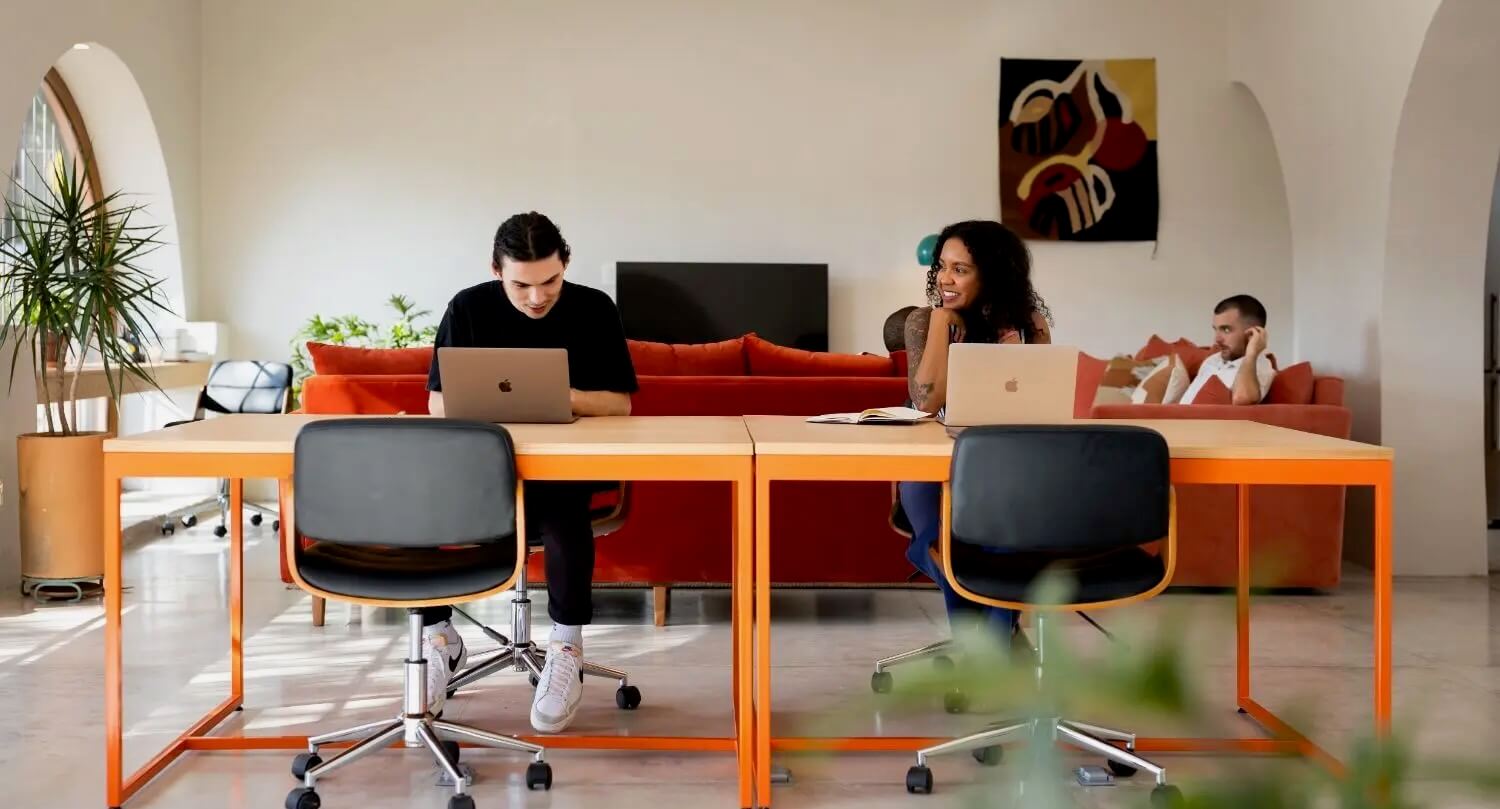
- Workstations: Ergonomic chairs, spacious desks, external computer monitors, integrated charging stations, and designated quiet zones.
- Connectivity: Enterprise-grade, redundant Wi-Fi networks capable of supporting concurrent video call traffic and high-volume data transfers.
- Private Quarters: Premium private bedrooms, with the majority featuring dedicated en-suite bathrooms. A limited inventory of budget-tier rooms utilizes single-partner shared bathrooms.
- Communal Assets: Commercial-grade chef kitchens equipped with professional appliances, daily housecleaning services, multi-zone living lounges, outdoor terraces, and, depending on the destination, private fitness facilities or swimming pools.
+-----------------------------------------------------------------------+
|                    OUTSITE VS. TRADITIONAL OPTIONS                    |
+-------------------------+--------------------+------------------------+
| FEATURE                 | OUTSITE            | AIRBNB + COWORKING     |
+-------------------------+--------------------+------------------------+
| Work Infrastructure     | Built-in/Ergonomic | Variable / Extra Cost  |
| Wi-Fi Assurance         | Enterprise-Grade   | Unverified / Consumer  |
| Housekeeping            | Daily (Shared)     | End-of-Stay Only       |
| Built-in Community      | Managed / Active   | None                   |
| Logistics Overhead      | Single Invoice     | Multiple Subscriptions |
+-------------------------+--------------------+------------------------+
3. Social Engineering and On-Site Governance
A distinct operational feature of the Outsite model is the integration of an on-site Community Manager at every location.
- Pre-Arrival Integration: Guests are integrated into a localized WhatsApp network prior to arrival, reducing transition friction.
- Curated Networking: Weekly programming includes structured family-style dinners, regional cultural excursions, tapas crawls, and wellness activities.
- Demographic Target: Guests skew noticeably older than traditional travel cohorts, primarily consisting of fully employed software engineers, consultants, creative directors, and founders in their late 20s, 30s, and 40s.
Field Analysis & Guest Experience: Case Study in Bordeaux
To evaluate the operational performance of Outsite’s infrastructure, field observations were conducted at the platform’s Bordeaux, France property.
+-----------------------------------------------------------------------+
|                   BORDEAUX PROPERTY FIELD ASSESSMENT                  |
+-------------------+---------------------------------------------------+
| Workspace Setup   | Integrated quiet area, ergonomic desks, monitors  |
| Room Comfort      | Dedicated work desk, premium bed, en-suite bath   |
| Facility Extras   | In-house fitness facility, commercial laundry     |
| Kitchen Quality   | Daily sanitation, professional appliances, free coffee|
| Community Profile | 2+ week average stay; tech/corporate professionals|
+-------------------+---------------------------------------------------+
Real Estate and Space Design
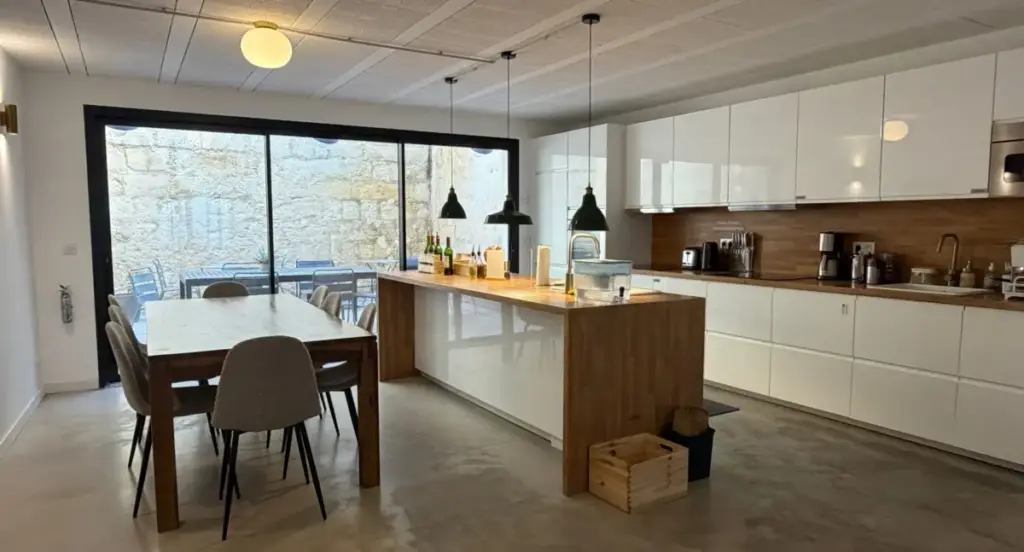
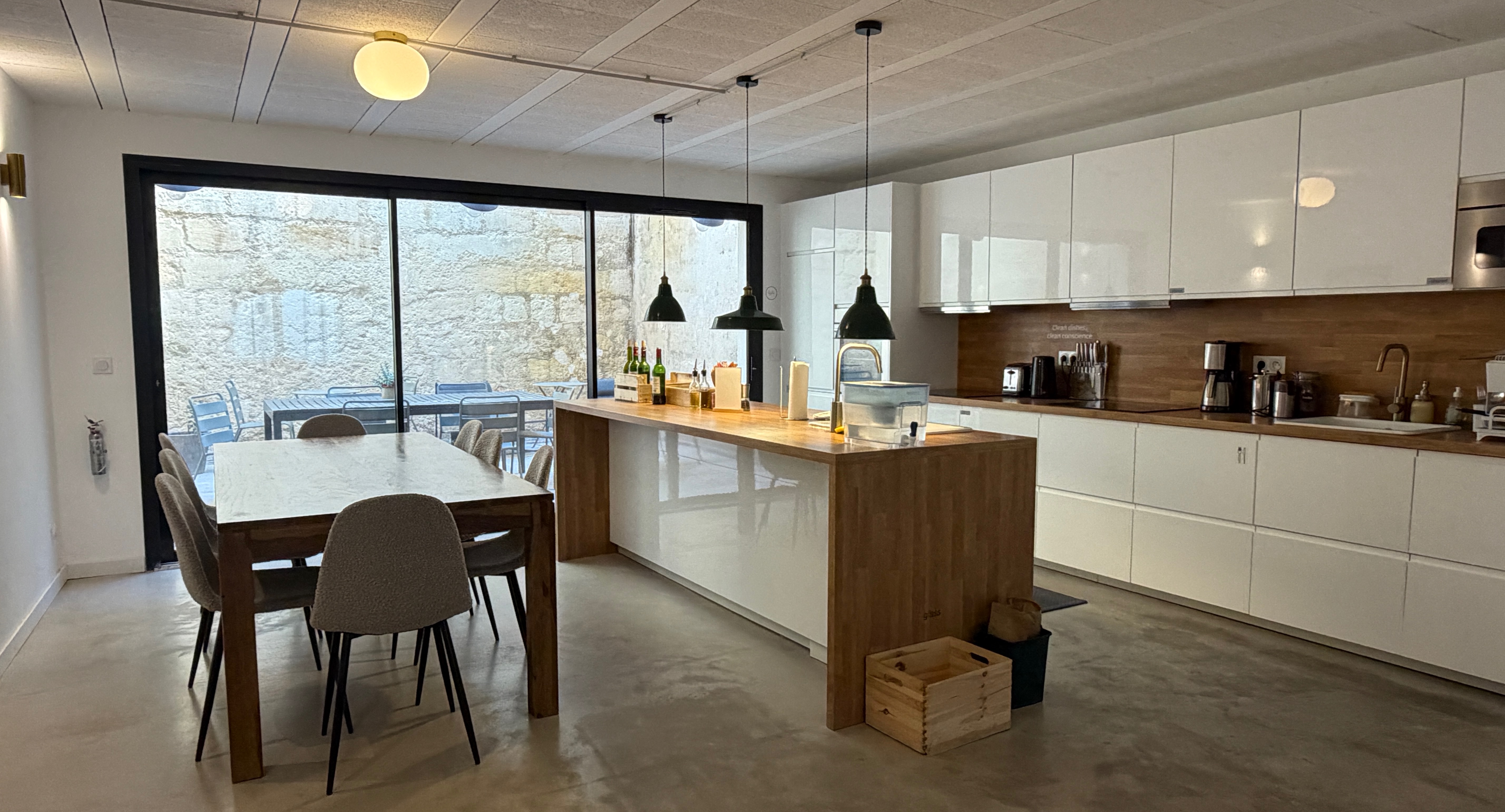
The Bordeaux facility highlights Outsite’s approach to architectural repurposing. Rather than offering uniform, corporate interiors, the space incorporates regional design, high ceilings, large windows for natural light, and curated local art.
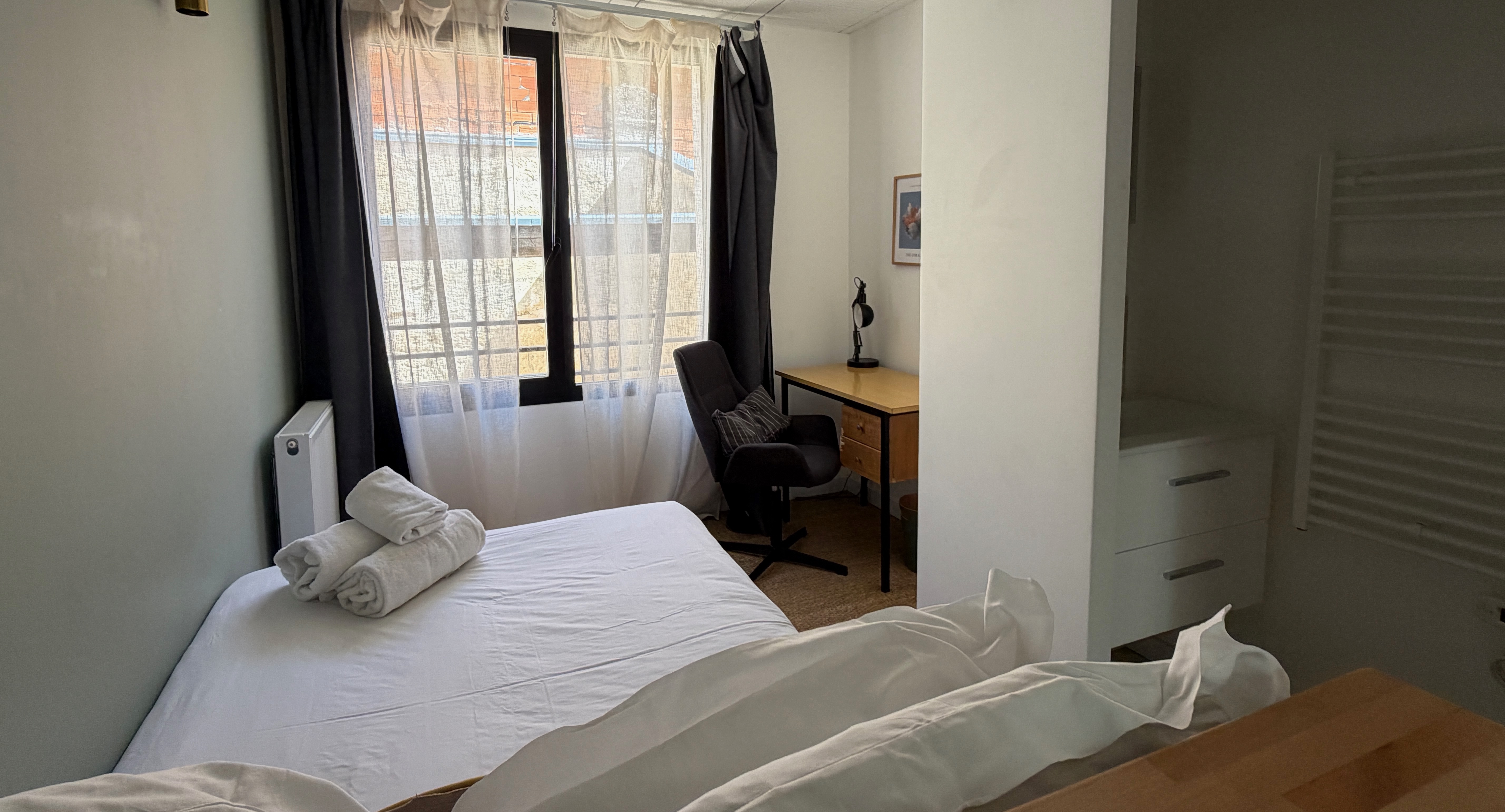
- Residential Units: Private suites are equipped with dedicated desks, ergonomic seating, sound isolation, and modern plumbing fixtures.
- Communal Kitchen & Dining: The shared kitchen facilities feature expansive prep surfaces, multiple cooking stations, specialized storage systems for individual guests, and complementary coffee and tea services. Professional cleaning teams sanitize communal spaces daily.
- On-Site Amenities: The property features private laundry facilities and an integrated workout space, allowing long-term residents to maintain routine fitness schedules without third-party gym memberships.
Workspace Functionality
The dedicated coworking space operates effectively as a silent, high-focus environment within the larger residence.
- High-speed, enterprise-grade connectivity ensures zero latency during global conference calls.
- Plug-and-play desktop monitors allow guests to replicate multi-screen office setups instantly upon arrival.
Professional Dynamics and Social Fabric
Observations at the Bordeaux location revealed a high degree of mutual social alignment among residents.
- Unlike short-term tourists or leisure backpackers, guests maintained structured 9-to-5 or cross-time-zone working schedules.
- The shared reality of balancing daily workload demands created an environment of respect for work hours alongside an appetite for evening social engagement.
- Long-term stays were dominant; the majority of occupants were booked for durations of two weeks to several months, fostering stable social connections rather than high-turnover transience.
Strategic Considerations, Limitations, and Friction Points
Despite its strengths, the Outsite model presents operational trade-offs and structural constraints that prospective users must consider.
+-----------------------------------------------------------------------+
|                  OPERATIONAL CHALLENGES & LIMITATIONS                 |
+-------------------+---------------------------------------------------+
| Premium Pricing   | Higher price point than budget hostelling         |
| Capacity Constraints| Major locations (Lisbon, Costa Rica) book months |
|                   | in advance                                        |
| Regulatory Friction| Municipal rules create minimum stays (e.g. 30 days|
|                   | in NYC)                                           |
| Pet Restrictions  | Strict no-pet policies at most locations due to   |
|                   | allergies                                         |
+-------------------+---------------------------------------------------+
1. Cost Considerations
Outsite does not compete on price with budget accommodations. Its pricing structure reflects a premium positioning that bundles private real estate, dedicated office infrastructure, and community curation. For budget-conscious travelers comfortable with low-cost dormitories, Outsite’s financial model will represent a significant cost step-up. However, for professionals evaluating the combined cost of a high-tier private Airbnb alongside a monthly pass to a local commercial coworking space, Outsite remains competitive and frequently offers cost savings.
2. Inventory and Lead-Time Bottlenecks
Due to fixed room inventory and high subscriber retention, primary locations—such as Lisbon, Portugal, or Santa Teresa, Costa Rica—frequently reach full occupancy months in advance during peak seasons. Spontaneous travel booking can be challenging within top-tier locations, requiring members to plan schedules far in advance.
3. Regulatory and Operational Constraints
- Minimum Stay Requirements: While most properties allow short stays starting at 2 nights, regional real estate laws impose strict booking floors. In dense urban markets like New York City, local short-term rental regulations require minimum stays of 30 days.
- Pet Policies: To protect guests with severe allergies and maintain residential standards across communal living zones, Outsite maintains strict no-pet rules across the majority of its portfolio.
Frequently Asked Questions
Is membership mandatory to book a room at an Outsite property?
No. Non-members can book stays directly through Outsite’s digital platform at standard rates. However, for stays exceeding several days, purchasing an annual membership ($199) typically yields net cost savings via member-only nightly discounts and access to extended-stay pricing.
What is the age demographic of the typical guest?
While any individual aged 18 or older (21+ at select destinations) may book a stay, the guest cohort consists overwhelmingly of established professionals in their late 20s, 30s, and 40s. The overall atmosphere skews professional, quiet, and work-focused.
What are the standard minimum stay requirements?
For the majority of rural, beach, and international properties, the minimum booking duration is 2 nights. In major metropolitan markets subject to strict local housing rules—such as New York—minimum stay mandates can extend up to 30 nights.
Are pets allowed in communal coliving spaces?
In general, no. To preserve clean, hypo-allergenic environment in communal kitchens, lounges, and indoor workspaces, pets are prohibited from most Outsite locations.
Future Outlook & Industry Trajectory
The rise of platforms like Outsite reflects a permanent shift in urban real estate and workplace dynamics. As major corporations transition from rigid, centralized headquarters toward distributed, remote workforce structures, demand for flexible, high-quality, long-term accommodations will continue to grow.
+-----------------------------------------------------------------------+
|                    FUTURE TRENDS IN COLIVING REAL ESTATE              |
+-----------------------------------------------------------------------+
| 1. Institutionalization of Hybrid Real Estate Assets                  |
| 2. Corporate Subscriptions for Nomadic Executive Teams               |
| 3. Deep Integration with Regional Urban Planning & Housing Policy     |
| 4. Expansion of Niche Micro-Hubs in Tier-2 and Rural Destinations     |
+-----------------------------------------------------------------------+
Moving forward, the primary operational challenge for coliving platforms will lie in managing international expansion while maintaining property quality, internet reliability, and community standards. Furthermore, platforms must navigate evolving municipal short-term rental regulations worldwide.
For location-independent professionals, Outsite delivers an effective, turn-key solution to the modern nomadic challenge. By offering an integrated ecosystem that protects professional productivity while combating geographic isolation, Outsite demonstrates that remote work does not require sacrificing career growth, residential comfort, or meaningful community connection.