









Executive Overview
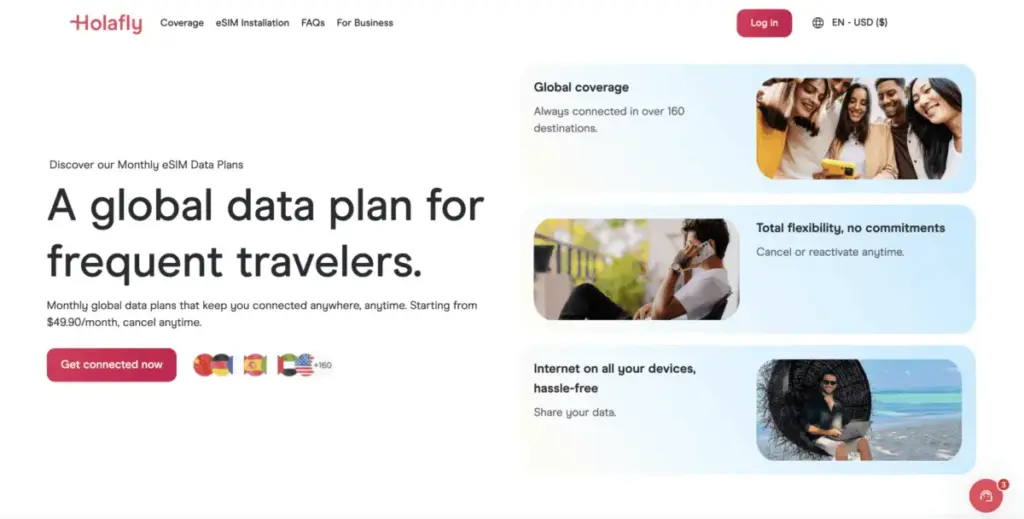
The international telecommunications landscape is undergoing a structural shift as software-defined mobile connectivity supersedes traditional roaming infrastructure. In a strategic bid to capture the rapidly growing market of remote workers, long-term expatriates, and frequent international travelers, eSIM provider Holafly has officially rolled out "Holafly Plans"—a recurring global subscription service operating across more than 160 destinations on a single, permanent eSIM installation.
Historically, mobile users traveling internationally faced a stark binary choice: pay exorbitant daily roaming fees to domestic telecom providers or endure the friction of purchasing physical SIM cards and localized pay-as-you-go data passes at every border crossing. While early virtual SIM (eSIM) solutions mitigated physical installation hurdles, they remained largely transactional, requiring users to repeatedly purchase, download, and configure distinct digital profiles for individual countries or regions.
Holafly Plans directly targets this operational inefficiency by shifting the travel data model from transactional purchasing to an ongoing subscription architecture. Offered in both "Light" and "Unlimited" tiers, the service combines broad global coverage, continuous software connectivity, and integrated virtual telephone numbers starting at approximately $55 USD per month under an annual agreement. By pairing unthrottled global data access with a lifetime baseline data safety net, the initiative marks a direct challenge to major telecommunications carriers, whose legacy international add-on passes frequently cost consumers upwards of $100 to $300 per month.
Detailed Chronology: The Evolution of Global Mobile Connectivity
To understand the strategic significance of subscription-based global eSIMs, one must examine the multi-stage evolution of mobile data accessibility over the past two decades.
+-----------------------------------------------------------------------------------+
|                            EVOLUTION OF TRAVEL DATA                               |
+-----------------------------------------------------------------------------------+
|  ERA 1: Physical Carrier Roaming & Local Kiosks (2000s–2015)                       |
|  • High per-megabyte overage fees; reliance on physical SIM swaps at borders.     |
+-----------------------------------------------------------------------------------+
                                         │
                                         ▼
+-----------------------------------------------------------------------------------+
|  ERA 2: Transactional Single-Trip eSIMs (2018–2023)                               |
|  • Software-based profiles via QR code; pay-per-destination model.               |
+-----------------------------------------------------------------------------------+
                                         │
                                         ▼
+-----------------------------------------------------------------------------------+
|  ERA 3: Subscription Travel Telecom / Holafly Plans (2024–Present)                |
|  • Single profile cross-border auto-reconnect; flat monthly global subscription.  |
+-----------------------------------------------------------------------------------+
Era 1: The Monopolistic Carrier Roaming Era (2000s–2015)
During the early years of mobile data adoption, international roaming was managed almost exclusively by home network operators through wholesale inter-carrier roaming agreements. Due to opaque pricing structures and a lack of market competition, consumers frequently suffered extreme "bill shock" upon returning from abroad. Alternative solutions required travelers to locate foreign telecom kiosks, present physical passports for regulatory verification, and swap plastic nano-SIM cards—a process that temporarily disabled their primary phone numbers and exposed them to physical card loss or damage.
Era 2: The First-Generation eSIM Expansion (2018–2023)
The adoption of GSMA-compliant Embedded Universal Integrated Circuit Cards (eUICC) built directly into modern smartphone architecture fundamentally altered distribution models. Digital platforms emerged, allowing users to scan a QR code or download an app to instantly provision local mobile data. However, this first phase of eSIM adoption remained fundamentally fragmented. Consumers traveling through multiple countries—such as digital nomads traversing Southeast Asia or Europe—were forced to manage dozens of stored digital SIM profiles, repeatedly input payment information, and endure service drop-offs at international borders while manually reconfiguring network settings.

Era 3: The Shift Toward Continuous Subscription Infrastructure (Present)
The launch of unified global subscription tiers represents the third evolutionary wave in travel telecom. Rather than treating each cross-border leg as a discrete retail transaction, platforms like Holafly are leveraging dynamic multi-IMSI (International Mobile Subscriber Identity) switching backends. Under the new Holafly Plans framework, a user installs a single digital profile once. As the device transitions between foreign cellular networks across 160+ nations, authentication occurs automatically in the background without requiring user intervention, new profile provisioning, or additional hardware interactions.
Supporting Context & Metrics: Structural & Cost Comparison
The commercial viability of subscription eSIM models relies on cost efficiency, data throughput capabilities, and operational convenience relative to legacy solutions. Below is an analytical breakdown comparing Holafly Plans against standard carrier roaming packages and local pay-as-you-go options.
Comprehensive Market Comparison
| Metric / Feature | Holafly Plans (Unlimited Tier) | Major US Carrier Roaming Pass | Traditional Local SIM / Single eSIM |
|---|---|---|---|
| Average Monthly Cost | ~$55–$65 USD / month (varies by billing cadence) | $100–$300 USD / month ($10/day passes) | $60–$120 USD / month (varies by country) |
| Data Bandwidth | Unlimited unthrottled high-speed data | Capped daily (e.g., 2GB/day), followed by 2G/3G throttling | Capped packages (typically 5GB–20GB) |
| Hotspot / Tethering | Included (Unlimited multi-device support) | Frequently restricted, capped, or blocked | Varies widely by carrier and local law |
| Setup Friction | Zero ongoing effort. Single setup for 160+ countries. | Low initial setup; high financial risk. | High effort. Repeated profile provisioning at borders. |
| Virtual Identity | Local phone number assigned (US, UK, or CA) for SMS | Retains home phone number | Assigned temporary local physical number |
| Contract Terms | No lock-in contract; monthly, quarterly, or annual plans | Tied to primary carrier account | Pay-as-you-go per destination |
Tiered Product Architecture Analysis
Holafly has structured its global subscription model into two primary product tiers to cater to distinct user profiles:
                  +-----------------------------------+
                  |       HOLAFLY PLANS TIERS         |
                  +-----------------------------------+
                                    |
          +-------------------------+-------------------------+
          |                                                   |
          ▼                                                   ▼
+-------------------+                               +-------------------+
|    LIGHT TIER     |                               |  UNLIMITED TIER   |
+-------------------+                               +-------------------+
| • 25GB Data/Month |                               | • Unlimited Data  |
| • Mobile Hotspot  |                               | • Uncapped Hotspot|
| • 160+ Countries  |                               | • US/UK/CA Number |
| • "Always On" 1GB |                               | • "Always On" 1GB |
+-------------------+ +-------------------+-
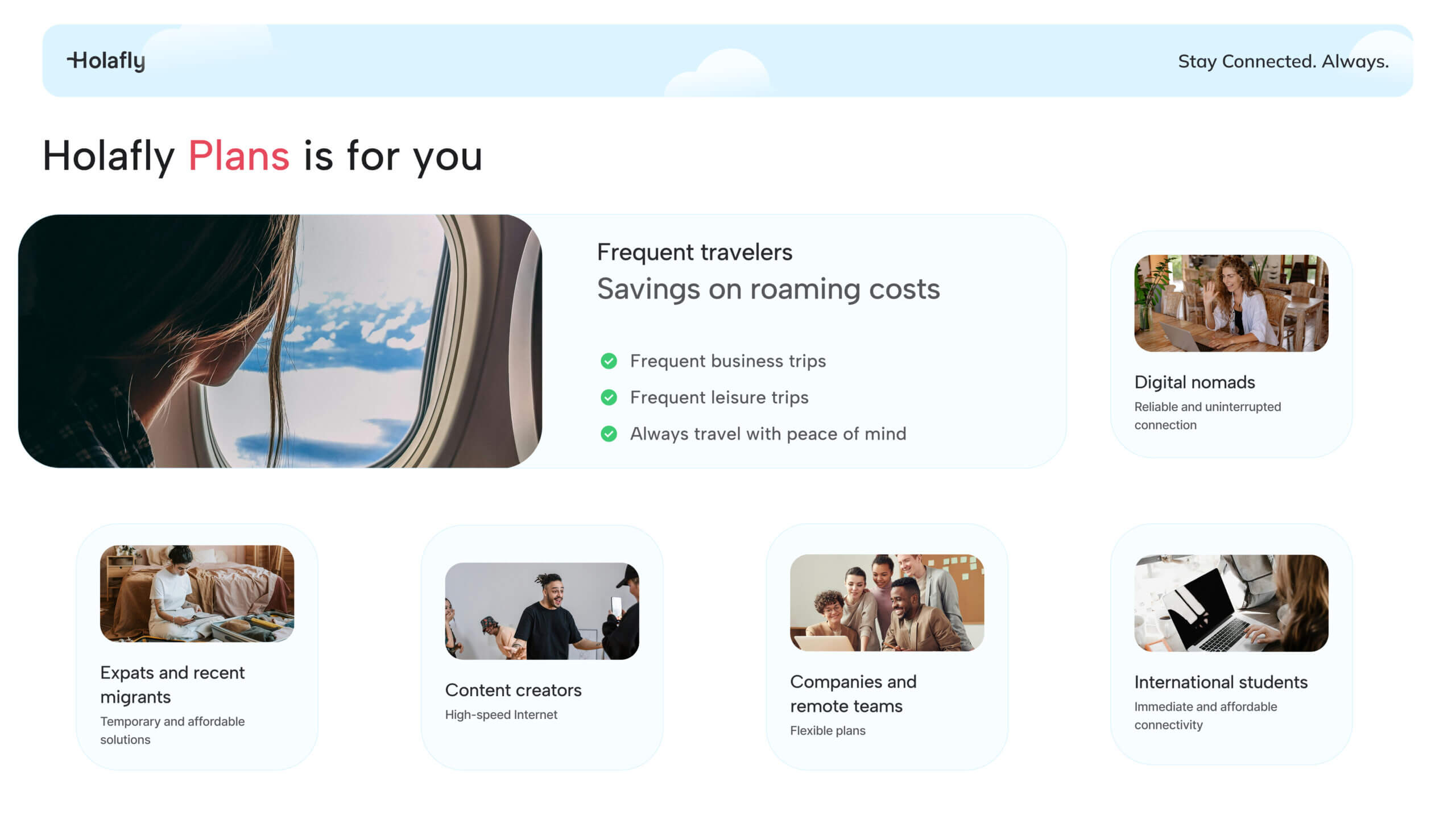
The Unlimited Plan: Designed for high-bandwidth remote workers, digital nomads, media creators, and corporate travelers who depend on cloud infrastructure, video conferencing, and heavy media consumption.
- Data Allocation: Uncapped high-speed global data.
- Tethering: Unlimited mobile hotspot functionality across multiple peripheral devices (laptops, tablets).
- Inbound Messaging: Includes an inbound virtual phone number originating from the United States, United Kingdom, or Canada, allowing users to receive essential two-factor authentication (2FA) codes and transactional SMS messages globally.
- Pricing Efficiency: Annual commitments bring baseline costs down to $55 USD per month, yielding a savings of approximately 15% compared to standard month-to-month pricing (quarterly plans yield roughly a 10% discount).
-
The Light Plan: Tailored for budget-conscious travelers, remote workers with modest bandwidth demands, and casual cross-border commuters.
- Data Allocation: 25GB of high-speed data per billing cycle.
- Tethering: Integrated mobile hotspot tethering enabled up to the 25GB threshold.
- Destinations: Identical 160+ country global footprint as the Unlimited Tier.
-
The "Always On" Safety Feature:
A distinct structural element of Holafly Plans is the inclusion of an automated fallback protocol called "Always On." Under this framework, active subscribers automatically receive 1GB of lifetime monthly backup data across 150+ countries. Uniquely, this fallback data remains active even if a user permanently cancels their underlying paid subscription, ensuring travelers retain emergency network access for navigation, messaging, or ridesharing upon arriving in foreign jurisdictions.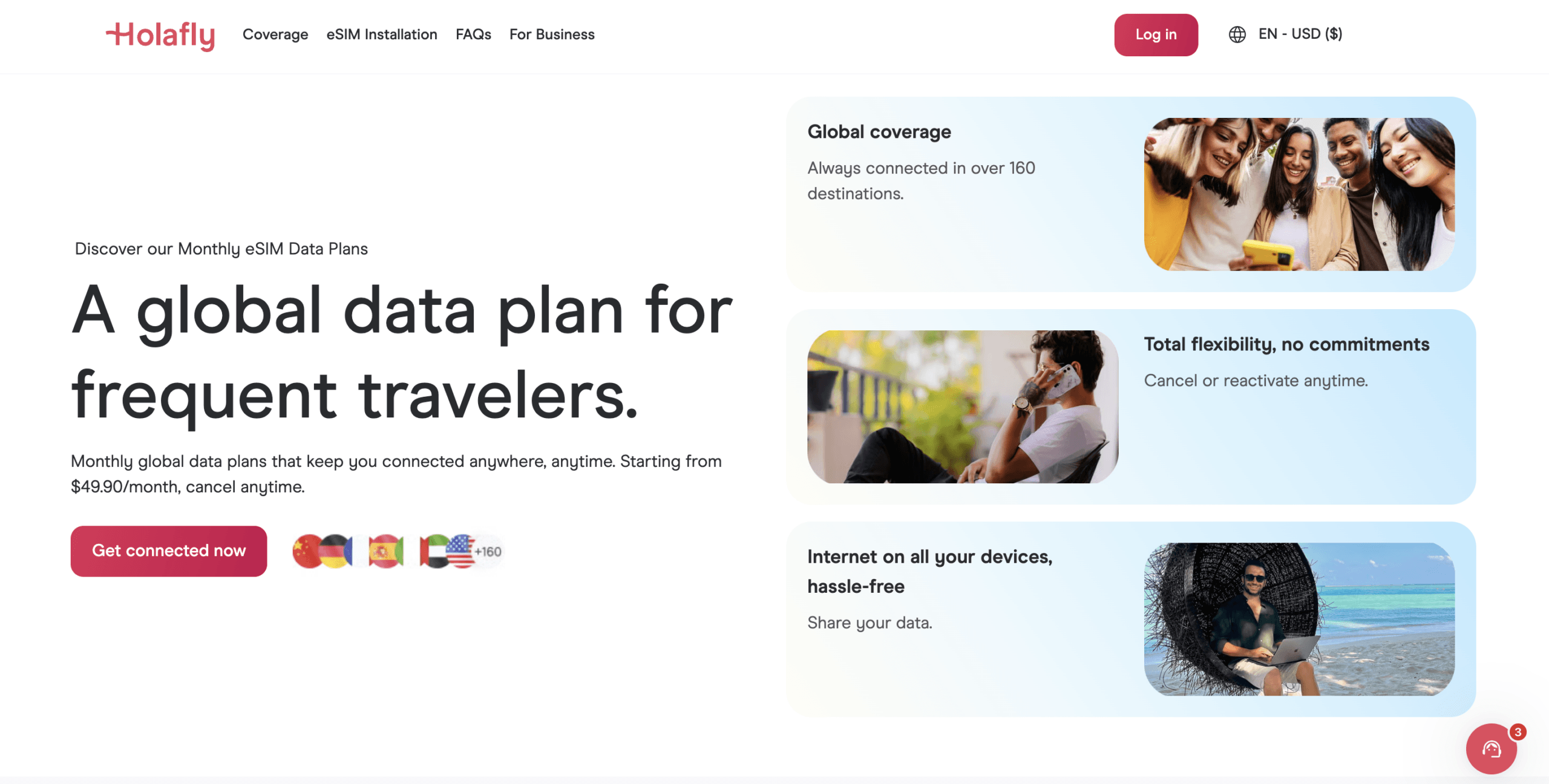
Official Statements & Industry Perspectives
Industry analysts and veteran travel journalists highlight that the shift toward global telecom subscriptions addresses systemic pain points long ignored by legacy mobile operators.
Matt Kepnes, founder of Nomadic Matt and author of the New York Times best-seller How to Travel the World on $75 a Day, has tracked international travel logistics for nearly two decades. Evaluating the transition from single-trip travel products to global subscriptions, Kepnes noted:
"There are a lot of eSIM companies in the world, and they generally operate on the same pay-as-you-go mechanics. But for anyone who travels continuously, managing individual country profiles is fundamentally inefficient. A standing global subscription changes the calculus for digital nomads. Instead of buying a new eSIM every time an itinerary shifts, you have one connection and one predictable bill that follows you across borders.
When you compare a flat global subscription rate of around $55 a month to major US legacy carriers—where daily roaming passes quickly add up to over $100 or $300 a month with aggressive data caps—the cost savings and reduction in operational hassle are substantial."
Kepnes further emphasized that while standard single-country eSIMs remain the most economical choice for short, isolated vacations (such as a two-week stay in a single European country), the long-term subscription model is optimized for cross-border mobility.
From a risk management perspective, market experts point to Holafly’s six-month refund policy on Plans as an unusually aggressive consumer guarantee in an industry historically known for non-refundable digital service terms and complex cancellation hurdles.
Future Outlook: Implications for Telecom & Borderless Work
The rollout of subscription models like Holafly Plans signals broader macroeconomic and technological shifts across the global communications sector.
+-----------------------------------------------------------------------------------+
|                           FUTURE TELECOM IMPLICATIONS                             |
+-----------------------------------------------------------------------------------+
| 1. Legacy Carrier Revenue Compression                                             |
|    • High-margin international roaming revenues threatened by over-the-top eSIMs. |
|                                                                                   |
| 2. Expansion of the Borderless Remote Workforce                                   |
|    • Guaranteed multi-country connectivity accelerates location-independent work. |
|                                                                                   |
| 3. Market Consolidation & Competitive Response                                   |
|    • Traditional telecom operators forced to restructure daily pass models.      |
+-----------------------------------------------------------------------------------+
1. Pressure on Legacy Carrier Roaming Revenue
For over two decades, major telecommunications providers have relied heavily on international roaming surcharges as a high-margin revenue stream. As consumer awareness surrounding eSIM software increases and device manufacturers phase out physical SIM trays entirely (a trend initiated by Apple’s US iPhone 14 releases), legacy carriers will face increasing pressure to restructure their daily international add-on rates or risk losing high-value business travelers to independent global eSIM platforms.
2. Infrastructure for the Distributed Workforce
The expansion of remote work policies has permanently decoupled employment from fixed geographic locations. Distributed workers rely heavily on redundant internet access, secure tethering, and reliable cross-border data continuity. By offering uncapped data alongside inbound virtual SMS capabilities, subscription eSIM offerings effectively function as a decentralized global utility layer for digital nomads and international business personnel.
3. Key Considerations for Consumers
While subscription models represent a major step forward in mobile connectivity, consumers should evaluate their travel patterns carefully before choosing a service:
- Short-Term Vacationers: Individuals traveling once or twice a year for brief periods remain better served by traditional, pay-per-destination eSIMs or localized pay-as-you-go packages.
- Long-Term & Multi-Country Travelers: Digital nomads, frequent international commuters, and long-term expedition travelers stand to gain significant financial savings, eliminate border-activation friction, and secure continuous baseline connectivity through multi-destination global subscriptions.
As software-defined connectivity continues to evolve, the distinction between foreign roaming and domestic data access will continue to blur, permanently reshaping how people stay connected across international borders.