The search bar is slowly disappearing, replaced by conversational interfaces, predictive algorithms, and digital assistants. As artificial intelligence increasingly steps into the role of the ultimate travel curator, deciding which hotels to recommend and which to ignore, the world’s largest hospitality brands are facing a fundamental question: How do you convince an algorithm that your brand deserves the booking?
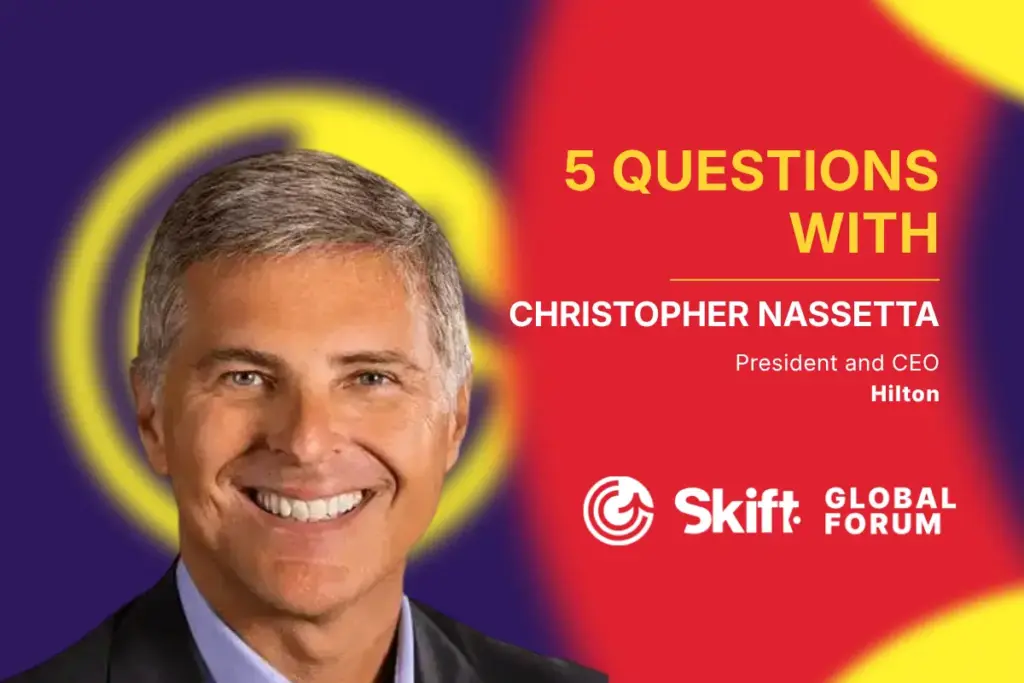
For Hilton, a company that has spent more than a century building a portfolio of 28 brands and a massive global footprint, the answer does not lie in trying to trick the technology. Instead, Christopher Nassetta, President and CEO of Hilton, argues that the rise of artificial intelligence has actually reinforced the industry’s most traditional fundamentals. Even as the gatekeeper changes, the core inputs that earn a recommendation—reliability, service culture, and long-term guest relationships—remain entirely unchanged.
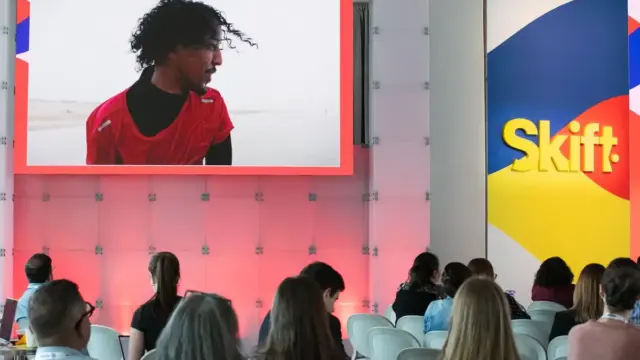
Ahead of his upcoming appearance at the Skift Global Forum in New York City, scheduled for September 22–24, 2026, Nassetta laid out a comprehensive vision of how Hilton is adapting to this technological shift. His perspective offers a masterclass in balancing cutting-edge digital infrastructure with the deeply human element of hospitality.
Algorithmic Curation and the New Search Gatekeepers
For decades, hotel search was a highly active, manual process. Travelers browsed multiple booking sites, compared prices across tabs, and scrolled through dozens of user reviews before making a decision. Today, generative AI and large language models are consolidating that journey. When a traveler asks an AI assistant to "find a family-friendly hotel in Chicago near millennium park with great breakfast options," the algorithm does not return a list of blue links; it offers a single, curated recommendation.
This shift has forced travel brands to reconsider how they position themselves within the digital ecosystem. When asked how Hilton is adapting to earn a spot in these algorithmic recommendations, Nassetta emphasized that AI models do not operate in a vacuum. They are trained on vast amounts of public and proprietary data, meaning that real-world performance directly dictates digital visibility.
"Ultimately, earning a place in an AI recommendation comes down to the same thing that has always earned guest loyalty: being relevant to the traveler and delivering the industry’s most reliable and friendly stays," Nassetta said. "When we deliver on that promise, it turns into positive reviews that reverberate across the network, including into the AI models that increasingly shape how people search."
In essence, the best way to optimize for AI is to optimize for the human guest. An algorithm trained to find the "best" hotel will inevitably look for patterns of high customer satisfaction, consistent service delivery, and positive sentiment.
However, Hilton is not simply passive in this transition. The company is actively investing in its own proprietary AI initiatives to capture travelers earlier in the planning phase. One of the cornerstone developments is the Hilton AI Planner, a digital tool designed to synthesize Hilton’s vast repository of property content with hyper-local destination insights. By offering travelers personalized, conversational itinerary planning directly on its own platforms, Hilton aims to keep guests within its ecosystem from the moment of inspiration to the final checkout.
According to Nassetta, the true strength of Hilton’s digital strategy is not found in any individual feature, but rather in the unified foundation supporting it. "Hilton’s digital advantage is not any single tool or technology," he explained. "It is the result of a long-term strategy to build an industry-leading proprietary technology platform that allows us to innovate faster, scale more effectively, and deliver greater value across a rapidly growing portfolio of hotels."
From Transactions to Lifetime Relationships
As the digital landscape becomes more fragmented, the nature of customer loyalty is undergoing a parallel evolution. Historically, hospitality loyalty programs were highly transactional—guests accumulated points like currency and redeemed them for free nights. Today, that dynamic is shifting toward a more holistic, lifetime relationship.
Nassetta notes that the traditional model of earning a guest’s business "one stay at a time" is giving way to a more integrated relationship. The goal now is to become the default choice for every travel occasion across a consumer’s entire life.
"The relationship has moved from being largely transactional to an intentional, long-term effort to earn and maintain a guest’s loyalty across a lifetime of travel," Nassetta said. "A guest used to choose us one stay at a time. Now, thanks to the strength of our global network and loyalty platform, customers are choosing Hilton for all their travel needs across family vacations, business trips, milestone celebrations, and more."
Achieving this level of brand stickiness requires an expansive portfolio that can serve a guest at different price points and life stages, but it also requires flawless execution at the property level. For Nassetta, the operational excellence required to maintain this loyalty is directly tied to Hilton’s corporate culture.
There is a direct line, he argues, between how employees are treated and how guests experience the brand. "Maintaining that relationship seems simple—it’s all about delivering the most reliable, friendly stays—but that takes a lot of work to perfect, and it starts with our culture," Nassetta said. "When our team members feel like they belong at Hilton, like they’re contributing to something bigger than themselves, they create better guest experiences, which in turn builds loyalty. So in our view, being the best place to work enables us to be the best place to stay."
This philosophy positions internal culture not merely as a human resources metric, but as a critical driver of the digital feedback loop. Happy employees deliver better service, which leads to better reviews, which in turn feeds the AI algorithms that drive future bookings.
Beyond Luxury: The Surprising Resilience of SMB Travel
While corporate travel discussions over the past few years have often focused on the slow return of large-scale enterprise accounts or the explosive post-pandemic demand for high-end luxury leisure travel, Hilton’s internal data points to a different, quieter driver of growth: small and medium-sized businesses (SMBs).
Nassetta revealed that midweek business travel from SMBs has shown remarkable strength, particularly benefiting the company’s midscale and upper-midscale properties. This segment of the market represents a highly resilient and distributed base of demand that often flies under the radar of broader industry analysis.
"One behavior shift that’s been particularly interesting is the strength we’re seeing in midweek business travel, especially from small and medium-sized businesses," Nassetta shared. "For the last few years, much of the conversation has centered on the resilience of luxury travel, but what we’re seeing now is demand broadening across all segments of the market, with SMB travelers increasingly getting back on the road and driving growth in our midscale and upper midscale hotels."
This shift is highly significant for the broader health of the hospitality ecosystem. While luxury travel is subject to discretionary spending trends and massive corporate travel accounts are often bound by strict corporate belt-tightening or sustainability mandates, SMB travelers represent the day-to-day engine of the real economy. They are sales representatives, regional managers, and independent contractors who need to be on the road to conduct business.
"What makes that noteworthy is that it points to a healthier and more balanced travel environment," Nassetta added. "It’s no longer just the top end of the market driving growth. We’re seeing a much wider range of businesses traveling again, which speaks to the overall strength of demand and gives us confidence in its durability."
Curating Choice Across a 28-Brand Ecosystem
The modern traveler’s journey is longer, more complicated, and highly fragmented. Consumers research on social media, consult AI planners, check online travel agencies, and seek recommendations from friends. At the same time, traveler preferences have become highly situational; a business traveler who needs a functional, efficient room on a Tuesday may want a highly experiential lifestyle hotel for a weekend getaway with family.
Rather than trying to simplify this complexity, Hilton has embraced it by building a diverse portfolio that currently spans 28 distinct brands. The objective is to ensure that no matter the destination, price point, or specific purpose of a trip, there is a Hilton property designed to match that exact need.
"Our thinking hasn’t changed as much as it’s sharpened," Nassetta said of the changing traveler journey. "Travel is more fragmented, people are making choices in different ways, and they want options that fit the specific purpose of their trip. That’s exactly why we’ve built a portfolio of 28 brands—so we can meet guests where they are, across more destinations, more price points, and more travel occasions."
The challenge of managing a 28-brand ecosystem is avoiding brand dilution and consumer confusion. To combat this, Hilton relies on its Hilton Honors loyalty program as the unifying tissue. By ensuring that benefits, point accumulation, and digital conveniences—such as digital key check-in—remain seamless across every brand from Hampton to Waldorf Astoria, Hilton makes it easy for consumers to stay within its network. The loyalty program acts as a centralized relationship manager, allowing guests the freedom to explore different styles of travel while maintaining a single, trusted connection with the parent company.
Hospitality as a Force for Good: The Underrated Impact of Human Connection
In an industry increasingly dominated by discussions of operating margins, digital pipelines, and technological disruption, Nassetta believes that the travel sector often loses sight of its most fundamental purpose: fostering human connection and global empathy.
Tracing his philosophy back to the company’s roots, Nassetta referenced the founding vision of Conrad Hilton, who established the company with the belief that hospitality could actively contribute to world peace by bringing diverse populations together.
"We don’t talk nearly enough about the role travel plays in bringing people together," Nassetta said. "Conrad Hilton believed hospitality could be a force for good in the world, and I think that idea is just as relevant today as it was more than a century ago when he founded the company. When people travel, they experience new places, cultures, and perspectives. Those experiences build understanding in ways few other industries can."
This macro-level connection is put to the test during major global events. Nassetta highlighted the recent World Cup, which saw a massive influx of international travelers sharing spaces and experiences, and looked forward to the upcoming 2028 Olympic Games in Los Angeles as another pivotal moment for the industry.
"Travelers from around the world stayed in our hotels, connected with our Team Members, and experienced communities that may have looked very different from their own," Nassetta reflected on recent global gatherings. "Those interactions might seem small in the moment, but they matter. A conversation in a hotel lobby, a welcome from a Team Member, a shared experience between people from different backgrounds—that’s hospitality at its best. And in a world that can often feel divided, creating those connections may be one of the most important things our industry does."
Looking Ahead to the Skift Global Forum
As travel executives prepare to gather in New York City for the Skift Global Forum from September 22–24, 2026, the tension between rapid technological advancement and fundamental human service will undoubtedly take center stage.
Nassetta’s insights highlight a strategic roadmap for the future: embracing technology to streamline search, booking, and personalization, while doubling down on workplace culture and consistent service delivery to ensure that the real-world product remains worthy of recommendation.
At the upcoming forum, Christopher Nassetta will share the stage with other prominent industry leaders, including Accor’s Sébastien Bazin, Uber’s Dara Khosrowshahi, Wyndham’s Geoff Ballotti, and Carnival Cruise Line’s Christine Duffy. Together, these executives will debate the future of global travel, the ongoing integration of AI, and how to maintain operational resilience in a rapidly changing global economy.