Somewhere around the second night of a family villa holiday, an inevitable domestic ritual takes place. Plates are left lingering on a rustic outdoor table, children have vanished into the shadowy corners of an unfamiliar garden to seek out the best hiding spots, and the grandparents have seamlessly claimed the two most comfortable armchairs on the terrace without anyone quite noticing the transition. For a fleeting hour, the entire excursion feels precisely like the triumphant, cinematic good idea everyone envisioned back in January when the deposits were paid.
Then, inevitably, Day Four arrives.
Fatigue settles into the group architecture like a slow-acting damp. One family member is exhausted; another desperately wanted to explore the historic old town rather than endure yet another consecutive afternoon baking beside the swimming pool. The teenager has not voluntarily crossed the threshold of their bedroom since breakfast. And whoever bore the psychological and logistical burden of organising the entire trip—because it is invariably a single individual who shoulders this invisible labor—is quietly staring into their morning espresso, wondering whether a multi-generational holiday spanning three distinct age brackets was actually the masterstroke it felt like during the dead of winter.
According to luxury hospitality logistics experts, this predictable trajectory is rarely a reflection of personal incompatibility or a failure of the group dynamic. Rather, it is a structural failure of planning. Multi-generational villa holidays can yield some of the most profoundly rewarding, memory-cementing experiences a family will ever share, but only if the property and the accompanying itinerary are meticulously engineered around the messy, multifaceted reality of who is actually arriving, rather than the idealized fantasy of who the family wishes they were.
Detailed Chronology: The Lifecycle of a Family Villa Escape
Understanding how a large-scale family holiday deteriorates or triumphs requires charting its psychological timeline from inception to departure.
Phase 1: The Conception and the Fantasy (January–March)
The planning cycle typically begins with high-altitude optimism. A parent or grandparent scrolls through glossy digital brochures, mesmerized by drone photography of infinity pools cascading toward cerulean coastlines. During this window, discussions focus entirely on aesthetic grandeur: square footage, architectural design, proximity to the beach, and maximum sleeping capacities. Crucial, uncomfortable questions—such as financial contributions, sleep schedules, and architectural privacy—are routinely deferred under the comforting assumption that "it will all work out once we get there."
Phase 2: The Honeymoon Period (Days 1–3)
Arrival day is characterized by high energy, unpacking, and the joyful chaos of claiming rooms. By the second night, the group experiences its first major collective high. Dinner is expansive, the wine flows, and the novelty of being together in a magnificent private estate masks underlying structural compromises. Everyone believes the holiday is an unmitigated success.
Phase 3: The Friction Point (Days 4–6)
By the fourth morning, the honeymoon veneer wears thin. Biological clocks clash: toddlers rise at dawn, demanding stimulation, while teenagers sleep until noon, throwing off communal meal schedules. Grandparents find themselves trapped in high-traffic zones without adequate quiet spaces. The designated organizer is now managing a de facto hotel, fielding requests for grocery runs, medication locations, and itinerary adjustments. Silent resentments take root around the kitchen island.
Phase 4: Resolution and Reflection (The Final Days and Beyond)
Well-designed trips pivot successfully past this friction point by utilizing pre-planned buffers—such as private catering, built-in days of separation, and zoned property layouts. Poorly planned trips end in polite exhaustion. Yet, as hospitality analysts note, the difference between these two outcomes comes down entirely to strategic foresight applied months before departure.
Supporting Context & Metrics: Why Hotels Quietly Fall Apart for Big Families
When attempting to house an extended family—ranging from eight-year-olds to septuagenarians—under one roof, standard luxury hotels present a cascade of invisible logistical hurdles.
Putting three generations into a luxury hotel forces the group to spend up to 50 percent of their waking hours coordinating mechanics rather than enjoying each other’s company. Breakfast occurs at a rigid, inflexible hour that accommodates neither the early-rising toddler nor the exhausted teenager. Rooms are inevitably scattered across different floors or disparate wings, shattering the cohesive family unit. The swimming pool, spa, and dining facilities belong equally to hundreds of other transient guests, stripping the holiday of intimacy.
[Hotel Environment]
   ├── Rigid schedules (Fixed breakfast times)
   ├── Dispersed rooms (Multiple floors/wings)
   ├── Shared public amenities (Loss of privacy)
   └── Compounding daily friction ──> Exhaustion by Day 3

[Villar Architecture]
   ├── Fluid timelines (Autonomous morning routines)
   ├── Unified yet zoned living spaces
   ├── Exclusive amenity access (Private pool/grounds)
   └── Reduced friction ──> Sustained family harmony
Conversely, a high-end private villa removes these friction points in a single operational stroke. Breakfast happens organically whenever the first person wakes. Nobody negotiates elevator etiquette or sun lounger reservations with strangers. The pool and grounds belong exclusively to the family circle. While these details may sound minor on paper, anyone who has experienced both versions of group travel understands that the cumulative weight of hotel friction can quietly poison an expensive holiday.
Architectural Psychology: Start with Sleeping Arrangements, Not the Pool
When browsing luxury property portfolios, the primary error travelers make is falling in love with a panoramic photograph of a swimming pool and attempting to work backward from there. Industry veterans advise reversing this methodology entirely. The search must begin with a rigorous analysis of sleeping arrangements and spatial zoning, as this dictates whether the property feels like a generous sanctuary or a pressure cooker.
Generational Zoning Requirements
Grandparents: Require ground-floor accessibility or elevator access, situated safely away from high-energy zones like children’s game rooms or pool terraces. While they adore their grandchildren, uninterrupted sleep remains a non-negotiable component of their wellbeing; 6:00 AM wake-up calls lose their charm after the third consecutive day.
Parents with Young Children: Require physical proximity to their offspring, yet demand sufficient acoustic and spatial separation to ensure that putting a toddler to sleep at 7:30 PM does not necessitate an evening spent whispering in the dark.
Teenagers and Young Adults: Require autonomous space above almost all else. A villa featuring a converted coach house, a separate guest wing, or lower-level suites with private outdoor access will eliminate more domestic arguments than any organized excursion.
Before examining a single property listing, families must hold a frank summit to address spatial requirements: Who needs to be near whom? Who requires absolute acoustic insulation? And who will grow quietly resentful if forced to share a single bathroom with a pre-teen for a week?
The Staff Question Nobody Asks Out Loud
There is a recurring archetype in family travel: the well-meaning, easygoing relative who vows they do not mind cooking for twelve people every evening, only to find themselves standing over a hot stove while everyone else relaxes on the terrace, nursing a silent, toxic resentment by Thursday afternoon.
According to high-end travel directors, securing a private chef or dedicated villa staff changes the entire emotional temperature of a multi-generational trip. Far from an extravagant luxury, localized staff support approaches operational necessity when groups exceed eight people or stays stretch beyond five days.
When allocating budgets for a luxury villa rental, experts strongly advise shifting capital away from superficial amenities—such as heated infinity pools or ultra-exclusive theater rooms—and investing it directly into human capital: a private chef, daily housekeeping, and concierge support.
"Nobody looks back on a family holiday and remembers whether the pool water was heated to exact specifications," notes Jamie Marquis, Director of The Luxury Travel Book. "Everyone remembers whether Mum finally got to sit down, put her feet up, and enjoy a meal she didn’t have to plan, prep, or clean up after."
Expert Insights: Building Room to Not Be Together
Counterintuitive as it may sound, the secret to successful multi-generational travel lies in engineering structured opportunities for the group to separate. Eleven consecutive days of uninterrupted, full-group togetherness places an unnatural strain on any family dynamic. Pretending that friction does not exist only breeds low-grade tension that eventually manifests as petty arguments over trivial matters.
Property selectors should prioritize estates equipped with multiple outdoor living spaces. An ideal layout features:
A grand main dining terrace for celebratory evening banquets.
A quiet, shaded reading garden or pergola where grandparents can retreat with literature.
An independent recreational zone—such as a lawn games area or media room—where teenagers can congregate without disrupting the tranquility of the wider group.
The most successful family expeditions operate under an unwritten golden rule: Nobody ever has to justify why they need an hour of solitude.
Financial Transparency: The March Conversation
Unquestionably the most unglamorous aspect of luxury travel planning, financial communication dictates whether a trip concludes in joyful nostalgia or long-term familial awkwardness. Splitting costs across generations appears straightforward in theory, but frequently collapses when assumptions collide—such as children assuming grandparents are subsidizing the estate, while grandparents assumed expenses were being divided equally per nuclear family unit.
Industry professionals urge families to initiate transparent financial discussions early in the calendar year—ideally March, rather than July as departure approaches. Clarifying cost allocations before anyone forms an emotional attachment to a specific property eliminates passive-aggressive disputes during transit.
The chosen destination must be capable of accommodating radically different definitions of a successful holiday. An eight-year-old, a sixteen-year-old, and a seventy-year-old possess entirely distinct expectations. Consequently, the property’s geographic micro-location is paramount.
Properties should offer genuine geographical range within a short driving radius:
Historic Cultural Hubs: Cobbled old towns and museums for grandparents seeking cultural immersion.
Coastal Access: Safe swimming beaches, water sports, and beach clubs for younger children and teenagers.
Gastronomic Infrastructure: A collection of high-quality local restaurants within twenty minutes, ensuring that when the family desires a break from villa dining, world-class culinary options are readily accessible.
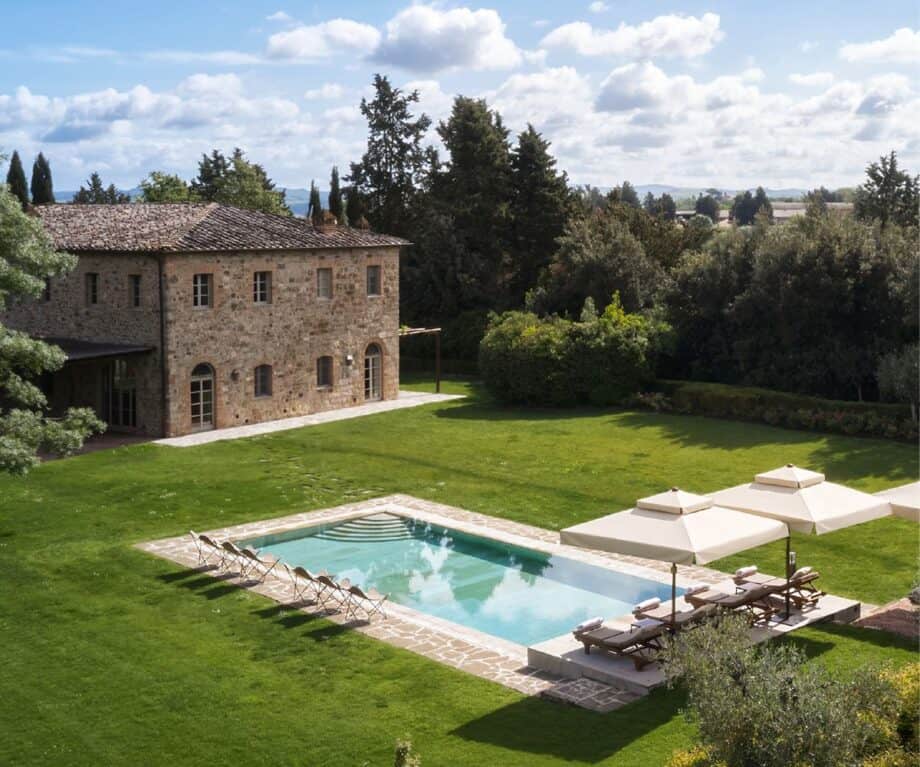
Regions such as Tuscany (Italy), the Algarve (Portugal), and the Peloponnese (Greece) excel in this regard, offering secluded hillside estates positioned within convenient striking distance of both vibrant cultural towns and pristine shorelines. Conversely, ultra-remote, hyper-specialized retreats—while magnificent for romantic couples—can quickly morph into isolating environments for restless adolescents with nothing to occupy their evenings.
Future Outlook
As the luxury travel sector continues to evolve through 2026 and beyond, multi-generational villa rentals represent one of the fastest-growing segments in high-end tourism. Driven by an increasing cultural emphasis on reclaiming shared family time after years of shifting global logistics, travelers are demanding smarter, more intuitive properties.
The future of family villa travel belongs to estates designed with architectural empathy—properties that understand the delicate equilibrium between communal celebration and sovereign privacy. By prioritizing structural zoning, investing in localized staffing infrastructure, and maintaining radical transparency regarding finances and daily pacing, families can banish the specter of holiday exhaustion.
Get these foundational elements right, and the results are transformative: the ambient friction dissolves, leaving behind what the trip was always intended to be—a multi-generational family, traveling together, making memories that endure long after the luggage has been unpacked.